Jehiel, Son of Jehoshaphat
Who was Jehiel, Son of Jehoshaphat, in the Bible?
A prince of Judah and son of King Jehoshaphat who lived during the Divided Monarchy.
This is one of 10 people named Jehiel in the Bible. See all 10 →
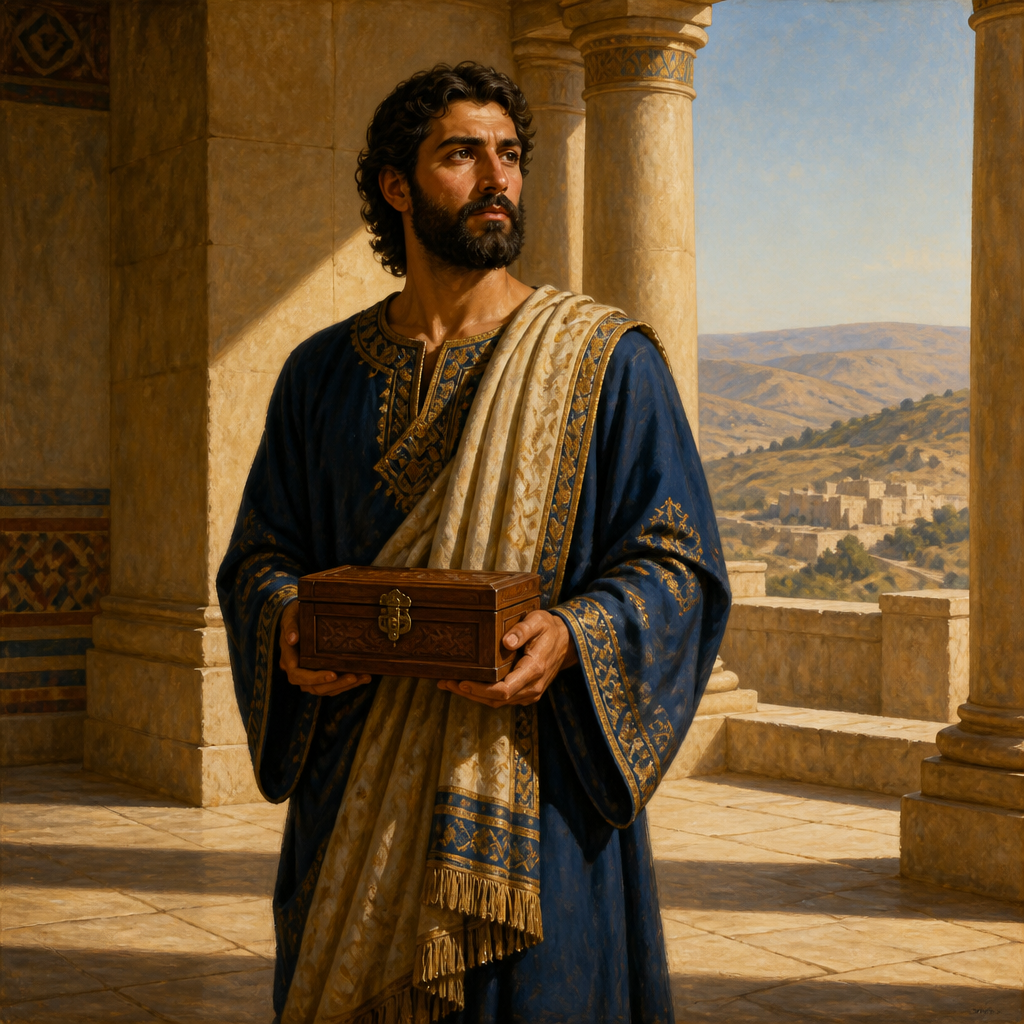
Jehiel was a prince of the Kingdom of Judah during the 9th century BC, recognized in the biblical record as one of the seven sons of King Jehoshaphat. As a member of the Davidic royal line, Jehiel occupied a position of significant status during a period when Judah was navigating complex geopolitical relationships with the northern Kingdom of Israel and neighboring Moab and Edom.
His life is primarily documented in the genealogical and historical summaries of the Chronicler, specifically within the context of the transition of power from Jehoshaphat to his eldest son, Jehoram. Though his personal biography is brief, his presence in the text serves to illustrate the domestic and political environment of the Judean court during the mid-Divided Monarchy era.
Background and Family
Jehiel was born into the royal house of Judah, the son of King Jehoshaphat, who is remembered as one of the more righteous reformers of the southern kingdom. His lineage traces directly back to King David, placing him within the covenantal line of the tribe of Judah. According to 2 Chronicles 21:2, Jehiel was one of six brothers to the crown prince Jehoram. His other brothers included Azariah, Zechariah, Azariahu, Michael, and Shephatiah.
The mention of two brothers named Azariah (often distinguished in Hebrew study as Azariah and Azariahu) suggests the importance of familial legacy within this generation of the Davidic dynasty. As a son of Jehoshaphat, Jehiel grew up in a court characterized by his father’s efforts to strengthen Judah's fortifications and his father’s somewhat controversial alliance with the northern house of Ahab.
Major Life Events
While the biblical text does not record specific deeds performed by Jehiel, the broader context of 2 Chronicles 21 provides the framework for his life. King Jehoshaphat, seeking to provide for his many sons and stabilize the kingdom, bestowed upon Jehiel and his brothers significant gifts. These included silver, gold, and precious things, along with the governorship or possession of "fortified cities in Judah" (2 Chronicles 21:3).
This distribution of wealth and administrative power was a common practice for Judean kings to ensure the loyalty of their offspring and to provide regional oversight. However, this period of royal favor was short-lived. Following the death of their father Jehoshaphat (c. 848 BC), Jehiel's eldest brother, Jehoram, ascended to the throne. In a move to consolidate his power and perhaps influenced by the practices of the northern kingdom, Jehoram executed all of his brothers, including Jehiel.
Relationship to Other Biblical Figures
Jehiel’s primary relationship in the biblical narrative is defined by his father, Jehoshaphat, and his brother, Jehoram. His father’s reign was marked by spiritual renewal, yet the internal family dynamics resulted in tragedy. Jehiel is also listed alongside his five brothers, indicating a large royal household that was central to the administrative structure of Judah at the time. Unlike his father, who sought to follow the ways of David, Jehiel’s brother Jehoram is recorded as walking in the ways of the kings of Israel, a shift that directly led to the violent end of Jehiel’s life.
Spiritual Significance
The life of Jehiel, though appearing in only a single verse, serves as a poignant reminder of the volatile nature of the Divided Monarchy. His inclusion in the text validates the historical reality of Jehoshaphat’s lineage and underscores the tragic consequences of the spiritual and moral decline that occurred when Jehoram took the throne. In biblical theology, the death of Jehiel and his brothers represents the internal strife that threatened the house of David, contrasting the peaceful legacy of Jehoshaphat with the bloody consolidation of power by his successor.
Jehiel’s significance lies in his role as a representative of the Davidic line during a critical transition in Judah’s history. His inclusion in the royal genealogy of 2 Chronicles 21:2 serves to document the extent of King Jehoshaphat’s household and the subsequent tragedy that befell the royal family upon the accession of Jehoram.
Theologically, Jehiel's life and death highlight the themes of royal succession and the departure from God's law. His death at the hands of his brother serves as a narrative marker for the wickedness of Jehoram’s reign, illustrating how the abandonment of covenantal faithfulness led to the fracturing of the family and the weakening of the Judean state.
Frequently Asked Questions
Who was Jehiel's father?
Jehiel was the son of Jehoshaphat, the King of Judah.
How many brothers did Jehiel have?
He had six brothers: Jehoram (who became king), two brothers named Azariah, Zechariah, Michael, and Shephatiah.
What happened to Jehiel after his father died?
He was killed by his brother Jehoram, who executed all his brothers to consolidate his power as king.
What tribe did Jehiel belong to?
Jehiel belonged to the tribe of Judah, as he was a member of the royal house of David.
Family & Relationships
Parents
 Jehoshaphat, King of JudahFather2 Chronicles 21:2Stated
 Jehiel, Son of JehoshaphatThis page
 Jehoram, King of JudahBrother2 Chronicles 21:2Stated
 Azariah, Second Named in 2 Chronicles 21:2Brother2 Chronicles 21:2Stated
 Azariah, Son of JehoshaphatBrother2 Chronicles 21:2Stated
 Michael, Son of JehoshaphatBrother2 Chronicles 21:2Stated
 Shephatiah, Son of JehoshaphatBrother2 Chronicles 21:2Stated
 Zechariah, Son of JehoshaphatBrother2 Chronicles 21:2Stated
Connected Figures
Family
Father · 2 Chronicles 21:2
The fourth king of the Southern Kingdom of Judah who initiated religious reforms, established a national judicial system, and successfully repelled a massive foreign coalition.
Divided MonarchyFirst: 1 Kings 15:2472 versesKing of JudahJudah
Brother · 2 Chronicles 21:2
The ninth king of the southern Kingdom of Judah, known for his violent rise to power, his marriage to Athaliah of Israel, and a disastrous reign marked by revolt and divine judgment.
Divided MonarchyFirst: 1 Kings 22:5023 versesKing of JudahJudah
Brother · 2 Chronicles 21:2
A prince of Judah and son of King Jehoshaphat who was tragically executed by his brother, King Jehoram, during the Divided Monarchy.
Divided MonarchyFirst: 2 Chronicles 21:21 versesPrince of JudahJudah
Brother · 2 Chronicles 21:2
A prince of Judah and son of King Jehoshaphat, Azariah was one of several brothers murdered by Jehoram during a bloody consolidation of the Judean throne.
Brother · 2 Chronicles 21:2
A prince of Judah and son of King Jehoshaphat who was tragically murdered by his brother Jehoram during a royal purge.
Divided MonarchyFirst: 2 Chronicles 21:22 versesPrince of JudahJudah
Brother · 2 Chronicles 21:2
A prince of Judah and son of King Jehoshaphat, Shephatiah was one of several brothers murdered by Jehoram during his consolidation of power.
Divided MonarchyFirst: 2 Chronicles 21:22 versesPrince of JudahJudah
Brother · 2 Chronicles 21:2
A prince of Judah and son of King Jehoshaphat, Zechariah was one of several brothers who were tragically murdered by their sibling Jehoram upon his accession to the throne.
Divided MonarchyFirst: 2 Chronicles 21:22 versesPrince of JudahJudah
Categories
Mentions by Book
- 2 Chronicles1
Scripture References
All 1 indexed verse, in canonical order, from the Berean Standard Bible.
2 Chronicles · 1
- 2 Chronicles 21:2
Jehoram’s brothers, the sons of Jehoshaphat, were Azariah, Jehiel, Zechariah, Azariah, Michael, and Shephatiah; these were all sons of Jehoshaphat king of Israel.
Others Named Jehiel
Compare all 10 bearers →Jehiel, Descendant of ElamEzra 10:26
A descendant of Elam during the post-exilic period who was identified among those who had married foreign women in violation of the Mosaic Law.
Jehiel, Temple Overseer under Hezekiah2 Chronicles 31:13
A Levite or temple official appointed by King Hezekiah to supervise the storage and distribution of sacred contributions and tithes in Jerusalem.
Jehiel, Father of ShecaniahEzra 10:2
An Elamite living during the Exile and Return whose son, Shecaniah, confessed the community's sin of intermarriage to Ezra.
Jehiel, Father of ObadiahEzra 8:9
A descendant of Joab whose son, Obadiah, served as a leader during the second wave of exiles returning from Babylon to Jerusalem under the leadership of Ezra.
Jehiel, Attendant to the Royal Sons1 Chronicles 27:32
A trusted royal official and educator who attended to the sons of King David during the United Monarchy's foundations.
Jehiel the Gershonite1 Chronicles 6:20
A prominent Levite of the Gershonite clan who served as a chief officer over the temple treasury during the reign of King David.
Jehiel, Musician of the United Monarchy1 Chronicles 15:18
A Levite musician appointed to play the harp during the transport of the Ark of the Covenant to Jerusalem and its subsequent ministry.
Jehiel, Descendant of HarimEzra 10:21
A member of the priestly line of Harim who lived during the post-exilic period and was among those who had married foreign women.
Jehiel, Administrator of the House of God2 Chronicles 35:8
A high-ranking official and administrator of the temple during the reign of King Josiah who provided generous offerings for the Great Passover.