Jehoram, King of Judah
Who was Jehoram, King of Judah, in the Bible?
The ninth king of the southern Kingdom of Judah, known for his violent rise to power, his marriage to Athaliah of Israel, and a disastrous reign marked by revolt and divine judgment.
This is one of 2 people named Jehoram in the Bible. See all 2 →
Jehoram, son of Jehoshaphat, ascended to the throne of the Kingdom of Judah during the Divided Monarchy period. Unlike his father, who was regarded as a righteous king who sought the Lord, Jehoram’s reign was defined by spiritual compromise and political turmoil. His rule began with a bloody consolidation of power and concluded with a painful, unlamented death, serving as a cautionary narrative within the books of Kings and Chronicles regarding the dangers of foreign idolatrous alliances.
Background and Family
Jehoram was the firstborn son of King Jehoshaphat of Judah. Growing up in a period of relative prosperity and religious reform under his father, Jehoram was positioned to inherit a stable kingdom. He was one of several brothers, including Azariah, Jehiel, Zechariah, Azariahu, Michael, and Shephatiah. Despite the numerous gifts of silver, gold, and fortified cities Jehoshaphat bestowed upon his other sons, the kingdom was rightfully bequeathed to Jehoram as the eldest (2 Chronicles 21:3).
A pivotal element of Jehoram’s life was his marriage to Athaliah, the daughter of Ahab and Jezebel of the northern kingdom of Israel. This alliance was intended to cement peace between the two Hebrew kingdoms but ultimately imported the Baal worship of the Omride dynasty into Judah. This union significantly influenced Jehoram's policies and spiritual direction, leading him to abandon the traditions of his ancestors, David and Asa.
Major Life Events
Jehoram’s reign began with an act of fratricide. Once he had established himself over his father’s kingdom, he consolidated his power by putting all his brothers to the sword, along with several other princes of Israel (2 Chronicles 21:4). This violent beginning set the tone for an eight-year reign characterized by instability and loss.
During his tenure, Judah experienced significant territorial losses. The Edomites, who had been subject to Judah since the time of David, successfully revolted. Although Jehoram attempted a military expedition to reclaim the territory, crossing into Edom with his chariots and attacking by night, his troops eventually fled to their homes. Edom remained in rebellion, as did the city of Libnah, which the biblical record attributes to Jehoram’s abandonment of the God of his fathers (2 Kings 8:21–22).
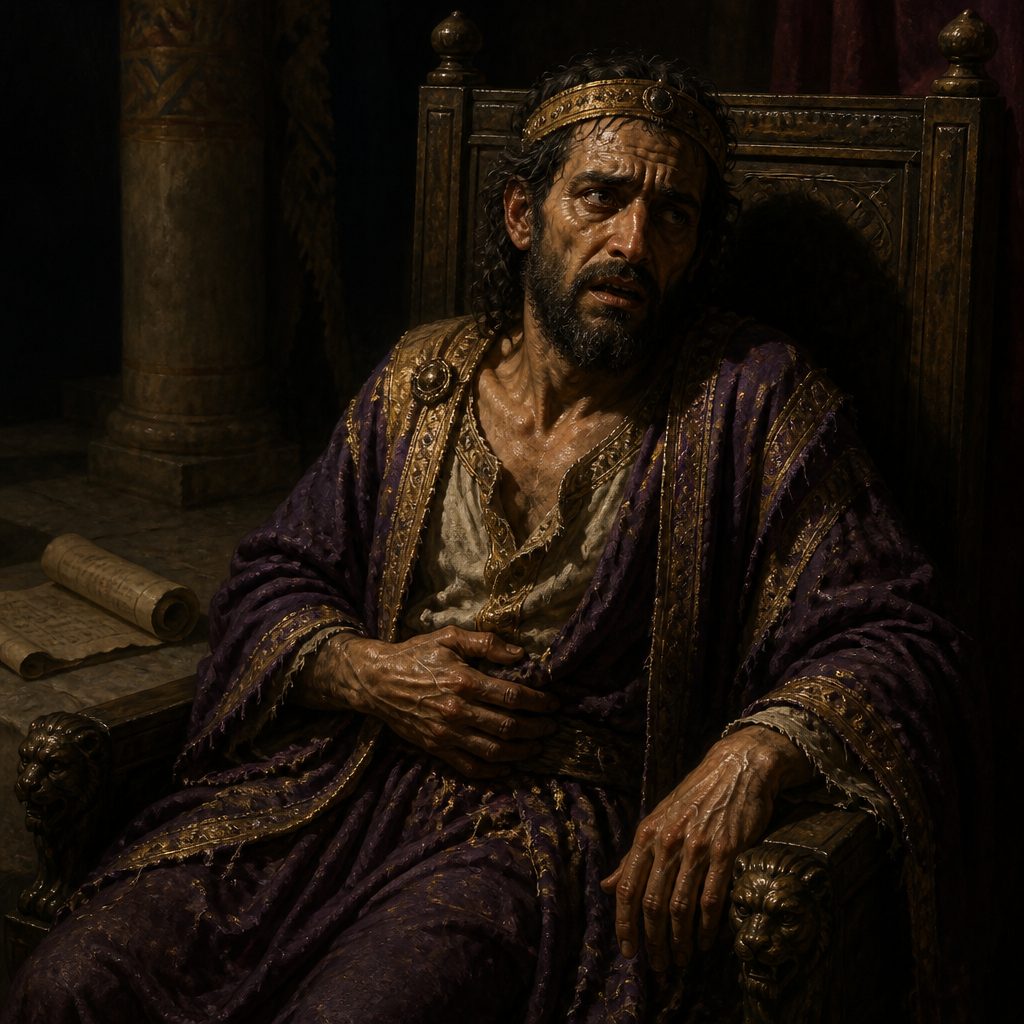
The final years of Jehoram’s life were marked by divine judgment. The Lord stirred up the Philistines and the Arabs against him. These invaders looted the royal palace and carried away Jehoram’s wives and sons, leaving only his youngest son, Ahaziah (also called Jehoahaz). Following these losses, Jehoram was struck with an incurable intestinal disease. After two years of suffering, his bowels came out because of the sickness, and he died in great pain at the age of forty.
Relationship to Other Biblical Figures
Jehoram’s life was inextricably linked to the house of Ahab through his wife, Athaliah. This connection is highlighted in 2 Kings 8, which notes that he walked in the ways of the kings of Israel. His daughter, Jehosheba (or Jehoshabeath), played a critical role in the survival of the Davidic line; she was the one who later hid the infant Joash from the murderous reach of Athaliah after Jehoram's son Ahaziah was killed.
He is also mentioned in the genealogy of Jesus Christ recorded in the Gospel of Matthew (Matthew 1:8). Despite his wicked reign, he remains a link in the messianic lineage, listed as the son of Jehoshaphat and the father (ancestor) of Uzziah.
Spiritual Significance
The biblical assessment of Jehoram is overwhelmingly negative. The Chronicler notes that he "did evil in the eyes of the Lord" and even constructed high places on the hills of Judah, leading the people into spiritual prostitution. A significant prophetic warning was sent to him in writing from the prophet Elijah, foretelling the plague upon his people and his own gruesome death.
His passing was notable for the lack of public mourning. The scripture records that he passed away "to no one's regret" (2 Chronicles 21:20). He was buried in the City of David but was denied a place in the tombs of the kings, a final indignity reflecting his failure as a spiritual and political leader. His life serves as a stark contrast to the Davidic ideal, illustrating how individual choices and unholy alliances can lead to the rapid decline of a once-godly nation.
Jehoram’s reign serves as a theological turning point in the history of Judah, representing the first major infiltration of northern idolatry into the southern kingdom via the house of Ahab. His narrative emphasizes the consequences of abandoning the Mosaic covenant and the specific dangers of political marriages that compromise religious integrity. Despite his wickedness, the biblical text notes that the Lord was unwilling to destroy Judah because of the covenant He made with David, promising to maintain a lamp for his descendants forever.
His life also illustrates the concept of divine retribution within the Deuteronomic history. The loss of his brothers, his children, his health, and his honor are presented as direct results of his violent and idolatrous actions. The inclusion of Jehoram in the genealogy of Matthew 1:8 further highlights the theme of God's providence, showing that the messianic line continued even through flawed and rebellious kings.
Frequently Asked Questions
How did Jehoram die?
Jehoram died from a severe and incurable intestinal disease. According to 2 Chronicles 21:18-19, the Lord afflicted him with a disease that caused his bowels to come out after two years of suffering.
Who was Jehoram’s wife?
His wife was Athaliah, the daughter of King Ahab and Queen Jezebel of Israel. Her influence was largely blamed for Jehoram’s turn toward idolatry.
Why did Jehoram kill his brothers?
The Bible states that once Jehoram established himself over his father's kingdom, he strengthened his position by killing all his brothers and some of the princes of Israel, likely to eliminate any rivals to the throne.
Was Jehoram buried with the other kings?
No. While he was buried in the City of David, the text specifically notes that he was not buried in the tombs of the kings, indicating a loss of honor and respect among his people.
What message did Elijah the prophet send to Jehoram?
Elijah sent a letter to Jehoram condemning his idolatry and the murder of his brothers. The letter prophesied a great plague on Jehoram's people and his own agonizing death by intestinal disease.
Family & Relationships
Parents
 Jehoshaphat, King of JudahFather2 Kings 1:17Stated
 Athaliah, Queen of JudahWife2 Kings 8:25
Inferred
Reconstructed through Ahaziah: 2 Kings 8:25 ties Jehoram to Ahaziah; 2 Kings 11:1 ties Ahaziah to Athaliah. No verse states the wife link between Jehoram and Athaliah directly.Evidence: 2 Kings 8:25; 2 Kings 8:26; 2 Kings 8:29; 2 Chronicles 22:1; 2 Chronicles 22:2; 2 Chronicles 22:6
 Jehoram, King of JudahThis page
 Azariah, Second Named in 2 Chronicles 21:2Brother2 Chronicles 21:2Stated
 Azariah, Son of JehoshaphatBrother2 Chronicles 21:2Stated
 Jehiel, Son of JehoshaphatBrother2 Chronicles 21:2Stated
 Michael, Son of JehoshaphatBrother2 Chronicles 21:2Stated
 Shephatiah, Son of JehoshaphatBrother2 Chronicles 21:2Stated
 Zechariah, Son of JehoshaphatBrother2 Chronicles 21:2Stated
Children
 Ahaziah, King of JudahSon2 Kings 8:25Stated
 JehoshebaDaughter2 Kings 11:2
Inferred
Reconstructed through Ahaziah: 2 Kings 11:2 ties Jehosheba to Ahaziah (itself an inferred link); 2 Kings 8:25 ties Ahaziah to Jehoram. No verse states the father link between Jehosheba and Jehoram directly.Evidence: 2 Kings 11:2
Connected Figures
Family
Father · 2 Kings 1:17
The fourth king of the Southern Kingdom of Judah who initiated religious reforms, established a national judicial system, and successfully repelled a massive foreign coalition.
Divided MonarchyFirst: 1 Kings 15:2472 versesKing of JudahJudah
Wife · 2 Kings 8:25
The only woman to reign as a monarch over Judah, Athaliah was the daughter of Ahab and the wife of Jehoram who attempted to exterminate the Davidic line.
Divided MonarchyFirst: 2 Kings 8:2620 versesQueen Regnant of Judah
Son · 2 Kings 8:25
Ahaziah was the sixth king of Judah whose brief one-year reign was defined by his alliance with the house of Ahab and his violent death during Jehu’s purge of Israel.
Divided MonarchyFirst: 2 Kings 8:2427 versesKing of JudahJudah
Daughter · 2 Kings 11:2
A Judean princess and wife of the high priest who preserved the Davidic line by hiding the infant prince Joash from the murderous purge of Queen Athaliah.
Divided MonarchyFirst: 2 Kings 11:25 versesPrincess of JudahJudah
Brother · 2 Chronicles 21:2
A prince of Judah and son of King Jehoshaphat who was tragically executed by his brother, King Jehoram, during the Divided Monarchy.
Divided MonarchyFirst: 2 Chronicles 21:21 versesPrince of JudahJudah
Brother · 2 Chronicles 21:2
A prince of Judah and son of King Jehoshaphat, Azariah was one of several brothers murdered by Jehoram during a bloody consolidation of the Judean throne.
Brother · 2 Chronicles 21:2
A prince of Judah and son of King Jehoshaphat who lived during the Divided Monarchy.
Divided MonarchyFirst: 2 Chronicles 21:21 versesPrince of JudahJudah
Brother · 2 Chronicles 21:2
A prince of Judah and son of King Jehoshaphat who was tragically murdered by his brother Jehoram during a royal purge.
Divided MonarchyFirst: 2 Chronicles 21:22 versesPrince of JudahJudah
Brother · 2 Chronicles 21:2
A prince of Judah and son of King Jehoshaphat, Shephatiah was one of several brothers murdered by Jehoram during his consolidation of power.
Divided MonarchyFirst: 2 Chronicles 21:22 versesPrince of JudahJudah
Brother · 2 Chronicles 21:2
A prince of Judah and son of King Jehoshaphat, Zechariah was one of several brothers who were tragically murdered by their sibling Jehoram upon his accession to the throne.
Divided MonarchyFirst: 2 Chronicles 21:22 versesPrince of JudahJudah
Categories
Mentions by Book
- 1 Kings1
- 2 Kings10
- 2 Chronicles12
Scripture References
All 23 indexed verses, in canonical order, from the Berean Standard Bible.
1 Kings · 1
- 1 Kings 22:50
And Jehoshaphat rested with his fathers and was buried with them in the city of his father David. And his son Jehoram reigned in his place.
2 Kings · 10
- 2 Kings 1:17Partial
So Ahaziah died according to the word of the LORD that Elijah had spoken. And since he had no son, Jehoram succeeded him in the second year of the reign of Jehoram son of Jehoshaphat over Judah.
- 2 Kings 8:16
In the fifth year of the reign of Joram son of Ahab over Israel, Jehoram son of Jehoshaphat succeeded his father as king of Judah.
- 2 Kings 8:21
So Jehoram crossed over to Zair with all his chariots. When the Edomites surrounded him and his chariot commanders, he rose up and attacked by night. His troops, however, fled to their homes.
- 2 Kings 8:23
As for the rest of the acts of Jehoram, along with all his accomplishments, are they not written in the book of the Chronicles of the Kings of Judah?
- 2 Kings 8:24
And Jehoram rested with his fathers and was buried with them in the City of David. And his son Ahaziah reigned in his place.
- 2 Kings 8:25
In the twelfth year of the reign of Joram son of Ahab over Israel, Ahaziah son of Jehoram became king of Judah.
- 2 Kings 8:26Partial
Ahaziah was twenty-two years old when he became king, and he reigned in Jerusalem one year. His mother’s name was Athaliah, the granddaughter of Omri king of Israel.
Cited as evidence on a family card; added so References, Key Verses and Mentions by Book share one index.
- 2 Kings 8:29
So King Joram returned to Jezreel to recover from the wounds that the Arameans had inflicted on him at Ramah when he fought against Hazael king of Aram. Then Ahaziah son of Jehoram king of Judah went down to Jezreel to visit Joram son of Ahab, because Joram had been wounded.
- 2 Kings 11:2
But Jehosheba daughter of King Joram, the sister of Ahaziah, took Joash son of Ahaziah and stole him away from among the sons of the king who were being murdered. She put him and his nurse in a bedroom to hide him from Athaliah, and he was not killed.
- 2 Kings 12:18
So King Joash of Judah took all the sacred objects dedicated by his fathers—Jehoshaphat, Jehoram, and Ahaziah, the kings of Judah—along with his own consecrated items and all the gold found in the treasuries of the house of the LORD and the royal palace, and he sent them to Hazael king of Aram. So Hazael withdrew from Jerusalem.
2 Chronicles · 12
- 2 Chronicles 21:1
And Jehoshaphat rested with his fathers and was buried with them in the City of David. And his son Jehoram reigned in his place.
- 2 Chronicles 21:2
Jehoram’s brothers, the sons of Jehoshaphat, were Azariah, Jehiel, Zechariah, Azariah, Michael, and Shephatiah; these were all sons of Jehoshaphat king of Israel.
Cited as evidence on a family card; added so References, Key Verses and Mentions by Book share one index.
- 2 Chronicles 21:3
Their father had given them many gifts of silver and gold and precious things, as well as the fortified cities in Judah; but he gave the kingdom to Jehoram because he was the firstborn.
- 2 Chronicles 21:4
When Jehoram had established himself over his father’s kingdom, he strengthened himself by putting to the sword all his brothers along with some of the princes of Israel.
- 2 Chronicles 21:5
Jehoram was thirty-two years old when he became king, and he reigned in Jerusalem eight years.
- 2 Chronicles 21:6
And Jehoram walked in the ways of the kings of Israel, just as the house of Ahab had done. For he married a daughter of Ahab and did evil in the sight of the LORD.
Cited as a key verse; added so References, Key Verses and Mentions by Book share one index.
- 2 Chronicles 21:9
So Jehoram crossed into Edom with his officers and all his chariots. When the Edomites surrounded him and his chariot commanders, he rose up and attacked by night.
- 2 Chronicles 21:16
Then the LORD stirred against Jehoram the spirit of the Philistines and Arabs who lived near the Cushites.
- 2 Chronicles 21:20
Jehoram was thirty-two years old when he became king, and he reigned in Jerusalem eight years. He died, to no one’s regret, and was buried in the City of David, but not in the tombs of the kings.
Cited as a key verse; added so References, Key Verses and Mentions by Book share one index.
- 2 Chronicles 22:1
Then the people of Jerusalem made Ahaziah, the youngest son of Jehoram, king in his place, since the raiders who had come into the camp with the Arabs had killed all the older sons. So Ahaziah son of Jehoram became king of Judah.
- 2 Chronicles 22:6Partial
So he returned to Jezreel to recover from the wounds they had inflicted on him at Ramah when he fought against Hazael king of Aram. Then Ahaziah son of Jehoram king of Judah went down to Jezreel to visit Joram son of Ahab, because Joram had been wounded.
- 2 Chronicles 22:11
But Jehoshabeath daughter of King Jehoram took Joash son of Ahaziah and stole him away from among the sons of the king who were being murdered, and she put him and his nurse in a bedroom. Because Jehoshabeath, the daughter of King Jehoram and the wife of Jehoiada the priest, was Ahaziah’s sister, she hid Joash from Athaliah so that she could not kill him.
Others Named Jehoram
Compare all 2 bearers →Jehoram, Priest of the Divided Monarchy2 Chronicles 17:8
Jehoram was a priest in the southern kingdom of Judah during the reign of King Jehoshaphat, tasked with teaching the Law of the LORD to the people.