Asa, King of Judah
Who was Asa, King of Judah, in the Bible?
The third king of the Kingdom of Judah who initiated significant religious reforms and reigned for forty-one years during the Divided Monarchy.
This is one of 2 people named Asa in the Bible. See all 2 →
Asa was the son of Abijah and the grandson of Rehoboam, making him the third monarch of the southern Kingdom of Judah after the division of the United Monarchy. His reign, which began in the twentieth year of King Jeroboam I of Israel, lasted forty-one years (c. 911–870 BC). He is distinguished in the biblical record as one of the few kings of Judah who "did what was right in the eyes of the Lord," characterized primarily by his aggressive stance against idolatry and his efforts to return the nation to the worship of Yahweh.
Asa’s rule was marked by significant military conflict, most notably a defensive war against the Cushites and a protracted struggle with King Baasha of Israel. While he is celebrated for his early piety and courage, the biblical narrative in 2 Chronicles also highlights the complexities of his later years, including a controversial alliance with the Arameans and a personal decline in health. Despite these later failings, his legacy remained foundational for the reforms of his son and successor, Jehoshaphat.
Background and Family
Asa ascended to the throne of Judah following the short three-year reign of his father, Abijah (also called Abijam). His lineage traces directly back to David through Solomon and Rehoboam, placing him firmly within the Davidic covenant. According to 1 Kings 15, his mother was Maacah (often identified as his grandmother in broader context, holding the influential title of Queen Mother), the daughter of Abishalom. Asa was married to Azubah, the daughter of Shilhi, who was the mother of his successor, Jehoshaphat.
Major Life Events
Religious Reforms
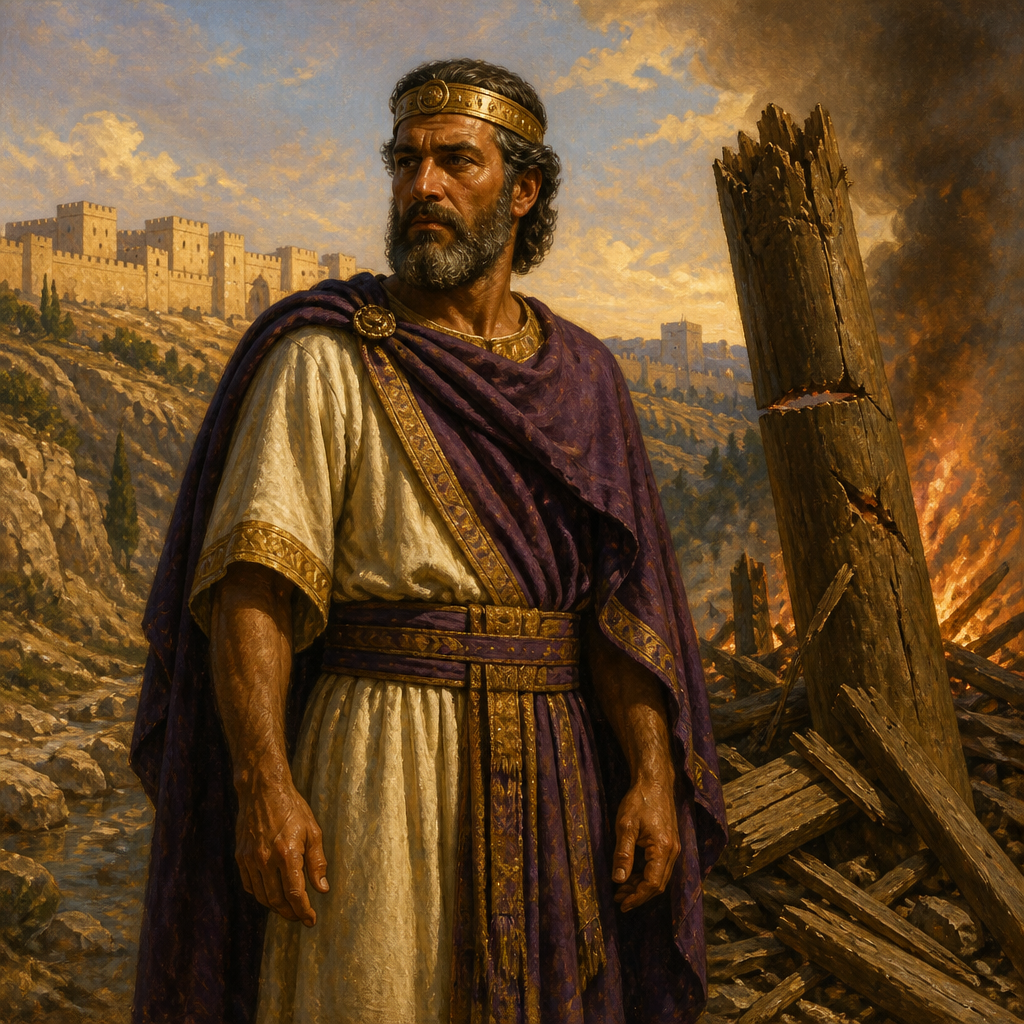
Asa’s early reign was defined by a spiritual purge of Judah. He removed the "detestable idols" that his predecessors had allowed to proliferate. This reform was comprehensive; he expelled male shrine prostitutes and demolished the altars of foreign gods. Most notably, Asa took the bold step of stripping his grandmother, Maacah, of her status as Queen Mother because she had fashioned a "detestable Asherah pole." He chopped down the pole and burned it in the Kidron Valley. While the biblical text notes that the "high places" were not entirely removed from the land, it affirms that Asa’s heart was "fully devoted to the Lord all his days."
Military Conflicts and Divine Deliverance
During the first ten years of his reign, the land enjoyed peace, which Asa utilized to fortify cities and build up a massive army consisting of 300,000 men from Judah and 280,000 from Benjamin. This preparation was tested when Zerah the Cushite invaded with an army of one million men and three hundred chariots. Facing overwhelming odds in the Valley of Zephathah, Asa cried out to God in prayer, acknowledging Judah’s powerlessness. The account in 2 Chronicles 14 records a miraculous victory where the Lord struck down the Cushites, allowing Asa to pursue them as far as Gerar and return with immense plunder.
Following this victory, the prophet Azariah son of Oded encouraged Asa to continue his reforms. In the fifteenth year of his reign, Asa gathered the people in Jerusalem for a great covenant renewal, sacrificing seven hundred oxen and seven thousand sheep and goats. The people entered into an oath to seek the Lord with all their heart.
The Conflict with Baasha and the Aramean Alliance
The latter half of Asa’s reign was dominated by a cold war with King Baasha of Israel. Baasha attempted to blockade Judah by fortifying Ramah. In a move that drew sharp prophetic criticism, Asa did not seek divine help as he had against the Cushites. Instead, he stripped the treasuries of the Temple and the royal palace to bribe Ben-hadad I, the King of Aram in Damascus, to break his treaty with Baasha. The plan worked militarily—Ben-hadad attacked Israel, forcing Baasha to abandon Ramah—but it was a spiritual failure. The seer Hanani rebuked Asa for relying on a foreign king rather than God. Enraged, Asa imprisoned the prophet and began to oppress some of his own people.
Final Years and Death
In the thirty-ninth year of his reign, Asa developed a severe disease in his feet. The chronicler notes with disappointment that even in this affliction, he "did not seek the Lord, but only the physicians." He died two years later, in the forty-first year of his reign (c. 870 BC), and was buried with great honor in a tomb he had hewn for himself in the City of David.
Relationship to Other Biblical Figures
Asa’s primary interactions were with the prophets Azariah and Hanani, who served as the moral compass of his administration. His relationship with the northern kings was characterized by perpetual tension; he saw the rise and fall of several Israeli dynasties, including those of Nadab, Baasha, Elah, Zimri, and Omri. His most enduring domestic impact was on his son, Jehoshaphat, who followed in his father’s righteous footsteps, though he too struggled with the persistence of the high places.
Spiritual Significance
Asa serves as a complex study in faithfulness. He is presented as a paradigm of a "good king" who demonstrated that national security and prosperity were tied to covenantal loyalty. His early reliance on God against the Cushites provides a classic biblical example of the power of prayer in the face of impossible odds. However, his later years serve as a cautionary tale regarding the dangers of pragmatism over faith. By turning to Aram and the physicians rather than Yahweh, Asa’s biography illustrates that a strong start in the faith does not guarantee a perfect finish. Nevertheless, he is remembered in the genealogies of 1 Chronicles and Matthew 1 as a vital link in the messianic line of Jesus Christ.
Asa is significant for initiating the first major religious revival in Judah after the kingdom split. His actions set a precedent for later reforming kings like Hezekiah and Josiah. He demonstrated that even the highest levels of royal family (such as the Queen Mother) were not exempt from the requirements of the Law of Moses. His reign solidified the Davidic line's identity as the protectors of the Temple and the pure worship of Yahweh against the syncretism of the Northern Kingdom.
Theological reflection on Asa focuses on the "divided heart" of his later years. Despite his early zeal, his reliance on political maneuvering and his harsh treatment of the prophet Hanani highlight the persistent human tendency to drift toward self-reliance. His inclusion in the genealogy of Jesus in Matthew 1:7–8 underscores his role in preserving the Davidic line through which the Messiah would eventually come.
Frequently Asked Questions
Why did Asa remove his grandmother Maacah from her position?
Asa removed Maacah from her role as Queen Mother because she had made an Asherah pole, an idol used in the worship of a Canaanite goddess. Asa’s commitment to Yahweh required him to prioritize religious purity over family ties.
What happened when the Cushites invaded Judah?
Zerah the Cushite invaded with a massive army of one million soldiers. Asa prayed for divine help, admitting Judah was powerless. God struck down the Cushites, and Asa’s army successfully routed them, taking significant plunder.
How did Asa react to the prophet Hanani's rebuke?
Unlike his positive reaction to the prophet Azariah earlier in his reign, Asa became enraged when Hanani rebuked him for his alliance with Aram. He threw the prophet into prison and began to act oppressively toward some of his subjects.
What was the 'disease in the feet' that Asa suffered from?
The Bible does not provide a specific medical diagnosis, only stating that the malady was severe and occurred in his old age. The text emphasizes that instead of seeking the Lord for healing, he relied solely on physicians.
Is Asa mentioned in the New Testament?
Yes, Asa is mentioned in the genealogy of Jesus Christ found in Matthew 1:7–8, identifying him as the son of Abijah and the father of Jehoshaphat.
Family & Relationships
Parents
 Abijah, King of JudahFather1 Kings 15:8Stated
 Azubah, Mother of JehoshaphatWife1 Kings 15:24
Inferred
Reconstructed through Jehoshaphat: 1 Kings 22:42 ties Azubah to Jehoshaphat; 1 Kings 15:24 ties Jehoshaphat to Asa. No verse states the husband link between Azubah and Asa directly.Evidence: 1 Kings 15:24; 1 Kings 22:41; 1 Kings 22:42; 1 Kings 22:43; 1 Chronicles 3:10; 2 Chronicles 20:31
 Asa, King of JudahThis page
Children
 Jehoshaphat, King of JudahSon1 Kings 15:24Stated
Connected Figures
Family
Father · 1 Kings 15:8
The second king of the Southern Kingdom of Judah who famously defeated Jeroboam I on Mount Zemaraim to reclaim territory for the Davidic line.
Divided MonarchyFirst: 1 Kings 15:321 versesKing of JudahJudah
Wife · 1 Kings 15:24
The Queen Mother of Judah during the 9th century BC, wife of King Asa and mother of the reformer King Jehoshaphat.
Divided MonarchyFirst: 1 Kings 22:423 versesQueen Mother of JudahJudah
Son · 1 Kings 15:24
The fourth king of the Southern Kingdom of Judah who initiated religious reforms, established a national judicial system, and successfully repelled a massive foreign coalition.
Divided MonarchyFirst: 1 Kings 15:2472 versesKing of JudahJudah
Categories
Mentions by Book
- 1 Kings25
- 1 Chronicles1
- 2 Chronicles25
- Jeremiah1
- Matthew2
Scripture References
All 54 indexed verses, in canonical order, from the Berean Standard Bible.
- 1 Kings 15:8
And Abijam rested with his fathers and was buried in the City of David, and his son Asa reigned in his place.
- 1 Kings 15:9
In the twentieth year of Jeroboam’s reign over Israel, Asa became king of Judah,
- 1 Kings 15:11
And Asa did what was right in the eyes of the LORD, as his father David had done.
- 1 Kings 15:13
He also removed his grandmother Maacah from her position as queen mother because she had made a detestable Asherah pole. Asa chopped down the pole and burned it in the Kidron Valley.
- 1 Kings 15:14
The high places were not removed, but Asa’s heart was fully devoted to the LORD all his days.
- 1 Kings 15:16
Now there was war between Asa and Baasha king of Israel throughout their days.
- 1 Kings 15:17
Baasha king of Israel went to war against Judah and fortified Ramah to prevent anyone from leaving or entering the territory of Asa king of Judah.
- 1 Kings 15:18Partial
So Asa withdrew all the silver and gold that remained in the treasuries of the house of the LORD and the royal palace. He entrusted it to his servants and sent them with this message to Ben-hadad son of Tabrimmon, the son of Hezion, the king of Aram, who was ruling in Damascus:
- 1 Kings 15:20
And Ben-hadad listened to King Asa and sent the commanders of his armies against the cities of Israel, conquering Ijon, Dan, Abel-beth-maacah, and the whole land of Naphtali, including the region of Chinnereth.
- 1 Kings 15:22Partial
Then King Asa summoned all the men of Judah, with no exceptions, and they carried away the stones of Ramah and the timbers Baasha had used for building. And with these materials King Asa built up Geba of Benjamin, as well as Mizpah.
- 1 Kings 15:23
Now the rest of the acts of Asa, along with all his might, all his accomplishments, and the cities he built, are they not written in the Book of the Chronicles of the Kings of Judah? In his old age, however, he became diseased in his feet.
- 1 Kings 15:24
And Asa rested with his fathers and was buried with them in the city of his father David, and his son Jehoshaphat reigned in his place.
- 1 Kings 15:25
In the second year of Asa’s reign over Judah, Nadab son of Jeroboam became king of Israel, and he reigned two years.
- 1 Kings 15:28
In the third year of Asa’s reign over Judah, Baasha killed Nadab and reigned in his place.
- 1 Kings 15:32
And there was war between Asa and Baasha king of Israel throughout their days.
- 1 Kings 15:33
In the third year of Asa’s reign over Judah, Baasha son of Ahijah became king of all Israel, and he reigned in Tirzah twenty-four years.
- 1 Kings 16:8
In the twenty-sixth year of Asa’s reign over Judah, Elah son of Baasha became king of Israel, and he reigned in Tirzah two years.
- 1 Kings 16:10
So in the twenty-seventh year of Asa’s reign over Judah, Zimri went in, struck Elah down, and killed him. And Zimri reigned in his place.
- 1 Kings 16:15
In the twenty-seventh year of Asa’s reign over Judah, Zimri reigned in Tirzah for seven days. Now the troops were encamped against Gibbethon of the Philistines,
- 1 Kings 16:23
In the thirty-first year of Asa’s reign over Judah, Omri became king of Israel, and he reigned twelve years, six of them in Tirzah.
- 1 Kings 16:29
In the thirty-eighth year of Asa’s reign over Judah, Ahab son of Omri became king of Israel, and he reigned in Samaria twenty-two years.
- 1 Kings 22:41
In the fourth year of Ahab’s reign over Israel, Jehoshaphat son of Asa became king of Judah.
- 1 Kings 22:42Partial
Jehoshaphat was thirty-five years old when he became king, and he reigned in Jerusalem twenty-five years. His mother’s name was Azubah daughter of Shilhi.
Cited as evidence on a family card; added so References, Key Verses and Mentions by Book share one index.
- 1 Kings 22:43
And Jehoshaphat walked in all the ways of his father Asa; he did not turn away from them, but did what was right in the eyes of the LORD. The high places, however, were not removed; the people still sacrificed and burned incense on the high places.
- 1 Kings 22:46
He banished from the land the male shrine prostitutes who remained from the days of his father Asa.
- 1 Chronicles 3:10
Solomon’s son was Rehoboam: Abijah was his son, Asa his son, Jehoshaphat his son,
- 2 Chronicles 14:1
Then Abijah rested with his fathers and was buried in the City of David. And his son Asa reigned in his place, and in his days the land was at peace for ten years.
- 2 Chronicles 14:2
And Asa did what was good and right in the eyes of the LORD his God.
- 2 Chronicles 14:8
Asa had an army of 300,000 men from Judah bearing large shields and spears, and 280,000 men from Benjamin bearing small shields and drawing the bow. All these were mighty men of valor.
- 2 Chronicles 14:10
So Asa marched out against him and lined up in battle formation in the Valley of Zephathah near Mareshah.
- 2 Chronicles 14:11
Then Asa cried out to the LORD his God: “O LORD, there is no one besides You to help the powerless against the mighty. Help us, O LORD our God, for we rely on You, and in Your name we have come against this multitude. O LORD, You are our God. Do not let a mere mortal prevail against You.”
- 2 Chronicles 14:12
So the LORD struck down the Cushites before Asa and Judah, and the Cushites fled.
- 2 Chronicles 14:13
Then Asa and his army pursued them as far as Gerar. The Cushites fell and could not recover, for they were crushed before the LORD and His army. So the people of Judah carried off a great amount of plunder
- 2 Chronicles 15:2Partial
So he went out to meet Asa and said to him, “Listen to me, Asa and all Judah and Benjamin. The LORD is with you when you are with Him. If you seek Him, He will be found by you, but if you forsake Him, He will forsake you.
- 2 Chronicles 15:8
When Asa heard these words and the prophecy of Azariah son of Oded the prophet, he took courage and removed the detestable idols from the whole land of Judah and Benjamin and from the cities he had captured in the hill country of Ephraim. He then restored the altar of the LORD that was in front of the portico of the LORD’s temple.
- 2 Chronicles 15:10
So they gathered together in Jerusalem in the third month of the fifteenth year of Asa’s reign.
- 2 Chronicles 15:16Partial
King Asa also removed his grandmother Maacah from her position as queen mother because she had made a detestable Asherah pole. Asa chopped down the pole, crushed it, and burned it in the Kidron Valley.
- 2 Chronicles 15:17
The high places were not removed from Israel, but Asa’s heart was fully devoted all his days.
- 2 Chronicles 15:19
And there was no war until the thirty-fifth year of Asa’s reign.
- 2 Chronicles 16:1Partial
In the thirty-sixth year of Asa’s reign, Baasha king of Israel went up against Judah and fortified Ramah to prevent anyone from leaving or entering the territory of Asa king of Judah.
- 2 Chronicles 16:2
So Asa withdrew the silver and gold from the treasuries of the house of the LORD and the royal palace, and he sent it with this message to Ben-hadad king of Aram, who was ruling in Damascus:
- 2 Chronicles 16:4
And Ben-hadad listened to King Asa and sent the commanders of his armies against the cities of Israel, conquering Ijon, Dan, Abel-maim, and all the store cities of Naphtali.
- 2 Chronicles 16:6
Then King Asa brought all the men of Judah, and they carried away the stones of Ramah and the timbers Baasha had used for building. And with these materials he built up Geba and Mizpah.
- 2 Chronicles 16:7
At that time Hanani the seer came to King Asa of Judah and told him, “Because you have relied on the king of Aram and not on the LORD your God, the army of the king of Aram has escaped from your hand.
- 2 Chronicles 16:10Partial
Asa was angry with the seer and became so enraged over this matter that he put the man in prison. And at the same time Asa oppressed some of the people.
- 2 Chronicles 16:11
Now the acts of Asa, from beginning to end, are indeed written in the Book of the Kings of Judah and Israel.
- 2 Chronicles 16:12
In the thirty-ninth year of his reign, Asa became diseased in his feet, and his disease became increasingly severe. Yet even in his illness he did not seek the LORD, but only the physicians.
- 2 Chronicles 16:13
So in the forty-first year of his reign, Asa died and rested with his fathers.
- 2 Chronicles 17:2
He stationed troops in every fortified city of Judah and put garrisons in the land of Judah and in the cities of Ephraim that his father Asa had captured.
- 2 Chronicles 20:32
And Jehoshaphat walked in the way of his father Asa and did not turn away from it; he did what was right in the eyes of the LORD.
- 2 Chronicles 21:12
Then a letter came to Jehoram from Elijah the prophet, which stated: “This is what the LORD, the God of your father David, says: ‘You have not walked in the ways of your father Jehoshaphat or of Asa king of Judah,
- Jeremiah 41:9
Now the cistern into which Ishmael had thrown all the bodies of the men he had struck down along with Gedaliah was a large one that King Asa had made for fear of Baasha king of Israel. Ishmael son of Nethaniah filled it with the slain.
- Matthew 1:7
Solomon the father of Rehoboam, Rehoboam the father of Abijah, and Abijah the father of Asa.
- Matthew 1:8
Asa was the father of Jehoshaphat, Jehoshaphat the father of Joram, and Joram the father of Uzziah.
Others Named Asa
Compare all 2 bearers →Asa, Levite of the Exile and Return1 Chronicles 9:16
A Levite of the family of Elkanah whose son, Berechiah, was among the first group of Israelites to resettle in the villages of the Netophathites following the Babylonian exile.