Rehoboam
Who was Rehoboam in the Bible?
The son of Solomon and grandson of David, Rehoboam was the first king of Judah following the division of the United Monarchy of Israel.
Rehoboam was the son of King Solomon and Naamah the Ammonite. He ascended to the throne at the age of forty-one following the death of his father, a time when the United Monarchy was under significant internal pressure due to the heavy taxation and forced labor policies of Solomon’s later years. His reign, which lasted seventeen years in Jerusalem, was defined by a catastrophic political miscalculation that led to the secession of the ten northern tribes.
Historically, Rehoboam is viewed as the monarch whose refusal to alleviate the burdens of his subjects triggered the fulfillment of prophetic judgment against the house of David. Though he attempted to maintain the glory of his predecessors, his rule was marked by spiritual decline, the invasion of Shishak of Egypt, and perpetual conflict with the newly formed northern Kingdom of Israel under Jeroboam I. Despite these failures, the biblical record notes that the Davidic line was preserved through him in the city of Jerusalem.
Background and Family
Rehoboam was born into the height of the Davidic dynasty's power. His father was Solomon, the wisest and wealthiest king of Israel, and his mother was Naamah, an Ammonite woman (1 Kings 14:21). This heritage is significant, as the inclusion of his mother's ethnicity highlights the foreign influences that had entered the royal court during Solomon's reign. Rehoboam was part of a large royal household; he eventually married eighteen wives and took sixty concubines, fathering twenty-eight sons and sixty daughters (2 Chronicles 11:21). Among his wives were Mahalath, a granddaughter of David, and his favorite, Maacah, the daughter of Absalom. He designated Abijah, his son by Maacah, as his successor, showing a preference for this lineage.
Major Life Events
The Schism at Shechem
Upon Solomon's death, Rehoboam traveled to Shechem to be inaugurated, as all Israel had gathered there (1 Kings 12:1). However, the assembly, led by the returned exile Jeroboam, presented a petition for the lightening of the "heavy yoke" of labor and taxes imposed by Solomon. Rehoboam sought counsel from two groups: the elders who had served his father and the young men who had grown up with him. The elders advised a servant-hearted approach, suggesting that if he served the people that day, they would serve him forever. Conversely, the young men advised an increase in authority and harshness.
Rehoboam chose the latter, famously replying: "My father made your yoke heavy, but I will add to your yoke; my father disciplined you with whips, but I will discipline you with scorpions" (1 Kings 12:14). This harsh response provoked the ten northern tribes to rebel, shouting, "What portion have we in David?" (1 Kings 12:16). When Rehoboam sent Adoram, his taskmaster, to quell the unrest, the people stoned him to death, forcing Rehoboam to flee to Jerusalem in his chariot.
Reign in Judah and Shishak’s Invasion
Safely in Jerusalem, Rehoboam mobilized 180,000 warriors from the tribes of Judah and Benjamin to retake the north by force. However, the prophet Shemaiah delivered a word from God forbidding the civil war, stating the division was from the Lord (2 Chronicles 11:4). Rehoboam obeyed and focused instead on fortifying the southern kingdom, building fifteen defense cities including Bethlehem, Tekoa, and Hebron.
Spiritually, the kingdom initially remained strong as Levites and faithful Israelites migrated south to Jerusalem. However, after three years, Rehoboam and Judah forsook the Law of the Lord (2 Chronicles 12:1). In his fifth year (c. 925 BC), Shishak king of Egypt invaded, capturing fortified cities and reaching Jerusalem. To prevent the city's destruction, Rehoboam was forced to surrender the treasures of the Temple and the royal palace, including the gold shields Solomon had made. Rehoboam replaced them with bronze shields, symbolizing the diminished glory of his reign.
Relationship to Other Biblical Figures
Rehoboam’s life was defined by his adversarial relationship with Jeroboam I, the first king of the northern kingdom. The Bible notes there was war between them throughout their entire lives (1 Kings 14:30). Domestically, his relationship with the prophet Shemaiah was pivotal; the king submitted to Shemaiah's warnings twice—once to avoid war and once to humble himself during the Egyptian invasion. His relationship with his father, Solomon, is one of tragic contrast; where Solomon began with a request for wisdom, Rehoboam began by rejecting it.
Spiritual Significance
The biblical assessment of Rehoboam is largely negative: "He did evil because he had not set his heart on seeking the Lord" (2 Chronicles 12:14). His reign serves as a theological warning about the consequences of pride and the rejection of wise counsel. Yet, his story also demonstrates the mercy of God. When Rehoboam and the leaders of Judah humbled themselves during Shishak’s invasion, God granted them some measure of deliverance, sparing Jerusalem from total destruction. Furthermore, despite his failures, Rehoboam remained a link in the Davidic covenant, ensuring the continuation of the line that would eventually lead to the Messiah, as recorded in the genealogy of Matthew 1:7.
Theologically, Rehoboam represents the fracture of the covenant community. His story illustrates that the unity of God's people was contingent upon the king's adherence to justice and the Law. By prioritizing royal prerogative over the welfare of the people, he facilitated the fulfillment of the judgment previously pronounced on Solomon for his idolatry.
However, Rehoboam also signifies the preservation of the 'Lamp of David.' In spite of his personal and political failures, the tribe of Judah and the city of Jerusalem remained under Davidic rule. This preservation was not due to Rehoboam's merit, but to God’s faithfulness to the promise made to David that his throne would endure. His inclusion in the New Testament genealogy of Jesus Christ underscores the theme that God works through flawed human history to accomplish His redemptive purposes.
Frequently Asked Questions
Why did the kingdom of Israel split under Rehoboam?
The kingdom split because Rehoboam refused to lower taxes and reduce the forced labor requirements established by his father, Solomon. He answered the people's request with threats of even harsher treatment, causing the ten northern tribes to rebel.
Who was Rehoboam's mother?
Rehoboam’s mother was Naamah the Ammonite. She is one of the few queen mothers mentioned by name in the books of Kings and Chronicles, highlighting the foreign religious influences present in the Judean court.
How long did Rehoboam reign?
Rehoboam reigned for seventeen years in Jerusalem, the city chosen by God, from approximately 931 BC to 913 BC.
What happened when Shishak of Egypt attacked Jerusalem?
Shishak looted the Temple of the Lord and the royal palace, taking all the gold shields Solomon had made. Rehoboam was spared total destruction after he humbled himself, but he had to replace the gold shields with bronze ones, representing the kingdom's decline.
Did Rehoboam go to war against Jeroboam?
Rehoboam initially prepared to go to war to reunite the kingdom but was stopped by the prophet Shemaiah. However, the Bible records that there was constant skirmishing and hostility between the two kings throughout their lives.
Family & Relationships
Parents
 SolomonFather1 Kings 12:6Stated
 Naamah the AmmoniteMother1 Kings 14:21Stated
 Maacah, Queen Mother of JudahWife2 Chronicles 11:18
Inferred
Reconstructed through Abijah: Matthew 1:7 ties Rehoboam to Abijah; 2 Chronicles 11:20 ties Abijah to Maacah. No verse states the wife link between Rehoboam and Maacah directly.Evidence: 2 Chronicles 11:18; 2 Chronicles 11:20
 Mahalath, Wife of RehoboamWife2 Chronicles 11:18Stated
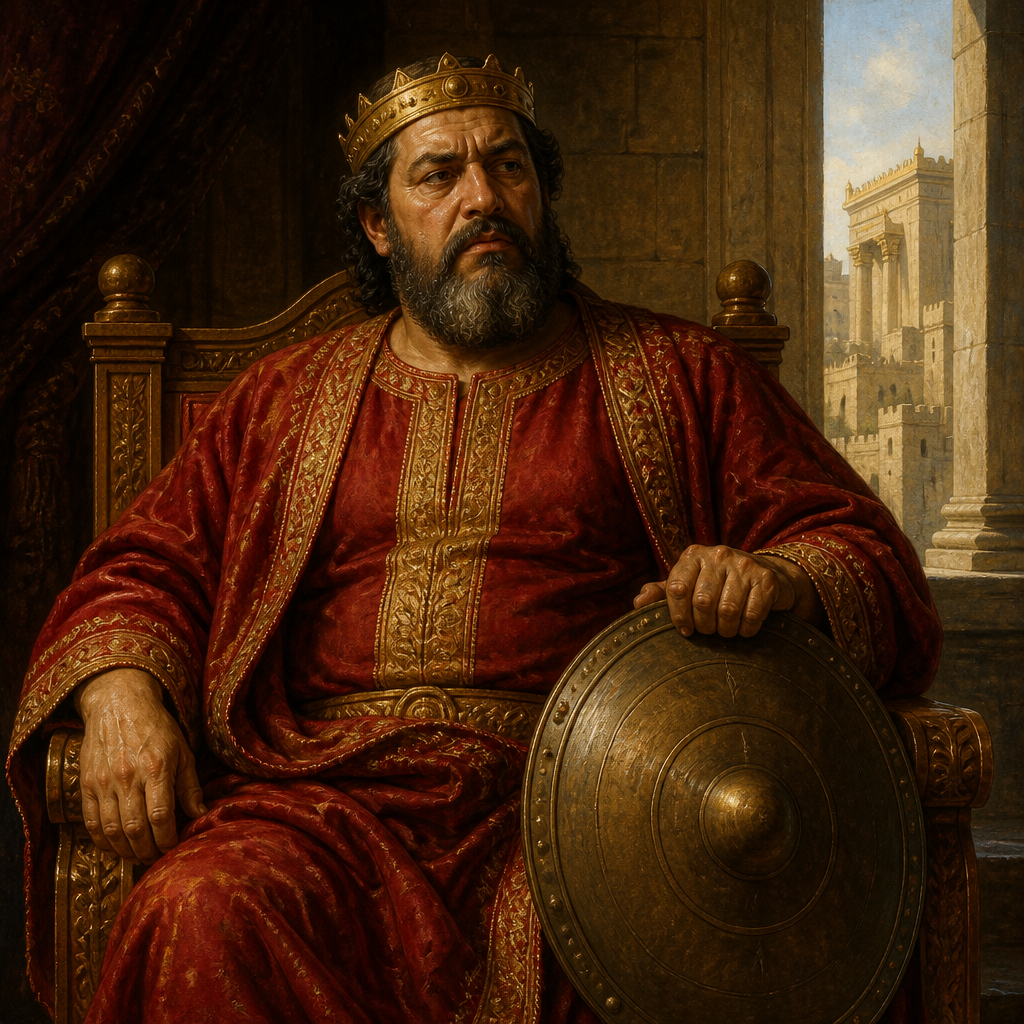 RehoboamThis page
 BasemathSister1 Kings 4:15
Inferred
Reconstructed through Solomon: 1 Kings 12:6 ties Rehoboam to Solomon; 1 Kings 4:15 ties Solomon to Basemath. No verse states the sister link between Rehoboam and Basemath directly.Evidence: 1 Kings 4:15; 1 Kings 12:6
 TaphathSister1 Kings 4:11
Inferred
Reconstructed through Solomon: 1 Kings 12:6 ties Rehoboam to Solomon; 1 Kings 4:11 ties Solomon to Taphath. No verse states the sister link between Rehoboam and Taphath directly.Evidence: 1 Kings 4:11; 1 Kings 12:6
Children
 Abijah, King of JudahSonMatthew 1:7Stated
 Attai, Son of RehoboamSon2 Chronicles 11:18–20Stated
 Jeush, Son of RehoboamSon2 Chronicles 11:18–19Stated
 Shelomith, Child of RehoboamChild2 Chronicles 11:18–20Stated
 Shemariah, Son of RehoboamSon2 Chronicles 11:18–19Stated
 ZahamSon2 Chronicles 11:18–19Stated
 Ziza, Son of RehoboamSon2 Chronicles 11:18–20Stated
Extended family
 Abihail, Daughter of EliabMother-in-law2 Chronicles 11:18Stated
 Jerimoth, Son of DavidFather-in-law2 Chronicles 11:18
Inferred
2 Chronicles 11:18 names Rehoboam and Jerimoth in the same verse but does not state a father-in-law tie between them; the link rests on the surrounding narrative.Evidence: 2 Chronicles 11:18
 Uriel of GibeahFather-in-law1 Kings 11:43
Inferred
No verse names Uriel and Rehoboam together; the son-in-law link is carried from the surrounding genealogy and is not stated in Scripture.Evidence: 1 Kings 11:43
Connected Figures
Family
Father · 1 Kings 12:6
The third king of Israel who built the First Temple in Jerusalem and was renowned for his God-given wisdom and immense wealth during the United Monarchy.
United MonarchyFirst: 2 Samuel 5:14292 versesKing of IsraelJudah
Mother · 1 Kings 14:21
The Ammonite wife of King Solomon and the mother of King Rehoboam during the transition from the United Monarchy to the Divided Monarchy.
Divided MonarchyFirst: 1 Kings 14:213 versesQueen consort of Israel; Queen Mother of Judah
Wife · 2 Chronicles 11:18
A powerful queen mother of Judah and wife of King Rehoboam who was deposed by her grandson Asa for her promotion of Asherah worship.
Divided MonarchyFirst: 1 Kings 15:210 versesQueen Mother (Gebirah)Judah
Wife · 2 Chronicles 11:18
Mahalath was a royal wife of King Rehoboam and a descendant of King David through two distinct lineages.
Divided MonarchyFirst: 2 Chronicles 11:182 versesQueen consortJudah
Son · Matthew 1:7
The second king of the Southern Kingdom of Judah who famously defeated Jeroboam I on Mount Zemaraim to reclaim territory for the Davidic line.
Divided MonarchyFirst: 1 Kings 15:321 versesKing of JudahJudah
Son · 2 Chronicles 11:18–20
Attai was a prince of the Kingdom of Judah, the son of King Rehoboam and his favorite queen, Maacah.
Divided MonarchyFirst: 2 Chronicles 11:204 versesPrince of JudahJudah
Son · 2 Chronicles 11:18–19
Jeush was a prince of the Kingdom of Judah, the son of King Rehoboam and Queen Mahalath, mentioned in the royal genealogies of the Divided Monarchy.
Divided MonarchyFirst: 2 Chronicles 11:193 versesPrince of JudahJudah
Child · 2 Chronicles 11:18–20
Shelomith was the child of King Rehoboam of Judah and his favorite wife, Maacah, mentioned in the genealogical records of the Divided Monarchy.
Son · 2 Chronicles 11:18–19
Shemariah was a prince of the Kingdom of Judah, the son of King Rehoboam and Queen Mahalath.
Divided MonarchyFirst: 2 Chronicles 11:193 versesPrince of JudahJudah
Son · 2 Chronicles 11:18–19
Zaham was a prince of the tribe of Judah, the son of King Rehoboam and grandson of King Solomon, during the era of the Divided Monarchy.
Divided MonarchyFirst: 2 Chronicles 11:193 versesPrince of JudahJudah
Son · 2 Chronicles 11:18–20
A prince of Judah and son of King Rehoboam through his favorite wife Maacah.
Divided MonarchyFirst: 2 Chronicles 11:203 versesPrince of JudahJudah
Sister · 1 Kings 4:15
Basemath was a daughter of King Solomon and the wife of Ahimaaz, one of the twelve district governors in the United Monarchy.
United MonarchyFirst: 1 Kings 4:156 versesPrincess of IsraelJudah
Categories
Mentions by Book
- 1 Kings20
- 1 Chronicles1
- 2 Chronicles27
- Matthew1
Scripture References
All 49 indexed verses, in canonical order, from the Berean Standard Bible.
- 1 Kings 4:11Partial
Ben-abinadab in Naphath-dor (Taphath, a daughter of Solomon, was his wife);
Cited as evidence on a family card; added so References, Key Verses and Mentions by Book share one index.
- 1 Kings 4:15Partial
Ahimaaz in Naphtali (he had married Basemath, a daughter of Solomon);
Cited as evidence on a family card; added so References, Key Verses and Mentions by Book share one index.
- 1 Kings 11:43
And Solomon rested with his fathers and was buried in the city of his father David. And his son Rehoboam reigned in his place.
- 1 Kings 12:1
Then Rehoboam went to Shechem, for all Israel had gone there to make him king.
- 1 Kings 12:3
So they sent for Jeroboam, and he and the whole assembly of Israel came to Rehoboam and said,
- 1 Kings 12:6
Then King Rehoboam consulted with the elders who had served his father Solomon during his lifetime. “How do you advise me to respond to these people?” he asked.
- 1 Kings 12:12
After three days, Jeroboam and all the people returned to Rehoboam, since the king had said, “Come back to me on the third day.”
- 1 Kings 12:14Partial
and spoke to them as the young men had advised, saying, “Whereas my father made your yoke heavy, I will add to your yoke. Whereas my father scourged you with whips, I will scourge you with scorpions.”
Cited as a key verse; added so References, Key Verses and Mentions by Book share one index.
- 1 Kings 12:17
but Rehoboam still reigned over the Israelites living in the cities of Judah.
- 1 Kings 12:18Partial
Then King Rehoboam sent out Adoram, who was in charge of the forced labor, but all Israel stoned him to death. And King Rehoboam mounted his chariot in haste and escaped to Jerusalem.
- 1 Kings 12:21Partial
And when Rehoboam arrived in Jerusalem, he mobilized the whole house of Judah and the tribe of Benjamin—180,000 chosen warriors—to fight against the house of Israel and restore the kingdom to Rehoboam son of Solomon.
- 1 Kings 12:23
“Tell Rehoboam son of Solomon king of Judah, all the house of Judah and Benjamin, and the rest of the people
- 1 Kings 12:27Partial
If these people go up to offer sacrifices in the house of the LORD at Jerusalem, their hearts will return to their lord, Rehoboam king of Judah; then they will kill me and return to Rehoboam king of Judah.”
- 1 Kings 14:21Partial
Meanwhile, Rehoboam son of Solomon reigned in Judah. He was forty-one years old when he became king, and he reigned seventeen years in Jerusalem, the city the LORD had chosen from all the tribes of Israel in which to put His Name. His mother’s name was Naamah the Ammonite.
- 1 Kings 14:25
In the fifth year of Rehoboam’s reign, Shishak king of Egypt attacked Jerusalem.
- 1 Kings 14:27
Then King Rehoboam made bronze shields in their place and committed them to the care of the captains of the guard on duty at the entrance to the royal palace.
- 1 Kings 14:29
As for the rest of the acts of Rehoboam, along with all that he did, are they not written in the Book of the Chronicles of the Kings of Judah?
- 1 Kings 14:30
There was war between Rehoboam and Jeroboam throughout their days.
- 1 Kings 14:31
And Rehoboam rested with his fathers and was buried with them in the City of David; his mother’s name was Naamah the Ammonite. And his son Abijam reigned in his place.
- 1 Kings 15:6
And there was war between the houses of Rehoboam and Jeroboam all the days of Abijam’s life.
- 1 Chronicles 3:10
Solomon’s son was Rehoboam: Abijah was his son, Asa his son, Jehoshaphat his son,
- 2 Chronicles 9:31
And Solomon rested with his fathers and was buried in the city of his father David. And his son Rehoboam reigned in his place.
- 2 Chronicles 10:1
Then Rehoboam went to Shechem, for all Israel had gone there to make him king.
- 2 Chronicles 10:3
So they sent for Jeroboam, and he and all Israel came to Rehoboam and said,
- 2 Chronicles 10:6
Then King Rehoboam consulted with the elders who had served his father Solomon during his lifetime. “How do you advise me to respond to these people?” he asked.
- 2 Chronicles 10:12
After three days, Jeroboam and all the people returned to Rehoboam, since the king had said, “Come back to me on the third day.”
- 2 Chronicles 10:13
And the king answered them harshly. King Rehoboam rejected the advice of the elders
- 2 Chronicles 10:17
but Rehoboam still reigned over the Israelites living in the cities of Judah.
- 2 Chronicles 10:18Partial
Then King Rehoboam sent out Hadoram, who was in charge of the forced labor, but the Israelites stoned him to death. And King Rehoboam mounted his chariot in haste and escaped to Jerusalem.
- 2 Chronicles 11:1Partial
When Rehoboam arrived in Jerusalem, he mobilized the house of Judah and Benjamin—180,000 chosen warriors—to fight against Israel and restore the kingdom to Rehoboam.
- 2 Chronicles 11:3
“Tell Rehoboam son of Solomon king of Judah and all the Israelites in Judah and Benjamin
- 2 Chronicles 11:5
Rehoboam lived in Jerusalem, and he built up cities for defense in Judah.
- 2 Chronicles 11:17
So they strengthened the kingdom of Judah and supported Rehoboam son of Solomon for three years, because they walked for three years in the way of David and Solomon.
- 2 Chronicles 11:18
And Rehoboam married Mahalath, who was the daughter of David’s son Jerimoth and of Abihail, the daughter of Jesse’s son Eliab.
- 2 Chronicles 11:19Partial
She bore sons to him: Jeush, Shemariah, and Zaham.
Cited as evidence on a family card; added so References, Key Verses and Mentions by Book share one index.
- 2 Chronicles 11:20Partial
After her, he married Maacah daughter of Absalom, and she bore to him Abijah, Attai, Ziza, and Shelomith.
Cited as evidence on a family card; added so References, Key Verses and Mentions by Book share one index.
- 2 Chronicles 11:21
Rehoboam loved Maacah daughter of Absalom more than all his wives and concubines. In all, he had eighteen wives and sixty concubines, and he was the father of twenty-eight sons and sixty daughters.
- 2 Chronicles 11:22
Rehoboam appointed Abijah son of Maacah as chief prince among his brothers, intending to make him king.
- 2 Chronicles 12:1
After Rehoboam had established his sovereignty and royal power, he and all Israel with him forsook the Law of the LORD.
- 2 Chronicles 12:2
In the fifth year of Rehoboam’s reign, because they had been unfaithful to the LORD, Shishak king of Egypt attacked Jerusalem
- 2 Chronicles 12:5
Then Shemaiah the prophet came to Rehoboam and the leaders of Judah who had gathered at Jerusalem because of Shishak, and he said to them, “This is what the LORD says: ‘You have forsaken Me; therefore, I have forsaken you into the hand of Shishak.’”
- 2 Chronicles 12:10
Then King Rehoboam made bronze shields in their place and committed them to the care of the captains of the guard on duty at the entrance to the royal palace.
- 2 Chronicles 12:13Partial
Thus King Rehoboam established himself in Jerusalem and reigned. He was forty-one years old when he became king, and he reigned seventeen years in Jerusalem, the city the LORD had chosen from all the tribes of Israel in which to put His Name. His mother’s name was Naamah the Ammonite.
- 2 Chronicles 12:14
And Rehoboam did evil because he did not set his heart to seek the LORD.
Cited as a key verse; added so References, Key Verses and Mentions by Book share one index.
- 2 Chronicles 12:15Partial
Now the acts of Rehoboam, from first to last, are they not written in the records of Shemaiah the Prophet and of Iddo the Seer concerning the genealogies? There was war between Rehoboam and Jeroboam throughout their days.
- 2 Chronicles 12:16
And Rehoboam rested with his fathers and was buried in the City of David. And his son Abijah reigned in his place.
- 2 Chronicles 13:2Partial
and he reigned in Jerusalem three years. His mother’s name was Micaiah daughter of Uriel; she was from Gibeah. And there was war between Abijah and Jeroboam.
Cited as evidence on a family card; added so References, Key Verses and Mentions by Book share one index.
- 2 Chronicles 13:7Partial
Then worthless and wicked men gathered around him to resist Rehoboam son of Solomon when he was young, inexperienced, and unable to resist them.
- Matthew 1:7Partial
Solomon the father of Rehoboam, Rehoboam the father of Abijah, and Abijah the father of Asa.