Jeush, Son of Rehoboam
Who was Jeush, Son of Rehoboam, in the Bible?
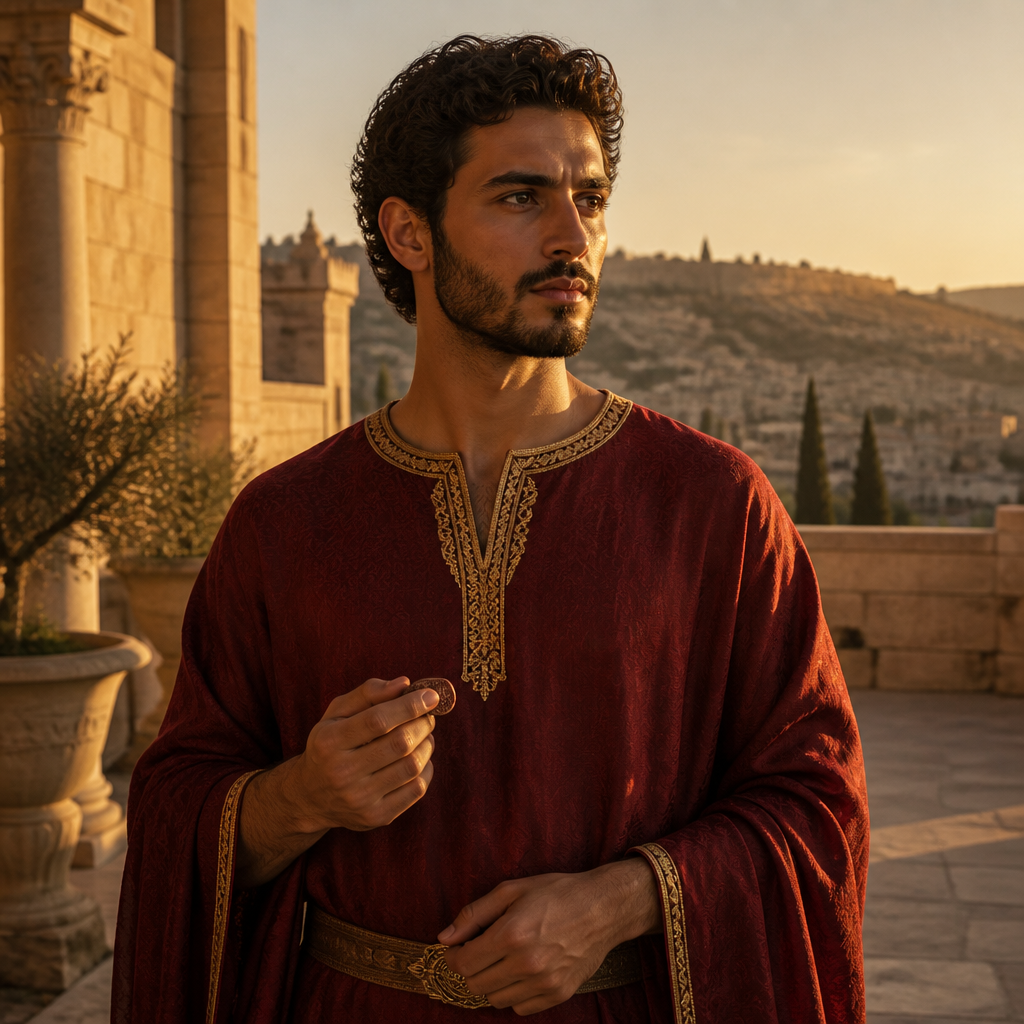
Jeush was a prince of the Kingdom of Judah, the son of King Rehoboam and Queen Mahalath, mentioned in the royal genealogies of the Divided Monarchy.
This is one of 5 people named Jeush in the Bible. See all 5 →
Jeush was a member of the Davidic royal line during the early years of the Divided Monarchy. As the son of King Rehoboam and Mahalath (the granddaughter of David), Jeush occupied a position of significant social and political standing within the southern Kingdom of Judah. His lineage underscored the ongoing consolidation of the Davidic dynasty following the secession of the ten northern tribes.
While the biblical record regarding Jeush is brief, his inclusion in the chronicler's account serves to document the expansion of Rehoboam’s household. He is one of the few named children of the king, highlighting his status as a legitimate heir within the primary royal family branch during a period of intense military and political transition for the nation of Israel.
Background and Family
Jeush appears in the biblical record specifically within the context of King Rehoboam’s domestic life and genealogical record. According to 2 Chronicles 11:18–19, Rehoboam married Mahalath, who was the daughter of Jerimoth (a son of David) and Abihail (the daughter of Eliab, Jesse’s son). This marriage was highly strategic, as it united two distinct branches of King David’s descendants. Jeush was the firstborn son of this union, followed by his brothers Shemariah and Zaham.
Although Rehoboam famously favored his wife Maakah and her son Abijah (who eventually succeeded him), the naming of Jeush and his brothers indicates the initial attempts by Rehoboam to establish a strong, multi-generational household in Jerusalem. The chronicler notes that Rehoboam had eighteen wives and sixty concubines, but specifically singles out the offspring of Mahalath, including Jeush, to establish the royal pedigree.
Major Life Events
The biblical text does not record specific deeds, military exploits, or political offices held by Jeush. His life occurred during the volatile era of the Divided Monarchy, shortly after the death of Solomon (c. 930 BC). During this time, the Kingdom of Judah was under constant threat from the Northern Kingdom of Israel and external powers like Egypt under Shishak. As a son of the king, Jeush would have been part of the royal court that witnessed the fortification of Judah's cities and the religious shifts occurring within the Temple in Jerusalem.
Relationship to Other Biblical Figures
Jeush was a grandson of King Solomon and a great-grandson of King David. His sibling relationship with Abijah (also known as Abijam) is significant, as Abijah would go on to be the next king of Judah. The text in 2 Chronicles 11 suggests that while Jeush was a legitimate son, he was bypassed for the throne in favor of his half-brother Abijah, whom Rehoboam appointed as the chief prince among his brothers to ensure his succession.
Spiritual Significance
The mention of Jeush in the Hebrew Bible serves a primarily genealogical and historical purpose. In the book of Chronicles, genealogies are used to demonstrate God's preservation of the Davidic line despite the rebellion of the northern tribes. Jeush represents the continued fruitfulness of the house of David. His presence in the record confirms that the promise made to David regarding his descendants was being fulfilled, even during the fractured and difficult years of the early Divided Monarchy.
Jeush is significant as a representative of the third generation of the Davidic dynasty after the kingdom's division. His listing in 2 Chronicles 11 serves to validate the lineage of the kings of Judah, emphasizing that the royal house remained intact and productive even after losing the majority of its territory to Jeroboam I.
Theological study of Jeush often focuses on his role within the 'favored son' motif common in scripture; despite being the son of a high-status wife (Mahalath), he was not the son chosen to lead the nation. This reflects the recurring biblical theme of divine or paternal sovereign choice in succession, regardless of birth order or maternal status.
Frequently Asked Questions
Who were the parents of Jeush?
Jeush was the son of King Rehoboam of Judah and his wife Mahalath, who was a granddaughter of King David.
In what book of the Bible is Jeush mentioned?
Jeush is mentioned exclusively in the book of 2 Chronicles, specifically in chapter 11, verse 19.
Did Jeush ever become king of Judah?
No. Although he was a son of King Rehoboam, his half-brother Abijah was chosen by their father to be the successor to the throne.
Who were the brothers of Jeush?
According to 2 Chronicles 11:19, his full brothers were Shemariah and Zaham. He also had many half-siblings, most notably King Abijah.
What does the name Jeush mean?
The name Jeush (יְעוּשׁ) is generally understood in Hebrew to mean 'he comes to help' or 'assembler.'
Family & Relationships
Parents
 RehoboamFather2 Chronicles 11:18–19Stated
 Mahalath, Wife of RehoboamMother2 Chronicles 11:18–19Stated
 Jeush, Son of RehoboamThis page
 Abijah, King of JudahBrother2 Chronicles 11:18
Inferred
No verse names Jeush and Abijah together; the brother link is carried from the surrounding genealogy and is not stated in Scripture.Evidence: 2 Chronicles 11:18; Matthew 1:7
 Attai, Son of RehoboamBrother2 Chronicles 11:18–20Stated
 Shelomith, Child of RehoboamSibling2 Chronicles 11:18–20Stated
 Shemariah, Son of RehoboamBrother2 Chronicles 11:18–19Stated
 ZahamBrother2 Chronicles 11:18–19Stated
 Ziza, Son of RehoboamBrother2 Chronicles 11:18–20Stated
Connected Figures
Family
Father · 2 Chronicles 11:18–19
The son of Solomon and grandson of David, Rehoboam was the first king of Judah following the division of the United Monarchy of Israel.
United MonarchyFirst: 1 Kings 11:4349 versesKing of JudahJudah
Mother · 2 Chronicles 11:18–19
Mahalath was a royal wife of King Rehoboam and a descendant of King David through two distinct lineages.
Divided MonarchyFirst: 2 Chronicles 11:182 versesQueen consortJudah
Brother · 2 Chronicles 11:18
The second king of the Southern Kingdom of Judah who famously defeated Jeroboam I on Mount Zemaraim to reclaim territory for the Davidic line.
Divided MonarchyFirst: 1 Kings 15:321 versesKing of JudahJudah
Brother · 2 Chronicles 11:18–20
Attai was a prince of the Kingdom of Judah, the son of King Rehoboam and his favorite queen, Maacah.
Divided MonarchyFirst: 2 Chronicles 11:204 versesPrince of JudahJudah
Sibling · 2 Chronicles 11:18–20
Shelomith was the child of King Rehoboam of Judah and his favorite wife, Maacah, mentioned in the genealogical records of the Divided Monarchy.
Brother · 2 Chronicles 11:18–19
Shemariah was a prince of the Kingdom of Judah, the son of King Rehoboam and Queen Mahalath.
Divided MonarchyFirst: 2 Chronicles 11:193 versesPrince of JudahJudah
Brother · 2 Chronicles 11:18–19
Zaham was a prince of the tribe of Judah, the son of King Rehoboam and grandson of King Solomon, during the era of the Divided Monarchy.
Divided MonarchyFirst: 2 Chronicles 11:193 versesPrince of JudahJudah
Brother · 2 Chronicles 11:18–20
A prince of Judah and son of King Rehoboam through his favorite wife Maacah.
Divided MonarchyFirst: 2 Chronicles 11:203 versesPrince of JudahJudah
Categories
Mentions by Book
- 2 Chronicles3
Scripture References
All 3 indexed verses, in canonical order, from the Berean Standard Bible.
2 Chronicles · 3
- 2 Chronicles 11:18Partial
And Rehoboam married Mahalath, who was the daughter of David’s son Jerimoth and of Abihail, the daughter of Jesse’s son Eliab.
Cited as evidence on a family card; added so References, Key Verses and Mentions by Book share one index.
- 2 Chronicles 11:19
She bore sons to him: Jeush, Shemariah, and Zaham.
- 2 Chronicles 11:20Partial
After her, he married Maacah daughter of Absalom, and she bore to him Abijah, Attai, Ziza, and Shelomith.
Cited as evidence on a family card; added so References, Key Verses and Mentions by Book share one index.
Others Named Jeush
Compare all 5 bearers →Jeush, Son of Eshek1 Chronicles 8:39
A Benjamite descendant of King Saul and the second son of Eshek, noted in the genealogies of the Divided Monarchy.
Jeush, Son of EsauGenesis 36:5
A son of Esau and Oholibamah who became a prominent clan leader and chief among the Edomites in the land of Seir.
Jeush, Levite of the Egypt and Wilderness Era1 Chronicles 23:10
A Levite descendant of Gershon who, due to having few descendants, was merged into a single census unit with his brother Beriah during the Davidic reorganization.
Jeush, Son of Bilhan1 Chronicles 7:10
Jeush was a prominent member of the tribe of Benjamin and one of the seven sons of Bilhan recorded in the post-exilic genealogies of Israel.