Ahab, King of Israel
Who was Ahab, King of Israel, in the Bible?
The seventh king of the northern kingdom of Israel, known for his military prowess, his marriage to Jezebel, and his intense spiritual conflict with the prophet Elijah.
This is one of 2 people named Ahab in the Bible. See all 2 →
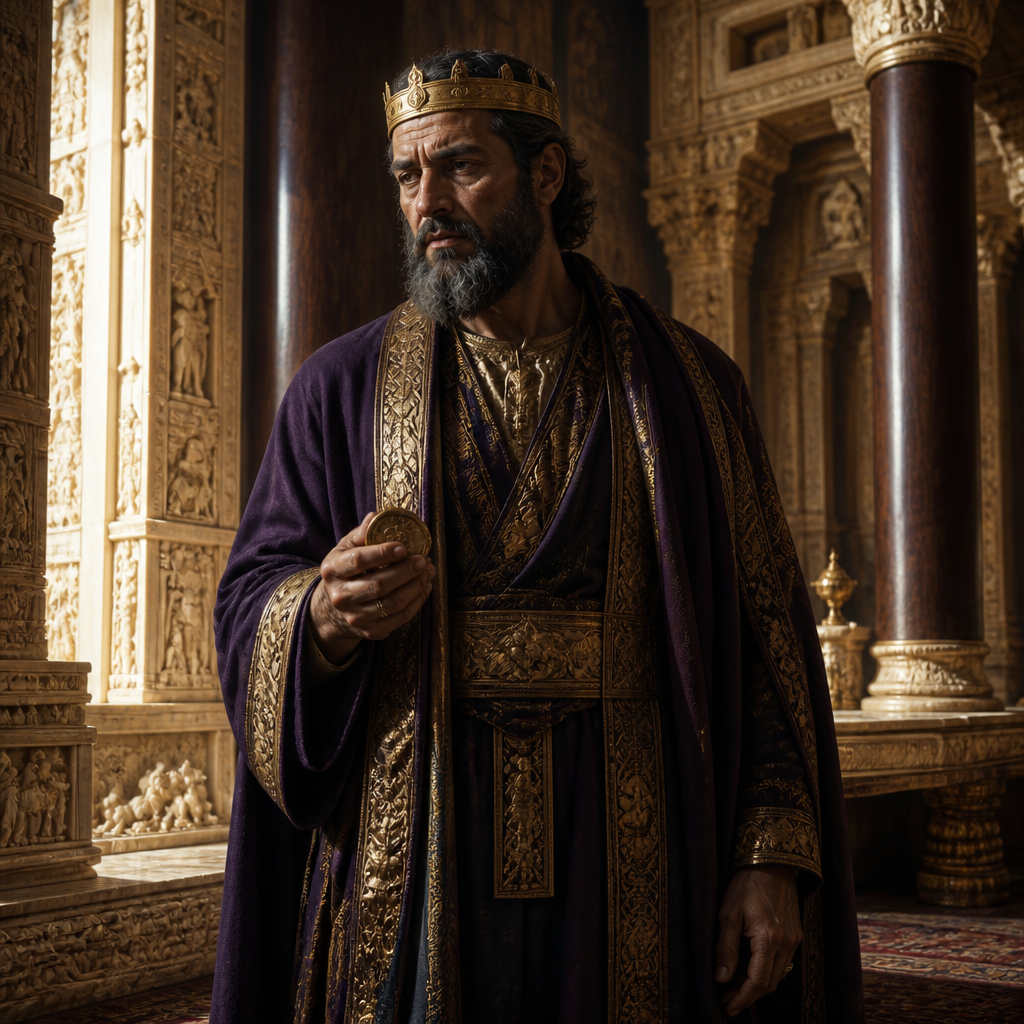
Ahab, the son of Omri, reigned as the seventh king of the northern kingdom of Israel for twenty-two years, beginning in the thirty-eighth year of King Asa of Judah (c. 874–853 BC). His reign is documented extensively in the books of 1 Kings and 2 Chronicles, where he is characterized as a complex figure—a capable builder and military leader who nevertheless became the biblical archetype for apostasy and royal corruption. The biblical narrative focuses heavily on the religious tension of his era, as Ahab’s marriage to the Phoenician princess Jezebel led to the formal institutionalization of Baal worship in Israel.
During his tenure, Ahab transformed Samaria into a major center of power, constructing an 'ivory palace' and various fortified cities. However, his political and architectural successes were overshadowed by his repeated confrontations with the prophet Elijah. The biblical record evaluates Ahab as the king who 'did more to provoke the Lord, the God of Israel, to anger than all the kings of Israel before him.' His reign ended in a dramatic battle at Ramoth-gilead, fulfilling a prophetic warning of judgment against his dynasty.
Background and Family
Ahab was the son of Omri, the founder of the Omride dynasty, which established Samaria as the capital of the northern kingdom. Upon his father's death, Ahab ascended the throne (1 Kings 16:28-29). His most significant personal and political alliance was his marriage to Jezebel, daughter of Ethbaal, king of the Sidonians. This union was likely intended to strengthen trade and security between Israel and Phoenicia, but it brought profound religious changes. Ahab sired several children who would later hold positions of power, including his successors Ahaziah and Joram (also called Jehoram), and a daughter, Athaliah, who became queen of Judah. Through these children, the influence of Ahab’s household extended into the southern kingdom of Judah, leading to a period of inter-monarchal cooperation and shared religious practices.
Major Life Events
The Rise of Baalism and the Drought
Ahab’s reign is defined by the official introduction of the worship of Baal and Asherah in Israel. He built a temple and an altar for Baal in Samaria (1 Kings 16:32). In response, the prophet Elijah declared a severe multi-year drought as a divine judgment against this idolatry. During this crisis, Ahab demonstrated a desperate concern for his kingdom’s survival, personally searching for grass to keep his livestock alive while simultaneously seeking Elijah's life. The conflict culminated on Mount Carmel, where Elijah challenged the prophets of Baal to a public demonstration of power. Despite Ahab’s presence at the event, the subsequent fire from heaven and the execution of the Baal prophets did not lead to a lasting repentance on his part.
The Naboth Scandal
One of the most revealing episodes of Ahab’s character involves a vineyard in Jezreel owned by a man named Naboth. Ahab desired the land for a vegetable garden, but Naboth refused to sell it, citing the Mosaic Law regarding ancestral inheritance. Ahab became 'sullen and angry,' but it was Jezebel who orchestrated Naboth’s judicial murder to seize the land. When Ahab went to take possession of the vineyard, Elijah met him with a devastating prophecy: the house of Ahab would be entirely cut off, and Ahab’s own blood would be licked by dogs in the same place Naboth died. Notably, Ahab responded with genuine, if temporary, humility—tearing his clothes and fasting—which led God to delay the destruction of his house until the days of his son.
Military Conflict and Death
Ahab was an active military commander. He successfully defended Samaria against Ben-hadad II of Aram, though he was later rebuked by a prophet for showing leniency to the defeated Aramean king. His final campaign occurred when he joined forces with King Jehoshaphat of Judah to reclaim Ramoth-gilead. Despite the warnings of the prophet Micaiah, who predicted Ahab’s fall, Ahab entered the battle in disguise. A 'random' arrow struck him between the joints of his armor. He remained propped up in his chariot throughout the day, watching the battle, and died at sunset. His blood was washed from his chariot at the pool of Samaria, where dogs licked it up, exactly as Elijah had foretold.
Relationship to Other Biblical Figures
Ahab’s life was inextricably linked to Elijah, whom he famously called his 'enemy' and the 'troubler of Israel.' Their relationship represents the classic struggle between theocratic authority and royal power. Ahab also maintained a unique, friendly alliance with Jehoshaphat of Judah, a relationship sealed by the marriage of their children. This alliance was controversial, as it brought the spiritual corruption of Ahab’s house into the Davidic line. Within his own court, Ahab relied on Obadiah, a high-ranking official who, despite Ahab’s apostasy, remained a secret and faithful worshiper of Yahweh.
Spiritual Significance
Ahab serves as a cautionary figure regarding the dangers of syncretism and the influence of ungodly counsel. The author of Kings notes that there was 'never one like Ahab' in terms of his devotion to evil, specifically highlighting that he was 'incited by his wife Jezebel' (1 Kings 21:25). His legacy remained a reference point for centuries; even the prophet Micah, writing long after Ahab's death, cited the 'practices of Ahab’s house' as a reason for the coming judgment on Judah (Micah 6:16). The destruction of his entire house by Jehu later served as the definitive biblical example of the total fulfillment of divine prophecy against corrupt leadership.
Theologically, Ahab represents the peak of institutionalized rebellion against the Covenant in the Northern Kingdom. While previous kings like Jeroboam I had created alternative worship sites, Ahab went further by attempting to replace the worship of Yahweh with the Phoenician cult of Baal. His story underscores the prophetic role as the conscience of the monarchy; the presence of Elijah and Micaiah highlights that God remains the true Sovereign over Israel, capable of judging even the most powerful kings.
Furthermore, Ahab’s brief moment of repentance after the Naboth incident provides a significant insight into the nature of divine mercy. Even for a man described as uniquely evil, God responded to his humility by delaying the promised judgment. However, his ultimate death at Ramoth-gilead reinforces the biblical theme that royal power cannot circumvent divine word, and that alliances with the ungodly—as seen in Jehoshaphat’s narrow escape—bring peril to the faithful.
Frequently Asked Questions
Why did Ahab want Naboth’s vineyard?
Ahab wanted the vineyard because it was located next to his palace in Jezreel, and he intended to convert it into a vegetable garden. When Naboth refused to sell it due to the religious laws regarding family inheritance, Ahab's wife Jezebel had Naboth falsely accused and executed so Ahab could take the land.
How did Ahab die?
Ahab died in battle against the Arameans at Ramoth-gilead. Although he disguised himself to avoid being targeted, a soldier drew his bow at random and struck Ahab between the sections of his armor. He bled out in his chariot and died that evening.
Was Ahab a successful king in secular terms?
Yes. The Bible mentions he was a prolific builder, including an 'ivory palace' and several cities. He also led a powerful military, successfully defending Israel against Ben-hadad of Aram and maintaining a dominant political alliance with the kingdom of Judah.
What was Ahab’s relationship with the prophet Elijah?
It was one of constant conflict. Ahab blamed Elijah for the drought and famine in the land, calling him the 'troubler of Israel.' Elijah, in turn, confronted Ahab for his idolatry and the murder of Naboth, eventually prophesying the total destruction of Ahab's family line.
What happened to Ahab’s family after his death?
His son Ahaziah succeeded him briefly, followed by another son, Joram. Eventually, as prophesied by Elijah, the commander Jehu led a revolt that resulted in the deaths of Joram, Jezebel, and all seventy of Ahab's remaining male descendants, ending the Omride dynasty.
Family & Relationships
Parents
 Omri, King of IsraelFather1 Kings 16:28Stated
 JezebelWife1 Kings 21:25Stated
 Ahab, King of IsraelThis page
Children
 Ahaziah, Son of AhabSon1 Kings 22:40Stated
 Joash, Son of AhabSon1 Kings 16:28
Inferred
No verse names Ahab and Joash together; the son link is carried from the surrounding genealogy and is not stated in Scripture.Evidence: 1 Kings 16:28
 Athaliah, Queen of JudahDaughter2 Kings 3:1
Inferred
Reconstructed through Joram: 2 Chronicles 22:11 ties Athaliah to Jehoram (itself an inferred link); 2 Kings 3:1 ties Jehoram to Ahab. No verse states the father link between Athaliah and Ahab directly.Evidence: 2 Kings 3:1; 2 Kings 8:16; 2 Kings 8:25; 2 Kings 8:28; 2 Chronicles 22:11
 Joram, Son of Ahab and King of IsraelSon2 Kings 3:1Stated
Connected Figures
Family
Father · 1 Kings 16:28
The sixth king of the northern kingdom of Israel, Omri was a former military commander who founded a powerful dynasty and established Samaria as the nation's permanent capital.
Divided MonarchyFirst: 1 Kings 16:1614 versesKing of Israel, Army Commander
Wife · 1 Kings 21:25
The Phoenician queen of Israel and wife of Ahab who systematically persecuted Yahweh's prophets and promoted the state worship of Baal.
Divided MonarchyFirst: 1 Kings 16:3130 versesQueen Consort of Israel
Son · 1 Kings 22:40
The eighth king of the northern kingdom of Israel who reigned for two years and was known for his wickedness and his fatal injury in a palace fall.
Divided MonarchyFirst: 1 Kings 22:4012 versesKing of Israel
Son · 1 Kings 16:28
A prince of the Northern Kingdom of Israel and son of King Ahab who held custodial authority over political prisoners during his father's reign.
Divided MonarchyFirst: 1 Kings 22:267 versesRoyal Prince and Deputy
Daughter · 2 Kings 3:1
The only woman to reign as a monarch over Judah, Athaliah was the daughter of Ahab and the wife of Jehoram who attempted to exterminate the Davidic line.
Divided MonarchyFirst: 2 Kings 8:2620 versesQueen Regnant of Judah
Son · 2 Kings 3:1
Joram was the ninth king of the northern kingdom of Israel, a son of Ahab and Jezebel, whose reign ended the Omride dynasty during Jehu's bloody coup.
Divided MonarchyFirst: 2 Kings 1:1725 versesKing of Israel
Categories
Mentions by Book
- 1 Kings47
- 2 Kings22
- 2 Chronicles13
- Micah1
Scripture References
All 83 indexed verses, in canonical order, from the Berean Standard Bible.
- 1 Kings 16:28
And Omri rested with his fathers and was buried in Samaria, and his son Ahab reigned in his place.
- 1 Kings 16:29Partial
In the thirty-eighth year of Asa’s reign over Judah, Ahab son of Omri became king of Israel, and he reigned in Samaria twenty-two years.
- 1 Kings 16:30
However, Ahab son of Omri did evil in the sight of the LORD, more than all who were before him.
- 1 Kings 16:33Partial
Then he set up an Asherah pole. Thus Ahab did more to provoke the LORD, the God of Israel, to anger than all the kings of Israel before him.
- 1 Kings 17:1
Now Elijah the Tishbite, who was among the settlers of Gilead, said to Ahab, “As surely as the LORD, the God of Israel, lives, before whom I stand, there will be neither dew nor rain in these years except at my word!”
- 1 Kings 18:1
After a long time, in the third year of the drought, the word of the LORD came to Elijah: “Go and present yourself to Ahab, and I will send rain upon the face of the earth.”
- 1 Kings 18:2
So Elijah went to present himself to Ahab. The famine was severe in Samaria,
- 1 Kings 18:3
and Ahab summoned Obadiah, who was in charge of the palace. (Now Obadiah greatly feared the LORD,
- 1 Kings 18:5
Then Ahab said to Obadiah, “Go throughout the land to every spring and every valley. Perhaps we will find grass to keep the horses and mules alive so that we will not have to destroy any livestock.”
- 1 Kings 18:6
So they divided the land to explore. Ahab went one way by himself, and Obadiah went the other way by himself.
- 1 Kings 18:9
But Obadiah replied, “How have I sinned, that you are handing your servant over to Ahab to put me to death?
- 1 Kings 18:12
I do not know where the Spirit of the LORD may carry you off when I leave you. Then when I go and tell Ahab and he does not find you, he will kill me. But I, your servant, have feared the LORD from my youth.
- 1 Kings 18:16Partial
So Obadiah went to inform Ahab, who went to meet Elijah.
- 1 Kings 18:17Partial
When Ahab saw Elijah, he said to him, “Is that you, O troubler of Israel?”
- 1 Kings 18:20
So Ahab summoned all the Israelites and assembled the prophets on Mount Carmel.
- 1 Kings 18:41
And Elijah said to Ahab, “Go up, eat and drink, for there is the sound of a heavy rain.”
- 1 Kings 18:42
So Ahab went up to eat and drink. But Elijah climbed to the summit of Carmel, bent down on the ground, and put his face between his knees.
- 1 Kings 18:44
On the seventh time the servant reported, “There is a cloud as small as a man’s hand rising from the sea.” And Elijah replied, “Go and tell Ahab, ‘Prepare your chariot and go down before the rain stops you.’”
- 1 Kings 18:45
Meanwhile, the sky grew dark with clouds and wind, and a heavy rain began to fall. So Ahab rode away and went to Jezreel.
- 1 Kings 18:46
And the hand of the LORD came upon Elijah, and he tucked his cloak into his belt and ran ahead of Ahab all the way to Jezreel.
- 1 Kings 19:1
Now Ahab told Jezebel everything that Elijah had done and how he had killed all the prophets with the sword.
- 1 Kings 20:2
Then he sent messengers into the city to Ahab king of Israel,
- 1 Kings 20:13
Meanwhile a prophet approached Ahab king of Israel and declared, “This is what the LORD says: ‘Do you see this entire great army? Behold, I will deliver it into your hand this very day, and you will know that I am the LORD.’”
- 1 Kings 20:14
“By whom?” Ahab asked. And the prophet replied, “This is what the LORD says: ‘By the young officers of the district governors.’” “Who will start the battle?” asked Ahab. “You will,” answered the prophet.
- 1 Kings 21:1
Some time after these events, Naboth the Jezreelite owned a vineyard in Jezreel next to the palace of Ahab king of Samaria.
- 1 Kings 21:2
So Ahab said to Naboth, “Give me your vineyard to use as a vegetable garden, since it is next to my palace. I will give you a better vineyard in its place—or if you prefer, I will give you its value in silver.”
- 1 Kings 21:3
But Naboth replied, “The LORD forbid that I should give you the inheritance of my fathers.”
- 1 Kings 21:4
So Ahab went to his palace, sullen and angry because Naboth the Jezreelite had told him, “I will not give you the inheritance of my fathers.” He lay down on his bed, turned his face away, and refused to eat.
- 1 Kings 21:8
Then Jezebel wrote letters in Ahab’s name, sealed them with his seal, and sent them to the elders and nobles who lived with Naboth in his city.
- 1 Kings 21:15
When Jezebel heard that Naboth had been stoned to death, she said to Ahab, “Get up and take possession of the vineyard of Naboth the Jezreelite, who refused to give it to you for silver. For Naboth is no longer alive, but dead.”
- 1 Kings 21:16Partial
And when Ahab heard that Naboth was dead, he got up and went down to take possession of the vineyard of Naboth the Jezreelite.
- 1 Kings 21:18
“Get up and go down to meet Ahab king of Israel, who is in Samaria. See, he is in the vineyard of Naboth, where he has gone to take possession of it.
- 1 Kings 21:20
When Elijah arrived, Ahab said to him, “So you have found me out, my enemy.” He replied, “I have found you out because you have sold yourself to do evil in the sight of the LORD.
- 1 Kings 21:21
This is what the LORD says: ‘I will bring calamity on you and consume your descendants; I will cut off from Ahab every male in Israel, both slave and free.
- 1 Kings 21:24
Anyone belonging to Ahab who dies in the city will be eaten by dogs, and anyone who dies in the field will be eaten by the birds of the air.”
- 1 Kings 21:25
(Surely there was never one like Ahab, who sold himself to do evil in the sight of the LORD, incited by his wife Jezebel.
- 1 Kings 21:27
When Ahab heard these words, he tore his clothes, put on sackcloth, and fasted. He lay down in sackcloth and walked around meekly.
- 1 Kings 21:29
“Have you seen how Ahab has humbled himself before Me? Because he has humbled himself before Me, I will not bring the calamity during his days, but I will bring it upon his house in the days of his son.”
- 1 Kings 22:20
And the LORD said, ‘Who will entice Ahab to march up and fall at Ramoth-gilead?’ And one suggested this, and another that.
- 1 Kings 22:26Partial
And the king of Israel declared, “Take Micaiah and return him to Amon the governor of the city and to Joash the king’s son,
Cited as evidence on a family card; added so References, Key Verses and Mentions by Book share one index.
- 1 Kings 22:34Partial
However, a certain man drew his bow without taking special aim, and he struck the king of Israel between the joints of his armor. So the king said to his charioteer, “Turn around and take me out of the battle, for I am badly wounded!”
Cited as a key verse; added so References, Key Verses and Mentions by Book share one index.
- 1 Kings 22:35Partial
The battle raged throughout that day, and the king was propped up in his chariot facing the Arameans. And the blood from his wound ran out onto the floor of the chariot, and that evening he died.
Cited as a key verse; added so References, Key Verses and Mentions by Book share one index.
- 1 Kings 22:39
As for the rest of the acts of Ahab, along with all his accomplishments and the ivory palace and all the cities he built, are they not written in the Book of the Chronicles of the Kings of Israel?
- 1 Kings 22:40
And Ahab rested with his fathers, and his son Ahaziah reigned in his place.
- 1 Kings 22:41
In the fourth year of Ahab’s reign over Israel, Jehoshaphat son of Asa became king of Judah.
- 1 Kings 22:49
At that time Ahaziah son of Ahab said to Jehoshaphat, “Let my servants sail with your servants,” but Jehoshaphat refused.
- 1 Kings 22:51
In the seventeenth year of Jehoshaphat’s reign over Judah, Ahaziah son of Ahab became king of Israel, and he reigned in Samaria two years.
- 2 Kings 1:1
After the death of Ahab, Moab rebelled against Israel.
- 2 Kings 3:1
In the eighteenth year of Jehoshaphat’s reign over Judah, Jehoram son of Ahab became king of Israel, and he reigned in Samaria twelve years.
- 2 Kings 3:5
But after the death of Ahab, the king of Moab rebelled against the king of Israel.
- 2 Kings 8:16
In the fifth year of the reign of Joram son of Ahab over Israel, Jehoram son of Jehoshaphat succeeded his father as king of Judah.
- 2 Kings 8:18Partial
And Jehoram walked in the ways of the kings of Israel, just as the house of Ahab had done. For he married a daughter of Ahab and did evil in the sight of the LORD.
- 2 Kings 8:25
In the twelfth year of the reign of Joram son of Ahab over Israel, Ahaziah son of Jehoram became king of Judah.
- 2 Kings 8:27Partial
And Ahaziah walked in the ways of the house of Ahab and did evil in the sight of the LORD like the house of Ahab, for he was a son-in-law of the house of Ahab.
- 2 Kings 8:28
Then Ahaziah went with Joram son of Ahab to fight against Hazael king of Aram at Ramoth-gilead, and the Arameans wounded Joram.
- 2 Kings 8:29
So King Joram returned to Jezreel to recover from the wounds that the Arameans had inflicted on him at Ramah when he fought against Hazael king of Aram. Then Ahaziah son of Jehoram king of Judah went down to Jezreel to visit Joram son of Ahab, because Joram had been wounded.
- 2 Kings 9:7
And you are to strike down the house of your master Ahab, so that I may avenge the blood of My servants the prophets and the blood of all the servants of the LORD shed by the hand of Jezebel.
- 2 Kings 9:8Partial
The whole house of Ahab will perish, and I will cut off from Ahab every male, both slave and free, in Israel.
- 2 Kings 9:9
I will make the house of Ahab like the houses of Jeroboam son of Nebat and Baasha son of Ahijah.
- 2 Kings 9:25
And Jehu said to Bidkar his officer, “Pick him up and throw him into the field of Naboth the Jezreelite. For remember that when you and I were riding together behind his father Ahab, the LORD lifted up this burden against him:
- 2 Kings 9:29
(In the eleventh year of Joram son of Ahab, Ahaziah had become king over Judah.)
- 2 Kings 10:1Partial
Now Ahab had seventy sons in Samaria. So Jehu wrote letters and sent them to Samaria to the officials of Jezreel, to the elders, and to the guardians of the sons of Ahab, saying:
- 2 Kings 10:10
Know, then, that not a word the LORD has spoken against the house of Ahab will fail, for the LORD has done what He promised through His servant Elijah.”
- 2 Kings 10:11
So Jehu killed everyone in Jezreel who remained of the house of Ahab, as well as all his great men and close friends and priests, leaving him without a single survivor.
- 2 Kings 10:17
When Jehu came to Samaria, he struck down everyone belonging to Ahab who remained there, until he had destroyed them, according to the word that the LORD had spoken to Elijah.
- 2 Kings 10:18
Then Jehu brought all the people together and said, “Ahab served Baal a little, but Jehu will serve him a lot.
- 2 Kings 10:30
Nevertheless, the LORD said to Jehu, “Because you have done well in carrying out what is right in My sight and have done to the house of Ahab all that was in My heart, four generations of your sons will sit on the throne of Israel.”
- 2 Kings 21:3
For he rebuilt the high places that his father Hezekiah had destroyed, and he raised up altars for Baal. He made an Asherah pole, as King Ahab of Israel had done, and he worshiped and served all the host of heaven.
- 2 Kings 21:13
I will stretch out over Jerusalem the measuring line used against Samaria and the plumb line used against the house of Ahab, and I will wipe out Jerusalem as one wipes out a bowl—wiping it and turning it upside down.
- 2 Chronicles 18:1
Now Jehoshaphat had an abundance of riches and honor, and he allied himself with Ahab by marriage.
- 2 Chronicles 18:2Partial
And some years later he went down to visit Ahab in Samaria, where Ahab sacrificed many sheep and cattle for him and the people with him and urged him to march up to Ramoth-gilead.
- 2 Chronicles 18:3
Ahab king of Israel asked Jehoshaphat king of Judah, “Will you go with me against Ramoth-gilead?” And Jehoshaphat replied, “I am as you are, and my people are your people; we will join you in the war.”
- 2 Chronicles 18:19
And the LORD said, ‘Who will entice Ahab king of Israel to march up and fall at Ramoth-gilead?’ And one suggested this, and another that.
- 2 Chronicles 21:6Partial
And Jehoram walked in the ways of the kings of Israel, just as the house of Ahab had done. For he married a daughter of Ahab and did evil in the sight of the LORD.
- 2 Chronicles 21:13
but you have walked in the ways of the kings of Israel and have caused Judah and the people of Jerusalem to prostitute themselves, just as the house of Ahab prostituted itself. You have also killed your brothers, your father’s family, who were better than you.
- 2 Chronicles 22:3
Ahaziah also walked in the ways of the house of Ahab, for his mother was his counselor in wickedness.
- 2 Chronicles 22:4
And he did evil in the sight of the LORD, as the house of Ahab had done, for to his destruction they were his counselors after the death of his father.
- 2 Chronicles 22:5
Ahaziah also followed their counsel and went with Joram son of Ahab king of Israel to fight against Hazael king of Aram at Ramoth-gilead. But the Arameans wounded Joram.
- 2 Chronicles 22:6
So he returned to Jezreel to recover from the wounds they had inflicted on him at Ramah when he fought against Hazael king of Aram. Then Ahaziah son of Jehoram king of Judah went down to Jezreel to visit Joram son of Ahab, because Joram had been wounded.
- 2 Chronicles 22:7
Ahaziah’s downfall came from God when he went to visit Joram. When Ahaziah arrived, he went out with Joram to meet Jehu son of Nimshi, whom the LORD had anointed to destroy the house of Ahab.
- 2 Chronicles 22:8
So while Jehu was executing judgment on the house of Ahab, he found the rulers of Judah and the sons of Ahaziah’s brothers who were serving Ahaziah, and he killed them.
- 2 Chronicles 22:11Partial
But Jehoshabeath daughter of King Jehoram took Joash son of Ahaziah and stole him away from among the sons of the king who were being murdered, and she put him and his nurse in a bedroom. Because Jehoshabeath, the daughter of King Jehoram and the wife of Jehoiada the priest, was Ahaziah’s sister, she hid Joash from Athaliah so that she could not kill him.
Cited as evidence on a family card; added so References, Key Verses and Mentions by Book share one index.
- Micah 6:16
You have kept the statutes of Omri and all the practices of Ahab’s house; you have followed their counsel. Therefore I will make you a desolation, and your inhabitants an object of contempt; you will bear the scorn of the nations.”
Others Named Ahab
Compare all 2 bearers →Ahab, son of KolaiahJeremiah 29:21
A false prophet among the Babylonian exiles who was executed by King Nebuchadnezzar for prophesying lies and committing adultery.