Jezebel
Who was Jezebel in the Bible?
The Phoenician queen of Israel and wife of Ahab who systematically persecuted Yahweh's prophets and promoted the state worship of Baal.
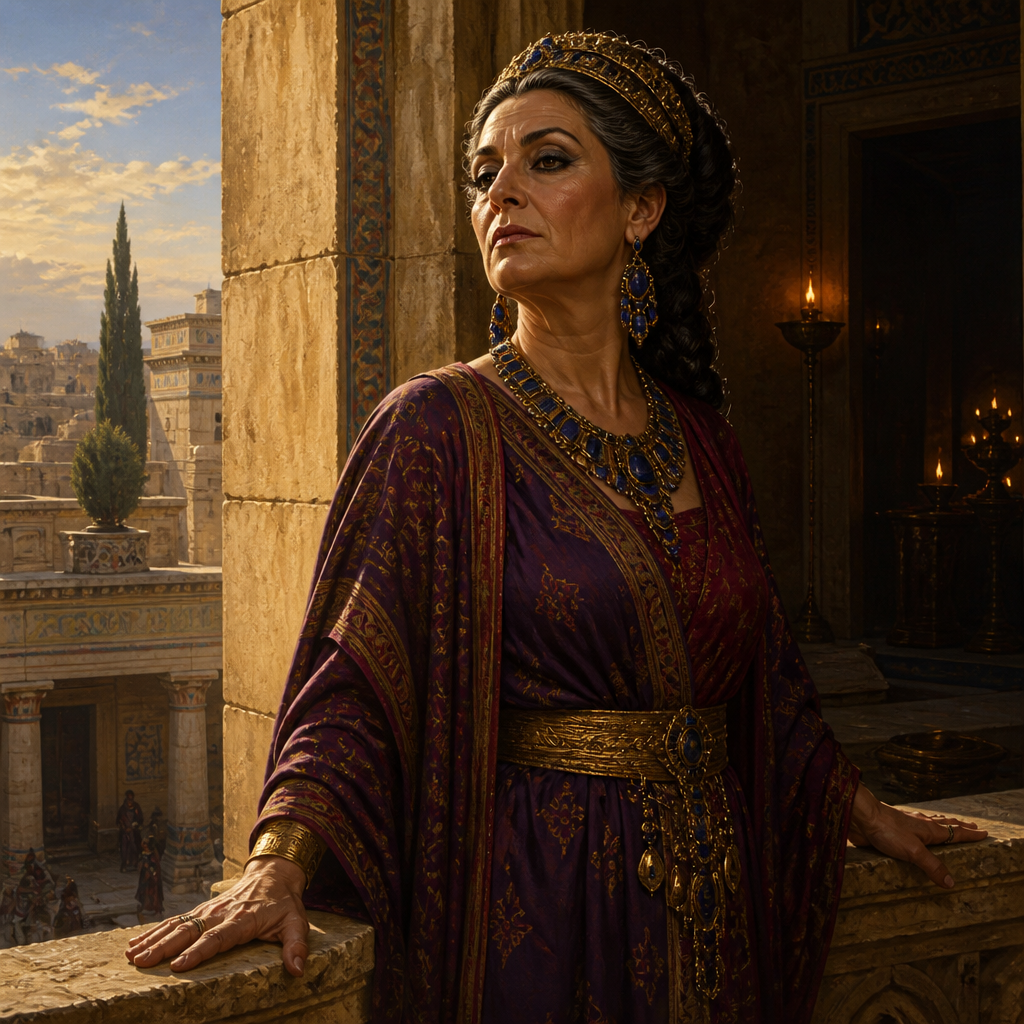
Jezebel was a Phoenician princess, the daughter of Ethbaal, King of the Sidonians, who became the queen consort of King Ahab of Israel during the 9th century BC. Her arrival in the Northern Kingdom of Israel marked a significant religious turning point, as she aggressively sought to replace the worship of Yahweh with the Phoenician cults of Baal and Asherah. She is characterized in the biblical narrative as a powerful, ruthless, and highly influential figure who dominated her husband and exerted considerable control over the religious and political life of the nation.
Her legacy is defined by her fierce opposition to the prophets of God, most notably Elijah, and her disregard for the traditional land-tenure laws of Israel. Her actions led to a direct confrontation between the monotheism of Israel and the paganism of her native Sidon. The biblical record culminates in a graphic account of her violent death during the coup of Jehu, fulfilling the prophecies spoken against her house by Elijah.
Background and Family
Jezebel entered the biblical narrative through her marriage to Ahab, the son of Omri and King of Israel. According to 1 Kings 16:31, this marriage was a strategic alliance; her father, Ethbaal, was the King of the Sidonians (Phoenicians). This union was intended to cement political and economic ties between the Northern Kingdom of Israel and the maritime power of Phoenicia. Through this marriage, Jezebel became the mother of two future kings of Israel, Ahaziah and Joram (2 Kings 9:22), and is widely identified as the mother of Athaliah, who later reigned as queen in Judah.
Unlike many foreign queens who assimilated into Israelite culture, Jezebel remained staunchly devoted to her native deities. She did not merely practice her religion in private but actively imported the cult of Baal into the heart of Israel, supported by 450 prophets of Baal and 400 prophets of Asherah who "ate at her table" (1 Kings 18:19).
Major Life Events
Persecution of the Prophets
Jezebel is first noted for her systematic campaign to purge Israel of the prophets of the LORD. 1 Kings 18:4 records that she "slaughtered the prophets of the LORD," an act so severe that Obadiah, a high-ranking official in Ahab’s court, was forced to hide one hundred prophets in caves to save them. This state-sponsored persecution set the stage for the famous contest on Mount Carmel between Elijah and the prophets of Baal.
Conflict with Elijah
Following Elijah’s victory at Mount Carmel and the subsequent execution of the prophets of Baal, Ahab reported these events to Jezebel. Her reaction was immediate and defiant. Rather than showing repentance, she sent a messenger to Elijah with a death threat, swearing by her gods to make his life like those of the slain prophets (1 Kings 19:2). This threat was so potent that it drove the prophet Elijah into a deep depression and flight to Mount Horeb.
The Naboth Incident
One of the most revealing episodes of Jezebel’s character occurred when Ahab desired the vineyard of Naboth the Jezreelite. When Naboth refused to sell his ancestral inheritance, citing the laws of the LORD, Ahab became sullen. Jezebel rebuked his weakness, asking, "Do you not reign over Israel?" (1 Kings 21:7). She then orchestrated a fraudulent legal process, using letters sealed with the king’s signet to have Naboth falsely accused of blasphemy and treason. Following Naboth's execution by stoning, she told Ahab to take possession of the land. This act of cold-blooded tyranny prompted a final judgment from Elijah, who prophesied that dogs would devour Jezebel by the wall of Jezreel.
Relationship to Other Biblical Figures
Jezebel's primary relationship was with her husband, Ahab. The writer of 1 Kings notes that there was "never one like Ahab, who sold himself to do evil... incited by his wife Jezebel" (1 Kings 21:25), suggesting she was the driving force behind his spiritual apostasy. Her relationship with Elijah was one of total mutual antagonism, representing the war between Yahwism and Baalism. Finally, her end came at the hands of Jehu, the commander who was anointed to destroy the house of Ahab. Even in her final moments, she confronted Jehu with defiance, adorning herself in queenly fashion before being thrown from a window by her own eunuchs at Jehu's command (2 Kings 9:30-33).
Spiritual Significance
In the Old Testament, Jezebel serves as the ultimate archetype of the "wicked queen" and the foreign influence that leads Israel into spiritual adultery. Her name became synonymous with idolatry, witchcraft, and the subversion of God’s law. The significance of her character extends into the New Testament; in the Book of Revelation, the name "Jezebel" is used symbolically to describe a woman in the church of Thyatira who calls herself a prophetess but misleads the servants of God into sexual immorality and idolatry (Revelation 2:20). Thus, Jezebel represents a perennial threat to the purity of faith—a spirit of compromise and active seduction away from the worship of the one true God.
Theologically, Jezebel represents the peak of the internal spiritual crisis within the Northern Kingdom of Israel. She was not merely an idolater but a militant promoter of paganism who sought to replace the covenant of Yahweh with the Phoenician religious system. Her actions demonstrated the dangers of political alliances that compromised religious integrity, and her eventual downfall is presented as a definitive vindication of God's justice and the reliability of prophetic word.
Her inclusion in the letter to Thyatira in Revelation highlights her lasting status as a symbol of false teaching and spiritual seduction. For the biblical writers, Jezebel is the antithesis of the virtuous woman; she is a ruler who uses power to destroy rather than protect, and who uses her intellect to manipulate rather than to govern in the fear of the LORD.
Frequently Asked Questions
Who was Jezebel's father?
Jezebel was the daughter of Ethbaal, who was the King of the Sidonians (1 Kings 16:31).
How did Jezebel die?
Jezebel was killed during Jehu's coup. At Jehu's command, her own eunuchs threw her out of a high window in Jezreel. She was trampled by horses, and her body was subsequently eaten by dogs, fulfilling Elijah's prophecy (2 Kings 9:30-37).
What gods did Jezebel worship?
Jezebel was a devotee of Baal and Asherah, the primary deities of her Phoenician homeland (1 Kings 18:19).
Why did Jezebel have Naboth killed?
She orchestrated Naboth's death because he refused to sell his ancestral vineyard to King Ahab, which Jezebel viewed as a challenge to the king's absolute authority (1 Kings 21).
Is Jezebel mentioned in the New Testament?
Yes, in Revelation 2:20, Jesus mentions a woman in Thyatira named 'Jezebel' who leads his servants into sexual immorality and idolatry, referencing the character traits of the original queen.
Family & Relationships
Parents
 EthbaalFather1 Kings 16:31Stated
 Ahab, King of IsraelHusband1 Kings 21:25Stated
 JezebelThis page
Children
 Ahaziah, Son of AhabSon1 Kings 22:40
Inferred
Reconstructed through Ahab: 1 Kings 21:25 ties Jezebel to Ahab; 1 Kings 22:40 ties Ahab to Ahaziah. No verse states the son link between Jezebel and Ahaziah directly.Evidence: 1 Kings 22:40; 1 Kings 21:25
 Joash, Son of AhabSon1 Kings 16:31
Inferred
No verse names Jezebel and Joash together; the son link is carried from the surrounding genealogy and is not stated in Scripture.Evidence: 1 Kings 16:31
 Athaliah, Queen of JudahDaughter1 Kings 16:31
Inferred
Reconstructed through Joram and Ahab: 2 Chronicles 22:11 ties Athaliah to Jehoram (itself an inferred link); 2 Kings 3:1 ties Jehoram to Ahab; 1 Kings 21:25 ties Ahab to Jezebel. No verse states the mother link between Athaliah and Jezebel directly.Evidence: 1 Kings 16:31
 Joram, Son of Ahab and King of IsraelSon1 Kings 21:25
Inferred
Reconstructed through Ahab: 2 Kings 3:1 ties Jehoram to Ahab; 1 Kings 21:25 ties Ahab to Jezebel. No verse states the mother link between Joram and Jezebel directly.Evidence: 1 Kings 21:25; 2 Kings 3:1; 2 Kings 8:16; 2 Kings 8:25; 2 Kings 8:28
Connected Figures
Family
Father · 1 Kings 16:31
The King of the Sidonians and the father of Jezebel, who facilitated the introduction of Baal worship into the Northern Kingdom of Israel through a political marriage with King Ahab.
Divided MonarchyFirst: 1 Kings 16:311 versesKing of the Sidonians
Husband · 1 Kings 21:25
The seventh king of the northern kingdom of Israel, known for his military prowess, his marriage to Jezebel, and his intense spiritual conflict with the prophet Elijah.
Divided MonarchyFirst: 1 Kings 16:2883 versesKing of Israel
Son · 1 Kings 22:40
The eighth king of the northern kingdom of Israel who reigned for two years and was known for his wickedness and his fatal injury in a palace fall.
Divided MonarchyFirst: 1 Kings 22:4012 versesKing of Israel
Son · 1 Kings 16:31
A prince of the Northern Kingdom of Israel and son of King Ahab who held custodial authority over political prisoners during his father's reign.
Divided MonarchyFirst: 1 Kings 22:267 versesRoyal Prince and Deputy
Daughter · 1 Kings 16:31
The only woman to reign as a monarch over Judah, Athaliah was the daughter of Ahab and the wife of Jehoram who attempted to exterminate the Davidic line.
Divided MonarchyFirst: 2 Kings 8:2620 versesQueen Regnant of Judah
Son · 1 Kings 21:25
Joram was the ninth king of the northern kingdom of Israel, a son of Ahab and Jezebel, whose reign ended the Omride dynasty during Jehu's bloody coup.
Divided MonarchyFirst: 2 Kings 1:1725 versesKing of Israel
Categories
Mentions by Book
- 1 Kings17
- 2 Kings12
- Revelation1
Scripture References
All 30 indexed verses, in canonical order, from the Berean Standard Bible.
- 1 Kings 16:31
And as if it were not enough for him to walk in the sins of Jeroboam son of Nebat, he even married Jezebel the daughter of Ethbaal king of the Sidonians, and he then proceeded to serve and worship Baal.
- 1 Kings 18:4
for when Jezebel had slaughtered the prophets of the LORD, Obadiah had taken a hundred prophets and hidden them, fifty men per cave, providing them with food and water.)
- 1 Kings 18:13
Was it not reported to my lord what I did when Jezebel slaughtered the prophets of the LORD? I hid a hundred prophets of the LORD, fifty men per cave, and I provided them with food and water.
- 1 Kings 18:19
Now summon all Israel to meet me on Mount Carmel, along with the four hundred and fifty prophets of Baal and the four hundred prophets of Asherah who eat at Jezebel’s table.”
- 1 Kings 19:1
Now Ahab told Jezebel everything that Elijah had done and how he had killed all the prophets with the sword.
- 1 Kings 19:2
So Jezebel sent a messenger to Elijah, saying, “May the gods deal with me, and ever so severely, if by this time tomorrow I have not made your life like the lives of those you killed!”
- 1 Kings 21:5
Soon his wife Jezebel came in and asked, “Why are you so sullen that you refuse to eat?”
- 1 Kings 21:7
But his wife Jezebel said to him, “Do you not reign over Israel? Get up, eat some food, and be cheerful, for I will get you the vineyard of Naboth the Jezreelite.”
- 1 Kings 21:11
So the elders and nobles who lived in Naboth’s city did as Jezebel had instructed in the letters she had written to them.
- 1 Kings 21:14
Then they sent word to Jezebel: “Naboth has been stoned to death.”
- 1 Kings 21:15Partial
When Jezebel heard that Naboth had been stoned to death, she said to Ahab, “Get up and take possession of the vineyard of Naboth the Jezreelite, who refused to give it to you for silver. For Naboth is no longer alive, but dead.”
- 1 Kings 21:23Partial
And the LORD also speaks concerning Jezebel: ‘The dogs will devour Jezebel by the wall of Jezreel.’
- 1 Kings 21:25
(Surely there was never one like Ahab, who sold himself to do evil in the sight of the LORD, incited by his wife Jezebel.
- 1 Kings 22:26Partial
And the king of Israel declared, “Take Micaiah and return him to Amon the governor of the city and to Joash the king’s son,
Cited as evidence on a family card; added so References, Key Verses and Mentions by Book share one index.
- 1 Kings 22:40Partial
And Ahab rested with his fathers, and his son Ahaziah reigned in his place.
Cited as evidence on a family card; added so References, Key Verses and Mentions by Book share one index.
- 1 Kings 22:49Partial
At that time Ahaziah son of Ahab said to Jehoshaphat, “Let my servants sail with your servants,” but Jehoshaphat refused.
Cited as evidence on a family card; added so References, Key Verses and Mentions by Book share one index.
- 1 Kings 22:51Partial
In the seventeenth year of Jehoshaphat’s reign over Judah, Ahaziah son of Ahab became king of Israel, and he reigned in Samaria two years.
Cited as evidence on a family card; added so References, Key Verses and Mentions by Book share one index.
- 2 Kings 3:1Partial
In the eighteenth year of Jehoshaphat’s reign over Judah, Jehoram son of Ahab became king of Israel, and he reigned in Samaria twelve years.
Cited as evidence on a family card; added so References, Key Verses and Mentions by Book share one index.
- 2 Kings 8:16Partial
In the fifth year of the reign of Joram son of Ahab over Israel, Jehoram son of Jehoshaphat succeeded his father as king of Judah.
Cited as evidence on a family card; added so References, Key Verses and Mentions by Book share one index.
- 2 Kings 8:25Partial
In the twelfth year of the reign of Joram son of Ahab over Israel, Ahaziah son of Jehoram became king of Judah.
Cited as evidence on a family card; added so References, Key Verses and Mentions by Book share one index.
- 2 Kings 8:26Partial
Ahaziah was twenty-two years old when he became king, and he reigned in Jerusalem one year. His mother’s name was Athaliah, the granddaughter of Omri king of Israel.
Cited as evidence on a family card; added so References, Key Verses and Mentions by Book share one index.
- 2 Kings 8:28Partial
Then Ahaziah went with Joram son of Ahab to fight against Hazael king of Aram at Ramoth-gilead, and the Arameans wounded Joram.
Cited as evidence on a family card; added so References, Key Verses and Mentions by Book share one index.
- 2 Kings 9:7
And you are to strike down the house of your master Ahab, so that I may avenge the blood of My servants the prophets and the blood of all the servants of the LORD shed by the hand of Jezebel.
- 2 Kings 9:10
And on the plot of ground at Jezreel the dogs will devour Jezebel, and there will be no one to bury her.’” Then the young prophet opened the door and ran.
- 2 Kings 9:22
When Joram saw Jehu, he asked, “Have you come in peace, Jehu?” “How can there be peace,” he replied, “as long as the idolatry and witchcraft of your mother Jezebel abound?”
- 2 Kings 9:30
Now when Jehu arrived in Jezreel, Jezebel heard of it. So she painted her eyes, adorned her head, and looked down from a window.
- 2 Kings 9:33Partial
“Throw her down!” yelled Jehu. So they threw her down, and her blood splattered on the wall and on the horses as they trampled her underfoot.
Cited as a key verse; added so References, Key Verses and Mentions by Book share one index.
- 2 Kings 9:36
So they went back and told Jehu, who replied, “This is the word of the LORD, which He spoke through His servant Elijah the Tishbite: ‘On the plot of ground at Jezreel the dogs will devour the flesh of Jezebel.
- 2 Kings 9:37Partial
And Jezebel’s body will lie like dung in the field on the plot of ground at Jezreel, so that no one can say: This is Jezebel.’”
- Revelation 2:20
But I have this against you: You tolerate that woman Jezebel, who calls herself a prophetess. By her teaching she misleads My servants to be sexually immoral and to eat food sacrificed to idols.