Shammua, Son of David
Shammua was a son of King David and Bathsheba, born in Jerusalem during the United Monarchy as a full brother to King Solomon.
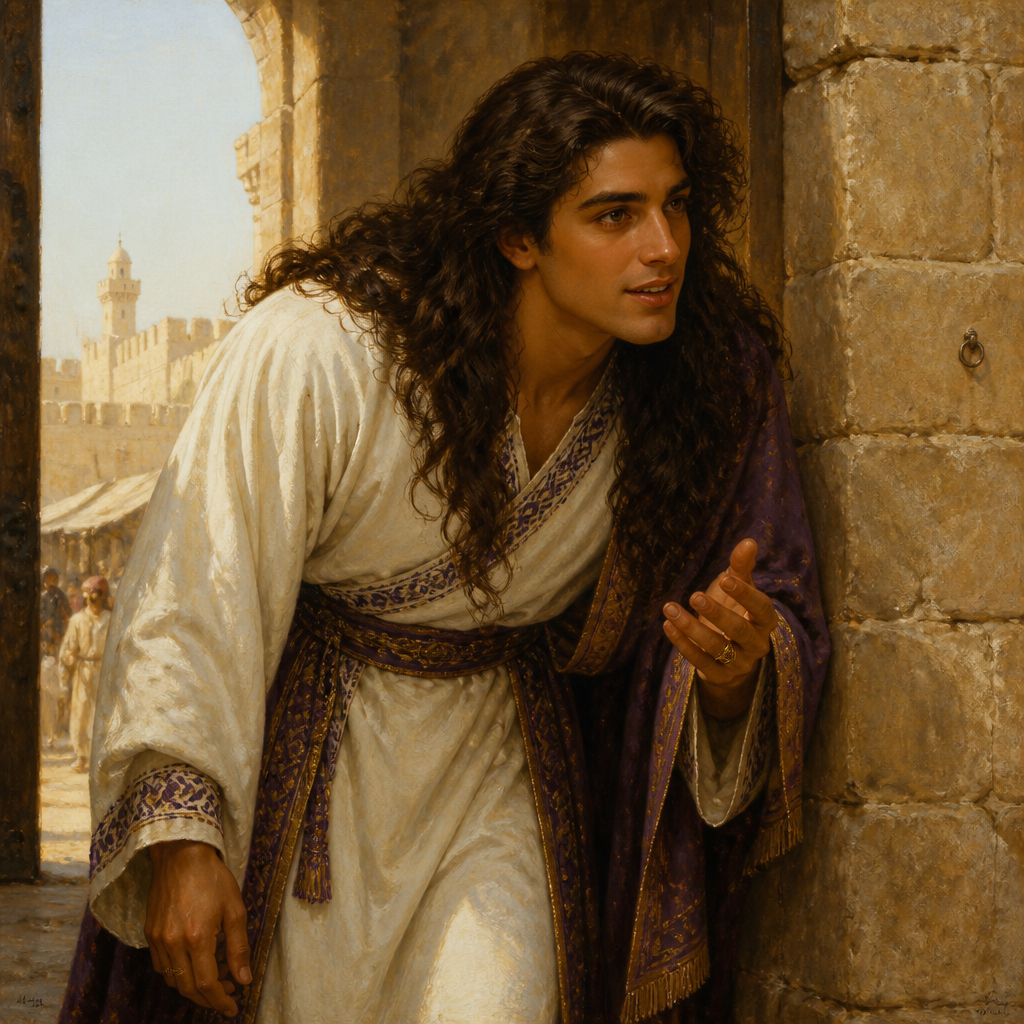
Shammua (also recorded as Shimea) was a prince of Israel during the height of the United Monarchy in the 10th century BC. He was the first son born to King David and Bathsheba after David established Jerusalem as the capital of the unified twelve tribes. As a member of the royal household, Shammua lived during a pivotal transition in Israel’s history, moving from the volatile reign of Saul to the centralized power and architectural expansion of the Davidic dynasty.
While Shammua did not succeed his father to the throne—a role that fell to his younger brother Solomon—his presence in the biblical genealogies serves to document the legitimacy and scope of David's lineage in Jerusalem. He is consistently listed among the four sons born to Bathsheba, placing him in the inner circle of the Davidic line.
Background and Family
Shammua was born in Jerusalem following David’s consolidation of power over all Israel. According to the genealogical records in 2 Samuel 5:14 and 1 Chronicles 14:4, Shammua appears at the head of the list of sons born to David after he relocated from Hebron to the new capital of Jerusalem. His mother is identified in 1 Chronicles 3:5 as Bathsheba (referred to there as Bath-shua), the daughter of Ammiel.
Shammua grew up in a complex royal court characterized by a large number of half-siblings. His full brothers—those also born to Bathsheba—included Shobab, Nathan, and Solomon. His older half-brothers, born while David reigned in Hebron, included prominent and often troubled figures such as Amnon, Absalom, and Adonijah. Shammua also had a sister, Tamar, and numerous other half-brothers like Chileab, Shephatiah, and Ithream.
Major Life Events
The biblical text does not record specific political or military actions attributed to Shammua. Instead, his life is framed by the establishment of the Davidic covenant and the expansion of the royal family in the City of David. His birth marked a shift in David’s reign; whereas the sons born in Hebron represented David's rise to power, the sons born in Jerusalem—led by Shammua—represented the stability and permanence of the dynasty in the chosen capital.
In the genealogical list found in 1 Chronicles 3:5, Shammua is called "Shimea." The variation in spelling is common in ancient Hebrew manuscripts, but the context confirms he is the same individual. The text emphasizes that Shammua and his three brothers were born to Bathsheba, distinguishing them from the children of David’s other wives and concubines.
Relationship to Other Biblical Figures
As the eldest of Bathsheba’s surviving children, Shammua occupied a unique position. While the biblical narrative eventually focuses on Solomon as the chosen successor and Nathan as a legal ancestor of Jesus (according to the Lucan genealogy), Shammua remains a silent witness to the internal struggles of the house of David. He would have lived through the rebellions of his half-brothers Absalom and Adonijah.
Despite being older than Solomon, Shammua was bypassed for the throne. The scriptures do not indicate any rivalry between the brothers, suggesting that the divine choice of Solomon was accepted within this specific branch of the family.
Spiritual Significance
The inclusion of Shammua in the sacred record serves a primarily genealogical and foundational purpose. By listing the sons born in Jerusalem, the biblical authors emphasize the fulfillment of God's promise to build David a "house" (2 Samuel 7). Shammua is a physical testament to the continuation of the Davidic line in the holy city.
Furthermore, the mention of Shammua as a son of Bathsheba highlights the grace extended to the royal family. Following the death of David and Bathsheba's first, unnamed child (born of adultery), the birth of Shammua and his brothers signaled a period of restoration and the continued blessing of the lineage that would eventually lead to the Messiah.
Spiritual Significance
Shammua represents the growth of the Davidic dynasty in Jerusalem. His presence in the genealogies of both 2 Samuel and 1 Chronicles validates the historical reality of David's large household and the specific branch of the family that produced Solomon. Theologically, he belongs to the generation of the United Monarchy that witnessed the transition from a nomadic kingship to a settled imperial power under the covenantal promises of God.
Frequently Asked Questions
Who was Shammua's mother?
Shammua was the son of Bathsheba (also called Bath-shua), the daughter of Ammiel.
Is Shammua known by any other name?
Yes, in 1 Chronicles 3:5, he is referred to as Shimea.
Was Shammua the eldest son of David?
No, he was one of the sons born in Jerusalem. David had several older sons born in Hebron, including Amnon, Chileab, Absalom, and Adonijah.
Did Shammua ever become king?
No, the throne passed to his younger brother Solomon.
Where was Shammua born?
According to 2 Samuel 5:14, he was born in Jerusalem.
Connected Figures
Categories
Mentions by Book
- 1 Chronicles2
- 2 Samuel1
Family & Relationships
Sibling
2 Samuel 5:14
Sibling
2 Samuel 5:14
Sibling
2 Samuel 5:14
Sibling
2 Samuel 5:14
Sibling
2 Samuel 5:14
Sibling
2 Samuel 5:14
Sibling
2 Samuel 5:14
Sibling
2 Samuel 5:14
Sibling
2 Samuel 5:14
Sibling
2 Samuel 5:14
Sibling
2 Samuel 5:14
Sibling
2 Samuel 5:14
Sibling
2 Samuel 5:14
Sibling
2 Samuel 5:14
Sibling
2 Samuel 5:14
Sibling
2 Samuel 5:14
Sibling
2 Samuel 5:14
Sibling
2 Samuel 5:14
Sibling
2 Samuel 5:14
Sibling
2 Samuel 5:14
Sibling
2 Samuel 3:3
Sibling
2 Samuel 3:4
Sibling
2 Samuel 3:2
Parent
2 Samuel 11:3
Sibling
2 Samuel 3:3
Parent
Ruth 4:17
Sibling
2 Samuel 5:16
Sibling
2 Samuel 5:16
Sibling
2 Samuel 5:16
Sibling
2 Samuel 5:15
Sibling
1 Chronicles 3:6
Sibling
2 Samuel 5:15
Sibling
2 Samuel 3:5
Sibling
2 Samuel 5:15
Sibling
2 Chronicles 11:18
Sibling
2 Samuel 5:14
Sibling
2 Samuel 5:15
Sibling
1 Chronicles 3:7
Sibling
2 Samuel 3:4
Sibling
2 Samuel 5:14
Sibling
2 Samuel 5:14
Sibling
2 Samuel 13:1
Others Named Shammua
Shammua, Son of ZaccurNumbers 13:4
A leader from the tribe of Reuben chosen by Moses as one of the twelve spies to scout the land of Canaan.
Shammua, Priest of the Post-Exilic PeriodNehemiah 12:18
A priest and head of the ancestral house of Bilgah during the generation of the high priest Joiakim following the return from Babylon.