Shammua, Priest of the Post-Exilic Period
A priest and head of the ancestral house of Bilgah during the generation of the high priest Joiakim following the return from Babylon.
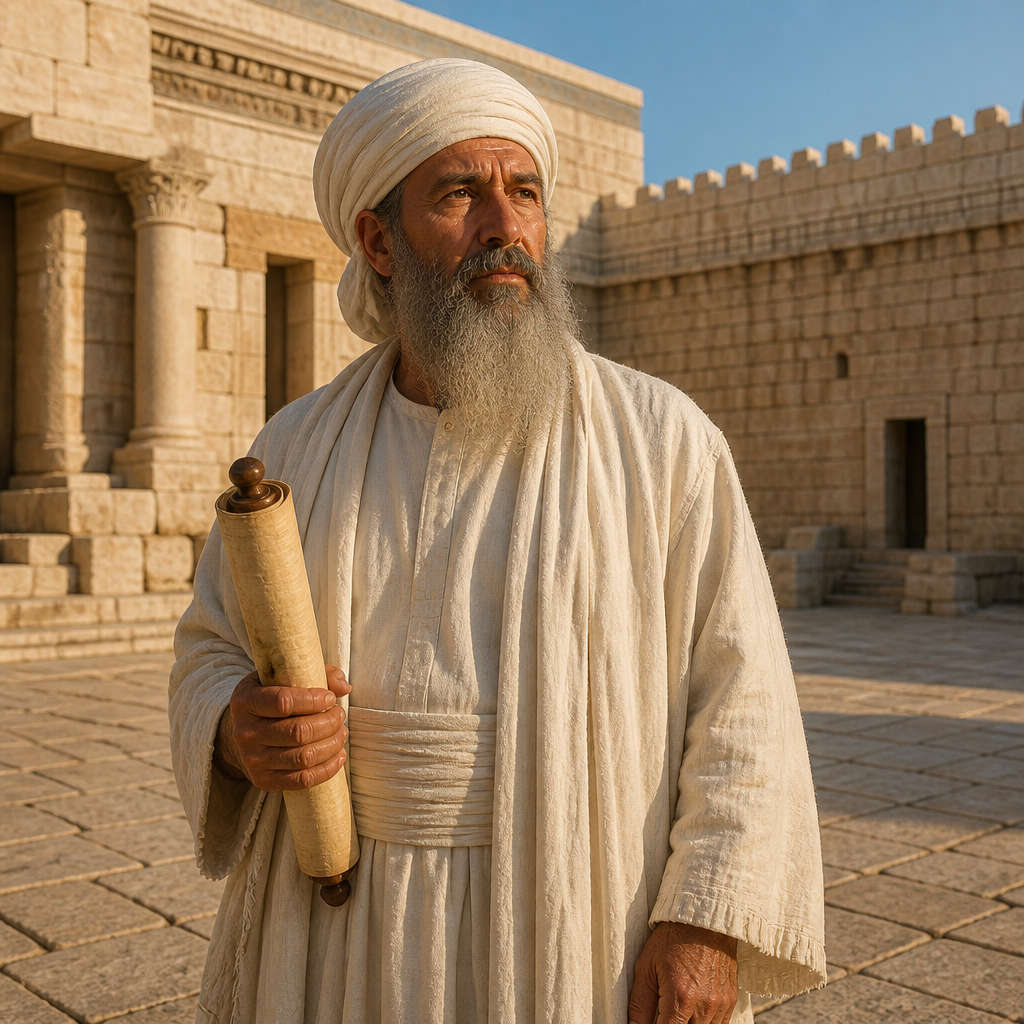
Shammua was a member of the Jewish priesthood during the critical era of the Exile and Return. Following the decree of Cyrus the Great, various waves of Jewish exiles returned to Jerusalem to rebuild the Temple and reestablish the sacrificial system. Shammua represents the continuation of the Levitical lineage during this period of restoration, serving as a patriarchal leader for his family line.
His mention in the biblical record occurs within a genealogical registry that preserves the continuity of the priesthood. In the days of Joiakim, who succeeded Jeshua as High Priest, Shammua stood as the designated head of the house of Bilgah, one of the priestly divisions that had returned from captivity in Babylon. His inclusion in Nehemiah signifies his formal recognition as an authorized minister in the Second Temple era.
Background and Family
Shammua served during the post-exilic era, specifically during the tenure of the High Priest Joiakim, the son of Jeshua. While the biblical text does not provide the names of his parents or children, it identifies him as the head of the house of Bilgah. The house of Bilgah was one of the original priestly divisions that returned from the Babylonian exile under the leadership of Zerubbabel and Jeshua.
The tribe of Shammua is not explicitly stated in the specific verse provided, but as a recognized head of a priestly house, he belonged to the tribe of Levi. His role was hereditary, ensuring that the sacred duties of the Temple remained within the families ordained by the Mosaic Law.
Major Life Events
The primary historical context for Shammua is the administrative and spiritual reorganization of Jerusalem after the return from Babylon. As the head of a priestly family, Shammua would have been responsible for overseeing the rotations of service in the Second Temple. The book of Nehemiah records his name in a specific list intended to verify the legitimacy of the priesthood during the generation of Joiakim (Nehemiah 12:12–21).
Although the text does not record specific speeches or miracles performed by Shammua, his presence in the registry indicates he was a man of significant status and responsibility. He functioned as a bridge between the generation that returned from exile and the generation that would eventually see the completion of the city walls under Nehemiah.
Relationship to Other Biblical Figures
Shammua is mentioned alongside other priestly heads of his generation, such as Jonathan (head of the house of Shemaiah) and Meshullam (head of the house of Ezra). His primary ecclesiastical relationship was to Joiakim, the High Priest. The text lists Shammua as the contemporary leader of the Bilgah line while Joiakim held the high priesthood. This placement underscores his importance in the hierarchy of the Second Temple period.
Spiritual Significance
While the biblical data regarding Shammua is brief, his inclusion in the sacred text serves a vital theological purpose. The lists in Nehemiah 12 demonstrate God’s faithfulness in preserving the Aaronic priesthood despite seventy years of exile in a pagan land.
"In the days of Joiakim, these were the heads of the priestly families: ...of Bilgah, Shammua; of Shemaiah, Jonathan;" (Nehemiah 12:12, 18)
For the post-exilic community, Shammua represented order and divine continuity. By recording his name, the chronicler affirmed that the worship of Yahweh was being conducted by the proper, authorized descendants of the ancient priestly houses. Shammua stands as a testament to the survival of the covenantal identity of Israel through one of its darkest historical periods.
Spiritual Significance
Shammua’s significance lies in his role as a link in the chain of the Levitical priesthood during the post-exilic restoration. His name is preserved to validate the genealogical purity and administrative structure of the Second Temple, ensuring that the worship of God followed the prescriptions laid out in the Torah. He represents the faithful remnant that maintained their identity and sacred calling despite the displacement of the Babylonian captivity.
Frequently Asked Questions
What was Shammua's role in the Bible?
Shammua was a priest and the head of the priestly family of Bilgah during the time of the High Priest Joiakim, following the return of the Jews from the Babylonian exile.
Which tribe did Shammua belong to?
While the specific tribe is not named in his single mention, as a leader of a priestly house (Bilgah), he was a member of the tribe of Levi.
When did Shammua live?
He lived during the Post-Exilic Period, specifically during the generation of Joiakim, the son of Jeshua, who was part of the leadership that returned to Jerusalem from Babylon.
In which book of the Bible is Shammua mentioned?
This specific Shammua is mentioned only once in the Bible, in the Book of Nehemiah, chapter 12, verse 18.
Connected Figures
Joiakim
High Priest during Shammua's leadership
Jonathan
Contemporary priestly head of the house of Shemaiah
Categories
Mentions by Book
- Nehemiah1
Others Named Shammua
Shammua, Son of ZaccurNumbers 13:4
A leader from the tribe of Reuben chosen by Moses as one of the twelve spies to scout the land of Canaan.
Shammua, Son of David2 Samuel 5:14
Shammua was a son of King David and Bathsheba, born in Jerusalem during the United Monarchy as a full brother to King Solomon.