Mahalath, Wife of Esau
Who was Mahalath, Wife of Esau, in the Bible?
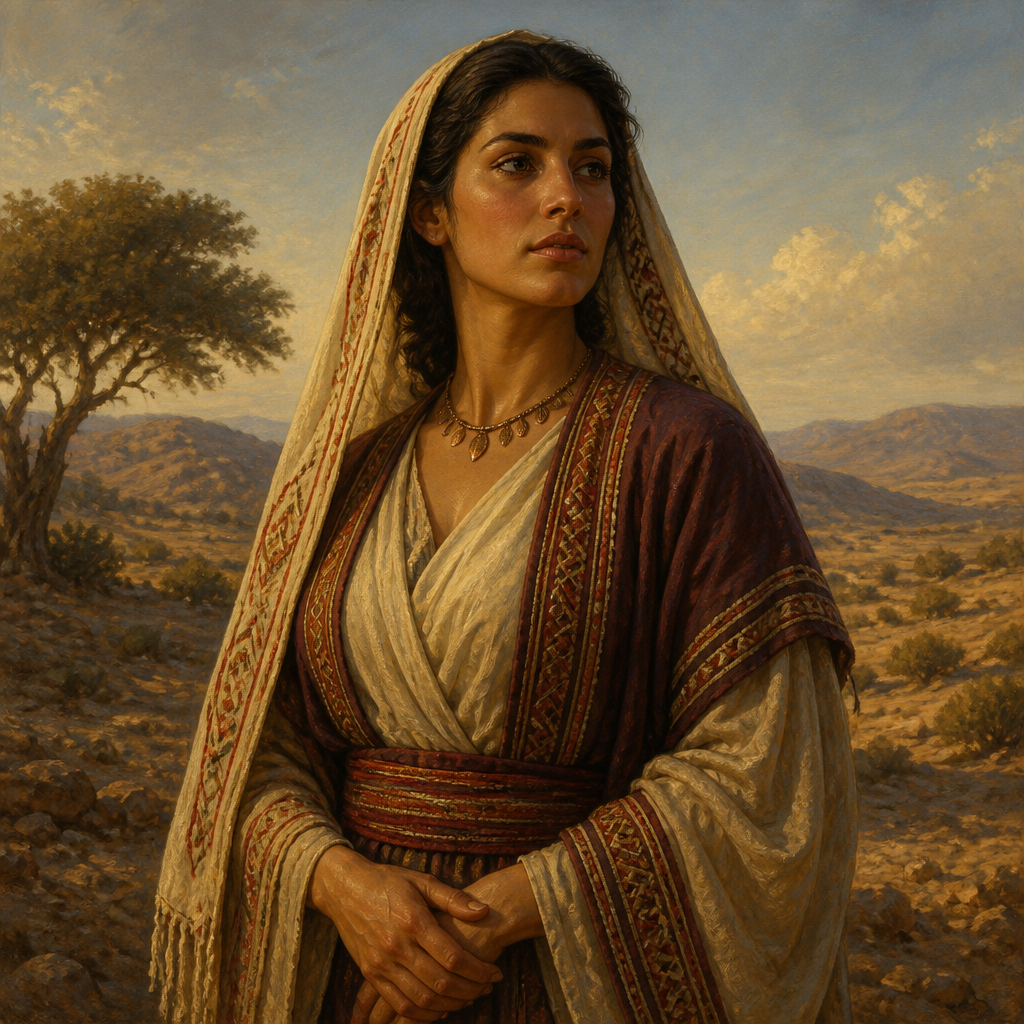
Mahalath was the daughter of Ishmael and granddaughter of Abraham who became a wife of Esau in an attempt to please his parents.
This is one of 2 people named Mahalath in the Bible. See all 2 →
Mahalath was a significant figure during the Patriarchal Period, serving as a biological link between the two primary branches of Abraham’s immediate descendants: the line of Isaac and the line of Ishmael. As the daughter of Ishmael, she represented the burgeoning Ishmaelite tribes of the Arabian Peninsula. Her marriage to her cousin Esau, the firstborn son of Isaac and Rebekah, was a strategic union intended to bridge family divides and secure ancestral approval.
Historically, Mahalath is situated within the complex family dynamics of the patriarchs, specifically during the time when Esau was seeking to rectify his standing with his parents after their disapproval of his previous marriages to Hittite women. While she is not a central protagonist in the narrative of the covenant, her inclusion in the genealogies of Genesis underscores the intermingling of the early Semitic tribes that would eventually form the nations of Edom and the various Ishmaelite clans.
Background and Family
Mahalath was born into the prominent family of Ishmael, the first son of Abraham through Hagar. As such, she was the granddaughter of the patriarch Abraham. The biblical text identifies her specifically as the sister of Nebaioth, who was the firstborn of Ishmael’s twelve sons (Genesis 25:13, 28:9). This connection places her in the heart of the Ishmaelite aristocracy. Her brothers included Kedar, Adbeel, Mibsam, Mishma, Dumah, Massa, Hadad, Tema, Jetur, Naphish, and Kedemah—the twelve princes who became the heads of their respective tribes across Arabia.
In the genealogical records of Genesis 36, a woman named Basemath is identified as the daughter of Ishmael and sister of Nebaioth. Biblical scholars generally conclude that Mahalath and Basemath are the same individual, with Mahalath being her birth name and Basemath perhaps being a name given upon her marriage or a secondary moniker meaning "fragrant" or "perfumed." This practice of using multiple names was common among the patriarchs and their wives.
Major Life Events
The defining moment of Mahalath’s recorded life occurs in Genesis 28. Following Jacob's departure to Paddan-aram to find a wife from among his mother’s kin, Esau realized that his Canaanite wives (Judith and Basemath the Hittite) were a source of deep grief and displeasure to his father, Isaac. In a deliberate attempt to gain favor and align himself more closely with his grandfather Abraham’s lineage, Esau traveled to the house of his uncle Ishmael.
"Esau went to Ishmael and married Mahalath, the sister of Nebaioth and daughter of Abraham’s son Ishmael, in addition to the wives he already had." (Genesis 28:9)
This marriage was a calculated move by Esau to introduce "proper" Abrahamic blood into his household. By marrying Mahalath, Esau sought to distance himself from the local Canaanite influence that his parents loathed. Mahalath subsequently moved into the territory that would become Edom. She gave birth to a son named Reuel, who became a prominent figure in the Edomite lineage. Through Reuel, Mahalath became the grandmother of four tribal chiefs: Nahath, Zerah, Shammah, and Mizzah (Genesis 36:17).
Relationship to Other Biblical Figures
Mahalath’s primary relationships defined her role as a bridge between the sons of Abraham. As the wife of Esau, she was the daughter-in-law of Isaac and Rebekah, though the text does not record her personal interactions with them. Her status as the sister of Nebaioth is emphasized repeatedly in Scripture, likely to validate her high standing within the Ishmaelite hierarchy.
Her son Reuel (meaning "Friend of God") serves as a notable link between the Ishmaelites and the Edomites. This connection suggests that the early Edomite identity was not purely a product of Esau’s Canaanite wives but was also deeply influenced by the Ishmaelite culture and lineage brought by Mahalath. The fusion of these two families contributed to the distinct national identity of the people inhabiting the land of Seir.
Spiritual Significance
While Mahalath herself does not perform miracles or speak directly in the text, her presence is theologically significant in the context of the Abrahamic Covenant. She represents the fulfillment of God’s promise to Ishmael in Genesis 17:20: "I will bless him and make him fruitful and will greatly increase his numbers. He will be the father of twelve rulers, and I will make him into a great nation."
Furthermore, Mahalath’s marriage highlights the tragic irony of Esau’s life. Although he attempted to fix his spiritual and familial standing by marrying a descendant of Abraham, the biblical narrative suggests that his efforts were focused on the outward form of heritage rather than the inward heart of the covenant. Despite this, Mahalath remains a pivotal genealogical figure, ensuring that the descendants of Edom remained inextricably linked to the broader family of Abraham.
Mahalath’s significance lies in her role as a genealogical bridge between the two great sons of Abraham: Isaac and Ishmael. Her marriage to Esau was a pivotal moment where the line of the rejected birthright (Esau) sought reconciliation with the Abrahamic legacy through the line of the firstborn son (Ishmael). This union solidified the kinship between the Edomites and Ishmaelites, two groups that would frequently interact with the nation of Israel throughout the Old Testament.
Theologically, she serves as a reminder of the far-reaching consequences of family choices and the complexities of the patriarchal era. Her inclusion in the Genesis genealogies ensures that the historical origins of the Arabian and Edomite peoples are clearly documented as part of the wider narrative of God’s dealings with the descendants of Abraham.
Frequently Asked Questions
Was Mahalath also known by another name?
Yes, biblical scholars generally identify Mahalath with Basemath (mentioned in Genesis 36:3), as both are described as the daughter of Ishmael and the sister of Nebaioth who married Esau.
Why did Esau marry Mahalath?
Esau married Mahalath because he realized his Hittite wives were displeasing to his parents. He hoped that by marrying a daughter of Ishmael (his uncle), he would honor his father Isaac's desire for a wife from Abraham's lineage.
Who was Mahalath's father?
Mahalath was the daughter of Ishmael, who was the son of Abraham and Hagar.
Who was Mahalath's son?
Mahalath bore a son named Reuel to Esau. Reuel went on to become the father of four Edomite chiefs.
What tribe or nation did Mahalath come from?
She was an Ishmaelite, representing the early tribes of Arabia that descended from Ishmael.
Family & Relationships
Parents
 Ishmael, Son of AbrahamFatherGenesis 28:9Stated
 EsauHusbandGenesis 28:9Stated
 Mahalath, Wife of EsauThis page
 AdbeelBrotherGenesis 25:13
Inferred
Reconstructed through Nebaioth: Genesis 28:9 ties Mahalath to Nebaioth; Genesis 25:13 ties Nebaioth to Adbeel. No verse states the brother link between Mahalath and Adbeel directly.Evidence: Genesis 25:13; Genesis 28:9
 DumahBrotherGenesis 25:14
Inferred
No verse names Dumah and Mahalath together; the sister link is carried from the surrounding genealogy and is not stated in Scripture.Evidence: Genesis 25:14; Genesis 28:9
 Hadad, Son of IshmaelBrotherGenesis 25:15
Inferred
No verse names Hadad and Mahalath together; the sister link is carried from the surrounding genealogy and is not stated in Scripture.Evidence: Genesis 25:15; Genesis 28:9
 JeturBrotherGenesis 28:9
Inferred
No verse names Mahalath and Jetur together; the brother link is carried from the surrounding genealogy and is not stated in Scripture.Evidence: Genesis 28:9; 1 Chronicles 1:31
 KedarBrotherGenesis 25:13
Inferred
Reconstructed through Ishmael: Genesis 25:13 ties Kedar to Ishmael; Genesis 28:9 ties Ishmael to Mahalath. No verse states the sister link between Kedar and Mahalath directly.Evidence: Genesis 25:13; Genesis 28:9
 KedemahBrotherGenesis 28:9
Inferred
No verse names Mahalath and Kedemah together; the brother link is carried from the surrounding genealogy and is not stated in Scripture.Evidence: Genesis 28:9; 1 Chronicles 1:31
 MassaBrotherGenesis 25:14
Inferred
No verse names Massa and Mahalath together; the sister link is carried from the surrounding genealogy and is not stated in Scripture.Evidence: Genesis 25:14; Genesis 28:9
 Mibsam, Son of IshmaelBrotherGenesis 25:13
Inferred
Reconstructed through Nebaioth: Genesis 28:9 ties Mahalath to Nebaioth; Genesis 25:13 ties Nebaioth to Mibsam. No verse states the brother link between Mahalath and Mibsam directly.Evidence: Genesis 25:13; Genesis 28:9
 Mishma, Son of IshmaelBrotherGenesis 25:14
Inferred
No verse names Mishma and Mahalath together; the sister link is carried from the surrounding genealogy and is not stated in Scripture.Evidence: Genesis 25:14; Genesis 28:9
 NaphishBrotherGenesis 28:9
Inferred
No verse names Naphish and Mahalath together; the sister link is carried from the surrounding genealogy and is not stated in Scripture.Evidence: Genesis 28:9; 1 Chronicles 1:31
 NebaiothBrotherGenesis 28:9Stated
 TemaBrotherGenesis 25:15
Inferred
No verse names Mahalath and Tema together; the brother link is carried from the surrounding genealogy and is not stated in Scripture.Evidence: Genesis 25:15; Genesis 28:9
Children
 Reuel, Son of EsauSonGenesis 28:9
Inferred
Reconstructed through Esau: Genesis 36:4 ties Reuel to Esau; Genesis 28:9 ties Esau to Mahalath. No verse states the mother link between Reuel and Mahalath directly.Evidence: Genesis 28:9; Genesis 36:17
Connected Figures
Family
Father · Genesis 28:9
Ishmael was the firstborn son of Abraham through Hagar, the forefather of the Ishmaelite tribes, and a patriarch whom God promised would father twelve princes.
Husband · Genesis 28:9
The firstborn son of Isaac and Rebekah, a skillful hunter and the progenitor of the Edomites, known for selling his birthright for a bowl of stew.
PatriarchsFirst: Genesis 25:2573 versesSkillful hunter, man of the field, Chief
Son · Genesis 28:9
Reuel was a patriarch of the Edomites, the son of Esau and Mahalath, and the progenitor of four major clans in the land of Seir.
Brother · Genesis 25:13
Adbeel was the third son of Ishmael and a grandson of Abraham, recognized as one of the twelve princes and tribal leaders of the Ishmaelite people.
PatriarchsFirst: Genesis 25:139 versesTribal Prince and Patriarch
Brother · Genesis 25:14
Dumah was the sixth son of Ishmael and a grandson of Abraham, serving as a tribal patriarch in the Arabian peninsula.
PatriarchsFirst: Genesis 25:149 versesPatriarchal tribal leader
Brother · Genesis 25:15
Hadad was one of the twelve sons of Ishmael and a grandson of the patriarch Abraham, serving as a tribal chieftain in the Arabian peninsula.
PatriarchsFirst: Genesis 25:159 versesTribal Chieftain
Brother · Genesis 28:9
Jetur was the tenth son of Ishmael and a grandson of Abraham, recognized as a tribal patriarch among the descendants of Ishmael in the Arabian peninsula.
PatriarchsFirst: Genesis 25:159 versesTribal Prince
Brother · Genesis 25:13
Kedar was the second son of Ishmael and a foundational patriarch of a major nomadic tribal confederation in the Arabian desert.
Brother · Genesis 28:9
Kedemah was the twelfth and youngest son of Ishmael and a grandson of Abraham, serving as a tribal patriarch in the Arabian peninsula.
Brother · Genesis 25:14
Massa was one of the twelve sons of Ishmael and a grandson of Abraham, serving as a tribal patriarch in the Arabian peninsula.
Brother · Genesis 25:13
A son of Ishmael and one of the twelve tribal princes who descended from Abraham, serving as a patriarchal figure in the Arabian peninsula.
PatriarchsFirst: Genesis 25:136 versesTribal Prince and Patriarch
Brother · Genesis 25:14
A son of Ishmael and a prince of a nomadic Arabian tribe during the Patriarchal Period.
PatriarchsFirst: Genesis 25:149 versesTribal Prince
Categories
Mentions by Book
- Genesis7
Scripture References
All 7 indexed verses, in canonical order, from the Berean Standard Bible.
Genesis · 7
- Genesis 25:13Partial
These are the names of the sons of Ishmael in the order of their birth: Nebaioth the firstborn of Ishmael, then Kedar, Adbeel, Mibsam,
Cited as evidence on a family card; added so References, Key Verses and Mentions by Book share one index.
- Genesis 28:9
Esau went to Ishmael and married Mahalath, the sister of Nebaioth and daughter of Abraham’s son Ishmael, in addition to the wives he already had.
- Genesis 36:3
and Basemath daughter of Ishmael and sister of Nebaioth.
- Genesis 36:4
And Adah bore Eliphaz to Esau, Basemath gave birth to Reuel,
- Genesis 36:10
These are the names of Esau’s sons: Eliphaz son of Esau’s wife Adah, and Reuel son of Esau’s wife Basemath.
- Genesis 36:13
These are the sons of Reuel: Nahath, Zerah, Shammah, and Mizzah. They are the grandsons of Esau’s wife Basemath.
- Genesis 36:17
These are the sons of Esau’s son Reuel: Chiefs Nahath, Zerah, Shammah, and Mizzah. They are the chiefs descended from Reuel in the land of Edom, and they are the grandsons of Esau’s wife Basemath.
Others Named Mahalath
Compare all 2 bearers →Mahalath, Wife of Rehoboam2 Chronicles 11:18
Mahalath was a royal wife of King Rehoboam and a descendant of King David through two distinct lineages.