Kedar
Who was Kedar in the Bible?
Kedar was the second son of Ishmael and a foundational patriarch of a major nomadic tribal confederation in the Arabian desert.
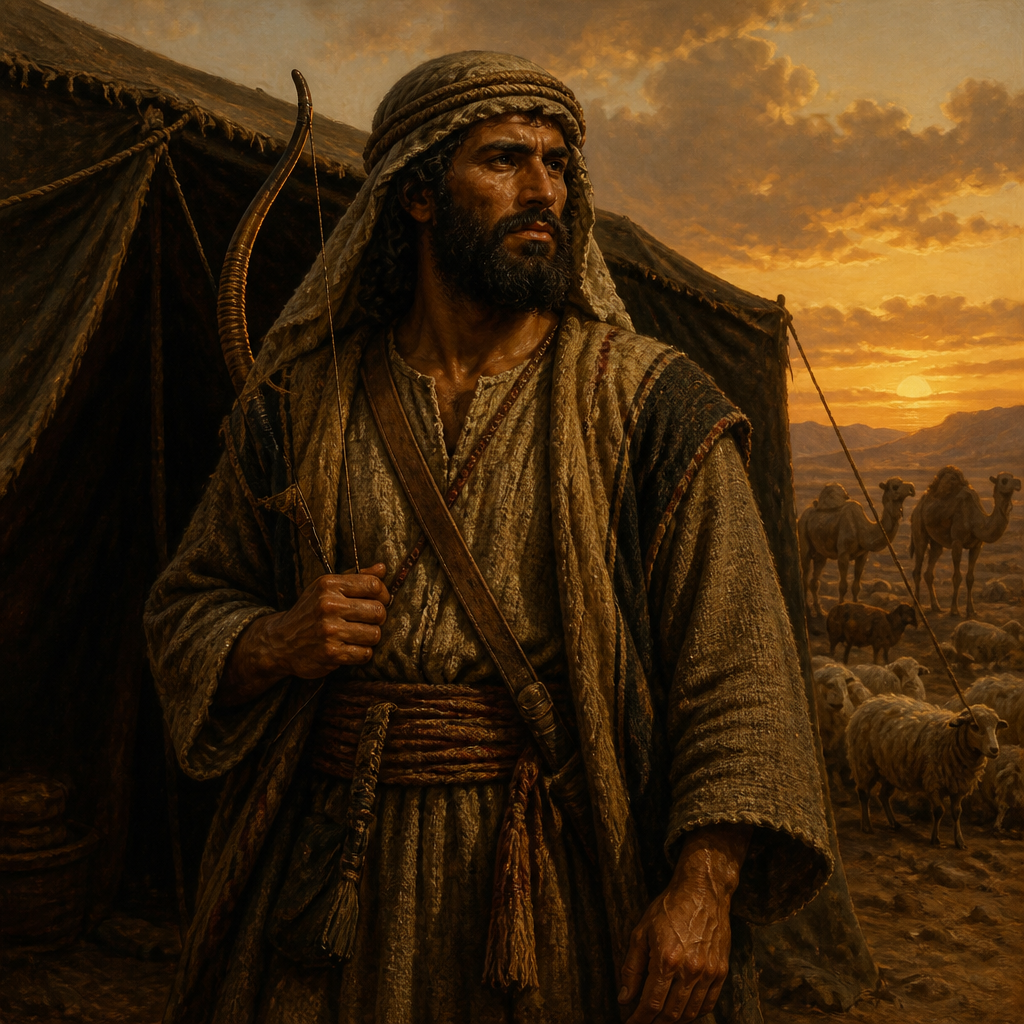
Kedar is a significant figure in the genealogical and prophetic landscape of the Old Testament, identified as the second son of Ishmael and a grandson of the patriarch Abraham. His name, which denotes 'dark' or 'dusky' in Hebrew, came to represent not only a specific individual but a powerful and expansive nomadic nation that inhabited the Syro-Arabian desert. In the biblical record, Kedar is synonymous with the wandering, tent-dwelling lifestyles of the East, characterized by their immense wealth in livestock and their prowess as archers.
Historically and scripturally, Kedar serves as a bridge between the patriarchal era and the later prophetic warnings concerning the nations surrounding Israel. While the biblical text provides limited personal biography regarding Kedar’s individual life, his legacy is preserved through the frequent mentions of his descendants, whose cultural presence and military strength were well-recognized by the authors of the Psalms, Isaiah, Jeremiah, and Ezekiel. As a patriarch of the Arabian tribes, Kedar occupies a unique position in the fulfillment of God’s promise to make Ishmael a great nation.
Background and Family
Kedar is first introduced in the biblical narrative within the genealogical records of Genesis. According to Genesis 25:13, he was the second-born son of Ishmael, the son of Abraham by Hagar. This placement is confirmed in 1 Chronicles 1:29. Kedar was part of a large family consisting of twelve brothers, including his elder brother Nebaioth and his younger siblings Adbeel, Mibsam, Mishma, Dumah, Massa, Hadad, Tema, Jetur, Naphish, and Kedemah. He also had a sister named Mahalath.
These twelve sons are described as 'twelve princes according to their nations' (Genesis 25:16), fulfilling the divine promise made to Abraham regarding Ishmael's fruitfulness. The name Kedar (Strong's H6938) is traditionally associated with the root qadar, meaning to be dark or swarthy, possibly referring to the color of the skin or, more likely, the black goat-hair tents that became the hallmark of his descendants.
The Tents of Kedar
The most enduring image of Kedar in the Bible is the 'tents of Kedar.' In Psalm 120:5, the psalmist laments dwelling among these tents, using them as a metaphor for living in a restless or hostile environment. Conversely, the Song of Solomon 1:5 uses the image poetically, where the narrator compares her beauty to the 'tents of Kedar' and the 'curtains of Solomon,' highlighting the striking aesthetic of the dark, woven fabrics used by these nomadic peoples. These references suggest that by the time of the Monarchy in Israel, the descendants of Kedar were a well-known nomadic entity famous for their distinctive dwellings and pastoral wealth.
Major Prophetic Mentions
Kedar appears prominently in the Major Prophets, often as a representative of the desert-dwelling nations that would face divine judgment or eventually participate in the restoration of God's kingdom. Isaiah 21:16-17 provides a grim outlook for the tribe, stating that 'all the glory of Kedar will be gone' and that their famed archers and warriors would be greatly diminished. This prophecy highlights the military reputation of the Kedarenes, who were respected for their skill with the bow.
In Jeremiah 49:28, the text describes the conquest of Kedar by Nebuchadnezzar, king of Babylon. The LORD commands the Babylonians to 'Rise up, advance against Kedar, and destroy the people of the east!' This passage underscores Kedar’s role as a major regional power among the 'kingdoms of Hazor,' possessing 'flocks and tents' and 'camels' that would be seized as plunder. Despite these judgments, Isaiah 42:11 and 60:7 offer a different perspective, envisioning a day when the villages of Kedar will 'raise their voices' in praise and their flocks will be gathered to serve at the altar of the LORD, signifying their eventual inclusion in the worship of the God of Israel.
Relationship to Other Biblical Figures
As the grandson of Abraham, Kedar is situated within the broader family of the Patriarchs. His relationship with his brother Nebaioth is particularly emphasized, as the two are often mentioned together in both genealogies and prophecies (Isaiah 60:7). This pairing suggests a close tribal alliance or geographical proximity between their descendants in the Arabian peninsula. Furthermore, Ezekiel 27:21 notes that the 'princes of Kedar' were active trading partners with the city of Tyre, dealing specifically in lambs, rams, and goats. This indicates that the legacy of Kedar was one of significant commercial influence, acting as a primary supplier of livestock to the major merchant hubs of the ancient Near East.
Spiritual Significance
Theologically, Kedar represents the fulfillment of God’s covenantal mercy toward Hagar and Ishmael. Though not the heir of the specific covenant promise given to Isaac, Kedar and his brothers were nonetheless blessed with national greatness and longevity. The inclusion of Kedar in the prophetic visions of Isaiah suggests that the grace of the God of Israel extends beyond the borders of Canaan to the nomadic tribes of the desert, anticipating a universal recognition of divine sovereignty.
Kedar serves as a primary biblical archetype for the nomadic tribes of the Arabian desert. His significance lies in his dual role as a genealogical link to Abraham and a representative of the 'East' in prophetic literature. The frequent mention of his descendants' tents, archers, and livestock illustrates the vast reach of the Ishmaelite nations and their interaction with Israel through trade, conflict, and eventually, shared worship. Theologically, the transition of Kedar from a target of judgment in Jeremiah to a participant in the glory of God's house in Isaiah 60:7 highlights the biblical theme of the eventual gathering of all nations to the God of Abraham.
Frequently Asked Questions
Who was Kedar's father?
Kedar was the son of Ishmael, making him the grandson of Abraham and Hagar.
What does the name 'Kedar' mean?
The name Kedar is derived from a Hebrew root meaning 'dark' or 'dusky,' which likely refers to the black goat-hair tents used by his descendants.
How many brothers did Kedar have?
Kedar had eleven brothers: Nebaioth, Adbeel, Mibsam, Mishma, Dumah, Massa, Hadad, Tema, Jetur, Naphish, and Kedemah.
What were the people of Kedar known for?
They were known as nomadic desert-dwellers who lived in tents, raised large numbers of livestock (sheep and goats), and were highly skilled archers.
Did Kedar ever interact with the Israelites?
While the individual Kedar lived during the patriarchal age, his descendants (the Kedarenes) were major trading partners with the region and are frequently mentioned in the writings of Hebrew prophets.
Family & Relationships
Parents
 Ishmael, Son of AbrahamFatherGenesis 25:13Stated
 KedarThis page
 AdbeelBrotherGenesis 25:13Stated
 DumahBrotherGenesis 25:13–14Stated
 Hadad, Son of IshmaelBrotherGenesis 25:13–15Stated
 JeturBrotherGenesis 25:13–15Stated
 KedemahBrotherGenesis 25:13–15Stated
 Mahalath, Wife of EsauSisterGenesis 25:13
Inferred
Reconstructed through Nebaioth: Genesis 28:9 ties Mahalath to Nebaioth; Genesis 25:13 ties Nebaioth to Kedar. No verse states the brother link between Mahalath and Kedar directly.Evidence: Genesis 25:13; Genesis 28:9
 MassaBrotherGenesis 25:13–14Stated
 Mibsam, Son of IshmaelBrotherGenesis 25:13Stated
 Mishma, Son of IshmaelBrotherGenesis 25:13–14Stated
 NaphishBrotherGenesis 25:13–15Stated
 NebaiothBrotherGenesis 25:13Stated
 TemaBrotherGenesis 25:13–15Stated
Extended family
 AbrahamGrandfatherGenesis 25:13
Inferred
Reconstructed through Ishmael: Genesis 16:15 ties Abram to Ishmael; Genesis 25:13 ties Ishmael to Kedar. No verse states the grandson link between Abraham and Kedar directly.Evidence: Genesis 25:13; 1 Chronicles 1:29; Genesis 17:23
 HagarGrandmotherGenesis 25:13
Inferred
Reconstructed through Ishmael: Genesis 16:15 ties Hagar to Ishmael; Genesis 25:13 ties Ishmael to Kedar. No verse states the grandson link between Hagar and Kedar directly.Evidence: Genesis 25:13; 1 Chronicles 1:29; Genesis 16:15; Genesis 16:16
Connected Figures
Family
Father · Genesis 25:13
Ishmael was the firstborn son of Abraham through Hagar, the forefather of the Ishmaelite tribes, and a patriarch whom God promised would father twelve princes.
Brother · Genesis 25:13
Adbeel was the third son of Ishmael and a grandson of Abraham, recognized as one of the twelve princes and tribal leaders of the Ishmaelite people.
PatriarchsFirst: Genesis 25:139 versesTribal Prince and Patriarch
Brother · Genesis 25:13–14
Dumah was the sixth son of Ishmael and a grandson of Abraham, serving as a tribal patriarch in the Arabian peninsula.
PatriarchsFirst: Genesis 25:149 versesPatriarchal tribal leader
Brother · Genesis 25:13–15
Hadad was one of the twelve sons of Ishmael and a grandson of the patriarch Abraham, serving as a tribal chieftain in the Arabian peninsula.
PatriarchsFirst: Genesis 25:159 versesTribal Chieftain
Brother · Genesis 25:13–15
Jetur was the tenth son of Ishmael and a grandson of Abraham, recognized as a tribal patriarch among the descendants of Ishmael in the Arabian peninsula.
PatriarchsFirst: Genesis 25:159 versesTribal Prince
Brother · Genesis 25:13–15
Kedemah was the twelfth and youngest son of Ishmael and a grandson of Abraham, serving as a tribal patriarch in the Arabian peninsula.
Sister · Genesis 25:13
Mahalath was the daughter of Ishmael and granddaughter of Abraham who became a wife of Esau in an attempt to please his parents.
Brother · Genesis 25:13–14
Massa was one of the twelve sons of Ishmael and a grandson of Abraham, serving as a tribal patriarch in the Arabian peninsula.
Brother · Genesis 25:13
A son of Ishmael and one of the twelve tribal princes who descended from Abraham, serving as a patriarchal figure in the Arabian peninsula.
PatriarchsFirst: Genesis 25:136 versesTribal Prince and Patriarch
Brother · Genesis 25:13–14
A son of Ishmael and a prince of a nomadic Arabian tribe during the Patriarchal Period.
PatriarchsFirst: Genesis 25:149 versesTribal Prince
Brother · Genesis 25:13–15
Naphish was a son of Ishmael and the progenitor of a nomadic Arabian tribe mentioned in the genealogies of Genesis and 1 Chronicles.
PatriarchsFirst: Genesis 25:157 versesTribal Prince
Brother · Genesis 25:13
Nebaioth was the firstborn son of Ishmael, a grandson of Abraham, and a patriarch of a prominent Arabian tribe identified with pastoral wealth.
Categories
Mentions by Book
- Genesis9
- 1 Chronicles1
Scripture References
All 10 indexed verses, in canonical order, from the Berean Standard Bible.
Genesis · 9
- Genesis 16:15Partial
And Hagar bore Abram a son, and Abram gave the name Ishmael to the son she had borne.
Cited as evidence on a family card; added so References, Key Verses and Mentions by Book share one index.
- Genesis 16:16Partial
Abram was eighty-six years old when Hagar bore Ishmael to him.
Cited as evidence on a family card; added so References, Key Verses and Mentions by Book share one index.
- Genesis 17:23Partial
On that very day Abraham took his son Ishmael and all those born in his household or purchased with his money—every male among the members of Abraham’s household—and he circumcised them, just as God had told him.
Cited as evidence on a family card; added so References, Key Verses and Mentions by Book share one index.
- Genesis 17:26Partial
Abraham and his son Ishmael were circumcised on the same day.
Cited as evidence on a family card; added so References, Key Verses and Mentions by Book share one index.
- Genesis 25:12Partial
This is the account of Abraham’s son Ishmael, whom Hagar the Egyptian, Sarah’s maidservant, bore to Abraham.
Cited as evidence on a family card; added so References, Key Verses and Mentions by Book share one index.
- Genesis 25:13
These are the names of the sons of Ishmael in the order of their birth: Nebaioth the firstborn of Ishmael, then Kedar, Adbeel, Mibsam,
- Genesis 25:14Partial
Mishma, Dumah, Massa,
Cited as evidence on a family card; added so References, Key Verses and Mentions by Book share one index.
- Genesis 25:15Partial
Hadad, Tema, Jetur, Naphish, and Kedemah.
Cited as evidence on a family card; added so References, Key Verses and Mentions by Book share one index.
- Genesis 28:9Partial
Esau went to Ishmael and married Mahalath, the sister of Nebaioth and daughter of Abraham’s son Ishmael, in addition to the wives he already had.
Cited as evidence on a family card; added so References, Key Verses and Mentions by Book share one index.
1 Chronicles · 1
- 1 Chronicles 1:29
These are their genealogies: Nebaioth the firstborn of Ishmael, then Kedar, Adbeel, Mibsam,