Kedemah
Who was Kedemah in the Bible?
Kedemah was the twelfth and youngest son of Ishmael and a grandson of Abraham, serving as a tribal patriarch in the Arabian peninsula.
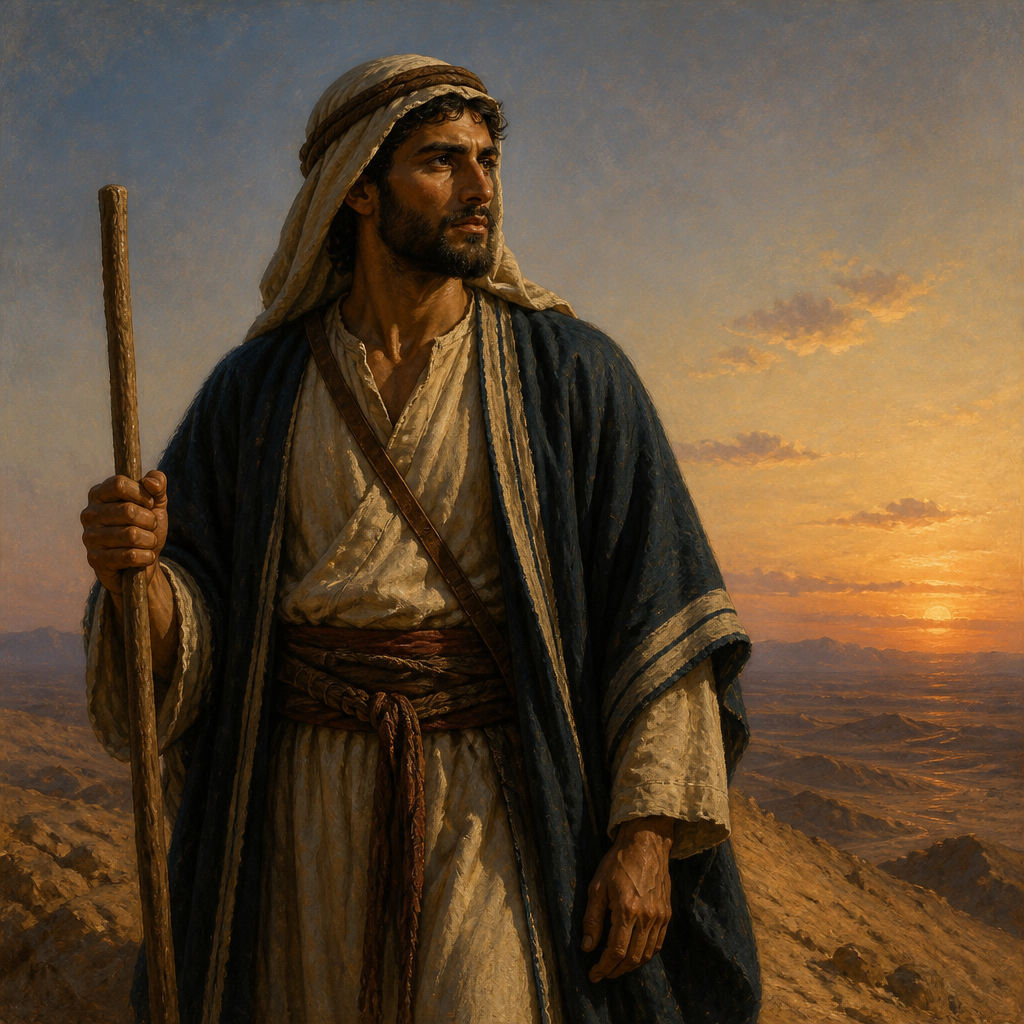
Kedemah is a figure of the Patriarchal Period, identified in the biblical record as the youngest of the twelve sons of Ishmael. As a grandson of Abraham through Hagar, Kedemah represents one of the twelve 'princes' promised by God to Ishmael in Genesis 17:20. His name, derived from a Hebrew root meaning 'eastward' or 'ancient,' reflects the geographic and ancestral positioning of his descendants among the eastern nomadic tribes.
While personal details of his life are not provided in the biblical text, his inclusion in the genealogies of Genesis and 1 Chronicles establishes his role as a foundational patriarch of an Arabian clan. The record of his lineage serves to fulfill the divine covenant that Ishmael would be fruitful and multiply into a great nation, specifically through twelve distinct tribal leaders.
Background and Family
Kedemah appears in the biblical narrative within the genealogical lists of the descendants of Abraham. He was the youngest son of Ishmael, born to the Egyptian matriarch Hagar's son. According to Genesis 25, Ishmael fathered twelve sons who became the leaders of twelve tribes, mirroring the later development of the twelve tribes of Israel through Jacob. Kedemah’s siblings included Nebaioth (the firstborn), Kedar, Adbeel, Mibsam, Mishma, Dumah, Massa, Hadad, Tema, Jetur, and Naphish. He also had a sister, Mahalath, who eventually became one of the wives of Esau.
The family was situated within the arid regions of the Arabian Peninsula. The biblical record notes that these sons of Ishmael settled in the area from Havilah to Shur, near the border of Egypt, lived in villages and encampments, and were recognized as "princes according to their nations" (Genesis 25:16).
Major Life Events
The scriptural record does not provide a biographical narrative for Kedemah’s individual life. Instead, he is mentioned strictly within the framework of tribal origins. His primary historical significance lies in his status as a progenitor. In the ancient Near East, the name of a patriarch often became synonymous with the tribe or territory his descendants occupied. As the twelfth son, Kedemah represents the completion of the Ishmaelite confederation.
By the time of 1 Chronicles 5:19, the tribes descended from Kedemah’s brothers—specifically Jetur and Naphish—are mentioned as being in conflict with the Israelite tribes of Reuben, Gad, and the half-tribe of Manasseh. While Kedemah is not explicitly named in the battle description, he is listed in the immediate genealogical context, indicating that his descendants remained part of the Hagrite or Ishmaelite collective that inhabited the Transjordan and northern Arabian regions.
Relationship to Other Biblical Figures
Kedemah’s most significant relationship is his descent from Abraham. Although Ishmael was sent away from Abraham’s immediate household to ensure Isaac’s inheritance, the biblical text maintains a clear record of Ishmael’s line to demonstrate God’s faithfulness to Hagar and her son. Kedemah is thus a cousin to the sons of Isaac and an uncle-by-marriage to Esau’s children.
His connection to his brothers Jetur and Naphish is particularly emphasized in the later chronicles. These three names often appear together in the late genealogies, suggesting that their respective tribes may have maintained a closer geographic or political alliance than the other Ishmaelite clans during the settlement of the Transjordan area.
Spiritual Significance
Theologically, Kedemah serves as a testament to the scope of God’s providence. When God promised Abraham that He would bless Ishmael and make him "the father of twelve rulers" (Genesis 17:20), Kedemah stands as the final fulfillment of that specific number. His presence in the Bible reinforces the theme that God’s word is precise and comprehensive; no branch of the promised lineage is forgotten.
Furthermore, the inclusion of Kedemah in the books of Chronicles, written post-exile, suggests that his tribe remained a recognized entity in the ancient world for centuries. For the original readers, Kedemah was a reminder of the vast network of nations surrounding Israel, all of whom shared a common ancestry through Abraham, yet remained distinct from the covenant line of the Messiah through Isaac.
Kedemah’s significance is rooted in his role as a fulfillment of divine prophecy. As the twelfth son of Ishmael, he completes the group of twelve princes promised by God to Abraham's firstborn son. This numerical symmetry with the twelve tribes of Israel highlights the parallel development of these two Abrahamic branches, one representing the covenant of promise and the other representing the expansive blessing granted to Hagar's offspring.
His inclusion in the genealogies of 1 Chronicles also serves a historical purpose, documenting the neighbors and occasional adversaries of the Israelites. The preservation of his name underscores the biblical emphasis on heritage and the sovereign distribution of nations across the Near East, affirming that the Ishmaelite tribes were participants in the broader history of the region as defined by their ancestral ties to the patriarch Abraham.
Frequently Asked Questions
Who was Kedemah's father?
Kedemah was the son of Ishmael, making him the grandson of Abraham and Hagar.
What does the name 'Kedemah' mean?
The name is derived from the Hebrew root 'Qedem,' which generally means 'eastward' or 'ancient,' likely referring to the eastern location of his tribe.
How many siblings did Kedemah have?
Kedemah had eleven brothers and at least one sister, Mahalath. His brothers included Nebaioth, Kedar, Adbeel, Mibsam, Mishma, Dumah, Massa, Hadad, Tema, Jetur, and Naphish.
Where did Kedemah's descendants live?
His descendants settled in the regions of Arabia, specifically the areas between Havilah and Shur, often characterized as the eastern desert regions.
Is Kedemah mentioned in the New Testament?
No, Kedemah is only mentioned in the Old Testament, specifically in the genealogical records of Genesis and 1 Chronicles.
Family & Relationships
Parents
 Ishmael, Son of AbrahamFatherGenesis 25:13–15Stated
 KedemahThis page
 AdbeelBrotherGenesis 25:13–15Stated
 DumahBrotherGenesis 25:14–15Stated
 Hadad, Son of IshmaelBrotherGenesis 25:15Stated
 JeturBrotherGenesis 25:15Stated
 KedarBrotherGenesis 25:13–15Stated
 Mahalath, Wife of EsauSisterGenesis 28:9
Inferred
No verse names Mahalath and Kedemah together; the brother link is carried from the surrounding genealogy and is not stated in Scripture.Evidence: Genesis 28:9; 1 Chronicles 1:31
 MassaBrotherGenesis 25:14–15Stated
 Mibsam, Son of IshmaelBrotherGenesis 25:13–15Stated
 Mishma, Son of IshmaelBrotherGenesis 25:14–15Stated
 NaphishBrotherGenesis 25:15Stated
 NebaiothBrotherGenesis 25:13–15Stated
 TemaBrotherGenesis 25:15Stated
Extended family
 AbrahamGrandfather1 Chronicles 1:31
Inferred
No verse names Abraham and Kedemah together; the grandson link is carried from the surrounding genealogy and is not stated in Scripture.Evidence: 1 Chronicles 1:31; Genesis 17:23
Connected Figures
Family
Father · Genesis 25:13–15
Ishmael was the firstborn son of Abraham through Hagar, the forefather of the Ishmaelite tribes, and a patriarch whom God promised would father twelve princes.
Brother · Genesis 25:13–15
Adbeel was the third son of Ishmael and a grandson of Abraham, recognized as one of the twelve princes and tribal leaders of the Ishmaelite people.
PatriarchsFirst: Genesis 25:139 versesTribal Prince and Patriarch
Brother · Genesis 25:14–15
Dumah was the sixth son of Ishmael and a grandson of Abraham, serving as a tribal patriarch in the Arabian peninsula.
PatriarchsFirst: Genesis 25:149 versesPatriarchal tribal leader
Brother · Genesis 25:15
Hadad was one of the twelve sons of Ishmael and a grandson of the patriarch Abraham, serving as a tribal chieftain in the Arabian peninsula.
PatriarchsFirst: Genesis 25:159 versesTribal Chieftain
Brother · Genesis 25:15
Jetur was the tenth son of Ishmael and a grandson of Abraham, recognized as a tribal patriarch among the descendants of Ishmael in the Arabian peninsula.
PatriarchsFirst: Genesis 25:159 versesTribal Prince
Brother · Genesis 25:13–15
Kedar was the second son of Ishmael and a foundational patriarch of a major nomadic tribal confederation in the Arabian desert.
Sister · Genesis 28:9
Mahalath was the daughter of Ishmael and granddaughter of Abraham who became a wife of Esau in an attempt to please his parents.
Brother · Genesis 25:14–15
Massa was one of the twelve sons of Ishmael and a grandson of Abraham, serving as a tribal patriarch in the Arabian peninsula.
Brother · Genesis 25:13–15
A son of Ishmael and one of the twelve tribal princes who descended from Abraham, serving as a patriarchal figure in the Arabian peninsula.
PatriarchsFirst: Genesis 25:136 versesTribal Prince and Patriarch
Brother · Genesis 25:14–15
A son of Ishmael and a prince of a nomadic Arabian tribe during the Patriarchal Period.
PatriarchsFirst: Genesis 25:149 versesTribal Prince
Brother · Genesis 25:15
Naphish was a son of Ishmael and the progenitor of a nomadic Arabian tribe mentioned in the genealogies of Genesis and 1 Chronicles.
PatriarchsFirst: Genesis 25:157 versesTribal Prince
Brother · Genesis 25:13–15
Nebaioth was the firstborn son of Ishmael, a grandson of Abraham, and a patriarch of a prominent Arabian tribe identified with pastoral wealth.
Categories
Mentions by Book
- Genesis5
- 1 Chronicles2
Scripture References
All 7 indexed verses, in canonical order, from the Berean Standard Bible.
Genesis · 5
- Genesis 25:12Partial
This is the account of Abraham’s son Ishmael, whom Hagar the Egyptian, Sarah’s maidservant, bore to Abraham.
Cited as evidence on a family card; added so References, Key Verses and Mentions by Book share one index.
- Genesis 25:13Partial
These are the names of the sons of Ishmael in the order of their birth: Nebaioth the firstborn of Ishmael, then Kedar, Adbeel, Mibsam,
Cited as evidence on a family card; added so References, Key Verses and Mentions by Book share one index.
- Genesis 25:14Partial
Mishma, Dumah, Massa,
Cited as evidence on a family card; added so References, Key Verses and Mentions by Book share one index.
- Genesis 25:15
Hadad, Tema, Jetur, Naphish, and Kedemah.
- Genesis 28:9Partial
Esau went to Ishmael and married Mahalath, the sister of Nebaioth and daughter of Abraham’s son Ishmael, in addition to the wives he already had.
Cited as evidence on a family card; added so References, Key Verses and Mentions by Book share one index.
1 Chronicles · 2
- 1 Chronicles 1:31
Jetur, Naphish, and Kedemah. These were the sons of Ishmael.
- 1 Chronicles 5:19
They waged war against the Hagrites, as well as Jetur, Naphish, and Nodab.