Tema
Who was Tema in the Bible?
A son of Ishmael and grandson of Abraham, Tema was a tribal patriarch whose descendants established a significant trading presence in the Arabian Peninsula.
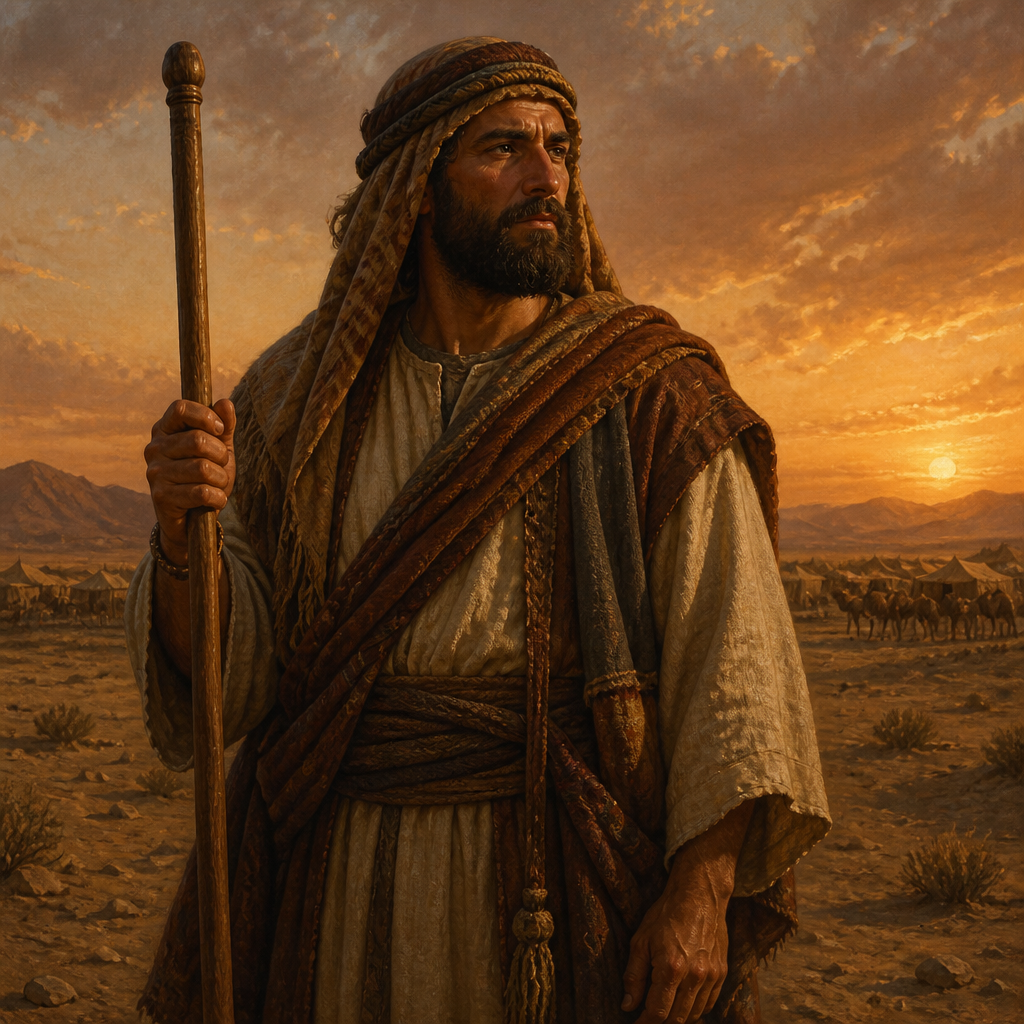
Tema is a figure from the Patriarchal Period, specifically identified in the biblical genealogies as one of the twelve sons of Ishmael. As the grandson of the patriarch Abraham, Tema represents one of the twelve princes promised by God to Ishmael’s line. His name is synonymous with both an individual and the subsequent tribe and region that emerged from his lineage in northern Arabia.
While Tema’s personal biography is not detailed in the narrative prose of the Old Testament, his inclusion in the formal records of Genesis and 1 Chronicles establishes his legal and historical status within the Abrahamic family tree. He is positioned as a foundational figure for the nomadic and mercantile cultures of the ancient Near East, particularly those inhabiting the desert regions east of Canaan.
Background and Family
Tema appears within the chronological framework of the Patriarchal Period, specifically within the records of the generations of Ishmael. According to Genesis 25:12–16, after the death of Abraham, the text enumerates the sons of Ishmael, whom Hagar the Egyptian bore to Abraham. Tema is listed as the ninth son among twelve brothers. His siblings include Nebaioth (the firstborn), Kedar, Adbeel, Mibsam, Mishma, Dumah, Massa, Hadad, Jetur, Naphish, and Kedemah. He also had at least one sister, Mahalath, who later became a wife to her cousin Esau.
The biblical record identifies these twelve sons as "twelve princes according to their nations" (Genesis 25:16). This designation indicates that Tema was not merely an individual but the progenitor of a distinct tribal entity. The name Tema itself is derived from the Hebrew Teyma, often associated with the concept of a "desert" or "south country."
Major Life Events
Specific narrative events concerning Tema’s life—such as his birth, marriage, or death—are not recorded in the Bible. His primary function in the biblical text is genealogical. He serves as a link in the fulfillment of the divine promise made to Abraham regarding Ishmael in Genesis 17:20: "I have blessed him and will make him fruitful and will greatly increase his numbers. He will be the father of twelve rulers, and I will make him into a great nation."
Tema is mentioned twice in the Scriptures. The first instance occurs in Genesis 25:15 during the listing of Ishmael’s descendants. The second mention is found in 1 Chronicles 1:30, which recapitulates the genealogy of the sons of Abraham to establish the ancestral heritage of Israel after the Babylonian exile. By appearing in these records, Tema is confirmed as a historical patriarch of the Arabian tribes.
Relationship to Other Biblical Figures
Tema’s most significant relationship is his status as a son of Ishmael and a grandson of Abraham. This places him within the broader family of the Hebrews, though his lineage diverged from the line of Isaac, through whom the covenantal promises of the land of Canaan were channeled. As a brother to Nebaioth and Kedar, Tema is part of a group often associated in later prophetic literature with the wealth and nomadic power of the East.
His relationship with his sister, Mahalath, also connects his family line back to the line of Isaac through her marriage to Esau, the son of Isaac. This highlights the complex web of tribal intermarriages that characterized the early Patriarchal Period.
Spiritual Significance
The figure of Tema signifies the far-reaching extent of God’s providence toward the descendants of Abraham. Even though the primary biblical narrative focuses on the line of promise through Isaac and Jacob, the inclusion of Tema demonstrates that the other branches of Abraham's family were recognized and their growth into nations was seen as a fulfillment of God's word.
In the broader context of the Old Testament, the tribe named after Tema became known for its caravans and trade. While these later mentions refer to the people rather than the man, they stem from the identity established by the patriarch. Tema represents the beginning of a community that lived on the periphery of the promised land but remained tethered to the history of the biblical patriarchs.
Theologically, Tema serves as a testament to the faithfulness of God in fulfilling his promises to the marginalized members of the Abrahamic family. By recording Tema as one of the twelve princes of Ishmael, the biblical authors acknowledge that Ishmael’s descendants were part of the organized tribal structure of the ancient world, directly resulting from the blessing God pronounced over Hagar’s son.
Furthermore, Tema’s presence in the genealogies of both Genesis and 1 Chronicles provides a bridge between the early nomadic life of the patriarchs and the later international landscape of the Near East. His name preserves the memory of the shared ancestry between the Israelites and their neighbors to the east, reinforcing the historical reality of the Abrahamic expansion.
Frequently Asked Questions
Who was Tema's father?
Tema was the son of Ishmael, who was the son of Abraham and Hagar.
How many brothers did Tema have?
Tema had eleven brothers: Nebaioth, Kedar, Adbeel, Mibsam, Mishma, Dumah, Massa, Hadad, Jetur, Naphish, and Kedemah.
Where is Tema mentioned in the Bible?
Tema is mentioned in the genealogical lists found in Genesis 25:15 and 1 Chronicles 1:30.
What does the name Tema mean?
The name Tema (Hebrew: Teyma) is generally understood to mean 'desert' or 'southland,' reflecting the geographic region his descendants inhabited.
Is Tema considered a patriarch?
Yes, Tema is considered a patriarch of the Ishmaelite tribes, specifically as one of the twelve princes promised by God to come from Ishmael’s line.
Family & Relationships
Parents
 Ishmael, Son of AbrahamFatherGenesis 25:13–15Stated
 TemaThis page
 AdbeelBrotherGenesis 25:13–15Stated
 DumahBrotherGenesis 25:14–15Stated
 Hadad, Son of IshmaelBrotherGenesis 25:15Stated
 JeturBrotherGenesis 25:15Stated
 KedarBrotherGenesis 25:13–15Stated
 KedemahBrotherGenesis 25:15Stated
 Mahalath, Wife of EsauSisterGenesis 25:15
Inferred
No verse names Mahalath and Tema together; the brother link is carried from the surrounding genealogy and is not stated in Scripture.Evidence: Genesis 25:15; Genesis 28:9
 MassaBrotherGenesis 25:14–15Stated
 Mibsam, Son of IshmaelBrotherGenesis 25:13–15Stated
 Mishma, Son of IshmaelBrotherGenesis 25:14–15Stated
 NaphishBrotherGenesis 25:15Stated
 NebaiothBrotherGenesis 25:13–15Stated
Extended family
 AbrahamGrandfatherGenesis 25:15
Inferred
No verse names Abraham and Tema together; the grandson link is carried from the surrounding genealogy and is not stated in Scripture.Evidence: Genesis 25:15; Genesis 25:16; Genesis 17:23
Connected Figures
Family
Father · Genesis 25:13–15
Ishmael was the firstborn son of Abraham through Hagar, the forefather of the Ishmaelite tribes, and a patriarch whom God promised would father twelve princes.
Brother · Genesis 25:13–15
Adbeel was the third son of Ishmael and a grandson of Abraham, recognized as one of the twelve princes and tribal leaders of the Ishmaelite people.
PatriarchsFirst: Genesis 25:139 versesTribal Prince and Patriarch
Brother · Genesis 25:14–15
Dumah was the sixth son of Ishmael and a grandson of Abraham, serving as a tribal patriarch in the Arabian peninsula.
PatriarchsFirst: Genesis 25:149 versesPatriarchal tribal leader
Brother · Genesis 25:15
Hadad was one of the twelve sons of Ishmael and a grandson of the patriarch Abraham, serving as a tribal chieftain in the Arabian peninsula.
PatriarchsFirst: Genesis 25:159 versesTribal Chieftain
Brother · Genesis 25:15
Jetur was the tenth son of Ishmael and a grandson of Abraham, recognized as a tribal patriarch among the descendants of Ishmael in the Arabian peninsula.
PatriarchsFirst: Genesis 25:159 versesTribal Prince
Brother · Genesis 25:13–15
Kedar was the second son of Ishmael and a foundational patriarch of a major nomadic tribal confederation in the Arabian desert.
Brother · Genesis 25:15
Kedemah was the twelfth and youngest son of Ishmael and a grandson of Abraham, serving as a tribal patriarch in the Arabian peninsula.
Sister · Genesis 25:15
Mahalath was the daughter of Ishmael and granddaughter of Abraham who became a wife of Esau in an attempt to please his parents.
Brother · Genesis 25:14–15
Massa was one of the twelve sons of Ishmael and a grandson of Abraham, serving as a tribal patriarch in the Arabian peninsula.
Brother · Genesis 25:13–15
A son of Ishmael and one of the twelve tribal princes who descended from Abraham, serving as a patriarchal figure in the Arabian peninsula.
PatriarchsFirst: Genesis 25:136 versesTribal Prince and Patriarch
Brother · Genesis 25:14–15
A son of Ishmael and a prince of a nomadic Arabian tribe during the Patriarchal Period.
PatriarchsFirst: Genesis 25:149 versesTribal Prince
Brother · Genesis 25:15
Naphish was a son of Ishmael and the progenitor of a nomadic Arabian tribe mentioned in the genealogies of Genesis and 1 Chronicles.
PatriarchsFirst: Genesis 25:157 versesTribal Prince
Categories
Mentions by Book
- Genesis8
- 1 Chronicles1
Scripture References
All 9 indexed verses, in canonical order, from the Berean Standard Bible.
Genesis · 8
- Genesis 16:15Partial
And Hagar bore Abram a son, and Abram gave the name Ishmael to the son she had borne.
Cited as evidence on a family card; added so References, Key Verses and Mentions by Book share one index.
- Genesis 16:16Partial
Abram was eighty-six years old when Hagar bore Ishmael to him.
Cited as evidence on a family card; added so References, Key Verses and Mentions by Book share one index.
- Genesis 17:23Partial
On that very day Abraham took his son Ishmael and all those born in his household or purchased with his money—every male among the members of Abraham’s household—and he circumcised them, just as God had told him.
Cited as evidence on a family card; added so References, Key Verses and Mentions by Book share one index.
- Genesis 17:26Partial
Abraham and his son Ishmael were circumcised on the same day.
Cited as evidence on a family card; added so References, Key Verses and Mentions by Book share one index.
- Genesis 25:13Partial
These are the names of the sons of Ishmael in the order of their birth: Nebaioth the firstborn of Ishmael, then Kedar, Adbeel, Mibsam,
Cited as evidence on a family card; added so References, Key Verses and Mentions by Book share one index.
- Genesis 25:14Partial
Mishma, Dumah, Massa,
Cited as evidence on a family card; added so References, Key Verses and Mentions by Book share one index.
- Genesis 25:15
Hadad, Tema, Jetur, Naphish, and Kedemah.
- Genesis 28:9Partial
Esau went to Ishmael and married Mahalath, the sister of Nebaioth and daughter of Abraham’s son Ishmael, in addition to the wives he already had.
Cited as evidence on a family card; added so References, Key Verses and Mentions by Book share one index.
1 Chronicles · 1
- 1 Chronicles 1:30
Mishma, Dumah, Massa, Hadad, Tema,