Mizzah
Who was Mizzah in the Bible?
An Edomite tribal chief and grandson of Esau who served as a clan leader during the Patriarchs.
Mizzah was a prominent tribal leader of the Edomites during the Patriarchs. According to the genealogical records in the books of Genesis and 1 Chronicles, he was the son of Reuel and a grandson of the patriarch Esau. His mother was Basemath, the daughter of Ishmael, linking him to two major branches of the Abrahamic lineage.
As a 'chief' (Hebrew: 'allup') in the land of Edom, Mizzah represented one of the primary administrative and familial divisions of the Edomite people. While the biblical text provides little narrative detail regarding his personal life, his inclusion in the formal genealogies of the Torah emphasizes the fulfillment of the divine promise that Esau would become the father of a great nation, paralleling the twelve tribes of Israel.
Background and Family
Mizzah appears in the biblical record as a member of the third generation of the house of Esau. His lineage is meticulously preserved in the 'Generations of Esau' found in Genesis 36. Mizzah was one of four sons born to Reuel, who was himself the firstborn son of Esau by his wife Basemath (Genesis 36:13). Through this connection, Mizzah was a grandson of Esau and a great-grandson of the patriarch Isaac.
His siblings included Nahath, Zerah, and Shammah. Together, these four brothers formed the core sub-clans of the Reuelite branch of the Edomites. The inclusion of Mizzah’s name in the chronicles of 1 Chronicles 1:37 reinforces the historical preservation of his identity within the broader context of Middle Eastern tribal history.
Major Life Events
The Bible does not record specific anecdotal events or dialogues involving Mizzah. However, it explicitly defines his social and political standing. Genesis 36:17 identifies him as a 'chief' (Hebrew: allup). The term allup denotes a commander of a thousand or the head of a tribal district. This suggests that Mizzah was not merely a private citizen but a governing figure who wielded authority over a specific territory in the rugged highlands of Seir, which would later be known as Edom.
As a chief, Mizzah would have been responsible for the protection of his clan, the management of grazing lands for their livestock, and the maintenance of the tribal identity within the larger Edomite confederation. His life was likely defined by the migratory and pastoral lifestyle common to the early inhabitants of the Transjordan region during the mid-to-late second millennium BC.
Relationship to Other Biblical Figures
Mizzah’s primary significance in the biblical text is his placement within a complex web of patriarchal relationships. He stands as a link between the patriarchs of Israel and the surrounding nations.
"These are the sons of Esau’s son Reuel: Chiefs Nahath, Zerah, Shammah, and Mizzah. They are the chiefs descended from Reuel in the land of Edom, and they are the grandsons of Esau’s wife Basemath." (Genesis 36:17)
Because his grandmother Basemath was the daughter of Ishmael, Mizzah represents the genealogical intersection of the lines of Isaac and Ishmael. This positioning highlights the shared ancestry of the peoples inhabiting the Levant and the Arabian Peninsula during this era.
Spiritual Significance
In a theological sense, Mizzah serves as a testament to God’s faithfulness to his word. In Genesis 25 and 27, promises were made regarding Esau's future—that he would live by the sword and serve his brother, but also that he would become a nation in his own right. The naming of Mizzah as a chief demonstrates the realization of this 'great nation' status. While Mizzah and the Edomites are often viewed as rivals to the Israelites, their inclusion in the sacred text acknowledges their status as 'kin' to the chosen people of God. Mizzah’s name, which some scholars suggest may mean 'fear' or 'distillation,' remains a permanent part of the record of the expansion of the human family following the patriarchal age.
Mizzah’s significance lies primarily in the formalization of the Edomite nation. As one of the listed 'chiefs,' he represents the transition from a single family (Esau and his wives) into a structured political entity. His presence in both Genesis and 1 Chronicles ensures that the origins of the Edomites are seen not as an accident of history, but as a recorded lineage that God monitored alongside the lineage of Jacob.
Furthermore, Mizzah serves as a genealogical marker for the Reuelite branch of Edom. By documenting his status as a grandson of Basemath (Ishmael’s daughter), the text emphasizes the merging of the Abrahamic lines through Isaac and Ishmael, providing a foundational understanding of the geopolitical landscape of the ancient Near East.
Frequently Asked Questions
Who was Mizzah's father?
Mizzah was the son of Reuel, who was the son of Esau and Basemath.
What does the title 'chief' mean for Mizzah?
The title 'chief' (Hebrew: allup) indicates that Mizzah was a tribal leader or clan head who governed a specific group and territory within Edom.
Which tribe or nation did Mizzah belong to?
Mizzah belonged to the Edomites, the descendants of Esau.
In which books of the Bible is Mizzah mentioned?
Mizzah is mentioned in the books of Genesis (chapter 36) and 1 Chronicles (chapter 1).
Who were Mizzah's siblings?
Mizzah had three brothers: Nahath, Zerah, and Shammah.
Family & Relationships
Parents
 Reuel, Son of EsauFatherGenesis 36:13Stated
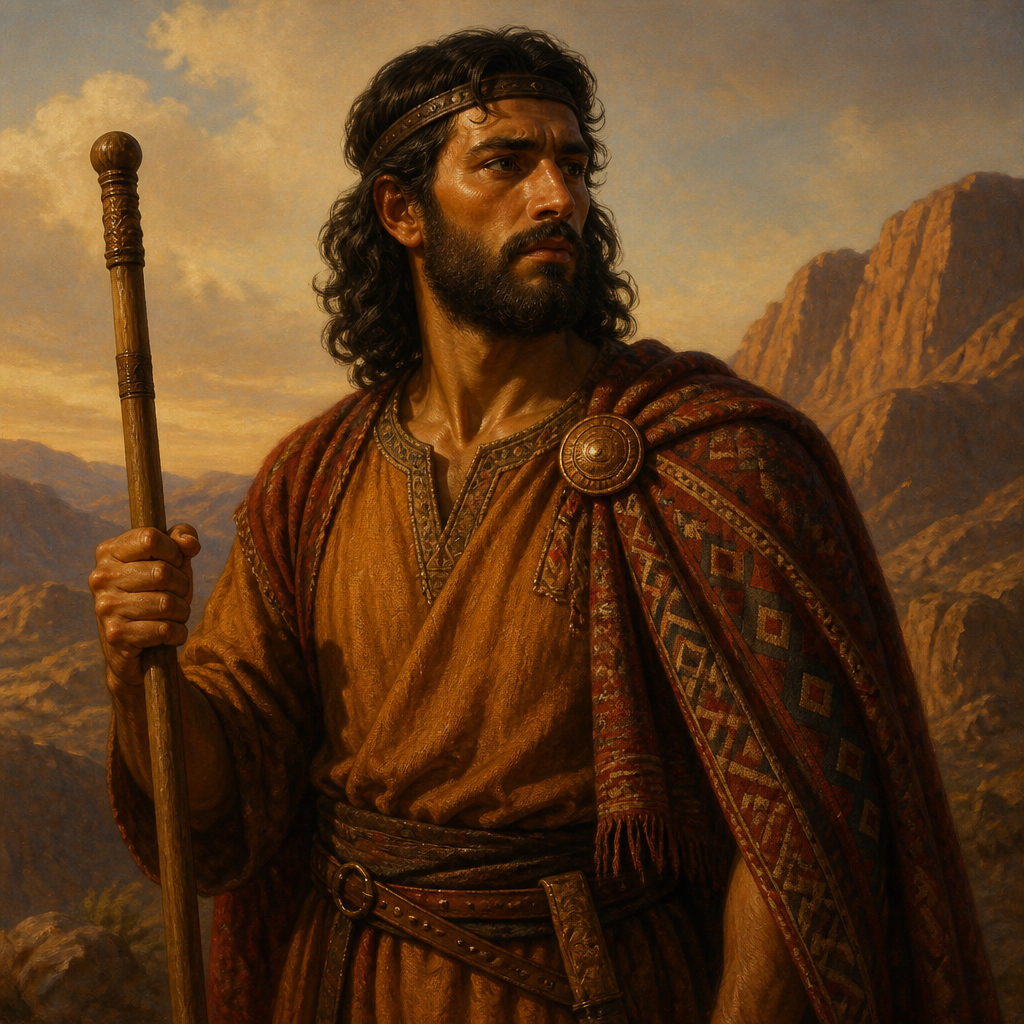 MizzahThis page
 Nahath, Grandson of EsauBrotherGenesis 36:13Stated
 Shammah, Grandson of EsauBrotherGenesis 36:13Stated
 Zerah, Grandson of EsauBrotherGenesis 36:13Stated
Extended family
 EsauGrandfatherGenesis 36:17
Inferred
Genesis 36:17 lists Mizzah and Esau among the sons of esau’s, but does not say how the two of them are related.Evidence: Genesis 36:17; Genesis 36:13
Connected Figures
Family
Father · Genesis 36:13
Reuel was a patriarch of the Edomites, the son of Esau and Mahalath, and the progenitor of four major clans in the land of Seir.
Brother · Genesis 36:13
Nahath was a clan leader and chief of the Edomites, identified as the son of Reuel and a grandson of Esau and Basemath.
Brother · Genesis 36:13
Shammah was a prominent Edomite chief, the son of Reuel and grandson of Esau and Basemath.
Brother · Genesis 36:13
A son of Reuel and grandson of Esau who became a tribal chief in the land of Edom.
Grandfather · Genesis 36:17
The firstborn son of Isaac and Rebekah, a skillful hunter and the progenitor of the Edomites, known for selling his birthright for a bowl of stew.
PatriarchsFirst: Genesis 25:2573 versesSkillful hunter, man of the field, Chief
Categories
Mentions by Book
- Genesis4
- 1 Chronicles1
Scripture References
All 5 indexed verses, in canonical order, from the Berean Standard Bible.
Genesis · 4
- Genesis 36:4Partial
And Adah bore Eliphaz to Esau, Basemath gave birth to Reuel,
Cited as evidence on a family card; added so References, Key Verses and Mentions by Book share one index.
- Genesis 36:10Partial
These are the names of Esau’s sons: Eliphaz son of Esau’s wife Adah, and Reuel son of Esau’s wife Basemath.
Cited as evidence on a family card; added so References, Key Verses and Mentions by Book share one index.
- Genesis 36:13
These are the sons of Reuel: Nahath, Zerah, Shammah, and Mizzah. They are the grandsons of Esau’s wife Basemath.
- Genesis 36:17
These are the sons of Esau’s son Reuel: Chiefs Nahath, Zerah, Shammah, and Mizzah. They are the chiefs descended from Reuel in the land of Edom, and they are the grandsons of Esau’s wife Basemath.
1 Chronicles · 1
- 1 Chronicles 1:37
The sons of Reuel: Nahath, Zerah, Shammah, and Mizzah.