Hur of the Tribe of Judah
A prominent leader of the tribe of Judah who supported Moses' hands during the battle against Amalek and served as a temporary leader of Israel.
Hur was a significant figure during the Israelite Exodus from Egypt and the subsequent wilderness wanderings. A member of the tribe of Judah, he rose to a position of high trust within the camp of Israel, acting as one of Moses' closest confidants alongside Aaron. His heritage is firmly rooted in the line of Caleb, establishing him as a man of noble lineage and considerable influence among the elders of the nation.
He is best remembered for his physical and spiritual support of Moses during critical moments of the journey. Whether providing stability during military conflict or exercising judicial authority while Moses ascended Mount Sinai, Hur is portrayed as a foundational pillar of the early Israelite community. His legacy continued through his descendants, most notably his grandson Bezalel, who was divinely chosen to oversee the construction of the Tabernacle.
Background and Family
The genealogical record of Hur is extensively documented in the books of Chronicles, identifying him as a central figure in the tribe of Judah. He was the son of Caleb (the son of Hezron) and Ephrath (also called Ephrathah). The text in 1 Chronicles 2:19-20 notes that after the death of Azubah, Caleb married Ephrath, who bore him Hur. This lineage connects Hur to the very heart of Judah’s leadership.
Hur’s own family was vast and influential. He was the father of Uri and the grandfather of Bezalel, the master craftsman of the Tabernacle. Chronicles further identifies him as the "firstborn of Ephrathah" and the "father of Bethlehem," suggesting that his descendants were instrumental in the settling and naming of prominent Judean territories. His children included Shobal, Salma, Hareph, and several others such as Penuel and Ezer, who are listed as leaders of various clans within the tribe. His siblings included figures such as Jesher, Shobab, and Ardon.
Major Life Events
The Battle at Rephidim
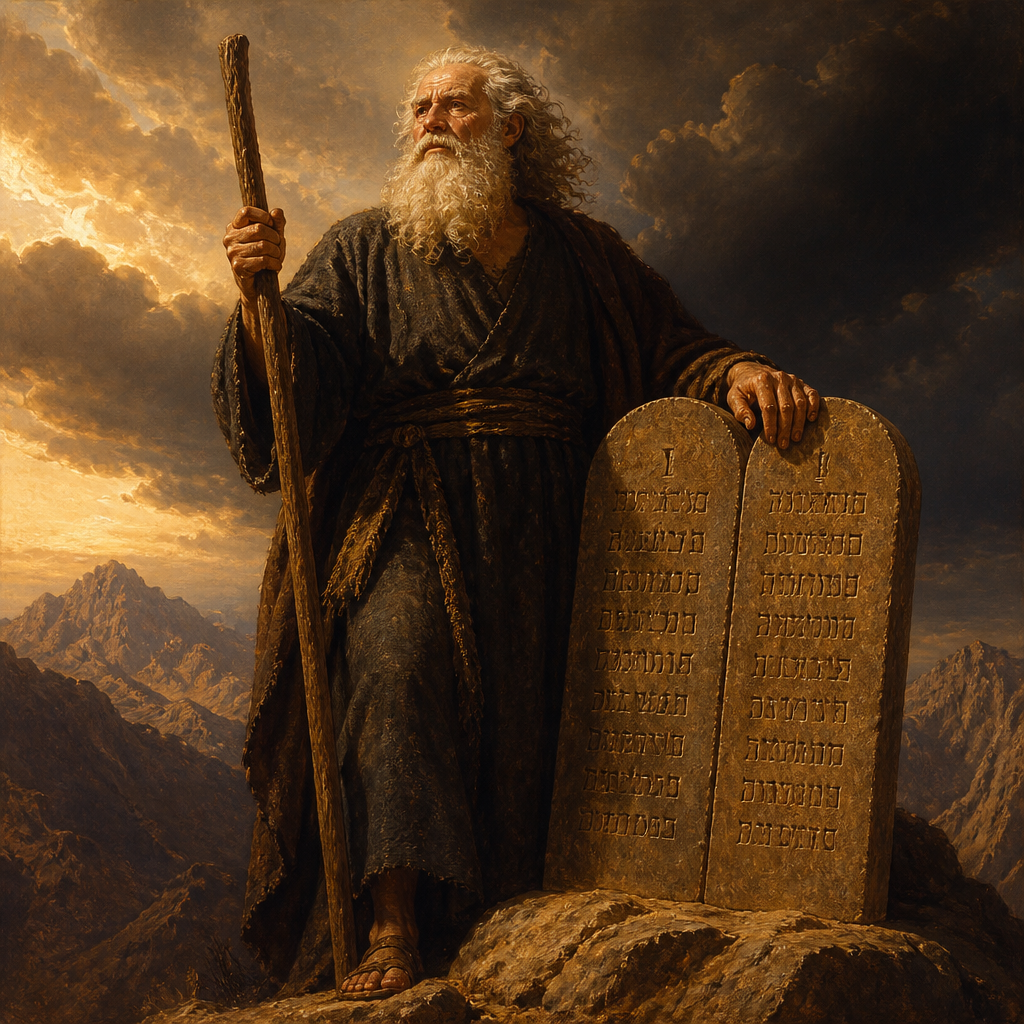
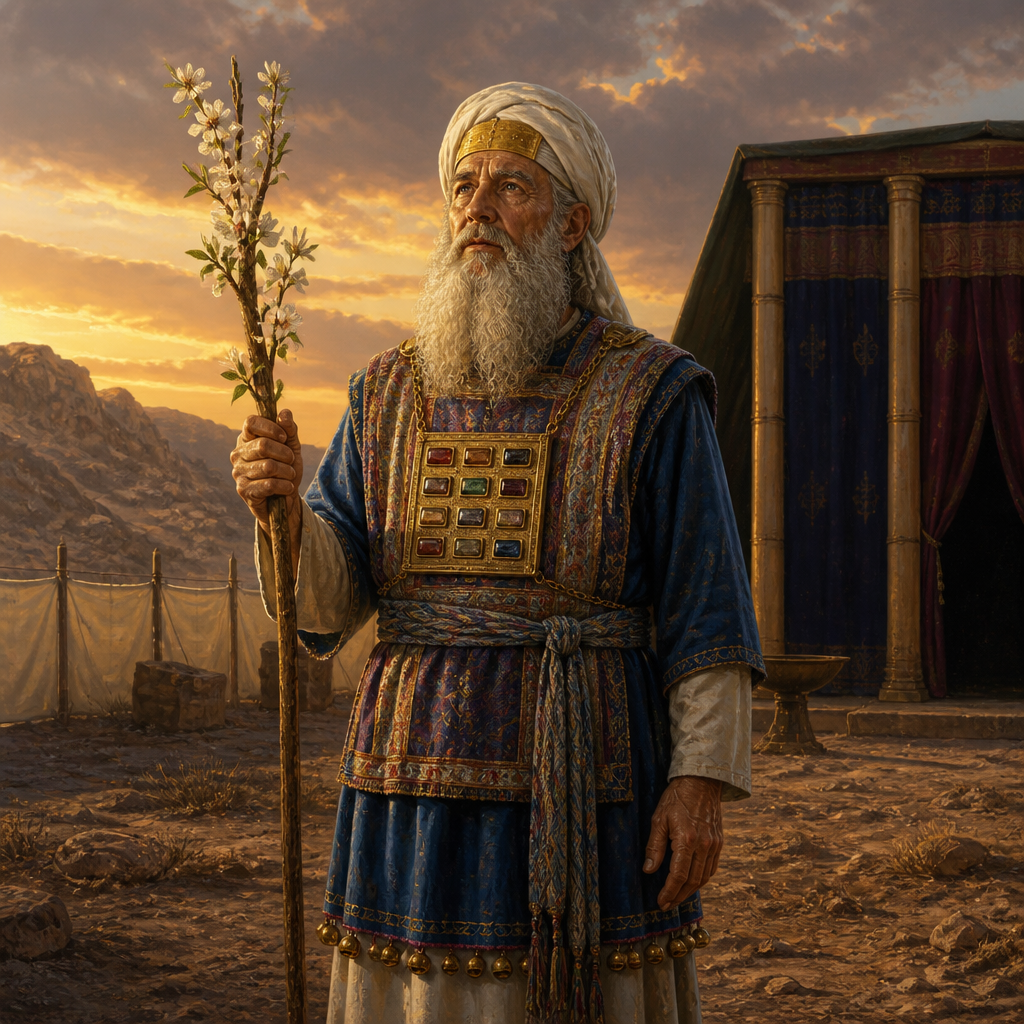
Hur first appears in the biblical narrative during the conflict with the Amalekites at Rephidim (Exodus 17). As Joshua led the Israelite army in the valley, Moses stood atop a hill with the staff of God. It was observed that when Moses held up his hands, Israel prevailed, but when he lowered them, Amalek prevailed. When Moses became exhausted, Hur and Aaron took a stone for Moses to sit on and stood on either side of him, supporting his hands. This collaborative effort ensured that Moses' hands remained "steady until the sun went down," resulting in a decisive victory for Israel. This event established Hur as a vital auxiliary to Moses' leadership.
Leadership at Mount Sinai
Hur’s status was further solidified when Moses prepared to ascend Mount Sinai to receive the Law. In Exodus 24:14, Moses appointed Aaron and Hur as the acting judicial authorities for the camp in his absence. He instructed the elders, "Wait here for us until we return to you. Aaron and Hur are here with you. Whoever has a dispute can go to them." This delegation of power indicates that Hur was viewed as having the wisdom, social standing, and spiritual maturity necessary to govern the nation and resolve legal disputes during a period of intense divine revelation.
Relationship to Other Biblical Figures
Hur’s primary relationships in the biblical text are defined by his proximity to Moses and Aaron. He is frequently paired with Aaron, suggesting a triumvirate of leadership during the early wilderness period. While Aaron represented the burgeoning priestly line, Hur represented the secular and tribal leadership of Judah.
His relationship with his grandson, Bezalel, is also emphasized across multiple books (Exodus 31:2, 35:30, 38:22, and 2 Chronicles 1:5). The repeated identification of Bezalel as the "son of Uri, the son of Hur" serves to validate Bezalel’s pedigree and link the artistic glory of the Tabernacle back to the faithful leadership of Hur.
Spiritual Significance
Theologically, Hur represents the necessity of communal support in the fulfillment of divine purposes. While Moses was the chosen mediator, the narrative of Exodus 17 makes it clear that Moses could not sustain his task alone. Hur’s role is often cited in homiletics as a model for "arm-bearing"—the act of supporting those in spiritual leadership to ensure the success of the community.
Furthermore, Hur’s inclusion in the genealogies of 1 Chronicles highlights the transition from the nomadic life of the wilderness to the settled life of the Promised Land. As the "father of Bethlehem," Hur’s legacy is tied to the very town that would eventually produce King David and, ultimately, the Messiah. His life serves as a bridge between the liberation from Egypt and the established kingdom of Judah.
Spiritual Significance
Hur serves as a model of steadfast, supportive leadership within the covenant community. His presence alongside Aaron during the battle against Amalek demonstrates that divine victory often requires the cooperation of faithful individuals who support their leaders. In the judicial context of Mount Sinai, he represents the administrative and legal stability required by the nation of Israel as they transitioned into a governed society under God's Law.
His lasting significance is also found in his lineage. By being the grandfather of Bezalel, the man filled with the Spirit of God for the construction of the Tabernacle, Hur’s faithfulness is linked to the physical dwelling place of God among His people. His role as a progenitor of the inhabitants of Bethlehem further cements his place in the historical and redemptive arc of the tribe of Judah.
Frequently Asked Questions
Who was Hur's father?
Hur was the son of Caleb and his wife Ephrath (also known as Ephrathah), as recorded in 1 Chronicles 2:19.
What role did Hur play in the battle against Amalek?
During the battle, Hur and Aaron stood on either side of Moses, holding up his hands so that Israel would continue to prevail against the Amalekites until sunset.
Did Hur have any official authority in Israel?
Yes. When Moses ascended Mount Sinai, he appointed Hur and Aaron to act as judges and leaders, instructing anyone with a legal dispute to take the matter to them.
How is Hur related to the building of the Tabernacle?
Hur was the grandfather of Bezalel, the chief craftsman whom God specifically called and filled with His Spirit to construct the Tabernacle and its furnishings.
What tribe did Hur belong to?
Hur belonged to the tribe of Judah, and he is listed as a prominent descendant of Perez and Hezron.
Connected Figures
Moses
Leader and companion
Aaron
Co-leader and companion
Caleb
Father
Bezalel
Grandson
Uri
Son
Ephrathah
Mother
Categories
Mentions by Book
- Exodus6
- 1 Chronicles5
- 2 Chronicles1
Family & Relationships
Child
Exodus 17:10
Child
Exodus 17:10
Child
Exodus 17:10
Child
Exodus 17:10
Child
Exodus 17:10
Child
Exodus 17:10
Child
Exodus 17:10
Child
Exodus 17:10
Child
Exodus 17:10
Child
Exodus 17:10
Sibling
Exodus 17:10
Sibling
Exodus 17:10
Sibling
Exodus 17:10
Sibling
Exodus 17:10
Sibling
Exodus 17:10
Sibling
Exodus 17:10
Sibling
Exodus 17:10
Sibling
Exodus 17:10
Sibling
Exodus 17:10
Sibling
Exodus 17:10
Sibling
Exodus 17:10
Sibling
Exodus 17:10
Sibling
Exodus 17:10
Sibling
Exodus 17:10
Sibling
Exodus 17:10
Sibling
Exodus 17:10
Sibling
Exodus 17:10
Sibling
Achsah, Daughter of Caleb ben Hezron
Exodus 17:10
Sibling
Achsah, Daughter of Caleb ben Hezron
1 Chronicles 2:49
Sibling
1 Chronicles 2:18
Parent
1 Chronicles 2:9
Sibling
Ephah, Son of JahdaiDisputed
1 Chronicles 2:47
Parent
Ruth 1:2
Sibling
1 Chronicles 2:46
Sibling
GeshanDisputed
1 Chronicles 2:47
Sibling
1 Chronicles 2:46
Sibling
1 Chronicles 2:18
Sibling
Jotham, Son of JahdaiDisputed
1 Chronicles 2:47
Sibling
1 Chronicles 2:42
Sibling
1 Chronicles 2:46
Sibling
Pelet, Son of JahdaiDisputed
1 Chronicles 2:47
Sibling
RegemDisputed
1 Chronicles 2:47
Sibling
Shaaph, Son of JahdaiDisputed
1 Chronicles 2:47
Sibling
1 Chronicles 2:49
Sibling
1 Chronicles 2:48
Sibling
1 Chronicles 2:49
Sibling
1 Chronicles 2:18
Sibling
1 Chronicles 2:48
Others Named Hur of the Tribe of Judah
Hur, Father of Solomon's Deputy1 Kings 4:8
A man of the tribe of Ephraim during the United Monarchy whose son served as one of King Solomon’s twelve district governors.
Hur, Father of RephaiahNehemiah 3:9
The father of Rephaiah, a high-ranking Judean official who oversaw the reconstruction of the Jerusalem wall during the post-exilic return under Nehemiah.
Hur, King of MidianNumbers 31:8
One of the five kings or chiefs of the Midianites who allied with the Moabites and was slain by the Israelites during the wilderness journey.