Hur, Father of Rephaiah
Who was Hur, Father of Rephaiah, in the Bible?
The father of Rephaiah, a high-ranking Judean official who oversaw the reconstruction of the Jerusalem wall during the post-exilic return under Nehemiah.
This is one of 4 people named Hur in the Bible. See all 4 →
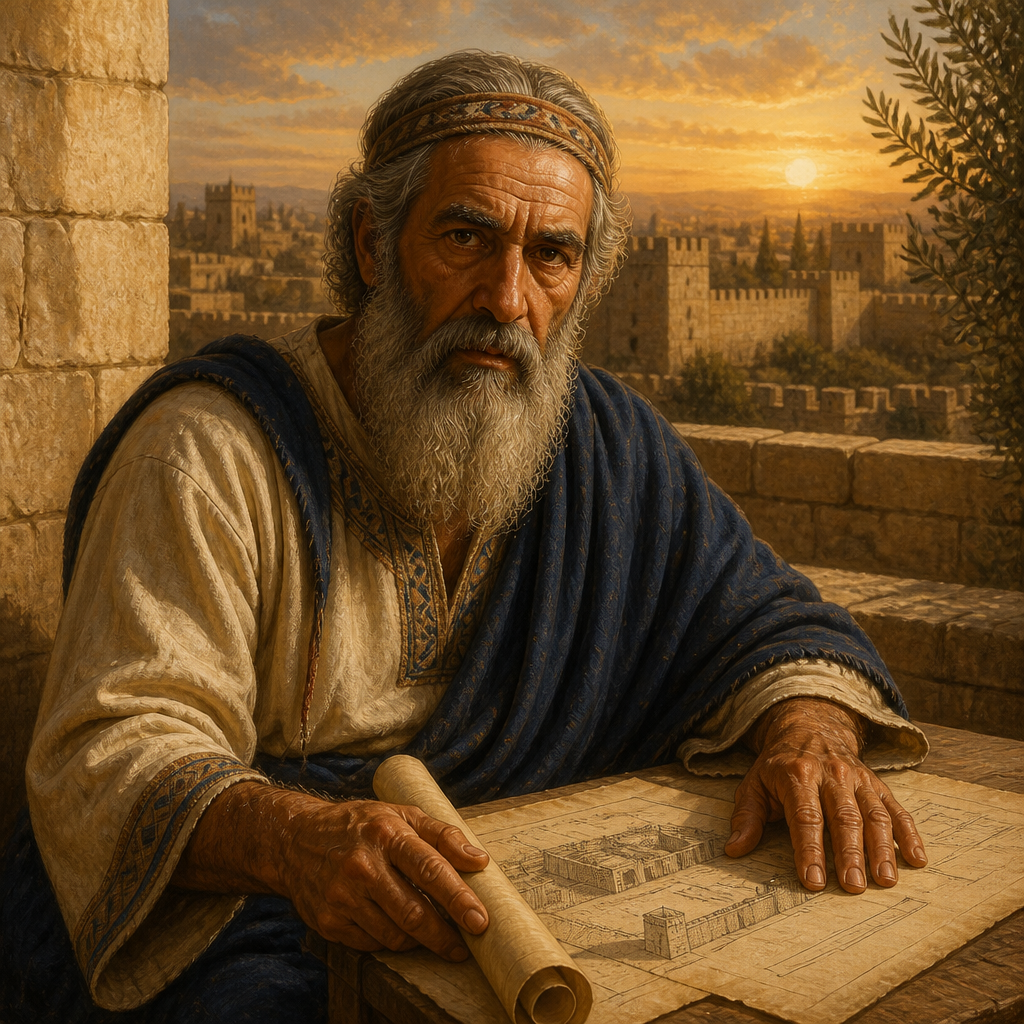
Hur was a Judean living in the 5th century BC during the Post-Exilic Period. While he is only mentioned once in the biblical record, his identity is established through the administrative and architectural achievements of his son, Rephaiah. Hur’s family held a position of significant civil authority in the restored community of Jerusalem following the Babylonian exile.
As the father of a 'ruler of a half-district of Jerusalem,' Hur belonged to the governing elite of the province of Yehud. His inclusion in the genealogy of those who rebuilt the city signifies his standing within the tribal structures that survived the exile and returned to the land under the Persian decrees.
Background and Family
The biblical record concerning Hur is found exclusively in the third chapter of the Book of Nehemiah. This chapter provides a meticulous accounting of the families and officials who participated in the reconstruction of Jerusalem’s walls in approximately 444 BC. Hur is identified as the father of Rephaiah.
While the text does not explicitly state Hur’s own occupation or his specific tribe, the context of the list strongly implies he was of the tribe of Judah. His son, Rephaiah, is described as the ruler of a 'half-district of Jerusalem' (Nehemiah 3:9). In the Persian administrative system of the time, Jerusalem was divided into two administrative sectors or districts. The fact that Hur’s son held such a high-level magistrate position suggests that Hur was a man of noble standing and influence within the Jewish community that had returned from Babylon.
Major Life Events
Because the biblical text focuses on the generation of the returnees active under Nehemiah’s leadership, Hur’s personal biography is largely obscured by the deeds of his son. However, his presence in the text serves a vital genealogical purpose. In the Post-Exilic Period, lineage was essential for establishing legal rights to land and positions of authority. By being named as the father of Rephaiah, Hur is solidified as a patriarch of a family that was instrumental in the physical and political restoration of the Jewish capital.
His son, Rephaiah, was assigned a specific section of the wall to repair. This labor was not merely manual; it was a demonstration of political loyalty and religious devotion. As the head of the family, Hur would have been the source of the social standing that allowed Rephaiah to command the resources and labor required for such a significant civic undertaking.
Relationship to Other Biblical Figures
Hur’s primary relationship in the text is to his son, Rephaiah. He is positioned alongside other leaders of the restoration, such as Nehemiah the governor and Eliashib the high priest. Although Hur himself is not recorded as laying stones, he is part of the 'aristocracy' of the return—the heads of houses who provided the leadership structure necessary to transition the Jews from a group of exiles back into a functioning city-state.
Spiritual Significance
The spiritual significance of Hur lies in his contribution to the continuity of the covenant people. The Book of Nehemiah emphasizes that the restoration of Jerusalem was a work of God, but one achieved through the hands of specific families. Hur represents the quiet, foundational generation that maintained their identity during the exile and passed on the responsibility of leadership to their children. His name is etched into the record of the wall’s completion, symbolizing the collective effort of the faithful to restore the holy city and the place of God's dwelling among His people.
Hur represents the generational link in the Post-Exilic Period between the trauma of the Babylonian exile and the hope of the restoration. His significance is found in his lineage; he produced a son, Rephaiah, who held a pivotal administrative role in the governance of Jerusalem. By being recorded in the Nehemiah 3 'Register of Builders,' Hur is immortalized as part of the faithful remnant that prioritized the reconstruction of the Holy City over their own private interests.
Theologically, Hur’s mention highlights the importance of the family unit in the reconstruction of the community of faith. His presence in the text serves as a reminder that the great works of leaders like Nehemiah were supported by noble families who provided the local administration and labor necessary to fulfill the divine mandate of restoration.
Frequently Asked Questions
Who was Hur in the Book of Nehemiah?
He was the father of Rephaiah, who served as the ruler of half the district of Jerusalem during the time of the wall's reconstruction.
What did Hur do to help rebuild Jerusalem?
While the Bible does not record Hur's specific actions, it credits his son Rephaiah with repairing a section of the wall next to the other district rulers.
What district did Hur's family rule?
His son Rephaiah ruled a 'half-district of Jerusalem,' indicating that the family held significant political authority in the Judean capital under Persian rule.
What tribe did Hur belong to?
While not explicitly stated, he is widely considered to be from the tribe of Judah, given his son's leadership role in the Judean capital of Jerusalem.
Family & Relationships
 Hur, Father of RephaiahThis page
Children
 Rephaiah, Ruler of a Half-District of JerusalemSonNehemiah 3:9Stated
Connected Figures
Family
Son · Nehemiah 3:9
A high-ranking administrative leader in post-exilic Jerusalem who oversaw the reconstruction of a section of the city wall under Nehemiah.
Exile and ReturnFirst: Nehemiah 3:91 versesRuler of a half-district of Jerusalem
Categories
Mentions by Book
- Nehemiah1
Scripture References
All 1 indexed verse, in canonical order, from the Berean Standard Bible.
Nehemiah · 1
- Nehemiah 3:9
Next to them, Rephaiah son of Hur, ruler of a half-district of Jerusalem, made repairs;
Others Named Hur
Compare all 4 bearers →Hur, Father of Solomon's Deputy1 Kings 4:8
A man of the tribe of Ephraim during the United Monarchy whose son served as one of King Solomon’s twelve district governors.
Hur, King of MidianNumbers 31:8
One of the five kings or chiefs of the Midianites who allied with the Moabites and was slain by the Israelites during the wilderness journey.
Hur of the Tribe of JudahExodus 17:10
A prominent leader of the tribe of Judah who supported Moses' hands during the battle against Amalek and served as a temporary leader of Israel.