Ephrathah
Who was Ephrathah in the Bible?
A matriarch of the Tribe of Judah, wife of Caleb and mother of Hur, whose lineage is inextricably linked to the founding of Bethlehem.
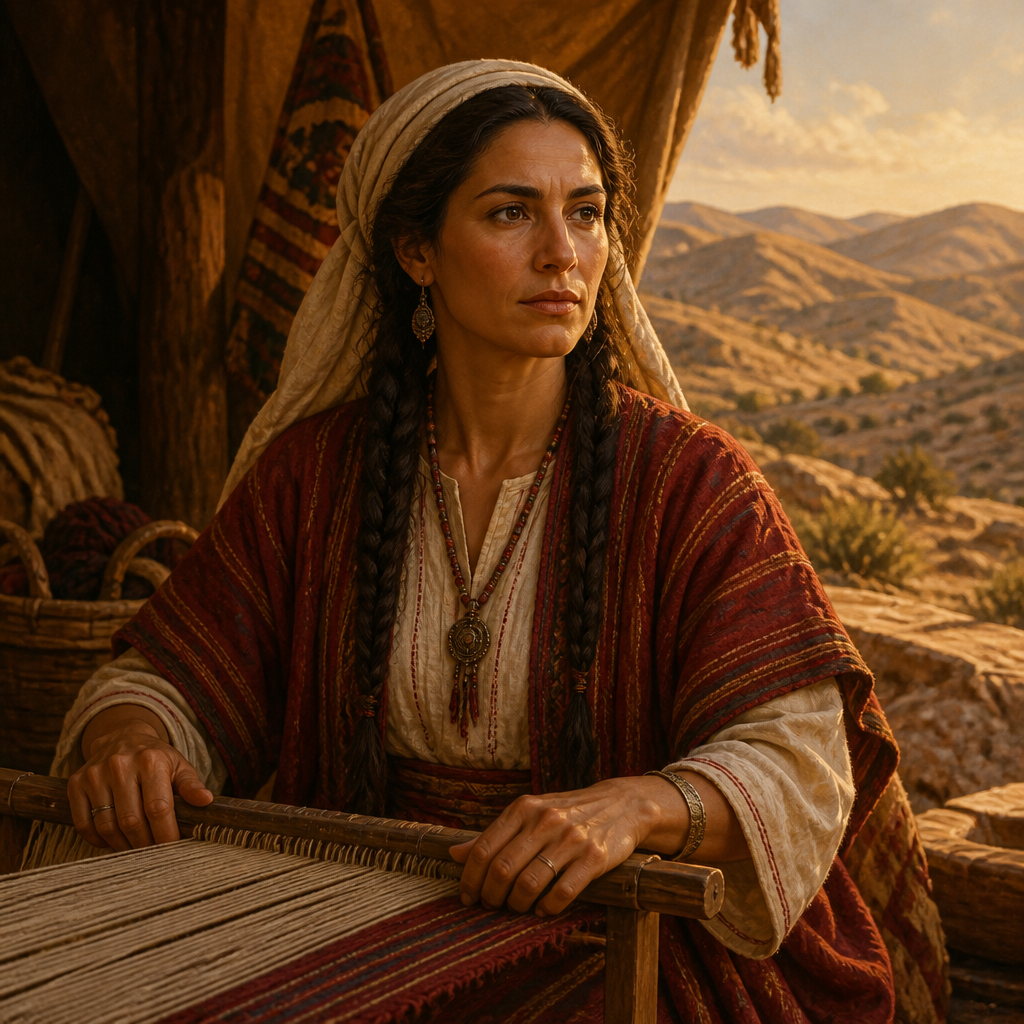
Ephrathah (also referred to as Ephrath) was a prominent matriarch within the Tribe of Judah during the era of the Egyptian sojourn and the transition toward the wilderness. Her primary historical and genealogical significance lies in her role as the wife of Caleb, the son of Hezron, and as the mother of Hur, a key figure in the early leadership of the Israelite community. Through her son Hur, she is recorded as a direct ancestor of the founders of significant Judean towns, most notably Bethlehem.
The biblical record concerning Ephrathah is preserved primarily within the genealogical registers of 1 Chronicles. These records serve to establish the legitimacy of the Judean aristocracy and the geographical claims of various clans. While the narrative details of her life are sparse, the frequent association of her name with the territory surrounding Bethlehem—often called Ephrathah in poetic and prophetic literature—highlights her status as a foundational figure in the identity of the southern Judean highlands.
Background and Family
Ephrathah appears in the genealogical records of the Tribe of Judah, specifically within the line of Hezron. According to 1 Chronicles 2:19, Ephrathah (there called Ephrath) became the wife of Caleb, the son of Hezron, following the death of his first wife, Azubah. This union marked a significant shift in the Calebite lineage, as it produced Hur, who is described as the "firstborn of Ephrathah" (1 Chronicles 4:4).
The family structure is further complicated by the mention of "Caleb-ephrathah" in 1 Chronicles 2:24. This place-name suggests a union of names between the patriarch Caleb and his wife, or perhaps a geographical location named in her honor where Hezron, Caleb’s father, died. The text notes that after Hezron’s death in this location, his wife Abijah bore Ashhur, the father of Tekoa. This intertwining of names and locations underscores Ephrathah’s role not just as an individual, but as a symbolic mother of a specific region in Judah.
Major Life Events
As is common for female figures in the Chronicler’s genealogies, Ephrathah is defined by her marriages and her progeny rather than by recorded dialogue or specific actions. Her entry into the narrative occurs as a point of transition: "When Azubah died, Caleb married Ephrath" (1 Chronicles 2:19). This marriage facilitated the continuation of the line that would eventually lead to the establishment of Bethlehem.
Her life spanned the difficult transition of the Israelites from their settled life in Egypt toward the movements that would eventually lead to the conquest of Canaan. As the mother of Hur, she was the progenitor of a line that included famous craftsmen like Bezalel (the architect of the Tabernacle) and influential clan leaders who settled the regions of Gedor, Hushah, and Kiriath-jearim.
Relationship to Other Biblical Figures
Ephrathah’s primary relationship is with her husband, Caleb. It is important to distinguish this Caleb (son of Hezron) from the more famous Caleb (son of Jephunneh) who served as a spy for Moses, though some scholars suggest they represent different branches of the same ancestral tradition. Through her son Hur, she is the grandmother of Shobal, Salma, and Hareph (1 Chronicles 2:50-51).
Crucially, her descendants are credited with the founding of Bethlehem. 1 Chronicles 4:4 explicitly identifies Hur as the "father of Bethlehem," linking Ephrathah directly to the ancestral home of King David. This connection is reinforced in the Book of Ruth and 1 Samuel, where David’s family is described as "Ephrathites from Bethlehem" (Ruth 1:2, 1 Samuel 17:12). While these later verses use the term as a gentilic (a group name), the origin of the term is rooted in the matriarch Ephrathah.
Spiritual Significance
In a biblical context, Ephrathah represents the hidden foundations of the Messianic line. Though she is a "minor" figure in terms of narrative space, her name becomes synonymous with the region from which the "Ruler in Israel" would emerge. The prophet Micah later utilized her name to identify the birthplace of the Messiah: "But you, Bethlehem Ephrathah... out of you will come for me one who will be ruler over Israel" (Micah 5:2).
Her inclusion in the genealogies signifies the importance of the Judean matriarchs in preserving the covenantal line. She stands as a bridge between the early tribal formation in Egypt and the settled monarchy in the land of promise. Her legacy is not found in words, but in the enduring name of the land that would eventually host the birth of David and, centuries later, Jesus of Nazareth.
Ephrathah’s theological importance is primarily genealogical and geographic. She serves as the biological and symbolic link between the Tribe of Judah and the city of Bethlehem. By being the mother of Hur, she establishes the lineage that eventually produces the 'Ephrathites'—the specific clan from which King David and the Davidic dynasty emerged. Her name is immortalized in the designation 'Bethlehem Ephrathah,' a term that carries deep Messianic weight in both the Old and New Testaments.
Furthermore, her presence in the Chronicler’s records highlights the dignity of women in the foundational history of Israel. Amidst long lists of male descendants, her name is preserved to clarify the specific origins of the Bethlehemite branch of Judah. This ensures that the history of Israel is understood not just through its patriarchs, but through the specific unions that shaped the tribal territories and the eventual coming of the Davidic King.
Frequently Asked Questions
Is Ephrathah a person or a place?
In the Bible, Ephrathah refers to both. It is the name of a matriarch in the Tribe of Judah (the wife of Caleb) and also a geographic name for the area around Bethlehem. The town likely took its secondary name from this prominent ancestral mother.
Who was Ephrathah’s husband?
Ephrathah (also called Ephrath) was the wife of Caleb, who was the son of Hezron and the grandson of Perez.
What is the relationship between Ephrathah and King David?
Ephrathah is a direct ancestor of King David. She was the mother of Hur, whose descendants founded Bethlehem. Consequently, David’s family members, such as Jesse and Elimelech, are referred to as 'Ephrathites.'
Does Ephrathah appear in the New Testament?
The name Ephrathah does not appear as an individual person in the New Testament, but her legacy is present through the birth of Jesus in Bethlehem, fulfilling the prophecy of Micah 5:2 which mentions 'Bethlehem Ephrathah.'
Why is she sometimes called 'Ephrath'?
Ephrath is an alternative spelling or a shortened version of the name Ephrathah. 1 Chronicles 2:19 uses 'Ephrath,' while 1 Chronicles 2:50 and 4:4 use 'Ephrathah' to refer to the same woman.
Family & Relationships
 Hezron, Son of PerezHusband1 Chronicles 2:24Stated
 Caleb, Son of HezronHusband1 Chronicles 2:19–24Stated
 EphrathahThis page
Children
 Hur of the Tribe of JudahSon1 Chronicles 2:19Stated
 Ram, Son of HezronSon1 Chronicles 2:24–25Stated
Connected Figures
Family
Husband · 1 Chronicles 2:24
A high-ranking member of the tribe of Judah and a direct ancestor in the Davidic and Messianic lineage.
Egypt and WildernessFirst: Genesis 46:1213 versesClan FounderJudah
Husband · 1 Chronicles 2:19–24
A prominent descendant of Judah and son of Hezron, Caleb was a foundational figure in the genealogical expansion of the Tribe of Judah during the Egyptian and wilderness eras.
Son · 1 Chronicles 2:19
A prominent leader of the tribe of Judah who supported Moses' hands during the battle against Amalek and served as a temporary leader of Israel.
Son · 1 Chronicles 2:24–25
A high-ranking member of the Tribe of Judah and a crucial link in the Davidic and Messianic genealogies, serving as the grandfather of Nahshon.
Categories
Mentions by Book
- 1 Samuel1
- 1 Chronicles9
Scripture References
All 10 indexed verses, in canonical order, from the Berean Standard Bible.
1 Samuel · 1
- 1 Samuel 17:12Partial
Now David was the son of a man named Jesse, an Ephrathite from Bethlehem of Judah who had eight sons. And in the days of Saul, Jesse was old and well along in years.
Cited as a key verse; added so References, Key Verses and Mentions by Book share one index.
1 Chronicles · 9
- 1 Chronicles 2:19
When Azubah died, Caleb married Ephrath, who bore to him Hur.
- 1 Chronicles 2:20Partial
Hur was the father of Uri, and Uri was the father of Bezalel.
Cited as evidence on a family card; added so References, Key Verses and Mentions by Book share one index.
- 1 Chronicles 2:21Partial
Later, Hezron slept with the daughter of Machir the father of Gilead. He had married her when he was sixty years old, and she bore to him Segub.
Cited as evidence on a family card; added so References, Key Verses and Mentions by Book share one index.
- 1 Chronicles 2:22Partial
Segub was the father of Jair, who had twenty-three cities in the land of Gilead.
Cited as evidence on a family card; added so References, Key Verses and Mentions by Book share one index.
- 1 Chronicles 2:23Partial
But Geshur and Aram captured Havvoth-jair, along with Kenath and its sixty surrounding villages. All these were descendants of Machir the father of Gilead.
Cited as evidence on a family card; added so References, Key Verses and Mentions by Book share one index.
- 1 Chronicles 2:24
After Hezron died in Caleb-ephrathah, his wife Abijah bore to him Ashhur the father of Tekoa.
- 1 Chronicles 2:25Partial
The sons of Jerahmeel the firstborn of Hezron: Ram his firstborn, Bunah, Oren, Ozem, and Ahijah.
Cited as evidence on a family card; added so References, Key Verses and Mentions by Book share one index.
- 1 Chronicles 2:50
These were the descendants of Caleb. The sons of Hur the firstborn of Ephrathah: Shobal the father of Kiriath-jearim,
- 1 Chronicles 4:4
Penuel was the father of Gedor, and Ezer was the father of Hushah. These were the descendants of Hur, the firstborn of Ephrathah and the father of Bethlehem.