Shobal, Son of Hur
Who was Shobal, Son of Hur, in the Bible?
A prominent leader of the tribe of Judah and the son of Hur, known as the 'father' or founder of the settlement of Kiriath-jearim.
This is one of 2 people named Shobal in the Bible. See all 2 →
Shobal was a significant clan leader within the tribe of Judah during the period of the Egyptian sojourn and the transition toward the settlement of Canaan. As the son of Hur and the grandson of Caleb (specifically the descendant of Hur, the firstborn of Ephrathah), Shobal occupied a high-ranking position within the genealogical records of Israel’s most powerful tribe. His lineage is meticulously preserved in the Book of Chronicles, underscoring his role in establishing the geographical and social identity of the Judean people.
He is primarily identified in the biblical text as the 'father' of Kiriath-jearim, a term that in genealogical contexts often signifies he was the founder, re-builder, or the primary chieftain of that specific region. His descendants formed various sub-clans that contributed to the demographic landscape of ancient Judah, particularly in the areas associated with the Zorathites and the Manahathites.
Background and Family
Shobal's ancestry is rooted in the prestigious line of Judah, specifically through the branch of Caleb and Hur. According to 1 Chronicles 2:50, Shobal was the son of Hur, who was the firstborn of Ephrathah. This connection places Shobal in a direct line of leadership; his brother Uri was the father of Bezalel, the famed artisan who constructed the Tabernacle in the wilderness. Shobal was part of a large family of siblings, including Salma (the father of Bethlehem), Hareph, and several others such as Jezreel, Ishma, and Hazzelelponi.
His immediate family included his sons Haroeh and Menuhoth. Through his descendants, Shobal's influence extended into the regional identity of Judah. The Chronicler notes that he was the ancestor of the inhabitants of Kiriath-jearim, a city that would later play a critical role in Israelite history as the resting place of the Ark of the Covenant.
Major Life Events
While the biblical record does not provide a narrative account of Shobal’s individual actions or speeches, his inclusion in the foundational genealogies of 1 Chronicles 2 and 4 serves as a record of his historical impact. He is listed among the primary 'descendants of Judah' alongside figures like Perez, Hezron, Carmi, and Hur (1 Chronicles 4:1). This grouping suggests that Shobal was considered one of the 'architects' of the tribe's internal structure.
His most significant recorded achievement is the establishment of Kiriath-jearim. In the Ancient Near East, being the 'father' of a city implied a leadership role that involved both the physical settling of the area and the governance of the families residing there. His son Haroeh and his grandson Reaiah continued this legacy, with Reaiah fathering Jahath, eventually leading to the formation of the Zorathite clans.
Relationship to Other Biblical Figures
Shobal’s genealogical position connects him to several of the most influential figures of the Exodus and Wilderness era. As the brother of Uri, he was the uncle of Bezalel, meaning his immediate family was central to the spiritual life of Israel during the construction of the Tabernacle. His father, Hur, is traditionally identified in Jewish exegesis (though not explicitly in this specific verse) as the same Hur who held up Moses’ hands during the battle against the Amalekites.
Furthermore, Shobal’s relationship to his brother Salma, the 'father' of Bethlehem, demonstrates that Shobal’s family was responsible for founding some of the most important cities in the Promised Land. While Salma focused on Bethlehem, Shobal focused on Kiriath-jearim, effectively partitioning the Judean territory among the sons of Hur.
Spiritual Significance
The presence of Shobal in the biblical record highlights the importance of heritage and the fulfillment of the Abrahamic promise regarding the multiplication of descendants. The Chronicler emphasizes Shobal to show that the greatness of the tribe of Judah was built upon individual leaders who established communities and maintained their ancestral identities.
Shobal represents the structural growth of the tribe of Judah during the foundational years of the nation of Israel. His primary theological and historical significance lies in his role as the 'father' of Kiriath-jearim, ensuring that the tribe of Judah had established roots in locations that would later become spiritually significant. By listing Shobal alongside the major patriarchs of Judah, the Bible affirms that the stability of the nation depended on the faithful expansion of families and the settling of the land according to divine decree.
Frequently Asked Questions
Who was Shobal's father?
Shobal was the son of Hur, who was the firstborn of Ephrathah and a descendant of Caleb from the tribe of Judah.
What city is Shobal associated with?
Shobal is known as the 'father' or founder of Kiriath-jearim.
Was Shobal related to Bezalel?
Yes, Shobal was the brother of Uri, which makes him the uncle of Bezalel, the chief craftsman of the Tabernacle.
Who were Shobal's children?
The Bible identifies his sons as Haroeh (also called Reaiah) and Menuhoth.
What clans descended from Shobal?
The Zorathites and the Manahathites are listed as the primary clans descending from Shobal.
Family & Relationships
Parents
 Hur of the Tribe of JudahFather1 Chronicles 2:50Stated
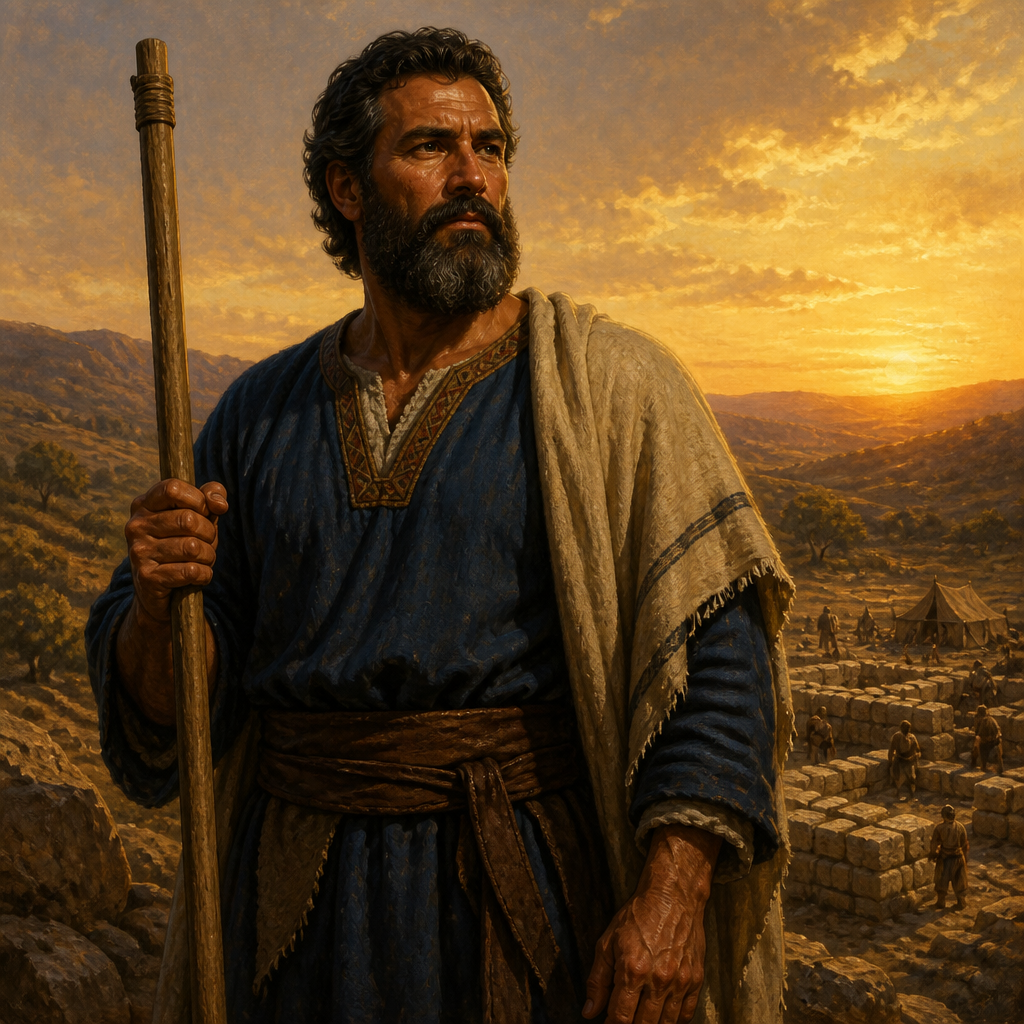 Shobal, Son of HurThis page
 Uri, Father of BezalelBrother1 Chronicles 2:50Stated
 Ezer, Son of HurBrother1 Chronicles 2:50
Inferred
Reconstructed through Hur: 1 Chronicles 4:4 ties Ezer to Hur; 1 Chronicles 2:50 ties Hur to Shobal. No verse states the brother link between Ezer and Shobal directly.Evidence: 1 Chronicles 2:50; 1 Chronicles 4:4
 HarephBrother1 Chronicles 2:50–51Stated
 HazzelelponiSister1 Chronicles 2:50
Inferred
No verse names Hazzelelponi and Shobal together; the brother link is carried from the surrounding genealogy and is not stated in Scripture.Evidence: 1 Chronicles 2:50; 1 Chronicles 4:1
 IdbashBrother1 Chronicles 2:50
Inferred
No verse names Idbash and Shobal together; the brother link is carried from the surrounding genealogy and is not stated in Scripture.Evidence: 1 Chronicles 2:50; 1 Chronicles 4:1
 IshmaBrother1 Chronicles 2:50
Inferred
No verse names Ishma and Shobal together; the brother link is carried from the surrounding genealogy and is not stated in Scripture.Evidence: 1 Chronicles 2:50; 1 Chronicles 4:1
 Jezreel, Son of HurBrother1 Chronicles 2:50
Inferred
No verse names Shobal and Jezreel together; the brother link is carried from the surrounding genealogy and is not stated in Scripture.Evidence: 1 Chronicles 2:50; 1 Chronicles 4:1
 Penuel, Son of HurBrother1 Chronicles 2:50
Inferred
Reconstructed through Hur: 1 Chronicles 4:4 ties Penuel to Hur; 1 Chronicles 2:50 ties Hur to Shobal. No verse states the brother link between Penuel and Shobal directly.Evidence: 1 Chronicles 2:50; 1 Chronicles 4:4
 SalmaBrother1 Chronicles 2:50–51Stated
Children
 HaroehSon1 Chronicles 2:52Stated
Connected Figures
Family
Father · 1 Chronicles 2:50
A prominent leader of the tribe of Judah who supported Moses' hands during the battle against Amalek and served as a temporary leader of Israel.
Son · 1 Chronicles 2:52
Haroeh was a descendant of Judah through the line of Shobal and a prominent clan leader associated with the settlement of Kiriath-jearim.
Brother · 1 Chronicles 2:50
Uri was a member of the Tribe of Judah, the son of Hur and father of Bezalel, the chief artisan of the Tabernacle.
Brother · 1 Chronicles 2:50
Ezer was a descendant of Judah through the line of Hur and the father of Hushah, recognized in the genealogies of the chronicler.
Brother · 1 Chronicles 2:50–51
A descendant of Judah and son of Hur who is recorded as the founding father of the settlement of Beth-gader during the Egyptian sojourn and wilderness era.
Egypt and WildernessFirst: 1 Chronicles 2:515 versesFounder of Beth-gaderJudah
Sister · 1 Chronicles 2:50
Hazzelelponi was a woman of the tribe of Judah, listed in the genealogical records of the descendants of Hur during the era of the Egyptian sojourn and the Wilderness.
Brother · 1 Chronicles 2:50
A descendant of Judah through the line of Hur, listed among the sons of Etam in the genealogical records of the Chronicler.
Brother · 1 Chronicles 2:50
A descendant of the tribe of Judah and a son of Hur, mentioned in the genealogical records of 1 Chronicles during the era of the Egyptian sojourn and Wilderness wanderings.
Brother · 1 Chronicles 2:50
A member of the Tribe of Judah during the Egyptian sojourn and wilderness era, listed as a prominent son of Hur.
Brother · 1 Chronicles 2:50
A descendant of Judah and the son of Hur who is recognized as the father of Gedor in the post-exilic genealogical records of the Chronicler.
Egypt and WildernessFirst: 1 Chronicles 4:44 versesprogenitorJudah
Brother · 1 Chronicles 2:50–51
A prominent leader of the tribe of Judah and son of Hur, recognized as the 'father' or founder of the settlement of Bethlehem.
Egypt and WildernessFirst: 1 Chronicles 2:517 versesfounder of BethlehemJudah
Categories
Mentions by Book
- Exodus1
- 1 Chronicles7
Scripture References
All 8 indexed verses, in canonical order, from the Berean Standard Bible.
Exodus · 1
- Exodus 31:2Partial
“See, I have called by name Bezalel son of Uri, the son of Hur, of the tribe of Judah.
Cited as evidence on a family card; added so References, Key Verses and Mentions by Book share one index.
1 Chronicles · 7
- 1 Chronicles 2:50
These were the descendants of Caleb. The sons of Hur the firstborn of Ephrathah: Shobal the father of Kiriath-jearim,
- 1 Chronicles 2:51Partial
Salma the father of Bethlehem, and Hareph the father of Beth-gader.
Cited as evidence on a family card; added so References, Key Verses and Mentions by Book share one index.
- 1 Chronicles 2:52
These were the descendants of Shobal the father of Kiriath-jearim: Haroeh, half the Manahathites,
- 1 Chronicles 4:1
The descendants of Judah: Perez, Hezron, Carmi, Hur, and Shobal.
- 1 Chronicles 4:2
Reaiah son of Shobal was the father of Jahath, and Jahath was the father of Ahumai and Lahad. These were the clans of the Zorathites.
- 1 Chronicles 4:3Partial
These were the sons of Etam: Jezreel, Ishma, and Idbash. And their sister was named Hazzelelponi.
Cited as evidence on a family card; added so References, Key Verses and Mentions by Book share one index.
- 1 Chronicles 4:4Partial
Penuel was the father of Gedor, and Ezer was the father of Hushah. These were the descendants of Hur, the firstborn of Ephrathah and the father of Bethlehem.
Cited as evidence on a family card; added so References, Key Verses and Mentions by Book share one index.
Others Named Shobal
Compare all 2 bearers →Shobal, Son of SeirGenesis 36:20
A Horite patriarch and chief who descended from Seir and governed portions of the land of Edom before the rise of the Edomite kings.