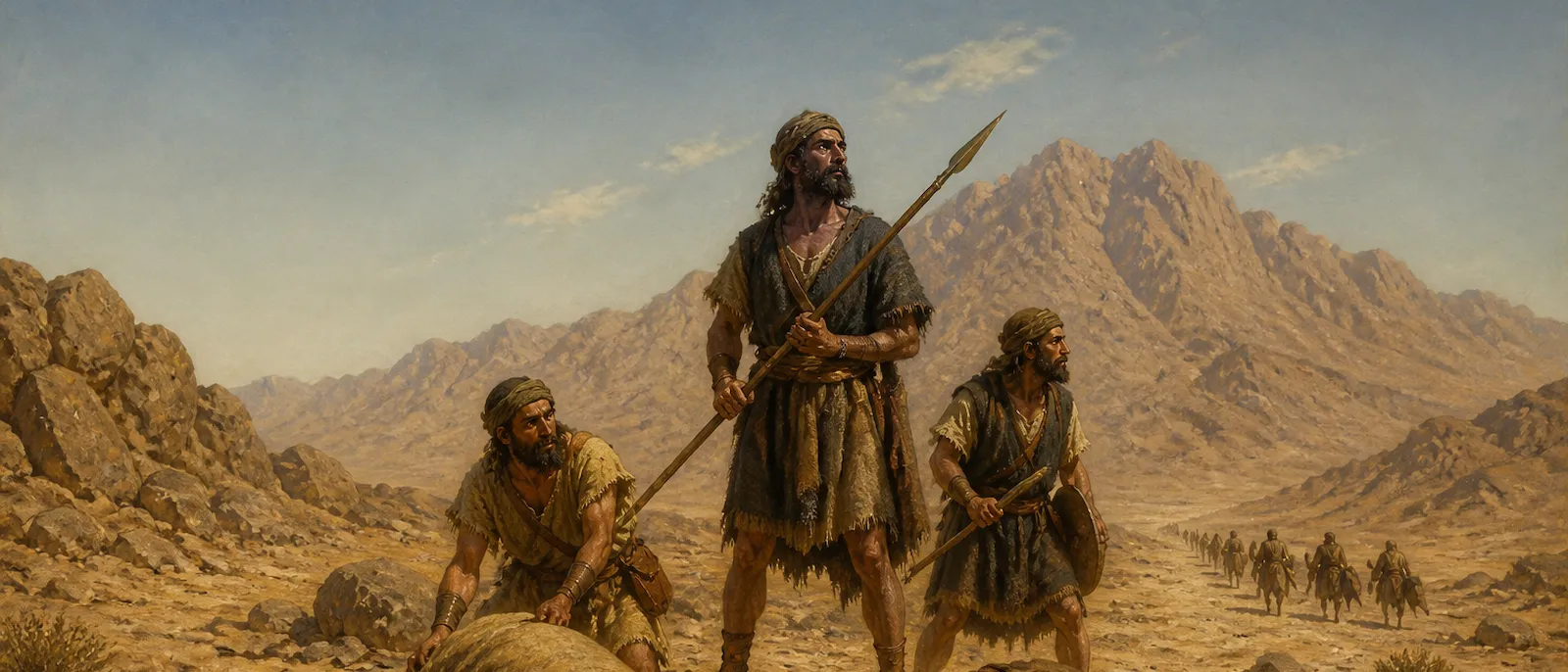
A group of ancient desert warriors attacks a caravan in a rocky wilderness while a royal figure in a Persian court watches from a distance.

The desert raiders descended from Esau's grandson Amalek, Israel's sworn enemy — Exodus 17; 1 Samuel 15; Esther 3.

The Amalekites are described throughout the biblical narrative as a nomadic kingdom and a persistent adversary of the Israelites, originating from the lineage of Esau. The text identifies Amalek as the grandson of Esau and a chief among the Edomites, establishing the ancestral root of the nation (Genesis 36:12). This group first encounters Israel in the wilderness after the exodus from Egypt, leading to a decree that there would be war against them from generation to generation (Exodus 17:16). The territory they occupied is generally associated with the Negev and the desert regions south of Canaan.

The leadership and individual members of the Amalekites appear at critical turning points in the history of the Israelite monarchy. During the period of the wilderness wanderings, a figure known as Agag is mentioned in a prophecy by Balaam as a standard of royal power (Numbers 24:7). Centuries later, during the reign of Israel's first king, Agag was captured in battle but spared by Saul against divine instructions, leading to the king's execution by the prophet Samuel (1 Samuel 15:8–33). Following the death of Saul on Mount Gilboa, an unnamed individual identified as The Amalekite Who Claimed to Kill Saul brought the king’s crown to David asserting he had delivered the final blow to the wounded ruler (2 Samuel 1:1–10).

The conflict with this kingdom extends into the period of the Persian Empire through the lineage of the Agagites. The text identifies Hammedatha as the father of a prominent official in the court of King Ahasuerus (Esther 3:1). His son, Haman rose to power as a high-ranking Persian official who plotted the genocide of the Jewish people after a personal slight (Esther 3:5–6). The narrative links these figures back to the ancient enmity established during the exodus, framing their actions as a continuation of the long-standing struggle between the two nations.

The presence of the Amalekites serves as a recurring obstacle to the stability of the Israelite state and the security of its borders. From their initial ambush of the weary Israelites in the desert to their role in the downfall of Saul’s kingship, they are characterized as a threat that persists across centuries. The text does not say exactly when the nation ceased to exist as a distinct political entity, but it records their final major defeat during the reign of Hezekiah, when the remnant of the Amalekites was struck down in the region of Mount Seir (1 Chronicles 4:43).

Everyone in this list

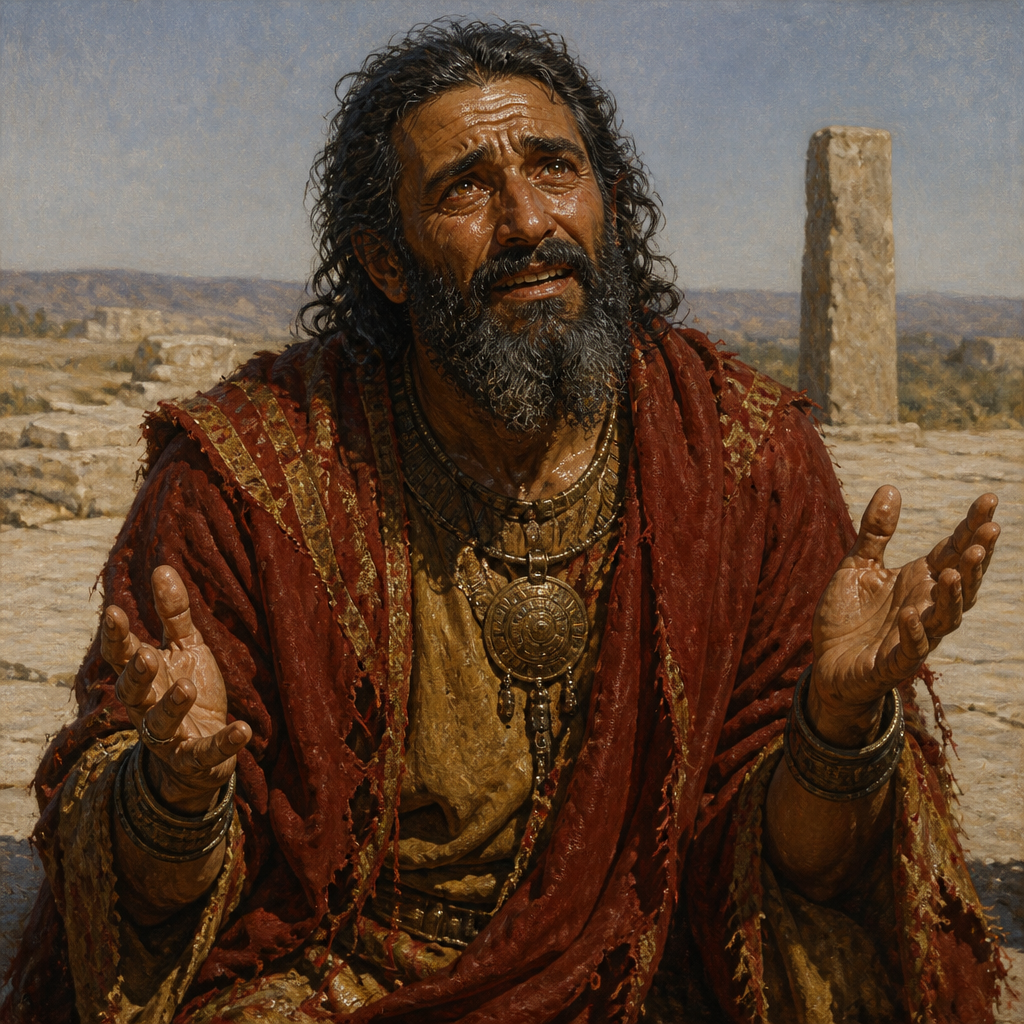
Oil-painting style portrait of Agag, King of the Amalekites, King of the Amalekites whose life was spared by Saul but ended by the prophet Samuel

Agag, King of the Amalekites

King of the Amalekites whose life was spared by Saul but ended by the prophet Samuel

Oil-painting style portrait of Agag, King of the Wilderness Era, King used as a standard of greatness in Balaam's prophecy

Agag, King of the Wilderness Era

King used as a standard of greatness in Balaam's prophecy

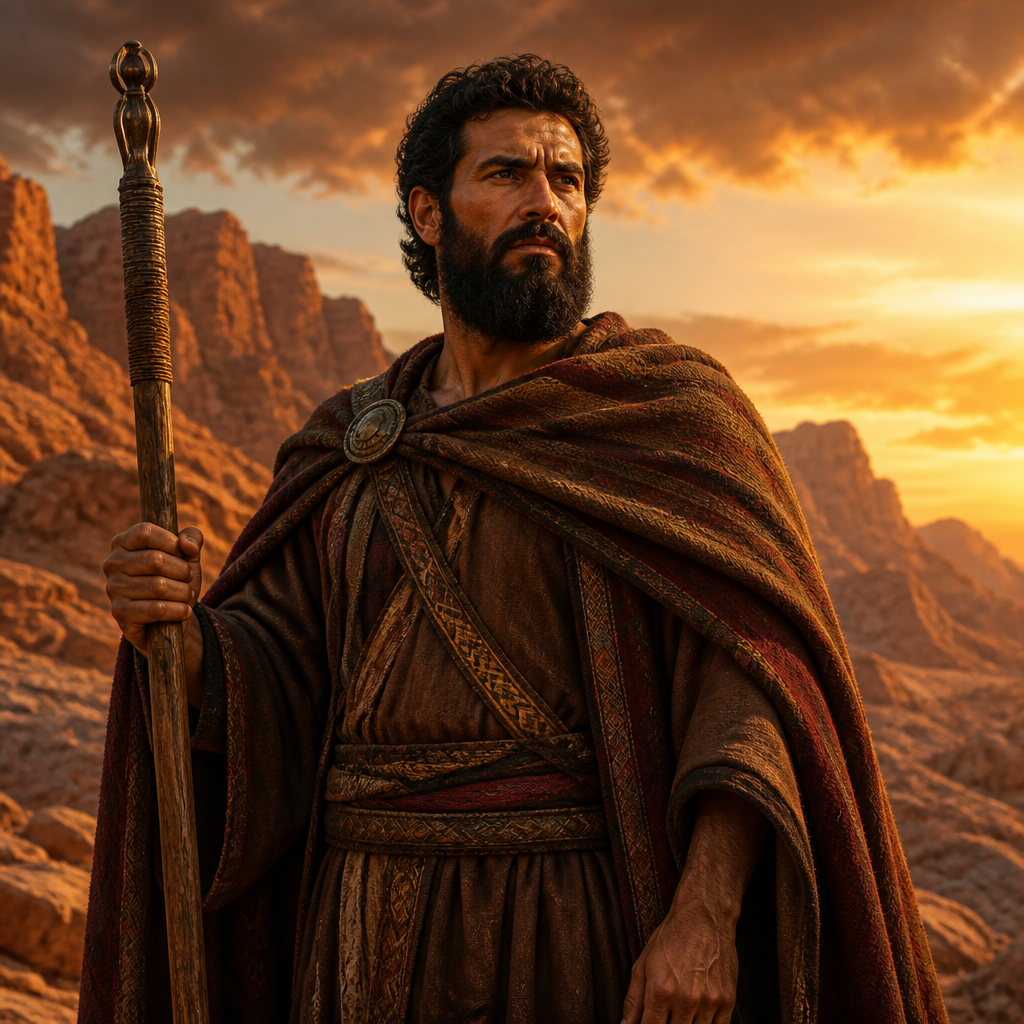
Oil-painting style portrait of Amalek, Grandson of Esau and a chief of the Edomites

Amalek

Grandson of Esau and a chief of the Edomites

Oil-painting style portrait of The Amalekite Who Claimed to Kill Saul, Young man who brought Saul’s crown to David and claimed responsibility for Saul's death

The Amalekite Who Claimed to Kill Saul

Young man who brought Saul’s crown to David and claimed responsibility for Saul's death

Oil-painting style portrait of Haman, Persian official who plotted the genocide of the Jewish people

Haman

Persian official who plotted the genocide of the Jewish people

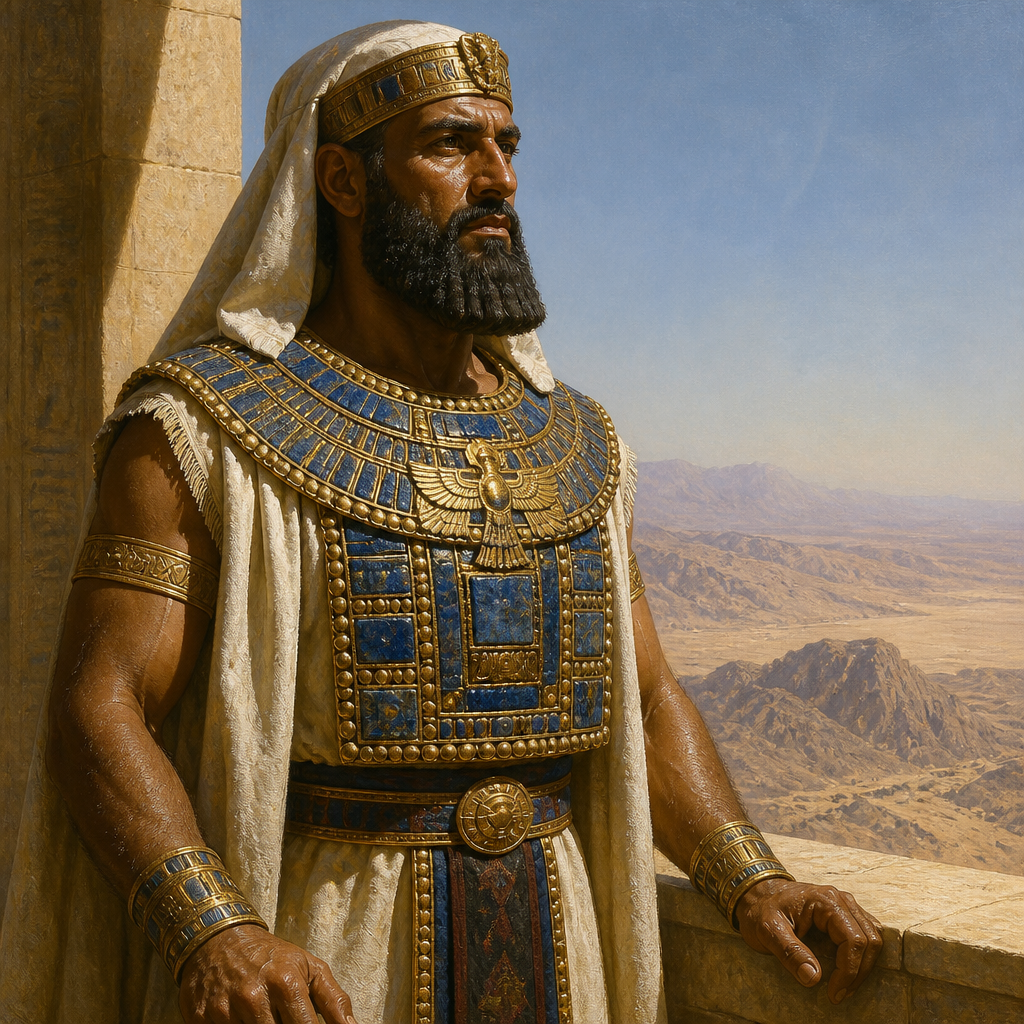
Oil-painting style portrait of Hammedatha, Father of Haman the Agagite

Hammedatha

Father of Haman the Agagite

Related lists