Gershon
Who was Gershon in the Bible?
Gershon was the eldest son of Levi and the founder of the Gershonite clan, responsible for the transport of the Tabernacle's textile coverings during the Exodus.
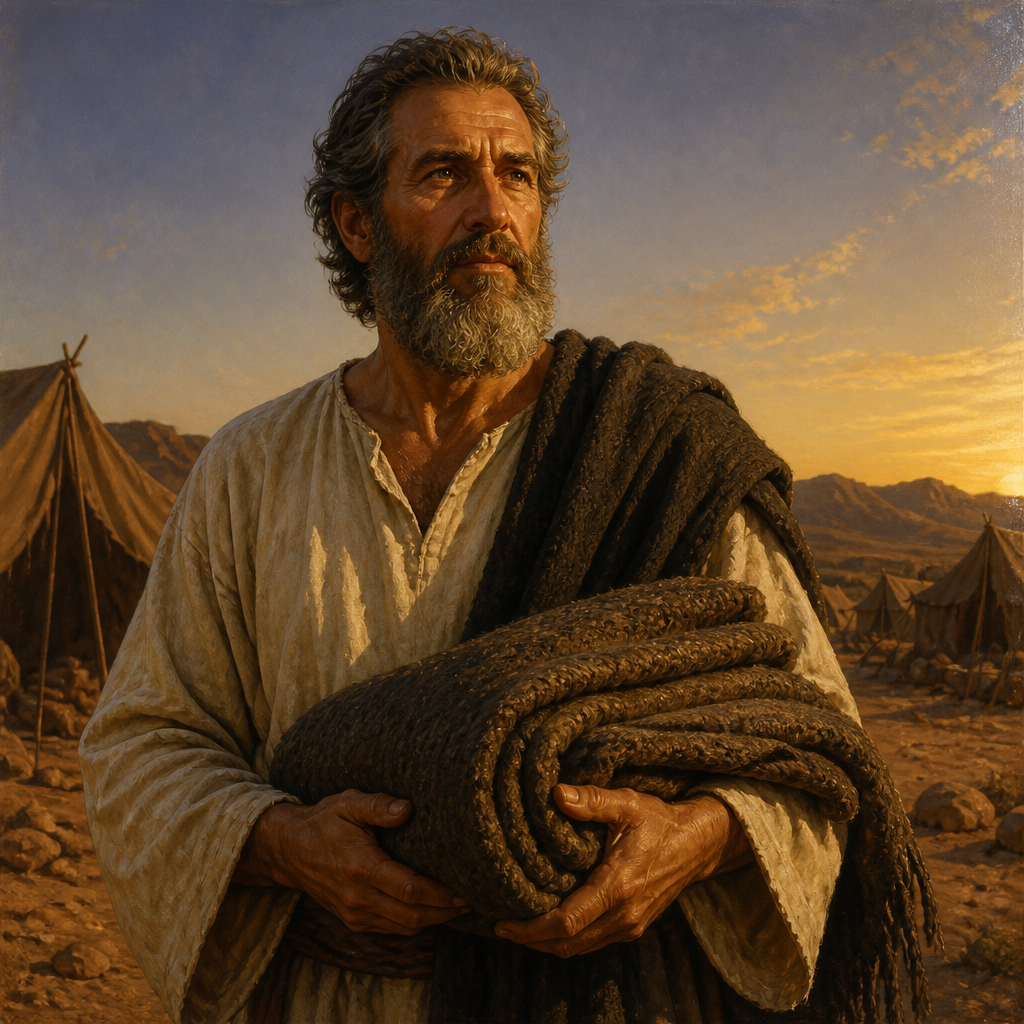
Gershon was a pivotal figure in the early organization of the Israelite priesthood and the logistics of the wilderness tabernacle. As the firstborn son of Levi, he stood at the head of one of the three major divisions of the Levites. His life spanned the critical transition of the Hebrew people from their residency in Egypt to their forty-year journey through the Sinai wilderness. While he is often overshadowed by his younger brother Kohath, from whom the Aaronic priesthood descended, Gershon’s lineage held a strictly defined and sacred role in the maintenance of Israel’s center of worship.
His name is frequently associated with the 'Gershonites,' a large clan that maintained its identity and specific liturgical duties for centuries, from the time of Moses through the reign of King David and into the restoration period. The biblical record establishes him as a link between the patriarchal era of Jacob and the formalized religious structure established at Mount Sinai.
Background and Family
Gershon was born in the land of Canaan or Egypt during the Egypt and Wilderness era. He is explicitly identified in Genesis 46:11 as one of the three sons of Levi who accompanied Jacob into Egypt to escape the famine. This placement establishes Gershon as a member of the third generation of the children of Israel. His brothers were Kohath and Merari, and his sister was Jochebed (the mother of Moses and Aaron).
According to Exodus 6:16-17, Gershon had two sons, Libni and Shimei, who became the heads of the two primary branches of the Gershonite clan. The records in 1 Chronicles 6 and 23 preserve the continuity of his line, listing descendants such as Jahath, Zimmah. The spelling of his name occasionally appears as 'Gershom' in later texts, such as 1 Chronicles 6:16, though he is distinct from Moses' son of the same name.
Major Life Events
While the personal biography of Gershon is not detailed with specific narrative episodes, his significance is defined by the census and the assignments given to his descendants during the Exodus. The Book of Numbers provides the most granular detail regarding the role of his house. In the census of the Levites (Numbers 3:21–26), the Gershonites numbered 7,500 males a month old or more. Under the leadership of Eliasaph son of Lael, they were commanded to camp on the west side of the Tabernacle.
Their primary duty was the transport and care of the 'Tent of Meeting.' This included the tabernacle itself, its inner and outer coverings, the screen for the entrance, the hangings of the courtyard, and all the cords and accessories related to these textiles. Unlike the Kohathites, who carried the most sacred furniture on their shoulders, the Gershonites were provided with two carts and four oxen by the tribal leaders to facilitate their work (Numbers 7:7). This logistical responsibility was overseen by Ithamar, the son of Aaron the priest.
Relationship to Other Biblical Figures
Gershon’s relationship to his family defines the hierarchy of the Levites. As the eldest son of Levi, he held the birthright of the tribe, yet the specialized role of the high priesthood was given to the line of his younger brother, Kohath. This highlights a recurring biblical theme where the chronological firstborn is not necessarily the recipient of the primary spiritual leadership role, though Gershon remained essential to the communal service.
In the era of the conquest under Joshua, the Gershonites were allotted thirteen cities by lot from the territories of Issachar, Asher, Naphtali, and the half-tribe of Manasseh in Bashan (Joshua 21:6). These cities included Golan in Bashan, which served as one of the six designated 'cities of refuge.' Centuries later, King David reorganized the Gershonites into divisions for the service of the Temple, ensuring that Gershon’s legacy remained integral to the worship of Yahweh through the age of the Monarchy (1 Chronicles 23:7-11).
Spiritual Significance
The spiritual significance of Gershon lies in the principle of 'appointed service.' The biblical text emphasizes that each Levite clan had a specific, non-negotiable task. The Gershonites’ responsibility for the 'coverings' and 'curtains' suggests a role in maintaining the boundary between the holy and the mundane. They were the keepers of the Tabernacle’s visibility—the fabrics that shielded the glory of God from the outside world and created the sacred space where atonement occurred.
Furthermore, the long-term preservation of the Gershonite genealogy reflects the biblical emphasis on faithfulness across generations. Even when the Tabernacle was replaced by the permanent Temple in Jerusalem, the descendants of Gershon transitioned into roles as treasurers and singers, demonstrating that while the form of service may change, the calling to serve remains constant. Their history serves as a testament to the structured, orderly nature of God's requirements for his people during the transition from a nomadic tribe to a settled nation.
Gershon is theologically significant as the progenitor of one of the three essential divisions of the tribe of Levi. His placement in the biblical record ensures the legitimacy of the Gershonite clan, validating their specific rights to land and their specific liturgical duties. By detailing his lineage, the text demonstrates that the service of God is not haphazard but is distributed among his people according to his sovereign design.
In the broader context of the Pentateuch, Gershon represents the logistical foundation of the Tabernacle. Without the specialized service of the Gershonites to transport the tent's fabrics and coverings, the mobile presence of God in the wilderness would have been impossible. His life and legacy reinforce the idea that every role within the community of faith—whether prominent like the high priest or supportive like the transporters of the curtains—is divinely ordained and essential for the functioning of the whole.
Frequently Asked Questions
What was the specific job of the Gershonites?
The Gershonites were responsible for the 'textile' elements of the Tabernacle, including the curtains, the tent coverings, the screens for the entrance, and the hangings of the courtyard.
Was Gershon the son of Moses?
No. While Moses had a son named Gershom, this article describes Gershon, the son of Levi and uncle to Moses, who lived during the initial migration to Egypt and the beginning of the Exodus.
How many cities were given to the descendants of Gershon?
The Gershonites were allotted thirteen cities within the territories of Issachar, Asher, Naphtali, and the half-tribe of Manasseh.
Who was the leader of the Gershonites in the wilderness?
According to Numbers 3:24, the leader of the Gershonite families during the wilderness wanderings was Eliasaph son of Lael.
Under whose supervision did the Gershonites work?
Their duties in the Tent of Meeting were performed under the direct supervision of Ithamar, the son of Aaron the priest.
Family & Relationships
Parents
 Levi, Son of JacobFatherGenesis 46:11Stated
 GershonThis page
 KohathBrotherGenesis 46:11Stated
 MerariBrotherGenesis 46:11Stated
 JochebedSisterGenesis 46:11
Inferred
Reconstructed through Levi: Numbers 26:59 ties Jochebed to Levi; Genesis 46:11 ties Levi to Gershon. No verse states the brother link between Jochebed and Gershon directly.Evidence: Genesis 46:11; Numbers 26:59
Children
 Libni, Son of GershonSonExodus 6:17Stated
 Shimei, Son of GershonSonExodus 6:17Stated
Extended family
 Beriah, Levite of the Egypt and Wilderness EraGrandson1 Chronicles 23:10
Inferred
Reconstructed through Shimei: 1 Chronicles 23:10 ties Beriah to Shimei; Exodus 6:17 ties Shimei to Gershon. No verse states the grandfather link between Beriah and Gershon directly.Evidence: 1 Chronicles 23:10; Exodus 6:17
 Jahath, Son of ShimeiGrandson1 Chronicles 23:10
Inferred
Reconstructed through Shimei: Exodus 6:17 ties Gershon to Shimei; 1 Chronicles 23:10 ties Shimei to Jahath. No verse states the grandson link between Gershon and Jahath directly.Evidence: 1 Chronicles 23:10; Exodus 6:17
 ZizahGrandson1 Chronicles 23:10
Inferred
Reconstructed through Jahath and Shimei: 1 Chronicles 23:11 ties Zizah to Jahath; 1 Chronicles 23:10 ties Jahath to Shimei; Exodus 6:17 ties Shimei to Gershon. No verse states the grandfather link between Zizah and Gershon directly.Evidence: 1 Chronicles 23:10; 1 Chronicles 23:11; Exodus 6:17
 Malchijah, Ancestor of AsaphDescendantGenesis 46:11
Inferred
No verse names Gershon and Malchijah together; the descendant link is carried from the surrounding genealogy and is not stated in Scripture.Evidence: Genesis 46:11
Connected Figures
Family
Father · Genesis 46:11
The third son of Jacob and Leah, a patriarch whose descendants were set apart as the priestly and ministerial class for the nation of Israel.
PatriarchsFirst: Genesis 29:3416 versesPatriarchLevi
Son · Exodus 6:17
Libni was the eldest son of Gershon and a grandson of the patriarch Levi, serving as the eponymous founder of the Libnite clan within the Levite priesthood.
Egypt and WildernessFirst: Exodus 6:177 versesLevite leaderLevi
Son · Exodus 6:17
A prominent Levite and grandson of Levi who established the Shimeite clan during the Egyptian sojourn and the wilderness wanderings.
Egypt and WildernessFirst: Exodus 6:177 versesLevitical Tribal HeadLevi
Brother · Genesis 46:11
Kohath was the second son of Levi and the patriarchal ancestor of the Kohathites, the Levite clan responsible for transporting the most holy objects of the Tabernacle.
Egypt and WildernessFirst: Genesis 46:1123 versesPatriarch of the Kohathite clanLevi
Brother · Genesis 46:11
The third son of Levi and founder of the Merarite clan, tasked with the transport and maintenance of the Tabernacle's heavy structural framework during the Wilderness Wanderings.
Egypt and WildernessFirst: Genesis 46:1130 versesPatriarch and founder of the Merarite clanLevi
Sister · Genesis 46:11
A woman of the tribe of Levi who was the mother of Moses, Aaron, and Miriam during the Israelites' sojourn in Egypt.
Egypt and WildernessFirst: Exodus 6:205 versesMatriarch of the Levite leadershipLevi
Grandson · 1 Chronicles 23:10
A Levite of the Gershonite line during the Egyptian Sojourn and Wilderness era, known for being combined with his brother's family for service assignments.
United MonarchyFirst: 1 Chronicles 23:106 versesLevite / Tabernacle ServantLevi
Grandson · 1 Chronicles 23:10
A Levite of the Gershonite line during the United Monarchy who served as the firstborn head of his father Shimei's house.
United MonarchyFirst: 1 Chronicles 23:103 versesHead of a Levite familyLevi
Grandson · 1 Chronicles 23:10
A Levite of the Gershonite clan, Zizah was the second son of Shimei and a member of the priestly lineage during the era of the Egypt and Wilderness sojourn.
United MonarchyFirst: 1 Chronicles 23:106 versesLevite / Tabernacle ServantLevi
Descendant · Genesis 46:11
A Levite of the Gershonite clan during the United Monarchy who served as a genealogical link to the temple musician Asaph.
Conquest and JudgesFirst: 1 Chronicles 6:403 versesLeviteLevi
Categories
Mentions by Book
- Genesis1
- Exodus3
- Numbers5
- Joshua1
- 1 Chronicles11
Scripture References
All 21 indexed verses, in canonical order, from the Berean Standard Bible.
Genesis · 1
- Genesis 46:11
The sons of Levi: Gershon, Kohath, and Merari.
Exodus · 3
- Exodus 6:16
These were the names of the sons of Levi according to their records: Gershon, Kohath, and Merari. Levi lived 137 years.
- Exodus 6:17
The sons of Gershon were Libni and Shimei, by their clans.
- Exodus 6:20Partial
And Amram married his father’s sister Jochebed, and she bore him Aaron and Moses. Amram lived 137 years.
Cited as evidence on a family card; added so References, Key Verses and Mentions by Book share one index.
Numbers · 5
- Numbers 3:17
These were the sons of Levi by name: Gershon, Kohath, and Merari.
- Numbers 3:18
These were the names of the sons of Gershon by their clans: Libni and Shimei.
- Numbers 3:21
From Gershon came the Libnite clan and the Shimeite clan; these were the Gershonite clans.
- Numbers 4:25Partial
They are to carry the curtains of the tabernacle, the Tent of Meeting with the covering of fine leather over it, the curtains for the entrance to the Tent of Meeting,
Cited as a key verse; added so References, Key Verses and Mentions by Book share one index.
- Numbers 26:57
Now these were the Levites numbered by their clans: The Gershonite clan from Gershon, the Kohathite clan from Kohath, and the Merarite clan from Merari.
Joshua · 1
- Joshua 21:6
The descendants of Gershon received thirteen cities by lot from the tribes of Issachar, Asher, Naphtali, and the half-tribe of Manasseh in Bashan.
1 Chronicles · 11
- 1 Chronicles 6:1
The sons of Levi: Gershon, Kohath, and Merari.
- 1 Chronicles 6:16
The sons of Levi: Gershom, Kohath, and Merari.
- 1 Chronicles 6:17
These are the names of the sons of Gershom: Libni and Shimei.
- 1 Chronicles 6:20
Of Gershom: Libni his son, Jahath his son, Zimmah his son,
- 1 Chronicles 6:40Partial
the son of Michael, the son of Baaseiah, the son of Malchijah,
Cited as evidence on a family card; added so References, Key Verses and Mentions by Book share one index.
- 1 Chronicles 6:43
the son of Jahath, the son of Gershom, the son of Levi.
- 1 Chronicles 23:6
Then David divided the Levites into divisions according to the sons of Levi: Gershon, Kohath, and Merari.
- 1 Chronicles 23:8Partial
The sons of Ladan: Jehiel the first, Zetham, and Joel—three in all.
Cited as evidence on a family card; added so References, Key Verses and Mentions by Book share one index.
- 1 Chronicles 23:9Partial
The sons of Shimei: Shelomoth, Haziel, and Haran—three in all. These were the heads of the families of Ladan.
Cited as evidence on a family card; added so References, Key Verses and Mentions by Book share one index.
- 1 Chronicles 23:10Partial
And the sons of Shimei: Jahath, Zina, Jeush, and Beriah. These were the sons of Shimei—four in all.
Cited as evidence on a family card; added so References, Key Verses and Mentions by Book share one index.
- 1 Chronicles 23:11Partial
Jahath was the first and Zizah was the second; but Jeush and Beriah did not have many sons, so they were counted as one family and received a single assignment.
Cited as evidence on a family card; added so References, Key Verses and Mentions by Book share one index.