Eliasaph son of Lael
Who was Eliasaph son of Lael in the Bible?
A Levite leader of the Gershonite families appointed to manage the sanctuary during the Israelite wilderness wanderings.
This is one of 2 people named Eliasaph in the Bible. See all 2 →
Eliasaph son of Lael was a prominent figure within the Levitical hierarchy during the Exodus and subsequent wilderness period. As a member of the tribe of Levi, his role was defined not by military conquest, but by the administration and physical transport of the Tabernacle, the central site of Israelite worship. His specific appointment placed him at the head of the Gershonite clan, one of the three major divisions of the Levites.
While his biblical footprint is concise, Eliasaph's position was one of high responsibility. He functioned as a chief officer over the families of Gershon, ensuring the orderly movement of the sacred items entrusted to his lineage. His leadership occurred during the pivotal second year after the departure from Egypt, a time when the administrative structure of the nation of Israel was being formally organized under the direction of Moses and Aaron.
Background and Family
Eliasaph was the son of a man named Lael. His lineage is traced through the house of Gershon, the firstborn son of Levi. In the organizational structure of the Israelite camp in the wilderness, the Gershonites held a prestigious status as one of the three primary Levitical families responsible for the Tabernacle (Numbers 3:17). The biblical record identifies Eliasaph specifically as the "leader of the families of the Gershonites" (Numbers 3:24). While the text does not provide extensive biographical details regarding his early life in Egypt or his exact age, his appointment suggests he was a man of maturity and recognized standing among his kin.
Major Life Events
The primary event associated with Eliasaph is his appointment as the chief of the Gershonite division during the census and organization of the Levites at Mount Sinai. In this capacity, he oversaw 7,500 males (from a month old and upward). According to the divine instructions relayed through Moses, Eliasaph and his clan were stationed on the west side of the Tabernacle.
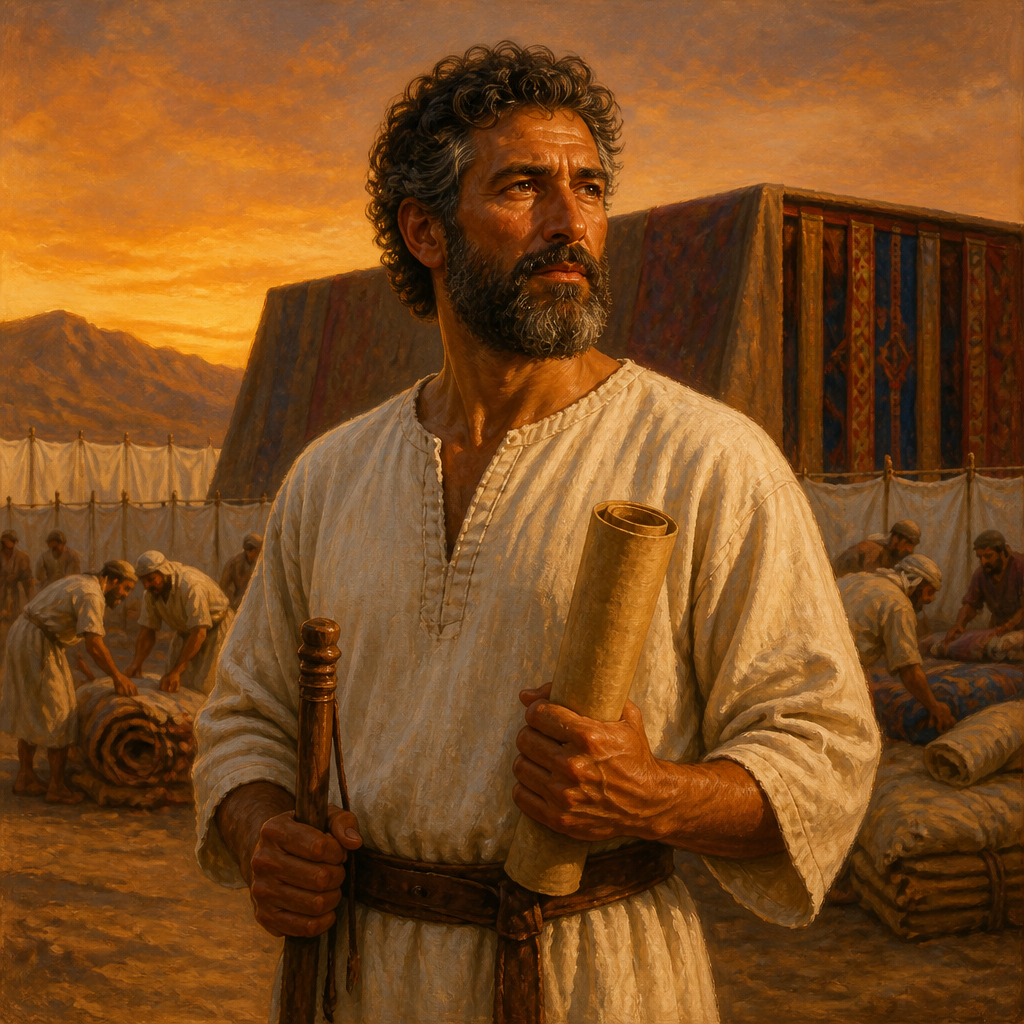
His administrative duties were crucial to the mobility of the sanctuary. The Gershonites were tasked with the care and transport of the Tabernacle's textiles, including the tent itself, its coverings, the screen for the entrance, the hangings of the courtyard, and all the related cords and equipment. Eliasaph would have been responsible for coordinating the labor of his kinsmen to ensure these sacred objects were handled according to the strict protocols of the Law.
Relationship to Other Biblical Figures
Eliasaph served directly under the oversight of the Aaronic priesthood. Specifically, the Gershonites—and by extension their leader Eliasaph—operated under the direction of Ithamar son of Aaron the priest (Numbers 4:28). This established a clear chain of command where Eliasaph acted as the primary liaison between the high priesthood and the Gershonite laborers. His father, Lael, is mentioned only in relation to Eliasaph, serving to distinguish this specific Eliasaph from other individuals of the same name who appeared in different tribal contexts during the same era.
Spiritual Significance
The role of Eliasaph highlights the biblical theme of delegated authority and the importance of orderly service in the worship of God. Though his name appears only once, his inclusion in the record of the Tabernacle’s administration underscores the value placed on those who facilitate the practical aspects of communal faith. In the context of the Wilderness period, Eliasaph represents the transition from a disorganized group of former slaves into a structured, liturgical community where every family had a specific, divinely ordained purpose.
Eliasaph son of Lael serves as a representative of the secondary tier of leadership within the tribe of Levi. His significance lies in the preservation of the sanctity of the Tabernacle through logistics; by leading the Gershonites, he ensured that the 'dwelling place' of God was mobile and respected. His role illustrates the principle that all tasks, whether priestly or administrative, are essential to the fulfillment of the divine covenant.
His name, which means 'God has added' or 'God is a gatherer,' reflects the growth of the Levite families during the wilderness sojourn. As the leader of 7,500 males, his presence in the census of Numbers 3 signifies the transition of the Israelites from a family unit into a functional national entity with a dedicated religious civil service.
Frequently Asked Questions
Who was Eliasaph son of Lael?
He was the appointed leader of the Gershonite families of the tribe of Levi during the Israelite wandering in the wilderness.
What were Eliasaph's responsibilities?
As the leader of the Gershonites, he oversaw the transport and maintenance of the Tabernacle's coverings, screens, hangings, and cords.
Which tribe did Eliasaph belong to?
He belonged to the tribe of Levi, specifically the branch descended from Gershon.
Who was Eliasaph's father?
His father was a man named Lael.
Where was Eliasaph's camp located?
Eliasaph and the Gershonites were instructed to camp on the west side of the Tabernacle, behind the sanctuary.
Family & Relationships
Parents
 LaelFatherNumbers 3:24Stated
 Eliasaph son of LaelThis page
Connected Figures
Family
Father · Numbers 3:24
A Levite of the Gershonite clan during the Wilderness Wanderings, known primarily as the father of Eliasaph.
Egypt and WildernessFirst: Numbers 3:241 versesLevite / PatriarchLevi
Categories
Mentions by Book
- Numbers1
Scripture References
All 1 indexed verse, in canonical order, from the Berean Standard Bible.
Numbers · 1
- Numbers 3:24
and the leader of the families of the Gershonites was Eliasaph son of Lael.
Others Named Eliasaph son of Lael
Compare all 2 bearers →Eliasaph son of Deuel, Prince of GadNumbers 1:14
Eliasaph son of Deuel was the tribal leader and military commander of the tribe of Gad during the Israelite wandering in the wilderness.