Jochebed
Who was Jochebed in the Bible?
A woman of the tribe of Levi who was the mother of Moses, Aaron, and Miriam during the Israelites' sojourn in Egypt.
Jochebed was a prominent figure within the tribe of Levi during the Egyptian sojourn, recognized primarily as the mother of the central leadership triad of the Exodus: Moses, Aaron, and Miriam. Her name, which suggests a meaning related to the glory of the LORD, marks her as a significant link in the genealogical progression from the patriarchal era of Jacob’s sons to the emergence of Israel as a nation under the Mosaic covenant.
While her appearances in the biblical text are limited to genealogical records, the information provided establishes her unique position within the Levite social structure. She is identified as both a daughter of Levi and the wife of Amram, creating a lineage that is entirely Levite in origin. This lineage provided the foundational requirements for the priesthood and the leadership roles her children would eventually occupy.
Background and Family
Jochebed’s background is rooted in the early years of the Israelite migration to Egypt. According to Numbers 26:59, she was a "daughter of Levi," born to Levi during the time the Israelites resided in Egypt. This direct descent from the third son of Jacob places her in the first generation born in the land of Goshen. The biblical text identifies her siblings as Gershon, Kohath, and Merari, who were the foundational heads of the three main divisions of the Levite tribe.
Her marriage was to Amram, who was also a member of the tribe of Levi. Exodus 6:20 provides a specific detail regarding their relationship, noting that Jochebed was Amram’s father’s sister (his paternal aunt). While such unions were later prohibited under the Mosaic Law established at Mount Sinai (Leviticus 18:12), they occurred during the transitional period of the Egyptian sojourn prior to the formalization of the Levitical code.
Major Life Events
The biblical record focuses exclusively on Jochebed’s role as a mother and her place in the Levite genealogy. The primary event associated with her life is the bearing of three children who would shape the destiny of Israel. She bore Aaron, the first High Priest; Moses, the lawgiver and deliverer; and Miriam, the prophetess.
Exodus 6:20 explicitly credits her with the birth of Aaron and Moses, while Numbers 26:59 adds Miriam to this list. The text emphasizes that these births occurred within the context of the tribe of Levi, reinforcing the purity of the lineage that would eventually oversee the Tabernacle and the religious life of the nation. Beyond these genealogical facts, the Masoretic Text does not provide specific narrative dialogue or personal anecdotes involving Jochebed, leaving her legacy to be defined by the actions and roles of her descendants.
Relationship to Other Biblical Figures
Jochebed serves as a central point of connection for the most influential family in the Pentateuch. As the wife of Amram, she represents the continuation of the line of Kohath. As the daughter of Levi, she is one of the few women of her generation specifically named in the tribal records, signifying her importance.
Her relationship with her children is her most defining characteristic in the scriptural record. Through her, the leadership of the Exodus was consolidated within a single family unit. Her sons, Moses and Aaron, and her daughter, Miriam, worked in tandem to lead the Israelites out of Egyptian bondage and through the wilderness, a task for which their Levite heritage—traced through Jochebed—was a prerequisite.
Spiritual Significance
The spiritual significance of Jochebed lies in her role as a vessel for the fulfillment of the promise made to the patriarchs. By maintaining the Levite lineage in Egypt, she participated in the preservation of the people of Israel during a period of oppression. The brevity of her mention in the text does not diminish her importance; rather, it highlights the essential, often hidden, roles played by the ancestors of Israel’s great leaders. She stands as a bridge between the era of the twelve patriarchs and the era of the Law, ensuring that the redeemer of Israel (Moses) and the intercessor for Israel (Aaron) were born of the chosen tribe.
Jochebed is theologically significant as the foundational matriarch of the Aaronic priesthood and the Mosaic leadership. Her identification as a direct 'daughter of Levi' reinforces the tribal purity required for the later establishment of the Levitical system. By providing the lineage for Moses, Aaron, and Miriam, she is the biological link through which God raised up the leadership necessary to fulfill the covenant promises made to Abraham, Isaac, and Jacob.
Frequently Asked Questions
Who was Jochebed's husband?
Jochebed was married to Amram, who was of the tribe of Levi and was also her nephew (the son of her brother Kohath).
Who were Jochebed's children?
According to Numbers 26:59, Jochebed was the mother of Aaron, Moses, and their sister Miriam.
Which tribe did Jochebed belong to?
Jochebed belonged to the tribe of Levi; she was a direct daughter of Levi, born in Egypt.
Where is Jochebed first mentioned in the Bible?
She is first mentioned by name in Exodus 6:20 in the genealogy of Moses and Aaron.
What does the name Jochebed mean?
The name Jochebed (Yōkheved) is generally understood to mean 'Yahweh is glory' or 'Yahweh is honor.'
Family & Relationships
Parents
 Levi, Son of JacobFatherNumbers 26:59Stated
 Amram, Father of MosesHusbandExodus 6:20Stated
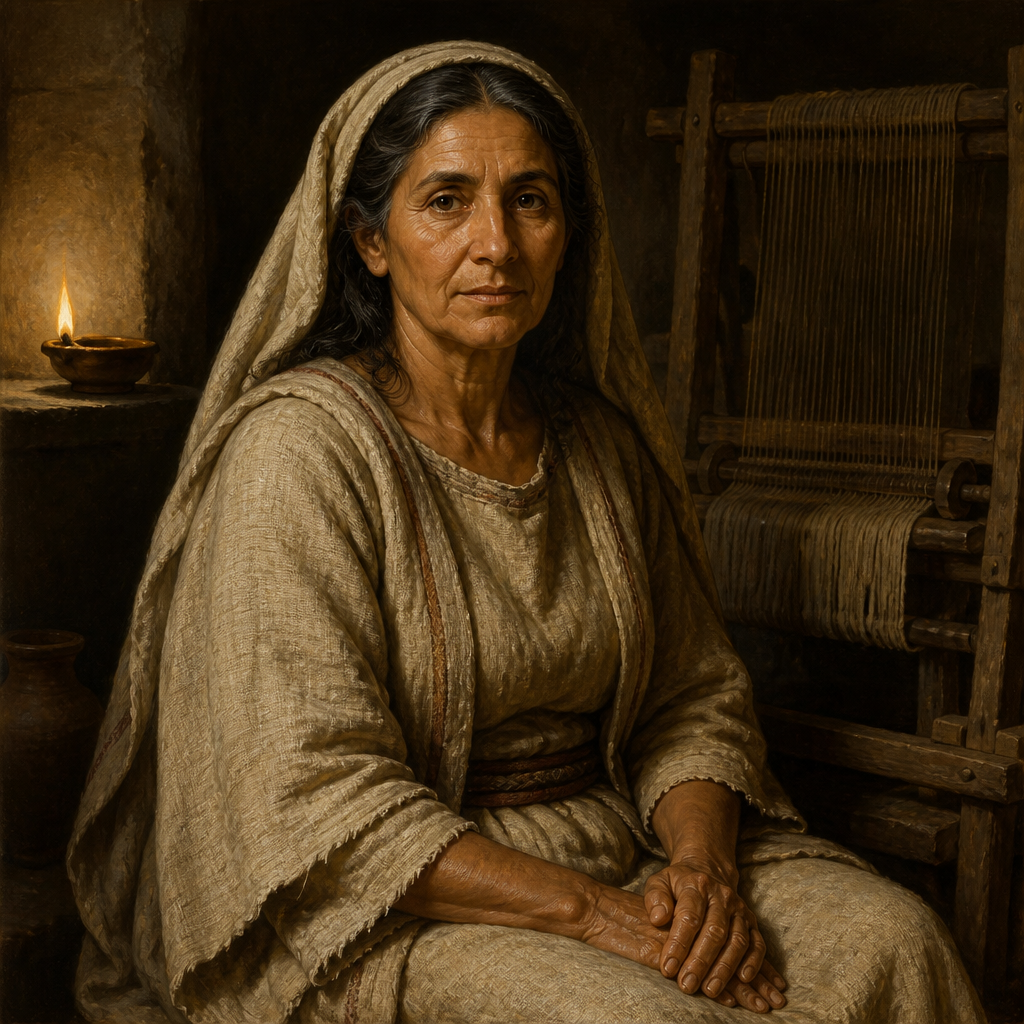 JochebedThis page
 GershonBrotherGenesis 46:11
Inferred
Reconstructed through Levi: Numbers 26:59 ties Jochebed to Levi; Genesis 46:11 ties Levi to Gershon. No verse states the brother link between Jochebed and Gershon directly.Evidence: Genesis 46:11; Numbers 26:59
 KohathBrotherNumbers 16:1
Inferred
Reconstructed through Amram: Exodus 6:18 ties Kohath to Amram; Exodus 6:20 ties Amram to Jochebed. No verse states the sister link between Kohath and Jochebed directly.Evidence: Numbers 16:1; Numbers 26:59
 MerariBrotherNumbers 26:59
Inferred
Reconstructed through Levi: 1 Chronicles 6:47 ties Merari to Levi; Numbers 26:59 ties Levi to Jochebed. No verse states the sister link between Merari and Jochebed directly.Evidence: Numbers 26:59; 1 Chronicles 6:47
Children
 AaronSonExodus 6:20Stated
 Miriam, Prophetess and Sister of MosesDaughterNumbers 26:59Stated
 MosesSonExodus 6:20Stated
Connected Figures
Family
Father · Numbers 26:59
The third son of Jacob and Leah, a patriarch whose descendants were set apart as the priestly and ministerial class for the nation of Israel.
PatriarchsFirst: Genesis 29:3416 versesPatriarchLevi
Husband · Exodus 6:20
A Levite of the Kohathite clan best known as the father of the three primary leaders of the Exodus: Moses, Aaron, and Miriam.
Son · Exodus 6:20
The first High Priest of Israel, elder brother of Moses, and primary spokesman for the Israelites during the Exodus from Egypt.
Egypt and WildernessFirst: Exodus 4:14338 versesHigh Priest, ProphetLevi
Daughter · Numbers 26:59
A prophetess of the Tribe of Levi who served as a prominent leader of Israel alongside her brothers Moses and Aaron during the Exodus and wilderness wanderings.
Egypt and WildernessFirst: Exodus 15:2012 versesProphetessLevi
Son · Exodus 6:20
The preeminent prophet and lawgiver of Israel who led the Hebrews out of Egyptian bondage and mediated the Covenant at Mount Sinai.
Egypt and WildernessFirst: Exodus 2:10844 versesProphet, Judge, and LawgiverLevi
Brother · Genesis 46:11
Gershon was the eldest son of Levi and the founder of the Gershonite clan, responsible for the transport of the Tabernacle's textile coverings during the Exodus.
Egypt and WildernessFirst: Genesis 46:1121 versesLevitical PatriarchLevi
Brother · Numbers 16:1
Kohath was the second son of Levi and the patriarchal ancestor of the Kohathites, the Levite clan responsible for transporting the most holy objects of the Tabernacle.
Egypt and WildernessFirst: Genesis 46:1123 versesPatriarch of the Kohathite clanLevi
Brother · Numbers 26:59
The third son of Levi and founder of the Merarite clan, tasked with the transport and maintenance of the Tabernacle's heavy structural framework during the Wilderness Wanderings.
Egypt and WildernessFirst: Genesis 46:1130 versesPatriarch and founder of the Merarite clanLevi
Categories
Mentions by Book
- Genesis1
- Exodus3
- Numbers1
Scripture References
All 5 indexed verses, in canonical order, from the Berean Standard Bible.
Genesis · 1
- Genesis 46:11Partial
The sons of Levi: Gershon, Kohath, and Merari.
Cited as evidence on a family card; added so References, Key Verses and Mentions by Book share one index.
Exodus · 3
- Exodus 6:18Partial
The sons of Kohath were Amram, Izhar, Hebron, and Uzziel. Kohath lived 133 years.
Cited as evidence on a family card; added so References, Key Verses and Mentions by Book share one index.
- Exodus 6:19Partial
The sons of Merari were Mahli and Mushi. These were the clans of the Levites according to their records.
Cited as evidence on a family card; added so References, Key Verses and Mentions by Book share one index.
- Exodus 6:20
And Amram married his father’s sister Jochebed, and she bore him Aaron and Moses. Amram lived 137 years.
Numbers · 1
- Numbers 26:59
and Amram’s wife was named Jochebed. She was also a daughter of Levi, born to Levi in Egypt. To Amram she bore Aaron, Moses, and their sister Miriam.