Amram, Father of Moses
Who was Amram, Father of Moses, in the Bible?
A Levite of the Kohathite clan best known as the father of the three primary leaders of the Exodus: Moses, Aaron, and Miriam.
This is one of 2 people named Amram in the Bible. See all 2 →
Amram was a prominent member of the tribe of Levi during the period of Israelite enslavement in Egypt. As the son of Kohath and the grandson of Levi, he occupied a significant position within the genealogical structure of the nascent nation of Israel. His life spanned a critical transition point in biblical history, beginning in the relative obscurity of the Egyptian sojourn and culminating in the lineage that would lead the Israelites toward the wilderness.
While the biblical narrative focuses extensively on the exploits of his children, Amram remains a foundational figure whose longevity and marriage are explicitly recorded to establish the priestly and prophetic credentials of his offspring. He is the progenitor of the Amramite clan, one of the four major divisions of the Kohathites, who held sacred responsibilities regarding the Tabernacle furniture.
Background and Family
Amram’s lineage is documented with precision in the genealogical records of Exodus, Numbers, and 1 Chronicles. He was the eldest son of Kohath, who was himself the son of Levi. This placement establishes Amram as a direct third-generation descendant of the patriarch Jacob. Amram had three brothers: Izhar, Hebron, and Uzziel. According to Exodus 6:18, his father Kohath lived for 133 years, while Amram himself reached the age of 137 years (Exodus 6:20), indicating a period of exceptional longevity even within the context of the Egyptian bondage.
Amram married Jochebed, who is identified in Exodus 6:20 as his father’s sister (his aunt). This type of union, while later prohibited under the Mosaic Law (Leviticus 18:12), was practiced during the patriarchal and pre-Sinaitic periods. Numbers 26:59 further clarifies that Jochebed was also a descendant of Levi, born to the house of Levi in Egypt, ensuring that their children—Aaron, Moses, and Miriam—were of pure Levite descent from both maternal and paternal lines.
Major Life Events
The biblical record for Amram is primarily genealogical rather than biographical. His life occurred during the height of the Egyptian oppression. While the Book of Exodus recounts the birth of his children and the subsequent decree by Pharaoh to kill Hebrew male infants, the specific actions of Amram during these events are largely subsumed under the general references to Moses' parents.
What is documented is the establishment of his legacy through his descendants. Amram's primary historical role was the preservation of the Levite line during the silent years of the Egyptian sojourn. His survival and the survival of his house were essential for the eventual fulfillment of the promise to return to Canaan. The text notes that he was the father of Aaron and Moses (Exodus 6:20) and Miriam (Numbers 26:59), the three individuals who would go on to challenge Pharaoh and lead the Hebrew people through the Red Sea.
Relationship to Other Biblical Figures
Amram’s significance is inextricably linked to his role as a patriarch of the Levite tribe. He is the head of the "Amramites," a clan within the Kohathites. In the organizational structure of the wilderness camp described in the Book of Numbers, the Amramites—along with the Izharites, Hebronites, and Uzzielites—were responsible for the care of the most sacred items of the Tabernacle, including the Ark of the Covenant, the table, the lampstand, and the altars (Numbers 3:27-31).
His relationship with his brothers also defines the secondary branches of the Levite tribe; for example, his brother Izhar was the father of Korah, making Amram the uncle of one of the most famous rebels in the wilderness narrative. Furthermore, 1 Chronicles 23:13 highlights that while both Aaron and Moses were Amram’s sons, Aaron was specifically "set apart" to consecrate the most holy things and to minister before the Lord forever, effectively making Amram the father of the high priestly line of Israel.
Spiritual Significance
Amram represents the faithful endurance of the Israelite identity during centuries of foreign cultural immersion. By marrying within his tribe and maintaining the records of his ancestry, he ensured that the legal and spiritual requirements for the priesthood could later be met by his son Aaron.
In the broader biblical context, Amram’s life serves as a bridge between the era of the Patriarchs (Jacob and Joseph) and the era of the Law (Moses). His inclusion in the genealogies of 1 Chronicles reflects his status as a root from which the entire religious infrastructure of Israel grew. The Amramite clan remained active well into the monarchic period; 1 Chronicles 26:23 mentions the Amramites in the context of the temple treasuries during the reign of King David, showing that the household of Amram continued to serve in high-capacity spiritual roles centuries after his death in Egypt.
Amram’s primary theological and historical significance lies in his role as the father of the 'great trio' of the Exodus: Moses the lawgiver, Aaron the high priest, and Miriam the prophetess. His lineage serves as the foundational proof for the legitimacy of the Aaronic priesthood, ensuring that the religious leaders of Israel were direct descendants of Levi. By providing the genealogy that connects the Egyptian sojourn to the wilderness wanderings, the biblical authors use Amram to demonstrate God's providence in preserving a specific family line to fulfill the promise of national liberation.
Furthermore, the Amramite clan established by him became a vital component of the Tabernacle service. Their specific duties involving the holiest vessels of the sanctuary underscore the high standing of Amram's house within the social and spiritual hierarchy of Israel. Though he did not live to see the Promised Land, his progeny became the architects of Israel's national and religious identity.
Frequently Asked Questions
Who were Amram's children?
Amram had three children: Aaron, Moses, and their sister Miriam.
Who was Amram's wife?
Amram's wife was Jochebed, who was also his father's sister (his aunt), as recorded in Exodus 6:20 and Numbers 26:59.
How long did Amram live?
According to Exodus 6:20, Amram lived for 137 years.
Which tribe did Amram belong to?
Amram belonged to the tribe of Levi. He was the son of Kohath and the grandson of Levi himself.
What was the role of the Amramite clan in the wilderness?
The Amramites were part of the Kohathite division of Levites responsible for transporting and caring for the most holy objects of the Tabernacle, such as the Ark of the Covenant.
Family & Relationships
Parents
 KohathFatherExodus 6:18Stated
 JochebedWifeExodus 6:20Stated
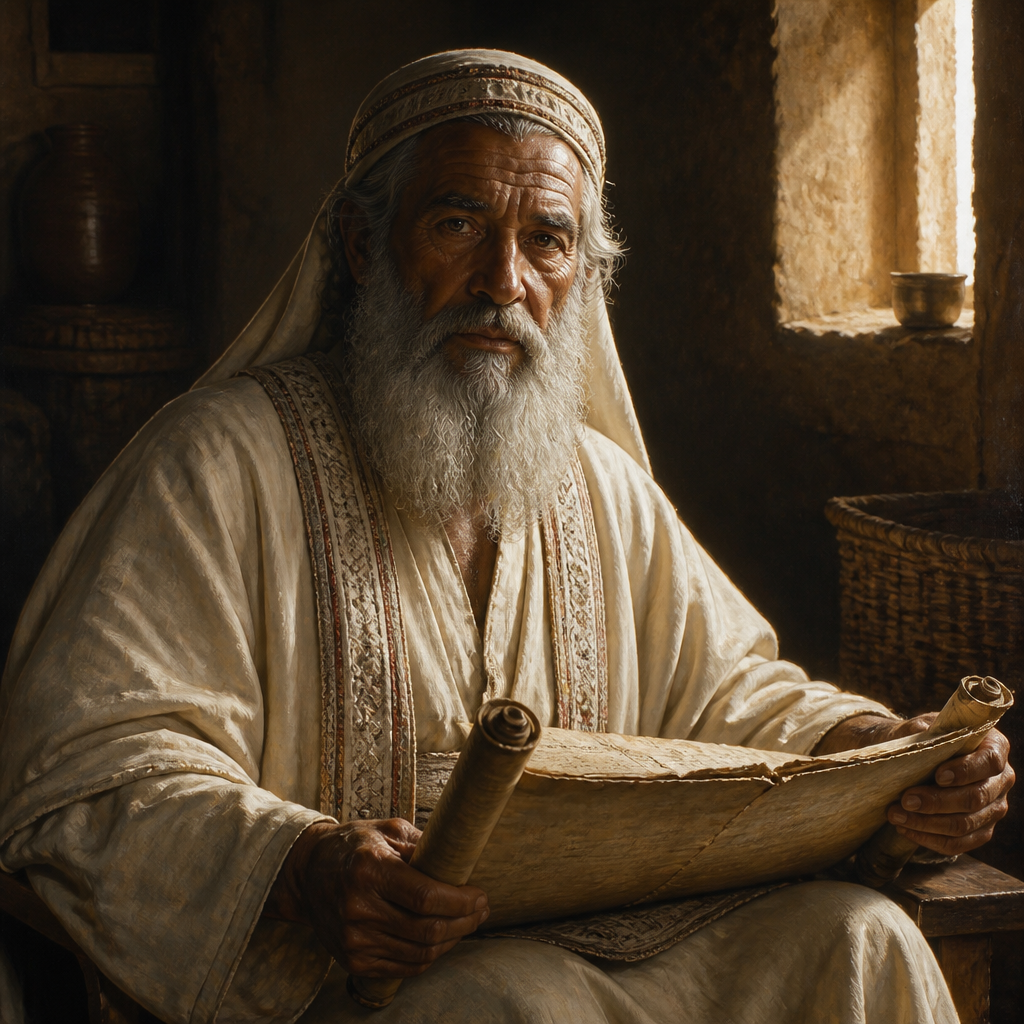 Amram, Father of MosesThis page
 Hebron, Son of KohathBrotherExodus 6:18Stated
 Izhar, Levite of the ExodusBrotherExodus 6:18Stated
 Uzziel, Son of KohathBrotherExodus 6:18Stated
Children
 AaronSonExodus 6:20Stated
 Miriam, Prophetess and Sister of MosesDaughterNumbers 26:59Stated
 MosesSonExodus 6:20Stated
Connected Figures
Family
Father · Exodus 6:18
Kohath was the second son of Levi and the patriarchal ancestor of the Kohathites, the Levite clan responsible for transporting the most holy objects of the Tabernacle.
Egypt and WildernessFirst: Genesis 46:1123 versesPatriarch of the Kohathite clanLevi
Wife · Exodus 6:20
A woman of the tribe of Levi who was the mother of Moses, Aaron, and Miriam during the Israelites' sojourn in Egypt.
Egypt and WildernessFirst: Exodus 6:205 versesMatriarch of the Levite leadershipLevi
Son · Exodus 6:20
The first High Priest of Israel, elder brother of Moses, and primary spokesman for the Israelites during the Exodus from Egypt.
Egypt and WildernessFirst: Exodus 4:14338 versesHigh Priest, ProphetLevi
Daughter · Numbers 26:59
A prophetess of the Tribe of Levi who served as a prominent leader of Israel alongside her brothers Moses and Aaron during the Exodus and wilderness wanderings.
Egypt and WildernessFirst: Exodus 15:2012 versesProphetessLevi
Son · Exodus 6:20
The preeminent prophet and lawgiver of Israel who led the Hebrews out of Egyptian bondage and mediated the Covenant at Mount Sinai.
Egypt and WildernessFirst: Exodus 2:10844 versesProphet, Judge, and LawgiverLevi
Brother · Exodus 6:18
A Levite of the Kohathite clan and the son of Kohath, he founded the Hebronite family that served in administrative and religious roles through the reign of King David.
Egypt and WildernessFirst: Exodus 6:189 versesLevite / Clan FounderLevi
Brother · Exodus 6:18
A prominent Levite of the Kohathite clan and the father of Korah, known for his genealogical position during the Egyptian sojourn and the wilderness wanderings.
Egypt and WildernessFirst: Exodus 6:1812 versesLevite PatriarchLevi
Brother · Exodus 6:18
A prominent Levite of the Kohathite branch and paternal uncle to Moses and Aaron during the Egyptian Sojourn and Exodus.
Categories
Mentions by Book
- Exodus2
- Numbers3
- 1 Chronicles6
Scripture References
All 11 indexed verses, in canonical order, from the Berean Standard Bible.
Exodus · 2
- Exodus 6:18
The sons of Kohath were Amram, Izhar, Hebron, and Uzziel. Kohath lived 133 years.
- Exodus 6:20Partial
And Amram married his father’s sister Jochebed, and she bore him Aaron and Moses. Amram lived 137 years.
Numbers · 3
- Numbers 3:19
The sons of Kohath by their clans were Amram, Izhar, Hebron, and Uzziel.
- Numbers 26:58
These were the families of the Levites: The Libnite clan, the Hebronite clan, the Mahlite clan, the Mushite clan, and the Korahite clan. Now Kohath was the father of Amram,
- Numbers 26:59Partial
and Amram’s wife was named Jochebed. She was also a daughter of Levi, born to Levi in Egypt. To Amram she bore Aaron, Moses, and their sister Miriam.
1 Chronicles · 6
- 1 Chronicles 6:2
The sons of Kohath: Amram, Izhar, Hebron, and Uzziel.
- 1 Chronicles 6:3
The children of Amram: Aaron, Moses, and Miriam. The sons of Aaron: Nadab, Abihu, Eleazar, and Ithamar.
- 1 Chronicles 6:18
The sons of Kohath: Amram, Izhar, Hebron, and Uzziel.
- 1 Chronicles 23:12
The sons of Kohath: Amram, Izhar, Hebron, and Uzziel—four in all.
- 1 Chronicles 23:13
The sons of Amram: Aaron and Moses. Aaron and his descendants were set apart forever to consecrate the most holy things, to burn incense before the LORD, to minister before Him, and to pronounce blessings in His name forever.
- 1 Chronicles 24:20
Now these were the rest of the descendants of Levi: From the sons of Amram: Shubael; from the sons of Shubael: Jehdeiah.
Others Named Amram
Compare all 2 bearers →Amram, Descendant of BaniEzra 10:34
A Jewish returnee from the Babylonian Exile who was identified by Ezra for having married a foreign woman during the post-exilic restoration.