Korah, Levite of the Exodus
Who was Korah, Levite of the Exodus, in the Bible?
A Levite who led a major insurrection against the leadership of Moses and Aaron in the wilderness, resulting in his divine execution and serving as a lasting warning against rebellion.
This is one of 4 people named Korah in the Bible. See all 4 →
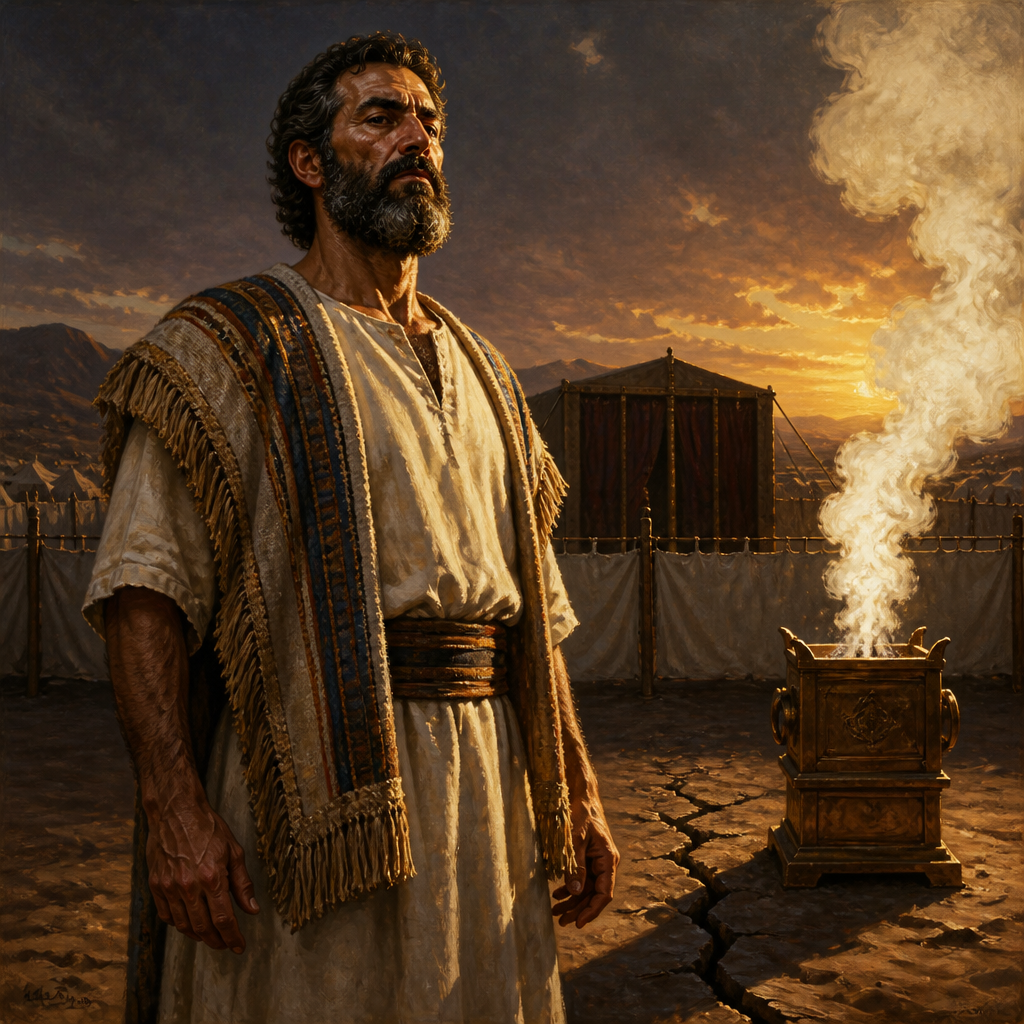
Korah, the son of Izhar and a member of the Kohathite clan of the tribe of Levi, is primarily known for leading a high-profile rebellion against the authority of Moses and the high priesthood of Aaron. Living during the Exodus and the subsequent wilderness wanderings, Korah held a privileged position within the tabernacle service. However, his dissatisfaction with his rank led him to challenge the hierarchical structure established by God, inciting a crisis that threatened the social and spiritual order of the fledgling nation of Israel.
The narrative of Korah is one of the most dramatic accounts of judgment in the Pentateuch. It serves as a stark legal and theological precedent regarding the sanctity of the priesthood and the dangers of spiritual pride. Despite his personal failure and eventual death, his lineage remained significant in Israel’s history, with his descendants—the Korahites—emerging as prominent singers, gatekeepers, and contributors to the Hebrew psalter.
Background and Family
Korah was born into a distinguished lineage within the tribe of Levi. According to Exodus 6:18–21, he was the son of Izhar, who was the son of Kohath, making Korah a first cousin to Moses and Aaron. This familial connection is crucial to understanding the political and religious tensions that later erupted; Korah was not an outsider, but a high-ranking member of the inner circle of the Levites. The Kohathites were specifically tasked with the transport and care of the most sacred furnishings of the Tabernacle, including the Ark of the Covenant, which afforded them a level of intimacy with the divine presence that other tribes did not possess.
Korah had three sons: Assir, Elkanah, and Abiasaph. He also had three recorded siblings: Nepheg, Zichri, and Shelomith. His domestic life was inextricably linked to the Levite camp, and his influence clearly extended beyond his immediate family, as evidenced by his ability to mobilize a large following among the Reubenites and other tribal leaders during his confrontation with Moses.
Major Life Events: The Rebellion
The central event of Korah’s life is recorded in Numbers 16. Driven by a sense of entitlement or perhaps a desire for the high priesthood itself, Korah gathered 250 well-known community leaders to challenge Moses and Aaron. His rhetorical strategy was based on an appeal to egalitarianism, arguing that since the whole congregation was holy and the Lord was among them all, Moses and Aaron had no right to "exalt themselves" above the assembly.
Moses responded to this challenge by proposing a divine test. He instructed Korah and his 250 followers to take censers and offer incense before the Lord the following morning. This was a direct provocation, as the offering of incense was a strictly regulated priestly duty limited to Aaron and his sons. Moses specifically rebuked Korah’s ambition, asking the Levites if it was not enough that God had set them apart for the service of the Tabernacle, that they now sought the priesthood as well (Numbers 16:8-10).
The climax of the rebellion occurred at the entrance to the Tent of Meeting. As Korah and his assembly stood with their censers, the glory of the Lord appeared. In a display of immediate and terrifying judgment, the earth opened and swallowed Korah, along with the other ringleaders Dathan and Abiram, their households, and their possessions. Simultaneously, fire from the Lord consumed the 250 men who were offering incense. This event served as a permanent "warning sign" to Israel that only those specifically appointed by God could approach the altar to offer incense.
Relationship to Other Biblical Figures
Korah’s primary relationship in the biblical text is one of antagonism toward Moses and Aaron. While they were relatives, Korah viewed their leadership as a form of nepotism rather than divine appointment. His alliance with Dathan and Abiram, who were of the tribe of Reuben, suggests a coordinated effort to restore the Reubenites to their status as the firstborn tribe while simultaneously elevating the status of the non-priestly Levites.
Interestingly, the biblical record in Numbers 26:11 notes that "the line of Korah did not die out." While Korah himself perished, his sons apparently did not participate in the rebellion or were spared. This allows for a significant redemptive arc in the Bible, as his descendants—the Korahites—eventually became faithful servants in the Temple of Solomon. The New Testament, in the Epistle of Jude, references Korah as a typological figure for false teachers who reject authority, grouping him with Cain and Balaam as examples of those who perish in their own rebellion (Jude 1:11).
Spiritual Significance
Theologically, Korah represents the danger of spiritual envy and the rejection of divinely established order. His rebellion was not merely a political coup but a theological assertion that personal holiness or communal belonging negates the need for specific, God-ordained leadership structures. The severity of his punishment underscores the holiness of God’s sanctuary and the gravity of presuming to take on roles that God has not assigned.
However, the legacy of Korah also provides a profound lesson in grace and mercy. The survival of his sons led to the creation of the "Sons of Korah," a group of musicians credited with writing several of the most beautiful and spiritually rich Psalms, including Psalms 42, 46, and 84. Their presence in the scripture serves as a reminder that the sins of the father do not necessarily define the spiritual destiny of the children. The transition from a name associated with rebellion to one associated with the highest forms of worship is a testament to the restorative power of God within the history of Israel.
Korah serves as the definitive biblical example of the 'sin of presumption' and the rejection of divinely appointed authority. His rebellion is significant because it originated from within the sanctified tribe of Levi, demonstrating that proximity to the holy does not guarantee a heart of submission. The judgment he faced established the exclusivity of the Aaronic priesthood and reinforced the necessity of approaching God only in the manner He has prescribed.
In a broader canonical sense, Korah’s legacy is twofold: he is a warning against apostasy and rebellion, yet his descendants become symbols of restoration. The 'Sons of Korah' contributed significantly to the liturgy of Israel, proving that a family line associated with judgment can be transformed into a line of blessing and praise. This duality makes Korah a complex figure who illustrates both the severity and the kindness of God.
Frequently Asked Questions
Why did Korah rebel against Moses?
Korah felt that Moses and Aaron had taken too much power for themselves. He argued that since the entire congregation was holy, there was no need for a hierarchy that placed Aaron's family above other Levites in the service of God.
How did Korah die according to the Bible?
Numbers 16 records that the earth opened up and swallowed Korah, his fellow leaders Dathan and Abiram, their households, and all their possessions. The 250 men following him were consumed by fire from the Lord.
Did all of Korah's children die with him?
No. Numbers 26:11 explicitly states that the 'line of Korah did not die out.' His sons Assir, Elkanah, and Abiasaph survived and their descendants became the 'Sons of Korah' who served in the Temple.
What is the 'error of Korah' mentioned in the New Testament?
In Jude 1:11, the 'rebellion of Korah' (or 'gainsaying of Core') refers to the sin of rejecting God-given authority and seeking spiritual positions or honors through pride and self-exaltation.
What were the duties of Korah's family before the rebellion?
As Kohathites, Korah's family was responsible for carrying the most sacred objects of the Tabernacle, including the Ark of the Covenant, whenever the camp moved.
Family & Relationships
Parents
 Izhar, Levite of the ExodusFatherExodus 6:21Stated
 Korah, Levite of the ExodusThis page
 Nepheg, Son of IzharBrotherExodus 6:21Stated
 Zichri, Levite of the ExodusBrotherExodus 6:21Stated
 Shelomith, Levite Son of IzharBrotherExodus 6:21
Inferred
Reconstructed through Izhar: 1 Chronicles 23:18 ties Shelomith to Izhar; Exodus 6:21 ties Izhar to Korah. No verse states the brother link between Shelomith and Korah directly.Evidence: Exodus 6:21; 1 Chronicles 23:18
Children
 Assir, Son of KorahSonExodus 6:24Stated
 Elkanah, Son of KorahSonExodus 6:24Stated
 EbiasaphSon1 Chronicles 6:37Stated
Connected Figures
Family
Father · Exodus 6:21
A prominent Levite of the Kohathite clan and the father of Korah, known for his genealogical position during the Egyptian sojourn and the wilderness wanderings.
Egypt and WildernessFirst: Exodus 6:1812 versesLevite PatriarchLevi
Son · Exodus 6:24
A Levite of the Kohathite clan and one of the sons of Korah who lived during the era of the Egyptian Sojourn and the Exodus.
Egypt and WildernessFirst: Exodus 6:244 versesLevite clan leaderLevi
Son · Exodus 6:24
A Levite during the era of the Exodus and son of Korah who served as a progenitor of the Korahite clans.
Egypt and WildernessFirst: Exodus 6:242 versesLevite clan founderLevi
Son · 1 Chronicles 6:37
A Levite of the clan of Korah during the Egyptian sojourn and Wilderness period, recognized as a founding ancestor of the Korahite gatekeepers.
Egypt and WildernessFirst: 1 Chronicles 6:235 versesLevite clansmanLevi
Brother · Exodus 6:21
Nepheg was a Levite of the Kohathite clan and a son of Izhar who lived during the era of the Egyptian bondage and the Exodus.
Brother · Exodus 6:21
A Levite during the era of the Egyptian sojourn and Exodus, Zichri was the son of Izhar and a brother of the well-known Korah.
Brother · Exodus 6:21
Shelomith was the first-born son of Izhar and a prominent Levite leader whose lineage was established for service in the Tabernacle and Temple.
Egypt and WildernessFirst: 1 Chronicles 23:184 versesLevite LeaderLevi
Categories
Mentions by Book
- Exodus2
- Numbers17
- 1 Chronicles5
- Psalms11
- Jude1
Scripture References
All 36 indexed verses, in canonical order, from the Berean Standard Bible.
- Exodus 6:21
The sons of Izhar were Korah, Nepheg, and Zichri.
- Exodus 6:24
The sons of Korah were Assir, Elkanah, and Abiasaph. These were the clans of the Korahites.
- Numbers 16:1
Now Korah son of Izhar, the son of Kohath son of Levi, along with some Reubenites—Dathan and Abiram, sons of Eliab, and On son of Peleth—conducted
- Numbers 16:5
Then he said to Korah and all his followers, “Tomorrow morning the LORD will reveal who belongs to Him and who is holy, and He will bring that person near to Himself. The one He chooses He will bring near to Himself.
- Numbers 16:6
You, Korah, and all your followers are to do as follows: Take censers,
- Numbers 16:8
Moses also said to Korah, “Now listen, you sons of Levi!
- Numbers 16:16
And Moses said to Korah, “You and all your followers are to appear before the LORD tomorrow—you and they and Aaron.
- Numbers 16:19
When Korah had gathered his whole assembly against them at the entrance to the Tent of Meeting, the glory of the LORD appeared to the whole congregation.
- Numbers 16:24
“Tell the congregation to move away from the dwellings of Korah, Dathan, and Abiram.”
- Numbers 16:27
So they moved away from the dwellings of Korah, Dathan, and Abiram. Meanwhile, Dathan and Abiram had come out and stood at the entrances to their tents with their wives and children and infants.
- Numbers 16:31Partial
As soon as Moses had finished saying all this, the ground beneath them split open,
Cited as a key verse; added so References, Key Verses and Mentions by Book share one index.
- Numbers 16:32
and the earth opened its mouth and swallowed them and their households—all Korah’s men and all their possessions.
- Numbers 16:33Partial
They went down alive into Sheol with all they owned. The earth closed over them, and they vanished from the assembly.
Cited as a key verse; added so References, Key Verses and Mentions by Book share one index.
- Numbers 16:40
just as the LORD commanded him through Moses. This was to be a reminder to the Israelites that no outsider who is not a descendant of Aaron should approach to offer incense before the LORD, lest he become like Korah and his followers.
- Numbers 16:49
But those who died from the plague numbered 14,700, in addition to those who had died on account of Korah.
- Numbers 26:9
and the sons of Eliab were Nemuel, Dathan, and Abiram. It was Dathan and Abiram, chosen by the congregation, who rebelled against Moses and Aaron with the followers of Korah who rebelled against the LORD.
- Numbers 26:10
And the earth opened its mouth and swallowed them along with Korah, whose followers died when the fire consumed 250 men. They serve as a warning sign.
- Numbers 26:11
However, the line of Korah did not die out.
- Numbers 27:3
“Our father died in the wilderness, but he was not among the followers of Korah who gathered together against the LORD. Instead, he died because of his own sin, and he had no sons.
- 1 Chronicles 6:22
The descendants of Kohath: Amminadab his son, Korah his son, Assir his son,
- 1 Chronicles 6:37
the son of Tahath, the son of Assir, the son of Ebiasaph, the son of Korah,
- 1 Chronicles 9:19
Shallum son of Kore, the son of Ebiasaph, the son of Korah, and his relatives from the Korahites were assigned to guard the thresholds of the Tent, just as their fathers had been assigned to guard the entrance to the dwelling of the LORD.
- 1 Chronicles 23:18Partial
The sons of Izhar: Shelomith was the first.
Cited as evidence on a family card; added so References, Key Verses and Mentions by Book share one index.
- 1 Chronicles 26:19
These were the divisions of the gatekeepers who were descendants of Korah and Merari.
- Psalms 42:1
For the choirmaster. A Maskil of the sons of Korah. As the deer pants for streams of water, so my soul longs after You, O God.
- Psalms 44:1
For the choirmaster. A Maskil of the sons of Korah. We have heard with our ears, O God; our fathers have told us the work You did in their days, in the days of old.
- Psalms 45:1
For the choirmaster. To the tune of “The Lilies.” A Maskil of the sons of Korah. A love song. My heart is stirred by a noble theme as I recite my verses to the king; my tongue is the pen of a skillful writer.
- Psalms 46:1
For the choirmaster. Of the sons of Korah. According to Alamoth. A song. God is our refuge and strength, an ever-present help in times of trouble.
- Psalms 47:1
For the choirmaster. A Psalm of the sons of Korah. Clap your hands, all you peoples; shout unto God with a voice of triumph.
- Psalms 48:1
A song. A Psalm of the sons of Korah. Great is the LORD, and greatly to be praised in the city of our God, His holy mountain.
- Psalms 49:1
For the choirmaster. A Psalm of the sons of Korah. Hear this, all you peoples; listen, all inhabitants of the world,
- Psalms 84:1
For the choirmaster. According to Gittith. A Psalm of the sons of Korah. How lovely is Your dwelling place, O LORD of Hosts!
- Psalms 85:1
For the choirmaster. A Psalm of the sons of Korah. You showed favor to Your land, O LORD; You restored Jacob from captivity.
- Psalms 87:1
A Psalm of the sons of Korah. A song. He has founded His city on the holy mountains.
- Psalms 88:1
A song. A Psalm of the sons of Korah. For the choirmaster. According to Mahalath Leannoth. A Maskil of Heman the Ezrahite. O LORD, the God of my salvation, day and night I cry out before You.
- Jude 1:11
Woe to them! They have traveled the path of Cain; they have rushed for profit into the error of Balaam; they have perished in Korah’s rebellion.
Others Named Korah
Compare all 4 bearers →Korah, Son of EsauGenesis 36:5
An Edomite chief and the son of Esau and Oholibamah, recognized as a tribal leader in the land of Canaan during the Patriarchs.
Korah, Son of Hebron1 Chronicles 2:43
Korah was a descendant of Caleb within the tribe of Judah, listed as one of the four sons of Hebron during the Egypt and Wilderness era.
Korah, Grandson of AdahGenesis 36:16
An Edomite chief and son of Eliphaz who served as a tribal leader in the land of Edom during the Patriarchs.