Elkanah, Son of Korah
Who was Elkanah, Son of Korah, in the Bible?
A Levite during the era of the Exodus and son of Korah who served as a progenitor of the Korahite clans.
This is one of 8 people named Elkanah in the Bible. See all 8 →
Elkanah, son of Korah, was a member of the tribe of Levi who lived during the pivotal era of the Exodus from Egypt and the subsequent wilderness wanderings. He is primarily identified in the biblical record as one of the three sons of Korah, alongside his brothers Assir and Abiasaph. His life is situated within the Kohathite branch of the Levites, the group historically responsible for the care of the most sacred elements of the Tabernacle.
While his individual actions are not detailed in the narrative prose of the Torah, Elkanah's presence in the genealogical records is significant. He represents a critical link in the survival and continuation of the Korahite line. His name, which translates to 'God has purchased' or 'God has created,' reflects the common Levite practice of naming children to honor the providence of Yahweh during their transition from Egyptian bondage to the Promised Land.
Background and Family
Elkanah was born into the Tribe of Levi, specifically within the lineage of Kohath. According to Exodus 6:24, he was one of the sons of Korah, who was the son of Izhar, the son of Kohath, the son of Levi. This lineage placed Elkanah at the heart of the priestly and ministerial structure of ancient Israel. His brothers were Assir and Abiasaph (also spelled Ebiasaph).
The mention of Elkanah in Exodus 6 occurs within a genealogical register intended to establish the credentials of Moses and Aaron. By listing Elkanah and his brothers, the text defines the 'clans of the Korahites,' establishing them as a distinct and recognized sub-group within the Levite social and religious hierarchy during the stay in Egypt and the initial stages of the Exodus.
Major Life Events
The biblical record for this specific Elkanah is strictly genealogical. He appears in the list of Levites who were present during the transition from Egypt into the wilderness. While the narrative of the Exodus focuses heavily on the leadership of Moses, Elkanah is documented to ensure the legal and ancestral continuity of the Levite families.
In 1 Chronicles 6:23, his name reappears in a retrospective genealogy. This passage reinforces his position as a son of Korah and a father within the Kohathite line. The brief nature of these mentions suggests that Elkanah’s primary contribution to the biblical narrative is his role as a progenitor, maintaining the line of the Levites who would eventually serve in the organized liturgical life of Israel.
Relationship to Other Biblical Figures
Elkanah is most closely defined by his relationship to his father, Korah, and his brothers, Assir and Abiasaph. As the sons of Korah, these three men are cited as the founders of the Korahite clans. The text of Exodus 6:24 explicitly groups them together: "The sons of Korah were Assir, Elkanah, and Abiasaph. These were the clans of the Korahites."
Because the biblical text does not record Elkanah’s involvement in the later rebellion of his father (recorded in Numbers 16), and because the Korahite line is known to have survived (Numbers 26:11 notes that 'the sons of Korah did not die'), Elkanah stands as a testament to the preservation of the family name despite the judgment brought upon his father's household.
Spiritual Significance
The significance of Elkanah, son of Korah, lies in the endurance of the Levite ministry. By appearing in both the Pentateuch and the Books of Chronicles, Elkanah serves as a bridge between the foundational era of the Law and the later organizational era of the Temple. His inclusion in these lists confirms that the Korahite branch remained a vital part of Israel’s spiritual heritage. His life demonstrates the biblical theme of generational continuity, where the faithfulness of a lineage is preserved through the naming and recording of its members, ensuring their place within the covenant community.
Elkanah, son of Korah, is theologically significant as a representative of the surviving Korahite line. His presence in the genealogies of Exodus and 1 Chronicles confirms that the judgment upon Korah did not result in the total extinction of his descendants. This highlights the biblical principle found in Numbers 26:11 regarding the survival of Korah's sons, allowing for the eventual emergence of the Korahite singers and gatekeepers who would author several Psalms.
Furthermore, as a Levite of the Kohathite branch, Elkanah represents the preservation of the designated servants of the sanctuary. His name serves as a marker of identity for a clan that would remain central to Israelite worship for centuries, emphasizing that God maintains his chosen servants across generations even during periods of national transition and wilderness wandering.
Frequently Asked Questions
Who was the father of this Elkanah?
This Elkanah was the son of Korah, the grandson of Izhar, from the tribe of Levi.
What tribe did Elkanah belong to?
He belonged to the tribe of Levi, specifically the Kohathite clan.
Did Elkanah, son of Korah, survive the rebellion in the wilderness?
While the narrative does not detail his specific actions, Numbers 26:11 states that the sons of Korah did not die in the rebellion, and Elkanah's appearance in later genealogies confirms the survival of his line.
Who were Elkanah's brothers?
His brothers were Assir and Abiasaph (also known as Ebiasaph).
In which books of the Bible is this Elkanah mentioned?
He is mentioned in the books of Exodus (6:24) and 1 Chronicles (6:23).
Family & Relationships
Parents
 Korah, Levite of the ExodusFatherExodus 6:24Stated
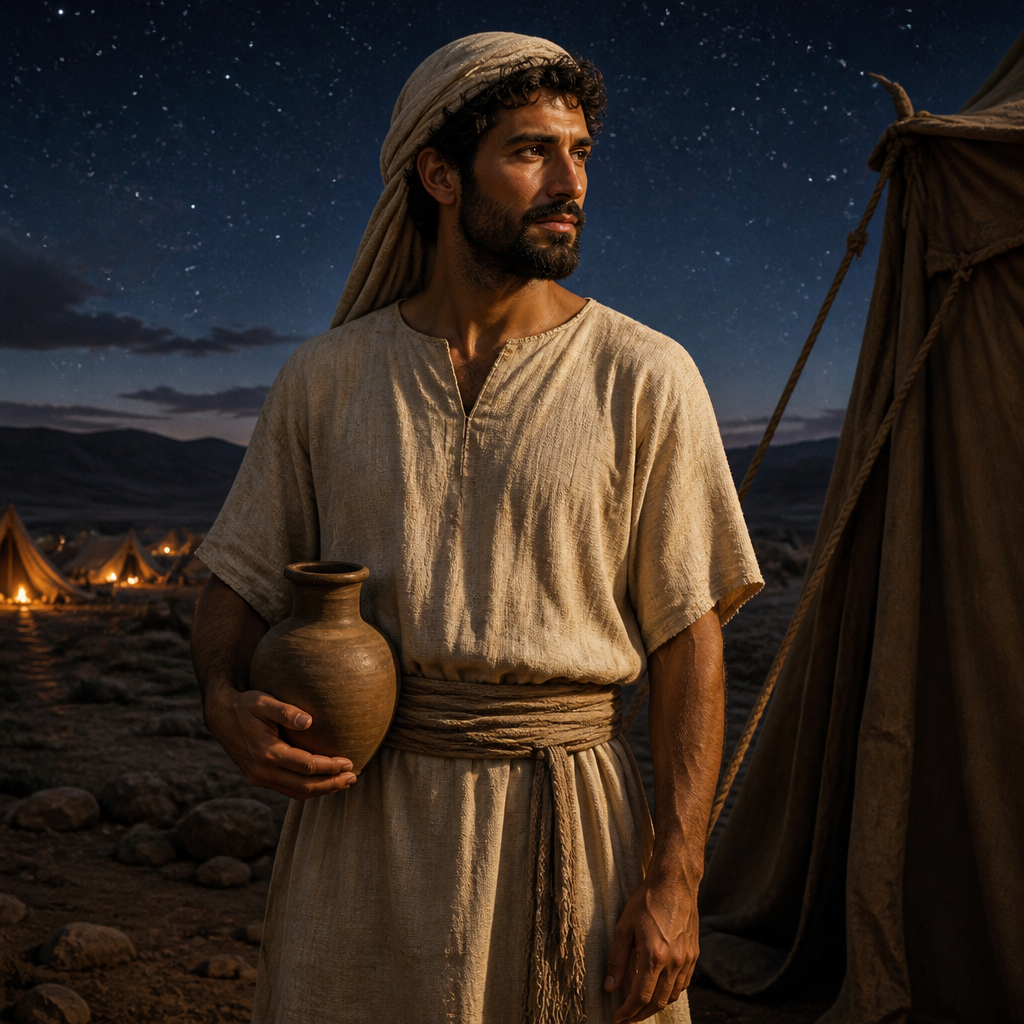 Elkanah, Son of KorahThis page
 Assir, Son of KorahBrotherExodus 6:24Stated
 EbiasaphBrother1 Chronicles 6:23Stated
Connected Figures
Family
Father · Exodus 6:24
A Levite who led a major insurrection against the leadership of Moses and Aaron in the wilderness, resulting in his divine execution and serving as a lasting warning against rebellion.
Egypt and WildernessFirst: Exodus 6:2136 versesLevite / Tabernacle ServantLevi
Brother · Exodus 6:24
A Levite of the Kohathite clan and one of the sons of Korah who lived during the era of the Egyptian Sojourn and the Exodus.
Egypt and WildernessFirst: Exodus 6:244 versesLevite clan leaderLevi
Brother · 1 Chronicles 6:23
A Levite of the clan of Korah during the Egyptian sojourn and Wilderness period, recognized as a founding ancestor of the Korahite gatekeepers.
Egypt and WildernessFirst: 1 Chronicles 6:235 versesLevite clansmanLevi
Categories
Mentions by Book
- Exodus1
- 1 Chronicles1
Scripture References
All 2 indexed verses, in canonical order, from the Berean Standard Bible.
Exodus · 1
- Exodus 6:24
The sons of Korah were Assir, Elkanah, and Abiasaph. These were the clans of the Korahites.
1 Chronicles · 1
- 1 Chronicles 6:23
Elkanah his son, Ebiasaph his son, Assir his son,
Others Named Elkanah
Compare all 8 bearers →Elkanah, Official of the Divided Monarchy2 Chronicles 28:7
High-ranking official in the court of King Ahaz of Judah, designated as 'second to the king' before his death during the Syro-Ephraimite War.
Elkanah, Warrior of the Divided Monarchy1 Chronicles 12:6
A Korahite warrior and skilled archer who joined David’s forces at Ziklag during the transition of the Israelite monarchy.
Elkanah, Father of Samuel1 Samuel 1:1
A devout Levite of the era of the conquest and the judges, known as the husband of Hannah and the father of the prophet Samuel.
Elkanah, Ancestor of Heman1 Chronicles 6:26
A Levite of the era of the conquest and the judges who appears in the Kohathite genealogical records as the son of Ahimoth and father of Zuph.
Elkanah, Levite of the Exile and Return1 Chronicles 9:16
A Levite whose descendants returned from the Babylonian Exile to inhabit the rural villages surrounding Jerusalem.
Elkanah, Guardian of the Ark1 Chronicles 15:23
A man appointed as a gatekeeper and guardian for the Ark of the Covenant during the United Monarchy.
Elkanah, Son of Shaul1 Chronicles 6:25
A Levite of the era of the conquest and the judges who served in the lineage of the Kohathites as the son of Shaul and father of Amasai.