Dathan
Who was Dathan in the Bible?
A Reubenite leader who, along with his brother Abiram and the Levite Korah, led a major rebellion against the leadership of Moses and Aaron during the wilderness wanderings.
Dathan was a prominent member of the tribe of Reuben, the eldest son of Eliab and the brother of Abiram and Nemuel. He rose to notoriety during the Israelites' journey through the wilderness following the Exodus from Egypt. Dathan is primarily remembered for his role as a chief antagonist to Moses, challenging the prophet’s divinely appointed authority and the exclusive priesthood of Aaron.
Along with his brother Abiram and a Levite named Korah, Dathan organized a faction of 250 well-known community leaders to confront Moses. Their rebellion represented a significant internal threat to the social and spiritual order of Israel. The conflict concluded with a dramatic divine judgment, in which Dathan and his fellow conspirators were consumed by the earth, serving as a permanent warning to the congregation of Israel regarding the sanctity of God’s chosen leadership.
Background and Family
Dathan was a descendant of Reuben, the firstborn son of Jacob. According to the genealogical records in Numbers 26:9, he was the son of Eliab. He had two brothers, Abiram and Nemuel. As a member of the tribe of Reuben, Dathan belonged to a lineage that traditionally might have expected leadership status due to Reuben’s status as the firstborn, though that preeminence had been forfeited in the patriarchal age. Dathan and his brother Abiram are described as "chosen by the congregation," indicating they were men of significant influence and standing among the Israelites during the wilderness period (Numbers 26:9).
Major Life Events
The Rebellion against Moses
The defining event of Dathan’s life is recorded in Numbers 16. In coordination with Korah (a Kohathite Levite) and Abiram, Dathan incited a rebellion against Moses and Aaron. The rebels accused Moses of self-exaltation, famously stating, "You have gone too far! For all the congregation is holy, every one of them, and the Lord is among them. Why then do you exalt yourselves above the assembly of the Lord?" (Numbers 16:3).
While Korah’s grievance focused largely on the priesthood, Dathan and Abiram’s complaints appeared more political and personal. When Moses summoned Dathan and Abiram to a meeting to resolve the dispute, they flatly refused to attend, replying, "We will not come!" (Numbers 16:12). They further insulted Moses by accusing him of leading the people out of a "land flowing with milk and honey" (referring to Egypt) only to kill them in the wilderness, and they accused him of acting like a prince over them.
Divine Judgment
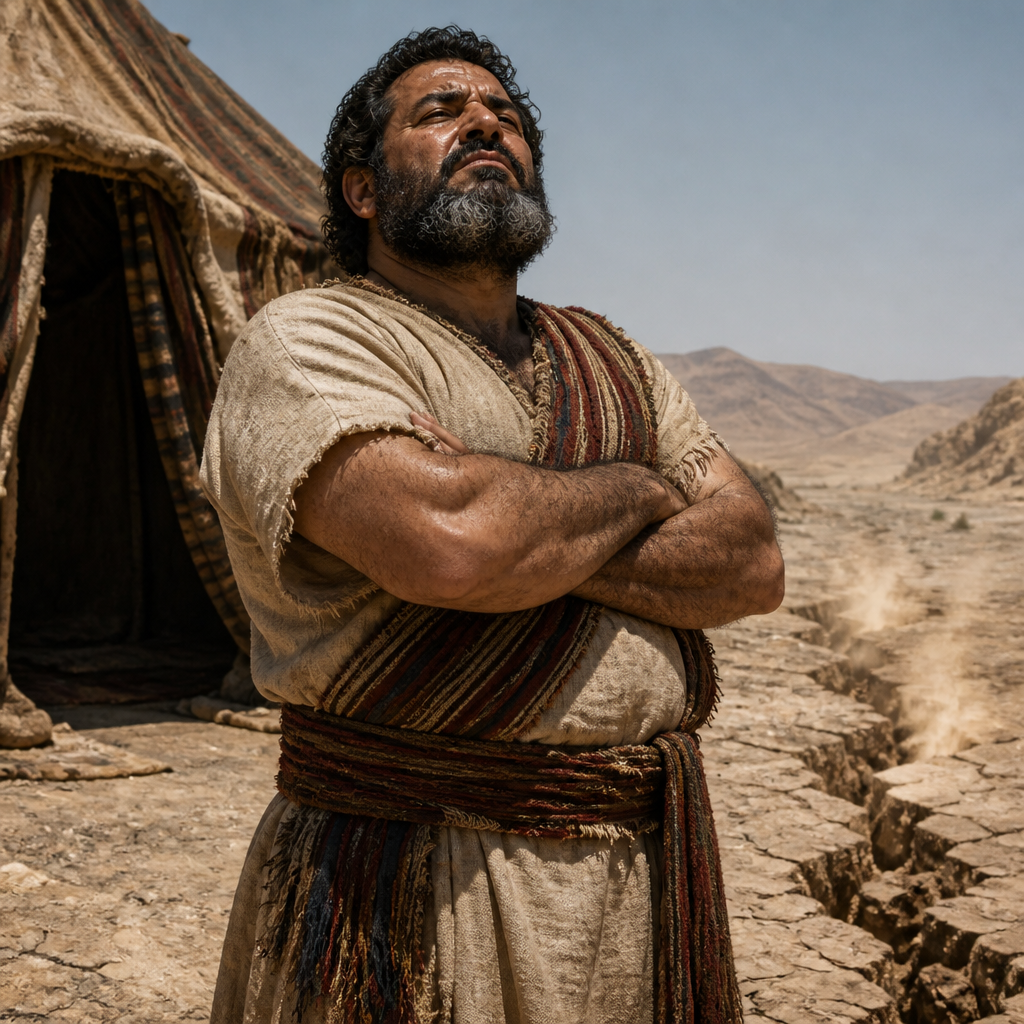
Moses, seeking divine vindication, instructed the congregation to move away from the tents of Korah, Dathan, and Abiram. Dathan and his brother Abiram remained defiant, standing at the entrances of their tents with their wives and children. Moses declared that if these men died a natural death, then the Lord had not sent him; however, if the earth opened to swallow them, it would be proof of their provocation against God.
Immediately after Moses finished speaking, the ground split apart. As recorded in Deuteronomy 11:6 and Psalm 106:17, the earth opened its mouth and swallowed Dathan, Abiram, their households, and all their possessions. This event served as a catastrophic end to the rebellion and a terrifying display of divine judgment.
Relationship to Other Biblical Figures
Dathan’s primary relationships were defined by his familial ties to Eliab and Abiram, and his adversarial relationship with Moses. Dathan and Abiram are almost always mentioned as a pair, suggesting they acted in close concert throughout the insurrection. Their alliance with Korah represents a rare union between the tribe of Reuben and the tribe of Levi for the purpose of challenging the established hierarchy. Unlike Korah’s sons, who the biblical record suggests survived the judgment (Numbers 26:11), the text indicates that Dathan’s entire household was lost in the seismic event.
Spiritual Significance
In the biblical narrative, Dathan serves as a cautionary figure representing the dangers of envy, pride, and the rejection of divinely established authority. The "rebellion of Korah," in which Dathan played a central role, is cited in later scriptures as a primary example of sinful insubordination. His refusal to even speak with Moses ("We will not come!") is often highlighted by scholars as a mark of hardened impenitence. The mention of Dathan in Psalm 106:17 serves to remind Israel of the consequences of forgetting God's works and challenging His appointed messengers, framing Dathan as a perpetual symbol of the "wicked" who are consumed by their own strife.
Theologically, Dathan represents the archetype of civic and tribal rebellion against theocratic governance. While Korah challenged the religious hierarchy, Dathan and Abiram challenged the civil leadership of Moses. Their downfall illustrates the biblical principle that rejecting a prophet sent by God is equivalent to rejecting God Himself. The physical nature of their punishment—being swallowed by the earth—is interpreted as a fitting end for those whose concerns were entirely earthly and focused on temporal power rather than spiritual obedience.
Dathan's story is also significant for its impact on the tribe of Reuben. The loss of prominent leaders like Dathan and Abiram contributed to the overall decline of Reuben’s influence in the wilderness and the subsequent history of Israel. The inclusion of his story in the census of Numbers 26 serves as a historical marker, explaining the missing branches of the Reubenite genealogy and reinforcing the holiness required of those who would lead the assembly of the Lord.
Frequently Asked Questions
What tribe did Dathan belong to?
Dathan was a member of the tribe of Reuben, the son of Eliab.
Why did Dathan rebel against Moses?
Dathan challenged Moses' authority, accusing him of acting like a prince over the people and failing to bring them to the promised land. He believed that the entire congregation was holy and that Moses had no right to exalt himself.
How did Dathan die according to the Bible?
According to Numbers 16 and Deuteronomy 11, the earth opened up and swallowed Dathan, his family, and his tents, along with his brother Abiram.
Did Dathan have any brothers?
Yes, Dathan had two brothers named Abiram and Nemuel.
Where is Dathan mentioned in the New Testament?
Dathan is not mentioned by name in the New Testament, although the rebellion he participated in is often alluded to in discussions regarding those who spoke against Moses (such as in Jude 1:11, though only Korah is named there).
Family & Relationships
Parents
 Eliab, Father of Dathan and AbiramFatherNumbers 16:1Stated
 DathanThis page
 Abiram, Reubenite Rebel in the WildernessBrotherNumbers 16:12Stated
 NemuelBrotherNumbers 26:9Stated
Extended family
 PalluGrandfatherGenesis 46:9
Inferred
No verse names Pallu and Dathan together; the grandson link is carried from the surrounding genealogy and is not stated in Scripture.Evidence: Genesis 46:9
Connected Figures
Family
Father · Numbers 16:1
Eliab was a Reubenite whose sons, Dathan and Abiram, led a famous rebellion against the leadership of Moses and Aaron in the wilderness.
Egypt and WildernessFirst: Numbers 16:15 versesHead of a Reubenite familyReuben
Brother · Numbers 16:12
A leader of the tribe of Reuben who, along with Dathan and Korah, instigated a major rebellion against the leadership of Moses and Aaron in the wilderness.
Brother · Numbers 26:9
A Reubenite and the eldest son of Eliab, notable as the brother of the rebels Dathan and Abiram.
Grandfather · Genesis 46:9
The second son of Reuben and the founder of the Palluite clan within the tribe of Reuben during the Egyptian sojourn and Exodus.
Categories
Mentions by Book
- Genesis1
- Numbers6
- Deuteronomy1
- Psalms1
Scripture References
All 9 indexed verses, in canonical order, from the Berean Standard Bible.
Genesis · 1
- Genesis 46:9Partial
The sons of Reuben: Hanoch, Pallu, Hezron, and Carmi.
Cited as evidence on a family card; added so References, Key Verses and Mentions by Book share one index.
Numbers · 6
- Numbers 16:1
Now Korah son of Izhar, the son of Kohath son of Levi, along with some Reubenites—Dathan and Abiram, sons of Eliab, and On son of Peleth—conducted
- Numbers 16:12
Then Moses summoned Dathan and Abiram, the sons of Eliab, but they said, “We will not come!
- Numbers 16:24
“Tell the congregation to move away from the dwellings of Korah, Dathan, and Abiram.”
- Numbers 16:25
So Moses got up and went to Dathan and Abiram, and the elders of Israel followed him.
- Numbers 16:27Partial
So they moved away from the dwellings of Korah, Dathan, and Abiram. Meanwhile, Dathan and Abiram had come out and stood at the entrances to their tents with their wives and children and infants.
- Numbers 26:9Partial
and the sons of Eliab were Nemuel, Dathan, and Abiram. It was Dathan and Abiram, chosen by the congregation, who rebelled against Moses and Aaron with the followers of Korah who rebelled against the LORD.
Deuteronomy · 1
- Deuteronomy 11:6
and what He did in the midst of all the Israelites to Dathan and Abiram, the sons of Eliab the Reubenite, when the earth opened its mouth and swallowed them, their households, their tents, and every living thing that belonged to them.
Psalms · 1
- Psalms 106:17
The earth opened up and swallowed Dathan; it covered the assembly of Abiram.