Hebron, Son of Kohath
Who was Hebron, Son of Kohath, in the Bible?
A Levite of the Kohathite clan and the son of Kohath, he founded the Hebronite family that served in administrative and religious roles through the reign of King David.
This is one of 2 people named Hebron in the Bible. See all 2 →
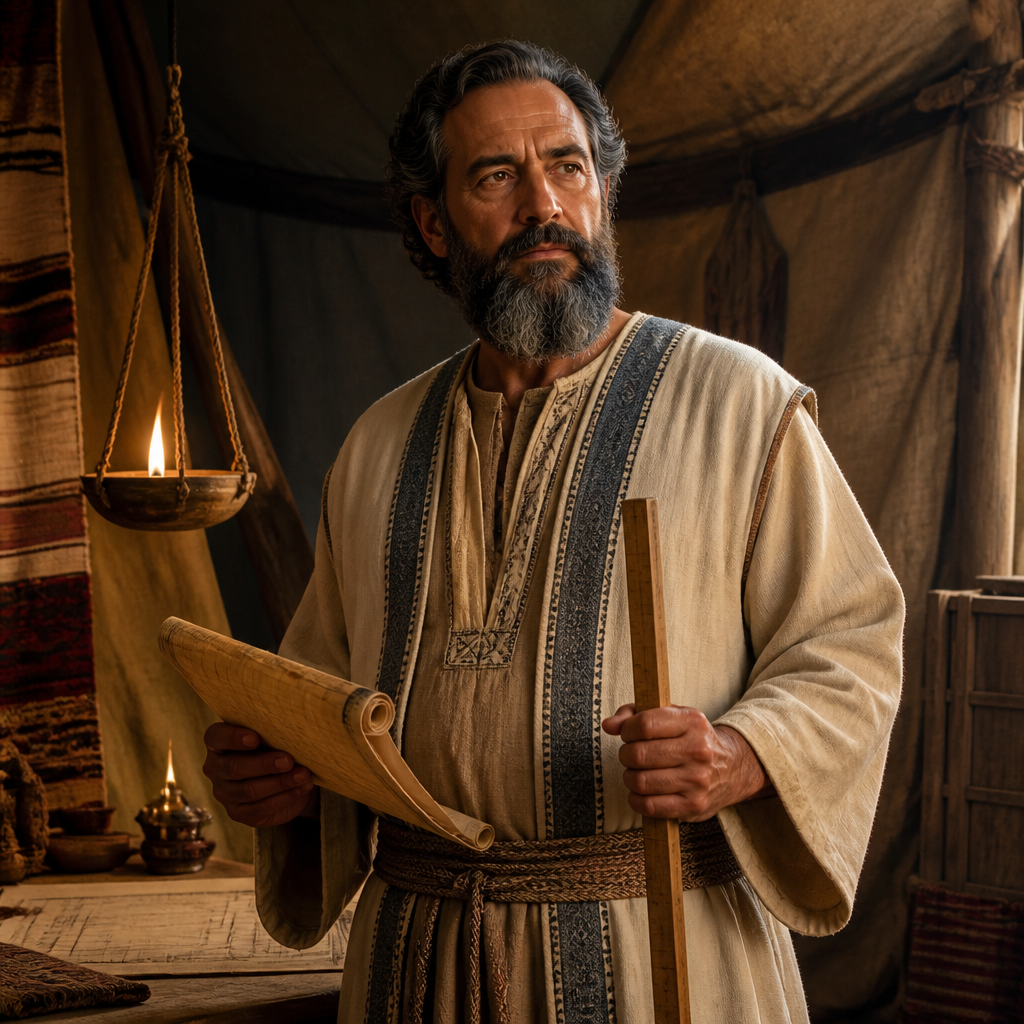
Hebron was a prominent Levite born during the Israelite sojourn in Egypt. As the son of Kohath and the grandson of Levi, he occupied a significant position within the tribal hierarchy that was designated for the service of the Tabernacle. While Hebron himself lived during the era of the Exodus, his legacy is primarily recorded through the 'Hebronites,' a clan that descended from him and maintained their identity across several centuries of Israelite history.
Hebron’s role in the biblical narrative is defined by his genealogy and the institutional roles filled by his descendants. As a brother to Amram, he was the paternal uncle of Moses, Aaron, and Miriam. Though he does not engage in the dramatic dialogues of the wilderness wanderings, his lineage was critical for the organizational structure of the priesthood and the eventual administration of the United Monarchy under King David.
Background and Family
Hebron was the third son of Kohath, who was himself the son of Levi (Exodus 6:18; Numbers 3:19). He was born into the generation of Israelites who experienced the harsh transition from the prosperity of Joseph's era to the oppression of the Egyptian bondage. His siblings included Amram (the father of Moses and Aaron), Izhar, and Uzziel. This placement within the family tree signifies that Hebron belonged to the core leadership lineage of the Levites.
According to the genealogical records in 1 Chronicles 23:19, Hebron had four sons: Jeriah (the firstborn), Amariah, Jahaziel, and Jekameam. These sons formed the basis of the Hebronite clan, one of the four primary branches of the Kohathites. The Kohathites were uniquely tasked with the care of the most sacred items of the Tabernacle, including the Ark of the Covenant, the table of showbread, and the lampstand.
Major Life Events
While the biblical text does not provide a narrative account of Hebron’s personal actions during the Exodus, his historical footprint is established through the census and organizational records of the Levites. In Numbers 3:27, the Hebronites are listed alongside the Amramites, Izharites, and Uzzielites as the four families comprising the Kohathite division. During the wilderness years, these families were responsible for the physical transport of the sanctuary's furnishings, a duty that required meticulous ritual purity.
Hebron's impact is most visible in the later records of the monarchy. During the reign of King David, the descendants of Hebron were recognized for their strength and administrative capability. In the fortieth year of David’s reign, a search was conducted for capable men among the Hebronites, leading to the discovery of strong leaders at Jazer in Gilead (1 Chronicles 26:31). This indicates that the family had expanded their influence beyond the traditional borders of the Promised Land, establishing a presence in the Transjordan region.
Relationship to Other Biblical Figures
As the uncle of Moses and Aaron, Hebron occupied a position of familial authority during the formation of the nation of Israel. His brothers’ families—the Amramites (priests) and the Izharites (from whom the rebel Korah descended)—are often mentioned alongside the Hebronites. Unlike the family of Izhar, which became associated with the rebellion against Moses, the Hebronites are consistently portrayed as faithful civil and religious servants.
In the time of David, the Hebronites were led by figures such as Eliel, who brought eighty relatives to assist in the relocation of the Ark to Jerusalem (1 Chronicles 15:9). Another notable descendant, Hashabiah, oversaw 1,700 men who managed the affairs of Israel west of the Jordan, handling both the "work of the LORD" and the "service of the king" (1 Chronicles 26:30). This highlights the dual role the Hebronites played as both religious officials and civil administrators.
Spiritual Significance
The significance of Hebron lies in the biblical theme of generational continuity and the distribution of sacred responsibilities. Hebron represents the structural support of the Israelite religious system. While his brother Amram produced the high priestly line, Hebron’s descendants provided the necessary administrative and physical labor to maintain the nation's spiritual life.
The mention of the Hebronites in 1 Chronicles 26:31, specifically their presence at Jazer in Gilead, serves as a testament to the expansion of the Levitical influence. It illustrates that the Levites were not merely stationary temple servants but were active participants in the governance and security of the land. The Hebronite legacy is one of "capable men" who balanced the service of God with the practical needs of the state, fulfilling a vital role in the social and spiritual fabric of ancient Israel.
Hebron’s importance is rooted in the preservation of the Levitical order. As one of the four sons of Kohath, his lineage was essential for the legal and ritual functioning of the Tabernacle and later the Temple. The Hebronites served as a model for the integration of spiritual devotion and civil service, demonstrating that administrative roles were considered just as much 'the work of the LORD' as the performance of sacrifices.
Furthermore, Hebron’s genealogy serves to ground the leadership of Moses and Aaron within a larger family context. By detailing the brothers of Amram—Izhar, Hebron, and Uzziel—the text emphasizes that the leadership of the Exodus was supported by a robust network of kinsmen who shared the responsibility of guiding the people and maintaining the holiness of the camp.
Frequently Asked Questions
Who was Hebron's father?
Hebron was the son of Kohath, who was the son of Levi. This makes Hebron a great-grandson of the patriarch Jacob.
Was Hebron related to Moses?
Yes, Hebron was the brother of Amram, who was the father of Moses. Therefore, Hebron was the paternal uncle of Moses, Aaron, and Miriam.
What happened to the descendants of Hebron?
The descendants of Hebron, known as the Hebronites, became a significant clan of Levites. They served as officials and judges under King David, with 1,700 men serving west of the Jordan and another group led by Jerijah serving east of the Jordan in Jazer.
Which tribe did Hebron belong to?
Hebron belonged to the Tribe of Levi, specifically within the Kohathite division, which was the group tasked with carrying the most sacred vessels of the Tabernacle.
How many sons did Hebron have?
According to 1 Chronicles 23:19, Hebron had four sons: Jeriah, Amariah, Jahaziel, and Jekameam.
Family & Relationships
Parents
 KohathFatherExodus 6:18Stated
 Hebron, Son of KohathThis page
 Amram, Father of MosesBrotherExodus 6:18Stated
 Izhar, Levite of the ExodusBrotherExodus 6:18Stated
 Uzziel, Son of KohathBrotherExodus 6:18Stated
Children
 Amariah, Son of HebronSon1 Chronicles 23:19Stated
 Jahaziel, Levite of the Egypt and Wilderness EraSon1 Chronicles 23:19Stated
 JekameamSon1 Chronicles 23:19Stated
 JeriahSon1 Chronicles 23:19Stated
Extended family
 MosesNephewExodus 6:18
Inferred
Reconstructed through Amram: Exodus 6:18 ties Hebron to Amram; Exodus 6:20 ties Amram to Moses. No verse states the nephew link between Hebron and Moses directly.Evidence: Exodus 6:18; Exodus 6:20; Numbers 26:59
Connected Figures
Family
Father · Exodus 6:18
Kohath was the second son of Levi and the patriarchal ancestor of the Kohathites, the Levite clan responsible for transporting the most holy objects of the Tabernacle.
Egypt and WildernessFirst: Genesis 46:1123 versesPatriarch of the Kohathite clanLevi
Son · 1 Chronicles 23:19
A Levite of the clan of Kohath and the second son of Hebron, recorded during the organization of the sanctuary service.
Egypt and WildernessFirst: 1 Chronicles 23:193 versesLeviteLevi
Son · 1 Chronicles 23:19
A Levite of the clan of Hebron who served during the organization of the Tabernacle and the priestly divisions under King David's chronicled history of the Kohathites.
Egypt and WildernessFirst: 1 Chronicles 23:193 versesLevite head of a father's houseLevi
Son · 1 Chronicles 23:19
Jekameam was a Levite of the Kohathite clan, serving as the fourth son of Hebron during the organizational transition of the wilderness era and early monarchy.
Egypt and WildernessFirst: 1 Chronicles 23:192 versesLevite MinisterLevi
Son · 1 Chronicles 23:19
The firstborn son of Hebron and a prominent Levite leader within the Kohathite clan during the era of the Egypt and Wilderness transition.
Egypt and WildernessFirst: 1 Chronicles 23:192 versesLevite LeaderLevi
Brother · Exodus 6:18
A Levite of the Kohathite clan best known as the father of the three primary leaders of the Exodus: Moses, Aaron, and Miriam.
Brother · Exodus 6:18
A prominent Levite of the Kohathite clan and the father of Korah, known for his genealogical position during the Egyptian sojourn and the wilderness wanderings.
Egypt and WildernessFirst: Exodus 6:1812 versesLevite PatriarchLevi
Brother · Exodus 6:18
A prominent Levite of the Kohathite branch and paternal uncle to Moses and Aaron during the Egyptian Sojourn and Exodus.
Nephew · Exodus 6:18
The preeminent prophet and lawgiver of Israel who led the Hebrews out of Egyptian bondage and mediated the Covenant at Mount Sinai.
Egypt and WildernessFirst: Exodus 2:10844 versesProphet, Judge, and LawgiverLevi
Categories
Mentions by Book
- Exodus3
- Numbers1
- 1 Chronicles5
Scripture References
All 9 indexed verses, in canonical order, from the Berean Standard Bible.
Exodus · 3
- Exodus 6:18
The sons of Kohath were Amram, Izhar, Hebron, and Uzziel. Kohath lived 133 years.
- Exodus 6:19Partial
The sons of Merari were Mahli and Mushi. These were the clans of the Levites according to their records.
Cited as evidence on a family card; added so References, Key Verses and Mentions by Book share one index.
- Exodus 6:20Partial
And Amram married his father’s sister Jochebed, and she bore him Aaron and Moses. Amram lived 137 years.
Cited as evidence on a family card; added so References, Key Verses and Mentions by Book share one index.
Numbers · 1
- Numbers 3:19
The sons of Kohath by their clans were Amram, Izhar, Hebron, and Uzziel.
1 Chronicles · 5
- 1 Chronicles 6:2
The sons of Kohath: Amram, Izhar, Hebron, and Uzziel.
- 1 Chronicles 6:18
The sons of Kohath: Amram, Izhar, Hebron, and Uzziel.
- 1 Chronicles 23:12
The sons of Kohath: Amram, Izhar, Hebron, and Uzziel—four in all.
- 1 Chronicles 23:19
The sons of Hebron: Jeriah was the first, Amariah the second, Jahaziel the third, and Jekameam the fourth.
- 1 Chronicles 24:23
From the sons of Hebron: Jeriah was the first, Amariah the second, Jahaziel the third, and Jekameam the fourth.
Cited as evidence on a family card; added so References, Key Verses and Mentions by Book share one index.
Others Named Hebron
Compare all 2 bearers →Hebron, Son of Mareshah1 Chronicles 2:42
A descendant of Caleb within the Tribe of Judah and the father of Korah, Tappuah, Rekem, and Shema during the Egypt and Wilderness era.