Jeriah
Who was Jeriah in the Bible?
The firstborn son of Hebron and a prominent Levite leader within the Kohathite clan during the era of the Egypt and Wilderness transition.
Jeriah (also transliterated as Jerijah) was a Levite of the Kohathite clan who lived during the pivotal transition between the Egyptian sojourn and the settlement in the Promised Land. As the firstborn son of Hebron, he held a position of ancestral seniority within one of the most significant sub-clans of the tribe of Levi. The record of his life is preserved primarily within the genealogical accounts of the Chronicler, which emphasize the orderly structure of the Levite ministry.
His identification is rooted in the lineage of Kohath, the son of Levi. This lineage was entrusted with the most sacred elements of the Tabernacle during the wilderness wanderings. Jeriah served as the head of his father’s house, leading a group of brothers who were likewise integrated into the spiritual and administrative service of the nation of Israel. His presence in the biblical text serves to validate the continuity of the priesthood and the legitimacy of the Hebronite branch of the Levites.
Background and Family
Jeriah was the eldest son of Hebron, who was himself a son of Kohath and a grandson of Levi. This placement within the tribe of Levi is significant, as the Kohathites were the branch of the tribe responsible for the care and transport of the most holy objects of the Tabernacle, including the Ark of the Covenant, the lampstand, and the altars (Numbers 4:4-15).
Jeriah grew up alongside his three brothers: Amariah, Jahaziel, and Jekameam. As the firstborn, Jeriah (whose name in Hebrew, Yeriyyahu, means "taught by the LORD" or "the LORD sees") would have carried the primary responsibility for the legacy of the Hebronite house. The Hebronites were one of the four main branches of the Kohathites, alongside the Amramites, Izharites, and Uzzielites.
Major Life Events
The biblical record concerning Jeriah is focused on his role as the head of a paternal house during the organization of the Levites. While specific narrative actions are not detailed, his inclusion in the lists of 1 Chronicles 23 and 24 indicates his formal recognition during the restructuring of the Levitical divisions.
During the wilderness era, the Levites were organized by their families to ensure that the service of the Sanctuary was conducted according to divine mandate. Jeriah’s role as the "first" (Hebrew: ha-rosh) signifies his leadership over the Hebronite clan. This designation was not merely a matter of birth order but a functional title indicating his status as the chief officer of his ancestral line.
Relationship to Other Biblical Figures
Jeriah is defined primarily by his immediate kin. His father, Hebron, established the clan that bore his name. Jeriah’s siblings—Amariah, Jahaziel, and Jekameam—are consistently listed alongside him in the biblical record, suggesting a unified family unit involved in the sacred service. As a descendant of Kohath, Jeriah was a distant relative of Moses and Aaron, who also belonged to the Kohathite line through Amram. This familial connection placed Jeriah within the inner circle of the tribe responsible for the direct physical handling of the sanctuary's sacred furniture.
Spiritual Significance
The inclusion of Jeriah in the sacred text, despite the brevity of the mentions, highlights the biblical theme of divine order and the importance of individual identity within the community of faith. In the context of the Egypt and Wilderness era, the meticulous tracking of names like Jeriah’s served to prove that no family was lost in the transition from slavery to nationhood.
"The sons of Hebron: Jeriah was the first, Amariah the second, Jahaziel the third, and Jekameam the fourth." (1 Chronicles 23:19)
Jeriah represents the preservation of the Levitical calling. His life demonstrates that the service of God is a multi-generational endeavor, where the faithfulness of the "firstborn" ensures the stability of the house for subsequent generations. His name, implying that he is seen or taught by God, reflects the Levite's ideal relationship with the Almighty—one of total dependence and divine instruction.
Jeriah’s importance lies in the preservation of the Levitical genealogy, ensuring the structural integrity of the tribe of Levi as they transitioned from the Egyptian sojourn through the wilderness. As the head of the Hebronite clan, he represents the administrative and spiritual leadership required to maintain the sanctity of the Tabernacle and the religious life of Israel.
His presence in the text reinforces the concept that God values specific, named individuals in the execution of His divine plan. Though he performed no recorded miracles, his role in the 'ordered service' of the sanctuary was essential for the communal worship of the nation.
Frequently Asked Questions
Who was Jeriah's father?
Jeriah was the son of Hebron, who was a son of Kohath and a grandson of Levi.
What tribe did Jeriah belong to?
Jeriah was a member of the Tribe of Levi, specifically within the Kohathite clan.
What does the name Jeriah mean?
The name Jeriah (Hebrew: Yeriyyahu) is generally understood to mean 'taught by Yahweh' or 'Yahweh sees'.
How many brothers did Jeriah have?
Jeriah had three brothers named in the biblical record: Amariah, Jahaziel, and Jekameam.
In which books of the Bible is Jeriah mentioned?
Jeriah is mentioned twice in the Old Testament, specifically in 1 Chronicles 23 and 1 Chronicles 24.
Family & Relationships
Parents
 Hebron, Son of KohathFather1 Chronicles 23:19Stated
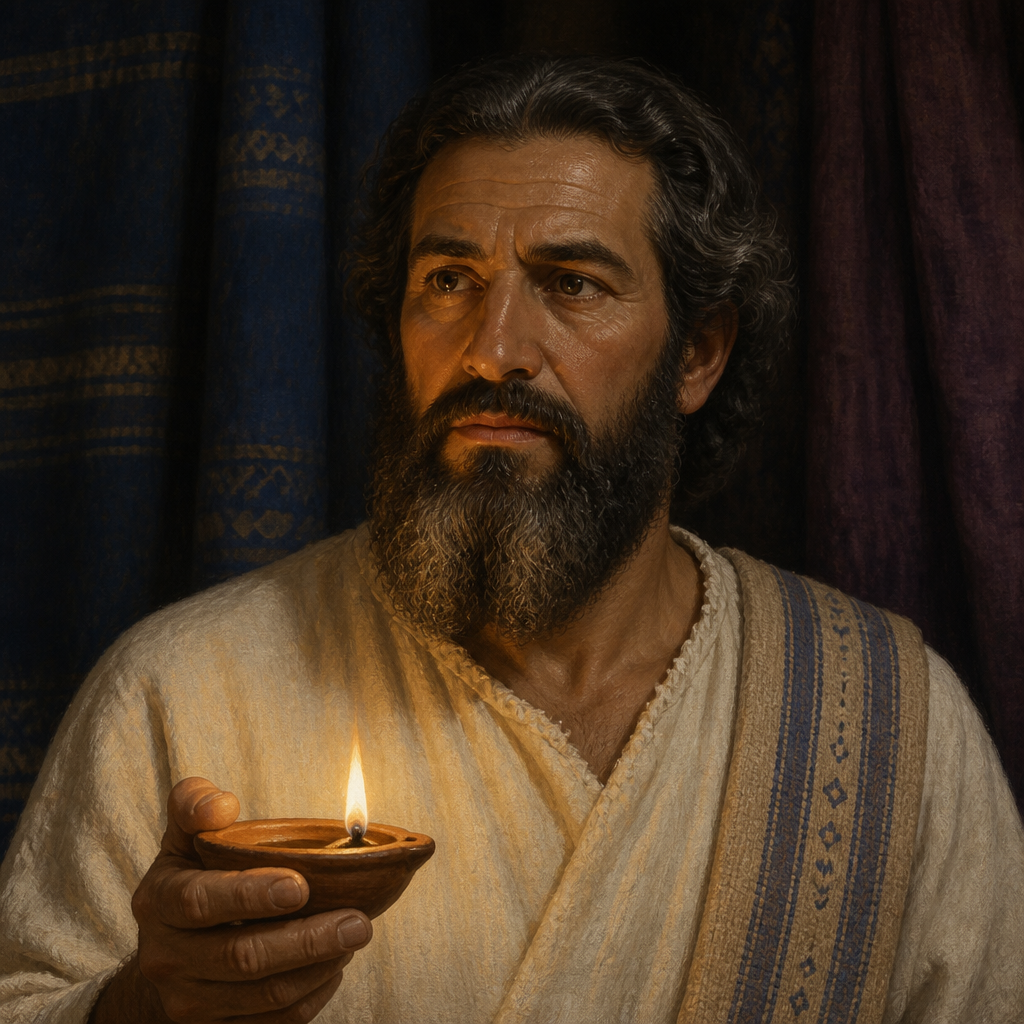 JeriahThis page
 Amariah, Son of HebronBrother1 Chronicles 23:19Stated
 Jahaziel, Levite of the Egypt and Wilderness EraBrother1 Chronicles 23:19Stated
 JekameamBrother1 Chronicles 23:19Stated
Connected Figures
Family
Father · 1 Chronicles 23:19
A Levite of the Kohathite clan and the son of Kohath, he founded the Hebronite family that served in administrative and religious roles through the reign of King David.
Egypt and WildernessFirst: Exodus 6:189 versesLevite / Clan FounderLevi
Brother · 1 Chronicles 23:19
A Levite of the clan of Kohath and the second son of Hebron, recorded during the organization of the sanctuary service.
Egypt and WildernessFirst: 1 Chronicles 23:193 versesLeviteLevi
Brother · 1 Chronicles 23:19
A Levite of the clan of Hebron who served during the organization of the Tabernacle and the priestly divisions under King David's chronicled history of the Kohathites.
Egypt and WildernessFirst: 1 Chronicles 23:193 versesLevite head of a father's houseLevi
Brother · 1 Chronicles 23:19
Jekameam was a Levite of the Kohathite clan, serving as the fourth son of Hebron during the organizational transition of the wilderness era and early monarchy.
Egypt and WildernessFirst: 1 Chronicles 23:192 versesLevite MinisterLevi
Categories
Mentions by Book
- 1 Chronicles2
Scripture References
All 2 indexed verses, in canonical order, from the Berean Standard Bible.
1 Chronicles · 2
- 1 Chronicles 23:19
The sons of Hebron: Jeriah was the first, Amariah the second, Jahaziel the third, and Jekameam the fourth.
- 1 Chronicles 24:23
From the sons of Hebron: Jeriah was the first, Amariah the second, Jahaziel the third, and Jekameam the fourth.