Timothy
Who was Timothy in the Bible?
A prominent first-century Christian leader, missionary, and the loyal younger protégé of the Apostle Paul, whom Paul left in Ephesus to stop false teaching (1 Timothy 1:3).
Timothy was one of the most significant figures in the early Christian movement, recognized primarily as the trusted companion and 'spiritual son' of the Apostle Paul. Born in Lystra to a Greek father and a Jewish mother, Timothy represented the bridge between Jewish tradition and the expanding Gentile mission. His unique upbringing and deep-rooted faith made him an ideal mediator and apostolic representative during the turbulent formative years of the early church.
Throughout the New Testament, Timothy is portrayed not merely as an assistant, but as a co-laborer of high standing. He accompanied Paul on several missionary journeys, acted as a diplomatic envoy to troubled congregations in Corinth and Thessalonica, and eventually took on a significant leadership role in Ephesus. His legacy is preserved through the two New Testament epistles bearing his name, which provide critical insights into early church structure, pastoral care, and the preservation of doctrine.
Background and Family
Timothy was a native of Lystra, a Roman colony located in the region of Lycaonia in modern-day Turkey. His family background was distinctively multicultural, a fact that would later play a strategic role in his ministry. According to Acts 16:1, his father was a Greek, while his mother, Eunice, and his grandmother, Lois, were devout Jewish believers. This heritage meant that while Timothy was not circumcised in infancy (likely due to his father's influence), he was thoroughly educated in the Hebrew Scriptures from a young age.
His upbringing emphasized a sincere faith passed down through the maternal line. By the time Paul returned to Lystra during his second missionary journey, Timothy was already a 'disciple' who was well-spoken of by the local believers in Lystra and Iconium. Recognizing his potential, Paul chose him as a traveling companion, famously circumcising him to avoid offending the Jewish communities they would visit, thereby ensuring Timothy's access to the synagogues of the Diaspora.
Major Life Events
Timothy’s life was defined by his active participation in the Pauline missions. He accompanied Paul through Phrygia, Galatia, and into Macedonia. He was present at the founding of the churches in Philippi, Berea, and Thessalonica. During the unrest in Berea, Timothy stayed behind with Silas to stabilize the new converts before reuniting with Paul in Athens or Corinth.
One of his most critical assignments was his mission to Corinth. The Corinthian church was plagued by factionalism and moral laxity, and Paul dispatched Timothy to 'remind them of my ways in Christ.' This indicates that despite Timothy’s relatively young age—a point Paul later addresses by telling him 'let no one despise your youth'—he possessed significant authority and the tactical diplomatic skill required to handle complex ecclesiastical disputes.
Later in his ministry, Timothy was stationed in Ephesus. His task there was perhaps his most difficult: to combat false teachers who were spreading 'myths and endless genealogies' and to establish clear organizational guidelines for the appointing of overseers (bishops) and deacons. Tradition, supported by the writings of Eusebius, holds that Timothy served as the first bishop of Ephesus, eventually suffering martyrdom under the reign of Domitian or Nerva for protesting against pagan festivities.
Relationship to Other Biblical Figures
Timothy’s relationship with the Apostle Paul is the defining partnership of the New Testament. Paul refers to him as his 'beloved and faithful child in the Lord' (1 Corinthians 4:17) and 'my true child in the faith' (1 Timothy 1:2). Unlike other associates who occasionally clashed with Paul, such as Barnabas or Mark, Timothy is consistently depicted as being of one mind with the apostle. In Philippians 2:20-22, Paul offers a high commendation, stating, 'I have no one like him... as a son with a father he has served with me in the gospel.'
In addition to Paul, Timothy worked closely with Silas (Silvanus) during the Macedonian mission and is mentioned alongside Erastus and Luke. The author of the Epistle to the Hebrews also mentions Timothy, noting his release from imprisonment (Hebrews 13:23), suggesting he shared not only Paul's ministry but also his persecutions.
Spiritual Significance
Theologically, Timothy serves as the primary recipient of Paul's instructions regarding church order, the qualifications for ministry, and the necessity of biblical inerrancy. The letters addressed to him provide the foundational requirements for the offices of Bishop and Deacon, shaping two millennia of ecclesiastical structure. His life also underscores the Pauline theology of the 'remnant' and the inclusion of the Gentiles, as his mixed heritage allowed him to navigate the social boundaries of the Roman Empire while remaining rooted in the Old Testament covenants.
Timothy is also significant as an example of the 'mentorship' model of ministry. He demonstrates how the gospel is preserved through relational discipleship and the intentional grooming of younger leaders. His presence in the salutations of six of Paul's epistles (2 Corinthians, Philippians, Colossians, 1 & 2 Thessalonians, and Philemon) reinforces his status as a co-author and vital witness to the apostolic message, ensuring the consistency of the early church's witness across diverse geographical regions.
Timothy represents the transition from the first generation of apostles to the second generation of church leadership. His life illustrates the principle of 'apostolic succession'—not necessarily in a formal hierarchical sense, but in the faithful transmission of the 'deposit' of faith. Paul’s instruction to Timothy in 2 Timothy 2:2 to 'entrust to faithful men who will be able to teach others also' establishes the blueprint for Christian education and ministerial continuity.
Furthermore, Timothy stands as a model for pastoral character. The 'Pastoral Epistles' addressed to him emphasize that a leader's authority is derived not from age or status, but from personal holiness, sound doctrine, and the diligent use of spiritual gifts. His struggles with timidity or physical ailments (alluded to in 1 Timothy 5:23) make his steadfastness in the face of Roman persecution particularly significant for the early Christian identity.
Frequently Asked Questions
Why did Paul circumcise Timothy if he taught that circumcision wasn't necessary?
Paul circumcised Timothy for pragmatic missionary reasons, not for salvation. Since Timothy had a Jewish mother, he was technically Jewish under legal tradition; by circumcising him, Paul removed a potential social barrier that would have prevented Timothy from preaching in synagogues.
What does the Bible mean when it calls Timothy 'young'?
In the Greco-Roman context, 'youth' (neotēs) could refer to anyone under the age of 40. Given the timeline of Paul's journeys, Timothy was likely in his late 20s or 30s when he assumed leadership in Ephesus.
What health issues did Timothy have?
1 Timothy 5:23 mentions that Timothy suffered from 'frequent ailments' and stomach problems, leading Paul to advise him to drink a little wine for medicinal purposes.
Was Timothy with Paul when he died?
The Second Epistle to Timothy is Paul's final letter, written from a Roman prison shortly before his execution. In it, Paul urgently requests Timothy to come to him before winter, though the Bible does not record if he arrived in time.
What was the role of Timothy's mother and grandmother?
Lois and Eunice are credited by Paul with instilling a 'sincere faith' in Timothy and teaching him the Holy Scriptures from childhood, illustrating the importance of family in the transmission of faith.
Family & Relationships
Parents
 Father of TimothyFatherActs 16:1Stated
 EuniceMother2 Timothy 1:5Stated
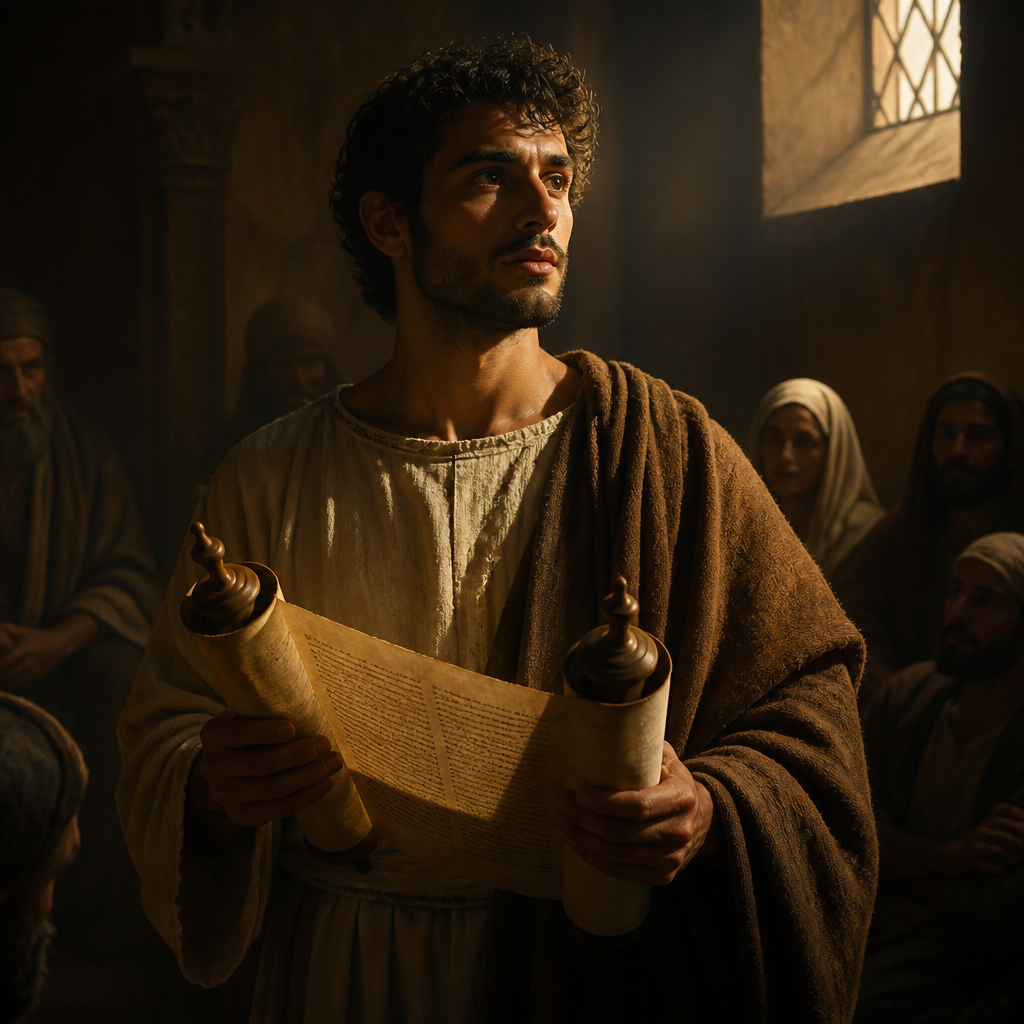 TimothyThis page
Extended family
 LoisGrandmother2 Timothy 1:5Stated
Connected Figures
Family
Father · Acts 16:1
The unnamed Greek father of the evangelist Timothy, residing in Lystra during the 1st century AD.
Mother · 2 Timothy 1:5
The mother of Timothy who was commended by the Apostle Paul for her sincere Christian faith and role in her son's spiritual upbringing.
Grandmother · 2 Timothy 1:5
Lois was the grandmother of Timothy, recognized by the Apostle Paul for her sincere faith and her role in the spiritual heritage of her family.
To the Ends of the EarthFirst: 2 Timothy 1:54 versesMatriarch
Categories
Mentions by Book
- Acts6
- Romans1
- 1 Corinthians2
- 2 Corinthians2
- Philippians3
- Colossians1
- 1 Thessalonians3
- 2 Thessalonians1
- 1 Timothy4
- 2 Timothy9
- Philemon1
- Hebrews1
Scripture References
All 34 indexed verses, in canonical order, from the Berean Standard Bible.
- Acts 16:1
Paul came to Derbe and then to Lystra, where he found a disciple named Timothy, the son of a believing Jewish woman and a Greek father.
- Acts 17:14
The brothers immediately sent Paul to the coast, but Silas and Timothy remained in Berea.
- Acts 17:15
Those who escorted Paul brought him to Athens and then returned with instructions for Silas and Timothy to join him as soon as possible.
- Acts 18:5
And when Silas and Timothy came down from Macedonia, Paul devoted himself fully to the word, testifying to the Jews that Jesus is the Christ.
- Acts 19:22
He sent two of his helpers, Timothy and Erastus, to Macedonia, while he stayed for a time in the province of Asia.
- Acts 20:4
Paul was accompanied by Sopater son of Pyrrhus from Berea, Aristarchus and Secundus from Thessalonica, Gaius from Derbe, Timothy, and Tychicus and Trophimus from the province of Asia.
- Romans 16:21
Timothy, my fellow worker, sends you greetings, as do Lucius, Jason, and Sosipater, my fellow countrymen.
- 1 Corinthians 4:17
That is why I have sent you Timothy, my beloved and faithful child in the Lord. He will remind you of my way of life in Christ Jesus, which is exactly what I teach everywhere in every church.
- 1 Corinthians 16:10
If Timothy comes, see to it that he has nothing to fear while he is with you, for he is doing the work of the Lord, just as I am.
- 2 Corinthians 1:1
Paul, an apostle of Christ Jesus by the will of God, and Timothy our brother, To the church of God in Corinth, together with all the saints throughout Achaia:
- 2 Corinthians 1:19
For the Son of God, Jesus Christ, who was proclaimed among you by me and Silvanus and Timothy, was not “Yes” and “No,” but in Him it has always been “Yes.”
- Philippians 1:1
Paul and Timothy, servants of Christ Jesus, To all the saints in Christ Jesus at Philippi, together with the overseers and deacons:
- Philippians 2:19
Now I hope in the Lord Jesus to send Timothy to you soon, that I also may be cheered when I learn how you are doing.
- Philippians 2:20Partial
I have nobody else like him who will genuinely care for your needs.
Cited as a key verse; added so References, Key Verses and Mentions by Book share one index.
- Colossians 1:1
Paul, an apostle of Christ Jesus by the will of God, and Timothy our brother,
- 1 Thessalonians 1:1
Paul, Silvanus, and Timothy, To the church of the Thessalonians in God the Father and the Lord Jesus Christ: Grace and peace to you.
- 1 Thessalonians 3:2
We sent Timothy, our brother and fellow worker for God in the gospel of Christ, to strengthen and encourage you in your faith,
- 1 Thessalonians 3:6
But just now, Timothy has returned from his visit with the good news about your faith, your love, and the fond memories you have preserved, longing to see us just as we long to see you.
- 2 Thessalonians 1:1
Paul, Silvanus, and Timothy, To the church of the Thessalonians in God our Father and the Lord Jesus Christ:
- 1 Timothy 1:2
To Timothy, my true child in the faith: Grace, mercy, and peace from God the Father and Christ Jesus our Lord.
- 1 Timothy 1:18
Timothy, my child, I entrust you with this command in keeping with the previous prophecies about you, so that by them you may fight the good fight,
- 1 Timothy 4:12Partial
Let no one despise your youth, but set an example for the believers in speech, in conduct, in love, in faith, in purity.
Cited as a key verse; added so References, Key Verses and Mentions by Book share one index.
- 1 Timothy 6:20
O Timothy, guard what has been entrusted to you. Avoid irreverent, empty chatter and the opposing arguments of so-called “knowledge,”
- 2 Timothy 1:2
To Timothy, my beloved child: Grace, mercy, and peace from God the Father and Christ Jesus our Lord.
- 2 Timothy 1:3Partial
I thank God, whom I serve with a clear conscience as did my forefathers, as I constantly remember you night and day in my prayers.
Cited as evidence on a family card; added so References, Key Verses and Mentions by Book share one index.
- 2 Timothy 1:4Partial
Recalling your tears, I long to see you so that I may be filled with joy.
Cited as evidence on a family card; added so References, Key Verses and Mentions by Book share one index.
- 2 Timothy 1:5Partial
I am reminded of your sincere faith, which first dwelt in your grandmother Lois and your mother Eunice, and I am convinced is in you as well.
Cited as a key verse; added so References, Key Verses and Mentions by Book share one index.
- 2 Timothy 2:2Partial
And the things that you have heard me say among many witnesses, entrust these to faithful men who will be qualified to teach others as well.
Cited as a key verse; added so References, Key Verses and Mentions by Book share one index.
- 2 Timothy 3:14Partial
But as for you, continue in the things you have learned and firmly believed, since you know from whom you have learned them.
Addressed as 'you' by Paul (Q58)
- 2 Timothy 3:15Partial
From infancy you have known the Holy Scriptures, which are able to make you wise for salvation through faith in Christ Jesus.
Addressed as 'you' by Paul (Q58)
- 2 Timothy 3:16Partial
All Scripture is God-breathed and is useful for instruction, for conviction, for correction, and for training in righteousness,
Cited as a key verse; added so References, Key Verses and Mentions by Book share one index.
- 2 Timothy 3:17Partial
so that the man of God may be complete, fully equipped for every good work.
Cited as a key verse; added so References, Key Verses and Mentions by Book share one index.
- Philemon 1:1
Paul, a prisoner of Christ Jesus, and Timothy our brother, To Philemon our beloved fellow worker,
- Hebrews 13:23
Be aware that our brother Timothy has been released. If he arrives soon, I will come with him to see you.