Barnabas
Who was Barnabas in the Bible?
A Levite from Cyprus and prominent early church leader recognized by the Holy Spirit as a prophet and teacher within the Christian community at Antioch.
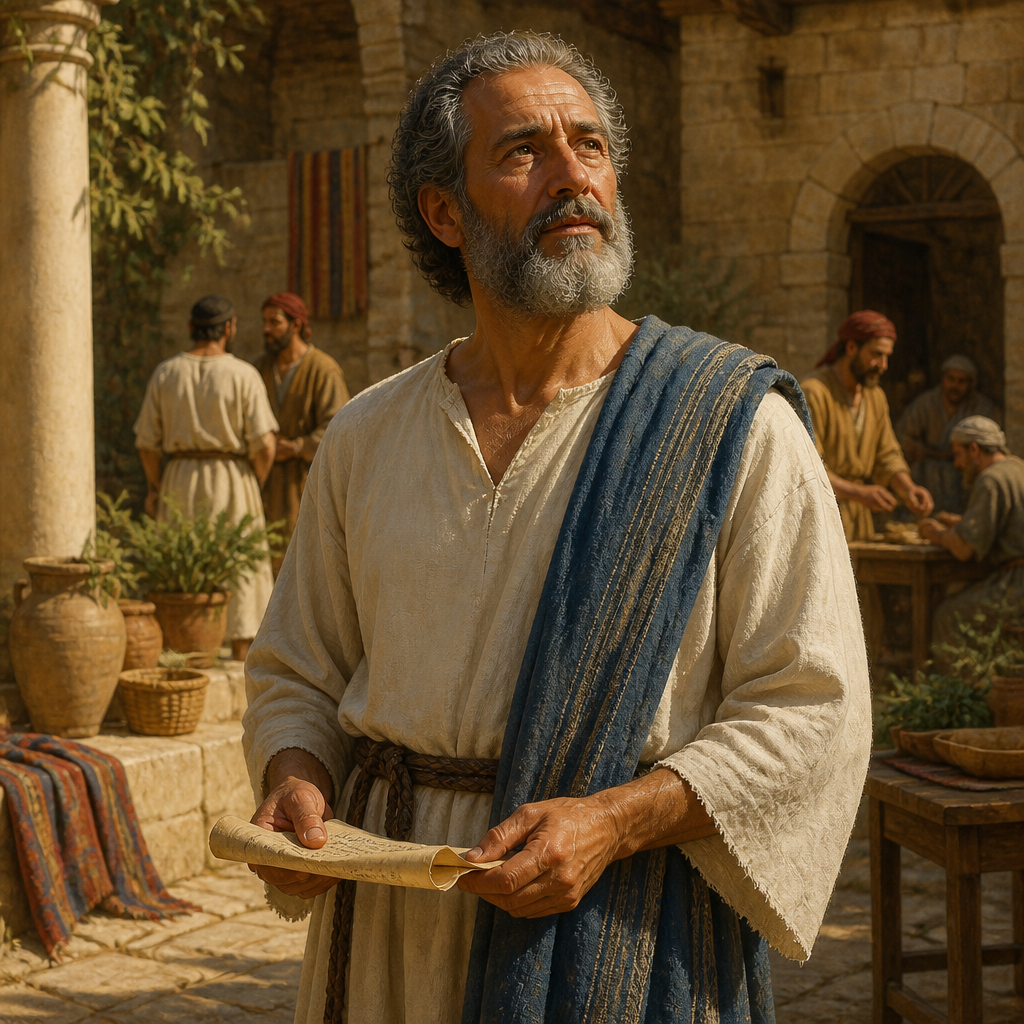
Barnabas, originally named Joseph, was a Levite from the island of Cyprus who became one of the most influential figures in the first-century church. Renamed 'Barnabas' (meaning 'Son of Encouragement') by the apostles in Jerusalem, he is frequently identified by his distinct generosity and his pivotal role in bridging the gap between the Jewish-Christian establishment and the newly converted Saul of Tarsus.
While often remembered as a missionary, the biblical text explicitly categorizes him among the 'prophets and teachers' active in the church at Antioch. Within the charismatic structure of the New Testament era, Barnabas functioned as a revelatory voice, tasked with discerning the will of the Holy Spirit and establishing doctrinal foundations for the Gentile mission. His life reflects the transition of the prophetic office from the solitary figures of the Old Testament to the communal, Spirit-led leadership of the Apostolic Age.
Background and Family
Barnabas was born into a Jewish family of the tribe of Levi residing in Cyprus. This background is significant for two reasons: as a Levite, he was traditionally associated with temple service and the preservation of sacred law; as a Cypriot, he was a member of the Diaspora, likely fluent in Greek and comfortable navigating Hellenistic culture. The New Testament mentions that his cousin was John Mark, the author of the Gospel of Mark, indicating that Barnabas belonged to a family with significant resources and ties to the early Christian community in Jerusalem (Acts 12:12; Colossians 4:10).
His entry into the biblical narrative is marked by an act of radical selflessness. In Acts 4:36-37, he sells a field he owned and brings the proceeds to the apostles. This act validated his new name, Barnabas, bestowed upon him by the apostles to reflect his character as a paraklēseōs—a word meaning encouragement, consolation, or exhortation.
Major Life Events
One of the most critical moments in Barnabas's life was his sponsorship of Saul (Paul) of Tarsus. When the disciples in Jerusalem were afraid of the former persecutor, it was Barnabas who took him in and brought him to the apostles, vouching for the legitimacy of Saul’s conversion (Acts 9:27). This act of prophetic discernment secured Saul’s place in the ministry.
Later, when the church in Jerusalem heard that Greeks in Antioch were turning to the Lord, they sent Barnabas to investigate. Seeing the grace of God there, he did not seek to suppress the movement but encouraged the believers to remain true to the Lord. Recognizing the scale of the work, he traveled to Tarsus to find Saul and brought him back to Antioch. It was here, in Acts 13:1, that the Scripture lists Barnabas first among the 'prophets and teachers' of the local church.
During a time of fasting and worship, the Holy Spirit spoke—likely through the prophetic utterance of one of these leaders—saying, 'Set apart for me Barnabas and Saul for the work to which I have called them.' This initiated the First Missionary Journey, where Barnabas led the initial efforts through Cyprus and into Asia Minor. Although tensions later arose regarding John Mark, leading to a separation between Barnabas and Paul, Barnabas continued his mission in Cyprus, remaining a steadfast pillar of the faith.
Relationship to Other Biblical Figures
Barnabas served as a mentor to both Paul and John Mark. To Paul, he was the advocate who provided entry into leadership; to Mark, he was the patient relative who provided a second chance after a perceived failure in Pamphylia. His ability to see the potential in others was a hallmark of his prophetic insight. Interestingly, even when Paul disagreed with Barnabas, he continued to speak of him with respect, noting in 1 Corinthians 9:6 that Barnabas, like himself, worked for his own living rather than demanding support from the church.
Spiritual Significance
Barnabas serves as the primary example of the 'prophetic teacher' in the early church, emphasizing that the gift of prophecy is often used for the strengthening and encouragement of the community. His role in integrating the Gentiles into a previously Jewish-centric faith was vital for the survival and expansion of Christianity. By championing Paul and Mark, he ensured that the men who would write much of the New Testament remained active in their callings.
Theologically, Barnabas represents the bridge between the Old Covenant (as a Levite) and the New Covenant (as an Apostle and Prophet). He demonstrates that the Holy Spirit redefines traditional identities, turning a temple servant into a missionary and a land-owner into a communal provider. His willingness to submit to the Spirit's direction at Antioch remains a model for ecclesiastical leadership.
The spiritual significance of Barnabas lies in his exercise of the prophetic gift as a means of 'exhortation and comfort.' In the New Testament context, the 'prophet' was one who spoke under the direct influence of the Holy Spirit to build up the body of Christ. Barnabas exemplified this by discerning God's hand in the Gentile mission long before it was widely accepted by the Jerusalem leadership.
> 'Now there were in the church that was at Antioch certain prophets and teachers; as Barnabas, and Simeon that was called Niger, and Lucius of Cyrene, and Manaen... and Saul.' (Acts 13:1)
His legacy is one of reconciliation and expansion. He represents the ideal of the 'Son of Encouragement'—one who uses his status, wealth, and spiritual authority to empower others, ensuring that the gospel crossed cultural and social boundaries. For Barnabas, prophecy was not merely about foretelling the future, but about forth-telling the grace of God into difficult situations.
Frequently Asked Questions
Was Barnabas considered an apostle?
Yes, Acts 14:14 explicitly refers to 'the apostles, Barnabas and Paul.' While not one of the original Twelve, he held apostolic authority as one sent out by the Holy Spirit for the mission to the Gentiles.
Why did Barnabas and Paul split up?
They disagreed over whether to take John Mark on their second missionary journey. Paul felt Mark was unreliable because he had left them in Pamphylia, while Barnabas, showing his characteristic encouragement, wanted to give his cousin a second chance.
What does the name Barnabas mean?
The name is interpreted by the author of Acts as 'Son of Encouragement' (from the Greek 'Huios Paraklēseōs'). It was a nickname given to him by the apostles; his birth name was Joseph.
What tribe did Barnabas belong to?
Barnabas was a Levite. This means he came from the priestly tribe of Israel, which traditionally was not supposed to own land in Israel, making his sale of his field in Cyprus particularly noteworthy.
Where was Barnabas from?
He was a native of Cyprus, a large island in the eastern Mediterranean with a significant Jewish population during the first century AD.
Family & Relationships
 BarnabasThis page
Extended family
 MarkCousinColossians 4:10Stated
Connected Figures
Family
Cousin · Colossians 4:10
An early Christian missionary and companion of Paul, Barnabas, and Peter, whose departure from a mission caused a significant rift between Paul and Barnabas.
Categories
Mentions by Book
- Acts24
- 1 Corinthians1
- Galatians3
- Colossians1
Scripture References
All 29 indexed verses, in canonical order, from the Berean Standard Bible.
- Acts 4:36
Joseph, a Levite from Cyprus, whom the apostles called Barnabas (meaning Son of Encouragement),
- Acts 9:27
Then Barnabas brought him to the apostles and described how Saul had seen the Lord, who had spoken to him on the road to Damascus, and how Saul had spoken boldly in that city in the name of Jesus.
- Acts 11:22
When news of this reached the ears of the church in Jerusalem, they sent Barnabas to Antioch.
- Acts 11:24
Barnabas was a good man, full of the Holy Spirit and faith, and a great number of people were brought to the Lord.
Cited as a key verse; added so References, Key Verses and Mentions by Book share one index.
- Acts 11:25
Then Barnabas went to Tarsus to look for Saul,
- Acts 11:30
This they did, sending their gifts to the elders with Barnabas and Saul.
- Acts 12:25
When Barnabas and Saul had fulfilled their mission to Jerusalem, they returned, bringing with them John, also called Mark.
- Acts 13:1
Now in the church at Antioch there were prophets and teachers: Barnabas, Simeon called Niger, Lucius of Cyrene, Manaen (who had been brought up with Herod the tetrarch), and Saul.
- Acts 13:2
While they were worshiping the Lord and fasting, the Holy Spirit said, “Set apart for Me Barnabas and Saul for the work to which I have called them.”
- Acts 13:7
an attendant of the proconsul, Sergius Paulus. The proconsul, a man of intelligence, summoned Barnabas and Saul because he wanted to hear the word of God.
- Acts 13:43
After the synagogue was dismissed, many of the Jews and devout converts to Judaism followed Paul and Barnabas, who spoke to them and urged them to continue in the grace of God.
- Acts 13:46
Then Paul and Barnabas answered them boldly: “It was necessary to speak the word of God to you first. But since you reject it and do not consider yourselves worthy of eternal life, we now turn to the Gentiles.
- Acts 13:50
The Jews, however, incited the religious women of prominence and the leading men of the city. They stirred up persecution against Paul and Barnabas and drove them out of their district.
- Acts 14:12
Barnabas they called Zeus, and Paul they called Hermes, because he was the chief speaker.
- Acts 14:14
But when the apostles Barnabas and Paul found out about this, they tore their clothes and rushed into the crowd, shouting,
- Acts 14:20
But after the disciples had gathered around him, he got up and went back into the city. And the next day he left with Barnabas for Derbe.
- Acts 15:2Partial
And after engaging these men in sharp debate, Paul and Barnabas were appointed, along with some other believers, to go up to Jerusalem to see the apostles and elders about this question.
- Acts 15:12
The whole assembly fell silent as they listened to Barnabas and Paul describing the signs and wonders God had done among the Gentiles through them.
- Acts 15:22
Then the apostles and elders, with the whole church, decided to select men from among them to send to Antioch with Paul and Barnabas. They chose Judas called Barsabbas and Silas, two leaders among the brothers,
- Acts 15:25
So we all agreed to choose men to send to you along with our beloved Barnabas and Paul,
- Acts 15:35
But Paul and Barnabas remained at Antioch, along with many others, teaching and preaching the word of the Lord.
- Acts 15:36
Some time later Paul said to Barnabas, “Let us go back and visit the brothers in every town where we proclaimed the word of the Lord, to see how they are doing.”
- Acts 15:37
Barnabas wanted to take John, also called Mark.
- Acts 15:39
Their disagreement was so sharp that they parted company. Barnabas took Mark and sailed for Cyprus,
- 1 Corinthians 9:6
Or are Barnabas and I the only apostles who must work for a living?
- Galatians 2:1
Fourteen years later I went up again to Jerusalem, accompanied by Barnabas. I took Titus along also.
- Galatians 2:9
And recognizing the grace that I had been given, James, Cephas, and John—those reputed to be pillars—gave me and Barnabas the right hand of fellowship, so that we should go to the Gentiles, and they to the circumcised.
- Galatians 2:13
The other Jews joined him in his hypocrisy, so that by their hypocrisy even Barnabas was led astray.
- Colossians 4:10
My fellow prisoner Aristarchus sends you greetings, as does Mark the cousin of Barnabas. You have already received instructions about him: If he comes to you, welcome him.