Azariah, Son of Zadok the Priest
A high-ranking official and priest in the court of King Solomon during the United Monarchy, descended from the line of Zadok.
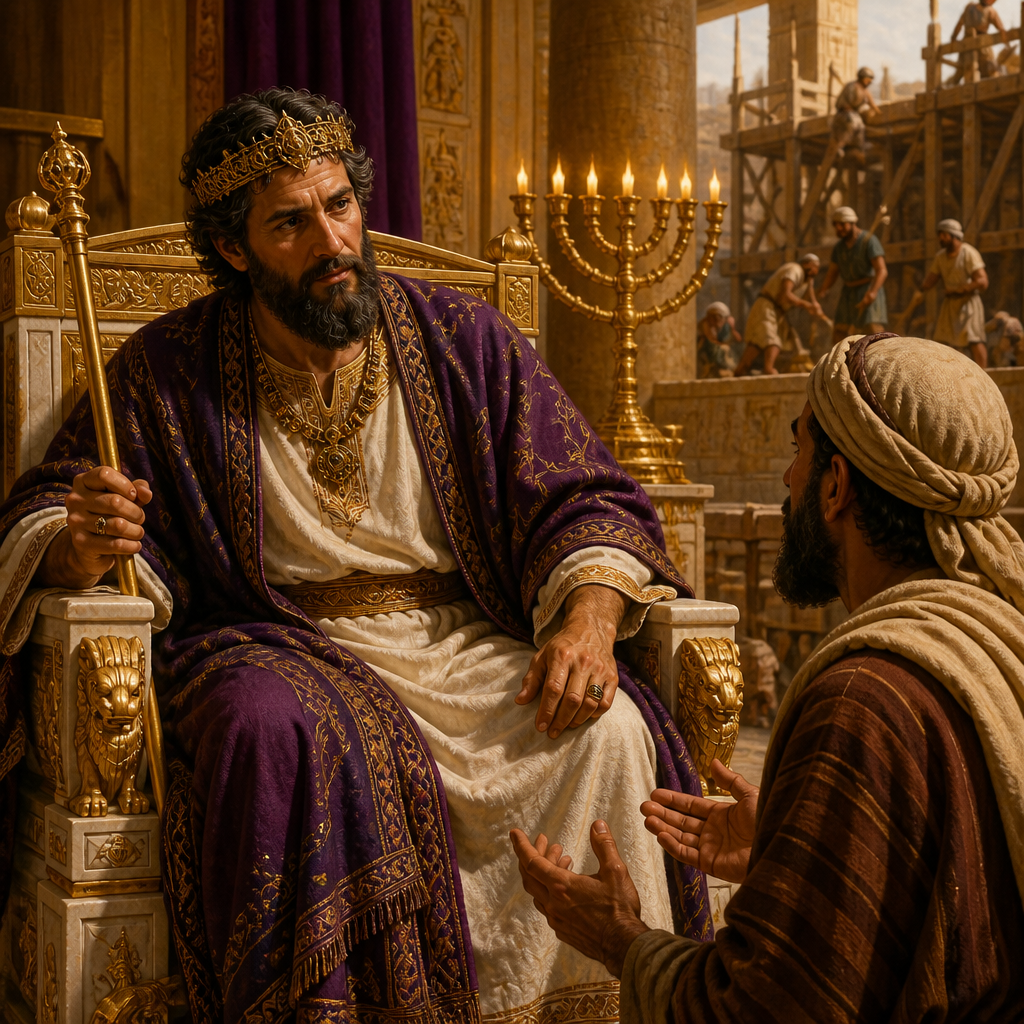
Azariah was a prominent Levite priest who served during the zenith of the United Monarchy under King Solomon. As the son of Ahimaaz and the grandson of the famous High Priest Zadok, Azariah occupied a position of immense religious and political influence. His role is documented within the administrative lists of Solomon’s government, highlighting the structured integration of the priesthood into the national bureaucracy of Israel.
While historical records for this specific Azariah are concise, his placement at the head of Solomon’s list of chief officials indicates his high status. He represented the established priestly lineage that had remained loyal to the Davidic line during the transition of power from King David to Solomon, ensuring the continuity of the Aaronic priesthood in the newly centralized worship center of Jerusalem.
Background and Family
Azariah belonged to the Tribe of Levi and was a direct descendant of the Aaronic line. According to the genealogical records in 1 Chronicles 6:9, he was the son of Ahimaaz. His grandfather, Zadok, was one of the most significant religious figures in Israel's history, having served as High Priest under King David and played a pivotal role in the coronation of King Solomon.
The lineage of Azariah is critical to understanding his position. As the grandson of Zadok, he was part of the Zadokite priesthood, which became the standard for legitimate priestly service in Jerusalem. The biblical text identifies him as the father of Johanan (1 Chronicles 6:9), ensuring the continuation of this influential family line through the period of the United Monarchy and into the subsequent era of the Divided Monarchy.
Major Life Events
The primary historical mention of Azariah occurs in 1 Kings 4:2, where he is listed first among the "chief officials" (or princes) of King Solomon. This list represents the administrative structure of the kingdom at its most prosperous and organized state. The text explicitly identifies him as "Azariah son of Zadok ... the priest."
Although the verse identifies him as the son of Zadok, scholarly consensus, supported by the genealogy in 1 Chronicles 6:9, suggests that "son" is used here in the broader sense of "descendant" or "grandson," as his father Ahimaaz preceded him. His service likely coincided with the construction and dedication of the First Temple in Jerusalem. As a high-ranking official, Azariah would have been responsible for overseeing the religious duties and perhaps the civil administrative tasks assigned to the priestly class under Solomon's centralized rule.
Relationship to Other Biblical Figures
Azariah’s identity is defined by his relationship to the Zadokite line. His grandfather Zadok was the priest who remained faithful to David during Absalom's rebellion and supported Solomon against Adonijah. By the time Azariah is mentioned in 1 Kings 4, he is inheriting the legacy of a family that helped stabilize the monarchy.
His father, Ahimaaz, was known for his speed and service as a messenger during the Davidic wars. Azariah moved the family legacy from the battlefield and the tabernacle into the formalized court of the king. His son, Johanan, succeeded him in the genealogical record, maintaining the family's status within the Tribe of Levi.
Spiritual Significance
The inclusion of Azariah in the list of Solomon's officials underscores the biblical theme of divine order and the fulfillment of the Aaronic covenant. During the United Monarchy, the priesthood was not merely a ritualistic group but a core component of the nation's leadership. Azariah’s role signifies the transition from the nomadic, wartime priesthood of the era of the Judges and King David to the settled, institutionalized priesthood of the Temple era.
His presence at the top of the administrative list reflects the ideal that the worship of God was intended to be the primary concern of the Israelite state. While Solomon's reign eventually faced spiritual decline, the early years—represented by officials like Azariah—are depicted as a time of great wisdom and adherence to the ancestral religious laws established through the line of Eleazar and Phinehas.
Spiritual Significance
Azariah serves as a link in the high priestly genealogy that connects the era of David to the later generations of the Divided Monarchy. His primary significance lies in his role as a 'chief official' under Solomon, demonstrating that the priesthood held a place of honor and administrative authority at the height of Israel's golden age. His life reflects the stability and institutionalization of the Zadokite priesthood following the establishment of the Temple in Jerusalem.
Theologically, Azariah represents the continuity of God's promise to the house of Phinehas regarding an everlasting priesthood. By maintaining his station in the court of Solomon, he helped ensure that the liturgical and sacrificial systems of the Law of Moses were integrated into the national identity of the United Monarchy.
Frequently Asked Questions
Who was Azariah's father?
According to the genealogy in 1 Chronicles 6:9, Azariah was the son of Ahimaaz and the grandson of Zadok.
What role did Azariah hold in King Solomon's court?
Azariah is listed as the first among Solomon's chief officials and is specifically identified as 'the priest' (1 Kings 4:2).
Which tribe did Azariah belong to?
Azariah belonged to the Tribe of Levi, descending through the line of Aaron and Zadok.
Did Azariah have any children?
Yes, the biblical record in 1 Chronicles 6:9 identifies his son as Johanan.
In which books of the Bible is this Azariah mentioned?
He is mentioned in 1 Kings (chapter 4) and 1 Chronicles (chapter 6).
Connected Figures
Categories
Mentions by Book
- 1 Chronicles1
- 1 Kings1
Family & Relationships
Child
Johanan, Son of Azariah the Priest
1 Kings 4:2
Parent
Ahimaaz, Son of Zadok the Priest
2 Samuel 15:27
Others Named Azariah
Azariah, Son of Nathan the Prophet1 Kings 4:5
An influential high-ranking official in King Solomon's court who oversaw the district governors during the United Monarchy.
Azariah, Prophet and Son of Oded2 Chronicles 15:1
A prophet of the Divided Monarchy whose short yet pivotal message to King Asa sparked a spiritual reformation in the Kingdom of Judah.
Azariah son of Obed2 Chronicles 23:1
A military commander of the Tribe of Levi who played a crucial role in the covenant to overthrow Queen Athaliah and restore the Davidic line through King Joash.
Azariah, Leader of the ReturnNehemiah 7:7
A prominent Jewish leader and priest who returned from the Babylonian exile and signed the covenant of faithfulness under Nehemiah.
Azariah, Chief Priest of the Divided Monarchy2 Chronicles 26:17
A bold chief priest during the reign of King Uzziah who led a group of eighty priests to prevent the king from unlawfully burning incense in the Temple.
Azariah, Father of Joel the Levite2 Chronicles 29:12
A Levite of the Kohathite clan during the Divided Monarchy whose son, Joel, assisted in the sanctification of the Temple under King Hezekiah.
Azariah, Companion of DanielDaniel 1:6
A noble youth of Judah taken into Babylonian captivity who survived the fiery furnace after refusing to worship Nebuchadnezzar’s golden image.
Azariah son of Jeroham2 Chronicles 23:1
A military commander of hundreds in the Kingdom of Judah who participated in the covenant to overthrow Queen Athaliah and crown Joash.
Azariah, Son of Jehallelel2 Chronicles 29:12
A Levite of the Merarite clan who participated in the purification of the Temple during the reign of King Hezekiah.
Azariah, Son of Jehu1 Chronicles 2:38
Azariah, son of Jehu, was a descendant of Jerahmeel and a member of the tribe of Judah whose lineage is preserved in the genealogical records of the Divided Monarchy.
Azariah, Son of Jehoshaphat2 Chronicles 21:2
A prince of Judah and son of King Jehoshaphat, Azariah was one of several brothers murdered by Jehoram during a bloody consolidation of the Judean throne.
Azariah, Son of Ethan1 Chronicles 2:8
A descendant of Judah through the line of Zerah and the son of Ethan, recorded in the genealogies of 1 Chronicles.
Azariah son of Jehohanan2 Chronicles 28:12
An Ephraimite leader who opposed the enslavement of Judean prisoners during the reign of King Pekah.
Azariah, Teacher of the LawNehemiah 8:7
A Levite who assisted Ezra in explaining the Law to the people of Jerusalem during the Post-Exilic restoration.
Azariah, Builder of Jerusalem's WallNehemiah 3:23
Azariah was a resident of Jerusalem who participated in the reconstruction of the city walls alongside Nehemiah, repairing the section adjacent to his own home.
Azariah, Chief Priest of the Zadokite Lineage2 Chronicles 31:10
A chief priest of the line of Zadok who managed the Temple storehouses and oversaw the abundance of offerings during King Hezekiah’s religious reforms.
Azariah, High Priest of the Divided Monarchy1 Chronicles 6:13
Azariah was a high official in the Temple of Jerusalem and a key link in the Aaronic priesthood during the late Divided Monarchy, serving as the father of the Chief Priest Seraiah.
Azariah, Son of Johanan1 Chronicles 6:9
A Levite priest during the Divided Monarchy who served in the high priestly line and was the father of Amariah.