Azariah, Chief Priest of the Zadokite Lineage
A chief priest of the line of Zadok who managed the Temple storehouses and oversaw the abundance of offerings during King Hezekiah’s religious reforms.
Azariah was a high-ranking priest during the reign of King Hezekiah of Judah. He is specifically identified in the biblical record as the 'chief priest of the household of Zadok,' a designation that underscores his legitimate priestly lineage and his authoritative standing within the Jerusalem Temple hierarchy during the late 8th century BC. His service coincided with one of the most significant spiritual revivals in the history of the Divided Monarchy, characterized by a return to Mosaic law and the centralized worship of Yahweh.
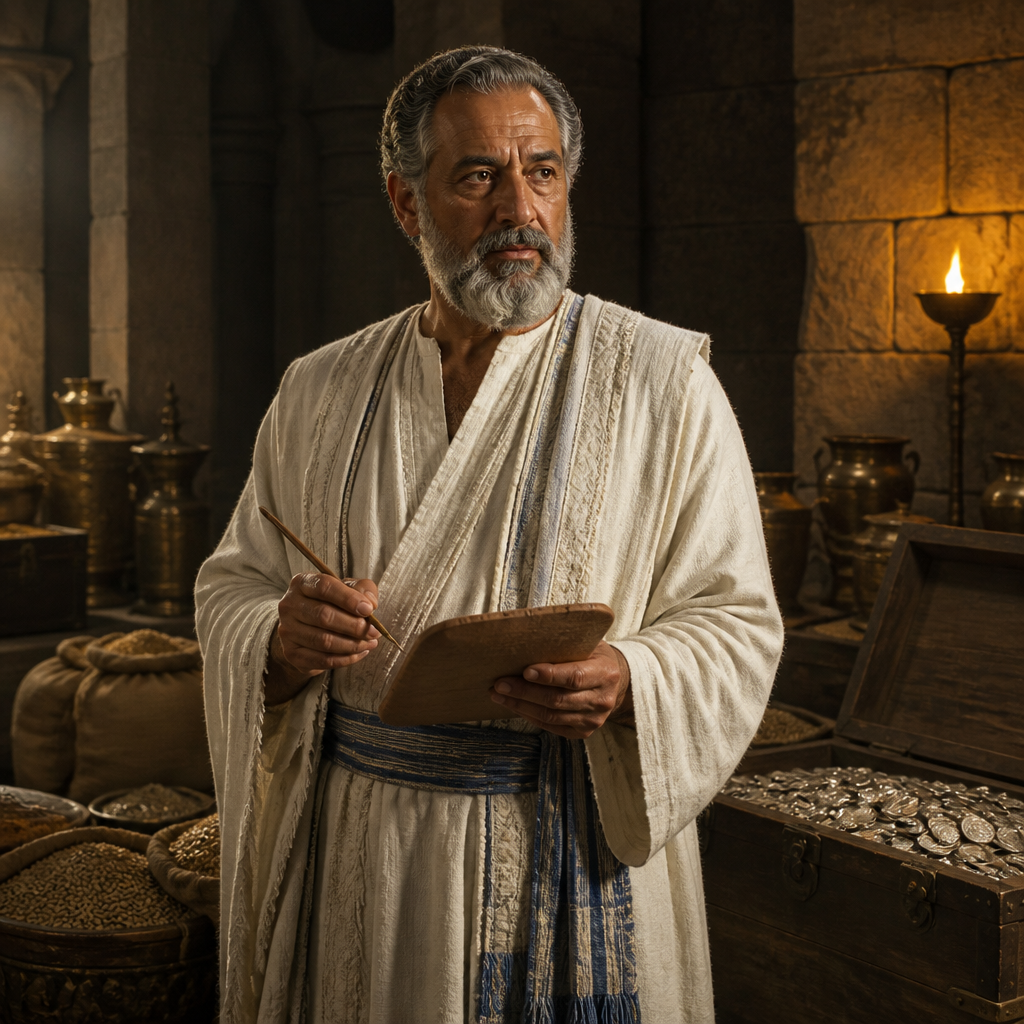
As the administrative head of the Temple, Azariah was responsible for managing the sudden and overwhelming influx of tithes and contributions brought by the people of Judah. His role was not merely liturgical but also administrative, as he worked in close coordination with King Hezekiah to ensure that the sacred offerings were properly stored, protected, and distributed among the levitical orders. He is portrayed as a reliable witness to the divine blessing that followed the nation's repentance and obedience.
Background and Family
Azariah served during the Divided Monarchy, specifically under the reign of Hezekiah, King of Judah (reigned c. 715–686 BC). The Chronicler identifies him as belonging to the 'household of Zadok.' This is a significant genealogical marker, as the Zadokite line was the exclusive family authorized to hold the high priesthood in the Temple of Solomon. While his specific parentage is not detailed in the immediate context of 2 Chronicles 31, his title as 'chief priest' (Hebrew: kohen ha-rosh) indicates he was the primary mediator and administrative leader of the sanctuary during this era of reform.
Major Life Events
The primary recorded event involving Azariah is the great religious reformation initiated by King Hezekiah. After the king ordered the purification of the Temple and the restoration of the Passover, the people of Israel and Judah responded with unprecedented generosity. They brought in 'abundance the firstfruits of grain, wine, oil, honey, and all the produce of the field' (2 Chronicles 31:5).
When Hezekiah observed the massive heaps of contributions that had accumulated from the third month through the seventh month, he questioned the priests and Levites about the store. Azariah, as the chief priest, provided the official report. He testified that since the people began bringing their contributions, the ministry had 'enough to eat and there is plenty left over.' Azariah explicitly credited this abundance to the blessing of the LORD upon His people. Following this consultation, Azariah was tasked as a 'chief official of the house of God,' working alongside the king to appoint overseers like Conaniah and Shimei to manage the storehouses (chambers) within the Temple complex.
Relationship to Other Biblical Figures
Azariah’s primary relationship in the text is his professional and spiritual partnership with King Hezekiah. The two functioned as the dual pillars of Judah's theocracy—the king providing the civil and reformative mandate, and Azariah providing the ecclesiastical oversight to sustain it. He also exercised authority over a large group of Levites and subordinate officials, including Jehiel, Azaziah, and others named in 2 Chronicles 31:13, who served under his ultimate supervision in the Temple administration.
Spiritual Significance
Azariah’s role highlights the importance of integrity in spiritual administration. In the biblical narrative, his testimony serves as a confirmation of God’s faithfulness: when the people honored God with their firstfruits, God responded with material and communal abundance. Azariah represents the 'faithful steward' who ensures that the gifts dedicated to God are handled with order and transparency. His presence in the text reinforces the legitimacy of Hezekiah’s reforms, proving that the religious infrastructure was led by a rightful Zadokite who recognized the hand of God in the nation's prosperity.
Spiritual Significance
Theologically, Azariah serves as a witness to the principle of divine reciprocity found in the Old Testament: that national obedience leads to national blessing. As the 'chief official of the house of God,' he bridges the gap between the king's decree and the practical needs of the priesthood, ensuring that the revival led to a sustainable system of worship. His lineage as a Zadokite also reaffirms the continuity of the Aaronic covenant even during the turbulent years of the Divided Monarchy.
Frequently Asked Questions
What was Azariah's specific title in the Temple?
He was known as the 'chief priest of the household of Zadok' and a 'chief official of the house of God.'
During which king's reign did Azariah serve?
He served during the reign of King Hezekiah of Judah.
What did Azariah tell King Hezekiah about the heaps of offerings?
He explained that because the Lord had blessed the people, there was a great abundance left over after everyone had eaten their fill.
What was his role in the Temple administration?
He oversaw the collection and storage of tithes and was the authority under whom other Temple overseers were appointed.
Connected Figures
Hezekiah
King of Judah who partnered with Azariah in Temple reforms
Conaniah
Levite overseer who served under Azariah's authority
Shimei
Levite official who served under Azariah's authority
Categories
Mentions by Book
- 2 Chronicles2
Others Named Azariah
Azariah, Son of Nathan the Prophet1 Kings 4:5
An influential high-ranking official in King Solomon's court who oversaw the district governors during the United Monarchy.
Azariah, Prophet and Son of Oded2 Chronicles 15:1
A prophet of the Divided Monarchy whose short yet pivotal message to King Asa sparked a spiritual reformation in the Kingdom of Judah.
Azariah son of Obed2 Chronicles 23:1
A military commander of the Tribe of Levi who played a crucial role in the covenant to overthrow Queen Athaliah and restore the Davidic line through King Joash.
Azariah, Leader of the ReturnNehemiah 7:7
A prominent Jewish leader and priest who returned from the Babylonian exile and signed the covenant of faithfulness under Nehemiah.
Azariah, Chief Priest of the Divided Monarchy2 Chronicles 26:17
A bold chief priest during the reign of King Uzziah who led a group of eighty priests to prevent the king from unlawfully burning incense in the Temple.
Azariah, Father of Joel the Levite2 Chronicles 29:12
A Levite of the Kohathite clan during the Divided Monarchy whose son, Joel, assisted in the sanctification of the Temple under King Hezekiah.
Azariah, Companion of DanielDaniel 1:6
A noble youth of Judah taken into Babylonian captivity who survived the fiery furnace after refusing to worship Nebuchadnezzar’s golden image.
Azariah son of Jeroham2 Chronicles 23:1
A military commander of hundreds in the Kingdom of Judah who participated in the covenant to overthrow Queen Athaliah and crown Joash.
Azariah, Son of Jehallelel2 Chronicles 29:12
A Levite of the Merarite clan who participated in the purification of the Temple during the reign of King Hezekiah.
Azariah, Son of Jehu1 Chronicles 2:38
Azariah, son of Jehu, was a descendant of Jerahmeel and a member of the tribe of Judah whose lineage is preserved in the genealogical records of the Divided Monarchy.
Azariah, Son of Jehoshaphat2 Chronicles 21:2
A prince of Judah and son of King Jehoshaphat, Azariah was one of several brothers murdered by Jehoram during a bloody consolidation of the Judean throne.
Azariah, Son of Ethan1 Chronicles 2:8
A descendant of Judah through the line of Zerah and the son of Ethan, recorded in the genealogies of 1 Chronicles.
Azariah son of Jehohanan2 Chronicles 28:12
An Ephraimite leader who opposed the enslavement of Judean prisoners during the reign of King Pekah.
Azariah, Teacher of the LawNehemiah 8:7
A Levite who assisted Ezra in explaining the Law to the people of Jerusalem during the Post-Exilic restoration.
Azariah, Son of Zadok the Priest1 Kings 4:2
A high-ranking official and priest in the court of King Solomon during the United Monarchy, descended from the line of Zadok.
Azariah, Builder of Jerusalem's WallNehemiah 3:23
Azariah was a resident of Jerusalem who participated in the reconstruction of the city walls alongside Nehemiah, repairing the section adjacent to his own home.
Azariah, High Priest of the Divided Monarchy1 Chronicles 6:13
Azariah was a high official in the Temple of Jerusalem and a key link in the Aaronic priesthood during the late Divided Monarchy, serving as the father of the Chief Priest Seraiah.
Azariah, Son of Johanan1 Chronicles 6:9
A Levite priest during the Divided Monarchy who served in the high priestly line and was the father of Amariah.