Azariah son of Jehohanan
Who was Azariah son of Jehohanan in the Bible?
An Ephraimite leader who opposed the enslavement of Judean prisoners during the reign of King Pekah.
This is one of 19 people named Azariah in the Bible. See all 19 →
Azariah, son of Jehohanan, was a prominent leader in the Northern Kingdom of Israel (Ephraim) during the 8th century BC. His historical presence is recorded during the volatile era of the Divided Monarchy, specifically during the Syro-Ephraimite War when the Northern Kingdom of Israel and the Kingdom of Judah were in direct conflict. Azariah is recognized in the biblical narrative not for military conquest, but for his civil leadership and moral courage in the face of internal political pressure.
While the scriptural record concerning this specific Azariah is concise, his actions represent a significant moment of internal resistance within the Northern Kingdom. Along with three other named heads of the Ephraimites, he stood as a voice of conscience, invoking the fear of God to prevent a humanitarian crisis involving thousands of prisoners of war from the Southern Kingdom of Judah.
Background and Family
Azariah was the son of Jehohanan (also rendered as Johanan). He was a leader among the heads of the children of Ephraim, the dominant tribe of the Northern Kingdom of Israel. His standing in 2 Chronicles 28:12 suggests he held a position of tribal authority or elder status, granting him the social capital required to challenge the returning victorious army of Israel. The text identifies him alongside three other peers: Berechiah son of Meshillemoth, Jehizkiah son of Shallum, and Amasa son of Hadlai. This collective leadership suggests that despite the spiritual decline of the Northern Kingdom, a remnant of leaders still respected the Mosaic law regarding the treatment of kinsmen.
Major Life Events
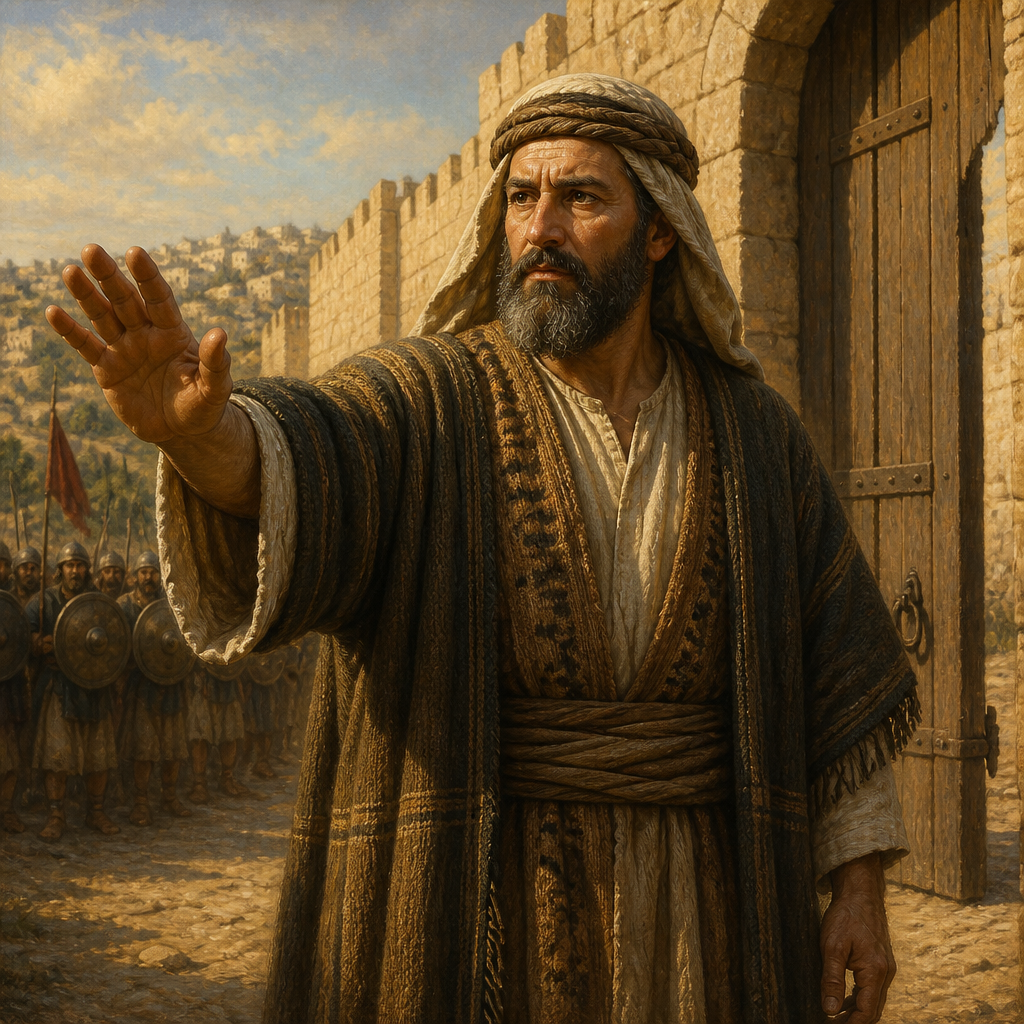
The primary event involving Azariah occurred following a devastating battle between King Pekah of Israel and King Ahaz of Judah. The Israelite army had slaughtered 120,000 Judean soldiers and captured 200,000 women and children to be taken as slaves to Samaria. As the army arrived at the gates of Samaria, the prophet Oded confronted the soldiers, warning them that the Lord’s anger was upon them for their excessive cruelty and for their intent to enslave their own brothers.
Azariah and his colleagues acted upon this prophetic warning. They "stood in opposition to those arriving from the war" (2 Chronicles 28:12). They argued that the Northern Kingdom was already guilty of many sins against the Lord and that adding the sin of enslaving their Judean brothers would bring divine wrath upon the nation. Their intervention was successful; the army abandoned the captives and the spoil in the presence of the leaders and the assembly. Following this, the captives were clothed, fed, and returned to their own territory in Jericho.
Relationship to Other Biblical Figures
Azariah’s actions are inextricably linked to the ministry of the prophet Oded. While Oded provided the spiritual impetus for the release of the captives, Azariah and his fellow Ephraimite leaders provided the political and administrative weight necessary to enforce the prophet's words. His lineage is traced through Jehohanan, a name common in the records of the Divided Monarchy, though this Azariah is distinct from the various priests and kings who shared his name during this era.
Spiritual Significance
Azariah serves as a rare example of righteous civil leadership within the Northern Kingdom of Israel, a nation often characterized in the biblical text by its systemic apostasy. His willingness to oppose the military establishment and the spoils of war demonstrates a lingering adherence to the brotherhood of the twelve tribes. Theologically, Azariah represents the principle that God’s mercy can be mediated through civil authorities who heed prophetic warnings, even in times of national judgment. His intervention prevented the Northern Kingdom from compounding its spiritual debt through the prohibited enslavement of fellow Israelites (Leviticus 25:39–43).
Azariah son of Jehohanan is significant for his role as a moral check against the excesses of the Northern Kingdom's military. His intervention, prompted by the prophet Oded, highlights a moment of inter-tribal compassion and obedience to the Torah amidst the general rebellion of the Divided Monarchy. He stands as a historical witness to the fact that even in apostate Israel, there were leaders who feared the judgment of God and acted to protect the vulnerable.
Theological reflection on his life emphasizes the importance of civil leaders who possess the courage to confront the 'spirit of the age' or the momentum of military victory when it contradicts divine ethics. By returning the Judean captives to Jericho, Azariah helped preserve a remnant of the Southern Kingdom and maintained the legal distinction between just warfare and prohibited fraternal enslavement.
Frequently Asked Questions
Who was Azariah son of Jehohanan?
He was a leader or 'head' of the tribe of Ephraim in the Northern Kingdom of Israel during the reign of King Pekah (c. 730s BC).
What did Azariah do regarding the Judean captives?
He and three other Ephraimite leaders blocked the Israelite army from bringing 200,000 Judean prisoners into Samaria as slaves, insisting they be returned home instead.
Why did Azariah oppose the enslavement of the Judeans?
He feared the wrath of God, believing that the Northern Kingdom was already too guilty before the Lord to add the sin of enslaving their own kinsmen.
In which book of the Bible is this Azariah mentioned?
He is mentioned exclusively in 2 Chronicles 28:12.
Was Azariah a priest or a king?
No, this specific Azariah was a tribal leader of Ephraim, distinct from the Judean kings and priests who shared the name.
Family & Relationships
Parents
 Jehohanan, Father of Azariah the EphraimiteFather2 Chronicles 28:12
Inferred
No verse names Azariah and Johanan together; the father link is carried from the surrounding genealogy and is not stated in Scripture.Evidence: 2 Chronicles 28:12
 Azariah son of JehohananThis page
Connected Figures
Family
Father · 2 Chronicles 28:12
Johanan was the father of Azariah, one of the four Ephraimite leaders who intervened to protect Judean prisoners during the Syro-Ephraimite War.
Divided MonarchyFirst: 2 Chronicles 28:121 versesLeaderEphraim
Categories
Mentions by Book
- 2 Chronicles1
Scripture References
All 1 indexed verse, in canonical order, from the Berean Standard Bible.
2 Chronicles · 1
- 2 Chronicles 28:12
Then some of the leaders of the Ephraimites—Azariah son of Jehohanan, Berechiah son of Meshillemoth, Jehizkiah son of Shallum, and Amasa son of Hadlai—stood in opposition to those arriving from the war.
Others Named Azariah son of Jehohanan
Compare all 19 bearers →Azariah, Son of Nathan the Prophet1 Kings 4:5
An influential high-ranking official in King Solomon's court who oversaw the district governors during the United Monarchy.
Azariah, Prophet and Son of Oded2 Chronicles 15:1
A prophet of the Divided Monarchy whose short yet pivotal message to King Asa sparked a spiritual reformation in the Kingdom of Judah.
Azariah son of Obed2 Chronicles 23:1
A military commander of the Tribe of Levi who played a crucial role in the covenant to overthrow Queen Athaliah and restore the Davidic line through King Joash.
Azariah, Leader of the ReturnNehemiah 7:7
A prominent Jewish leader and priest who returned from the Babylonian exile and signed the covenant of faithfulness under Nehemiah.
Azariah, Chief Priest of the Divided Monarchy2 Chronicles 26:17
A bold chief priest during the reign of King Uzziah who led a group of eighty priests to prevent the king from unlawfully burning incense in the Temple.
Azariah, Father of Joel the Levite2 Chronicles 29:12
A Levite of the Kohathite clan during the Divided Monarchy whose son, Joel, assisted in the sanctification of the Temple under King Hezekiah.
Azariah, Companion of DanielDaniel 1:6
A noble youth of Judah taken into Babylonian captivity who survived the fiery furnace after refusing to worship Nebuchadnezzar’s golden image.
Azariah son of Jeroham2 Chronicles 23:1
A military commander of hundreds in the Kingdom of Judah who participated in the covenant to overthrow Queen Athaliah and crown Joash.
Azariah, Son of Jehallelel2 Chronicles 29:12
A Levite of the Merarite clan who participated in the purification of the Temple during the reign of King Hezekiah.
Azariah, Son of Jehu1 Chronicles 2:38
Azariah, son of Jehu, was a descendant of Jerahmeel and a member of the tribe of Judah whose lineage is preserved in the genealogical records of the Divided Monarchy.
Azariah, Son of Jehoshaphat2 Chronicles 21:2
A prince of Judah and son of King Jehoshaphat, Azariah was one of several brothers murdered by Jehoram during a bloody consolidation of the Judean throne.
Azariah, Son of Ethan1 Chronicles 2:8
A descendant of Judah through the line of Zerah and the son of Ethan, recorded in the genealogies of 1 Chronicles.
Azariah, Teacher of the LawNehemiah 8:7
A Levite who assisted Ezra in explaining the Law to the people of Jerusalem during the Post-Exilic restoration.
Azariah, Son of Zadok the Priest1 Kings 4:2
A high-ranking official and priest in the court of King Solomon during the United Monarchy, descended from the line of Zadok.
Azariah, Builder of Jerusalem's WallNehemiah 3:23
Azariah was a resident of Jerusalem who participated in the reconstruction of the city walls alongside Nehemiah, repairing the section adjacent to his own home.
Azariah, Chief Priest of the Zadokite Lineage2 Chronicles 31:10
A chief priest of the line of Zadok who managed the Temple storehouses and oversaw the abundance of offerings during King Hezekiah’s religious reforms.
Azariah, High Priest of the Divided Monarchy1 Chronicles 6:13
Azariah was a high official in the Temple of Jerusalem and a key link in the Aaronic priesthood during the late Divided Monarchy, serving as the father of the Chief Priest Seraiah.
Azariah, Son of Johanan1 Chronicles 6:10
A Levite priest during the Divided Monarchy who served in the high priestly line and was the father of Amariah.