Jehizkiah
Who was Jehizkiah in the Bible?
An Ephraimite leader during the Exile and Return who stood against the enslavement of fellow Judeans after a battle between Israel and Judah.
Jehizkiah, son of Shallum, was a prominent tribal leader of Ephraim during the mid-8th century BC. He appears in the biblical record during the reign of King Pekah of Israel and King Ahaz of Judah. While his personal biography is brief, his actions mark a significant moment of moral conviction within the Northern Kingdom of Israel.
He is specifically remembered for his role in a coalition of tribal heads who intervened following a bloody conflict between the sister kingdoms of Israel and Judah. When the victorious Northern army returned to Samaria with thousands of Judean captives, Jehizkiah was one of the few who dared to oppose the popular military sentiment in favor of divine law.
Background and Family
Jehizkiah is identified in the biblical text as the son of Shallum. He was a leader within the tribe of Ephraim, the dominant tribe of the Northern Kingdom of Israel. His mention in 2 Chronicles 28:12 places him in the social and political elite of Samaria during the Divided Monarchy. While his specific lineage beyond his father is not detailed, his inclusion in a list of four specific "heads of the children of Ephraim" suggests he held significant jurisdictional or ancestral authority during a time of great political instability.
Major Life Events
The singular recorded event of Jehizkiah’s life occurs during the Syro-Ephraimite War (c. 735–732 BC). The Northern Kingdom, led by King Pekah, had inflicted a massive defeat on the Southern Kingdom of Judah, killing 120,000 soldiers and capturing 200,000 women and children. As the army returned to the capital, Samaria, the prophet Oded confronted them, warning that bringing these captives into slavery would provoke the wrath of God.
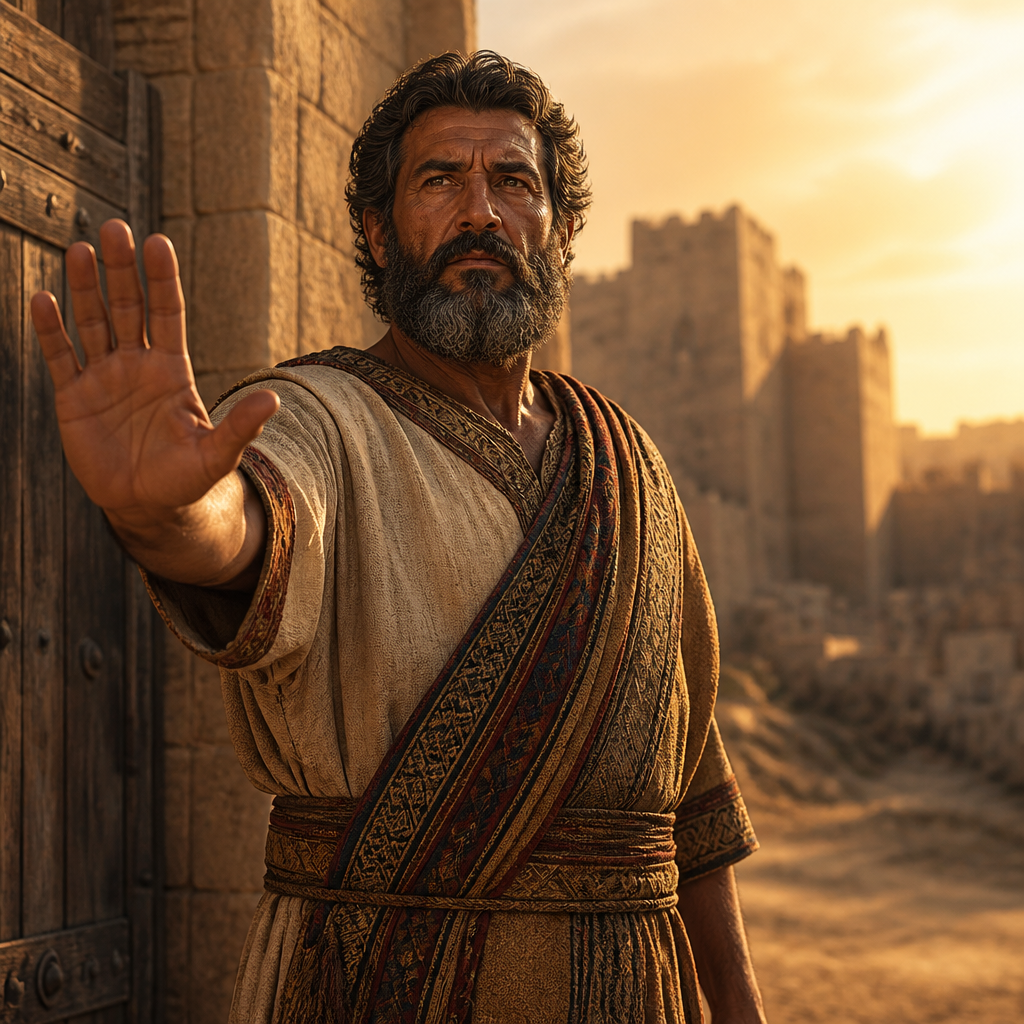
Jehizkiah, along with Azariah son of Jehohanan, Berechiah son of Meshillemoth, and Amasa son of Hadlai, stood in the gap. They "stood up against those who were coming from the war" (2 Chronicles 28:12). These leaders asserted that the nation already had enough guilt and that enslaving their "brothers" from Judah would lead to fierce divine anger. Following this stand, the captives were not only released but were clothed, fed, and transported back to Jericho by the Israelites.
Relationship to Other Biblical Figures
Jehizkiah’s primary biblical connection is his collaborative effort with the prophet Oded and the three other Ephraimite leaders. Unlike many of the kings of Israel who are depicted as consistently rebellious, Jehizkiah represents a subset of the Northern leadership that remained sensitive to prophetic warnings. He is also indirectly linked to King Pekah of Israel, whose military policy he successfully challenged, and King Ahaz of Judah, whose subjects he protected.
Spiritual Significance
Jehizkiah serves as a rare example of civic and moral courage within the Northern Kingdom. In a period characterized by the "sins of Jeroboam" and spiritual decay, Jehizkiah demonstrated a commitment to the concept of brotherhood among the tribes of Israel. His refusal to participate in the exploitation of Judean prisoners highlights a temporary restoration of the Mosaic covenant's principles regarding the treatment of fellow Hebrews. His actions prove that even in a collapsing state, individuals of conscience could still influence national policy toward justice.
Jehizkiah represents the 'remnant' of conscience within the Northern Kingdom of Israel. His theological importance lies in his recognition of corporate guilt; he understood that the nation's military success did not grant them moral license to violate God's laws regarding their kinsmen. By standing against the returning army, he facilitated one of the few recorded acts of mass repentance and mercy in the history of the Northern Kingdom.
Furthermore, Jehizkiah’s story emphasizes the power of unified leadership in the face of injustice. While the prophet Oded provided the divine word, it was men like Jehizkiah who provided the political and social leverage to see that word enacted. His legacy is one of de-escalation and humanitarianism in the midst of a brutal civil war.
Frequently Asked Questions
Who was Jehizkiah's father?
Jehizkiah was the son of Shallum.
What tribe did Jehizkiah belong to?
He was a leader of the tribe of Ephraim in the Northern Kingdom of Israel.
What did Jehizkiah do to the Judean captives?
He and other leaders refused to let them be enslaved, ensuring they were instead fed, clothed, and returned safely to their own territory.
During which king's reign did Jehizkiah live?
He lived during the reign of King Pekah of Israel and King Ahaz of Judah in the 8th century BC.
Where is Jehizkiah mentioned in the Bible?
His only mention is in 2 Chronicles 28:12.
Family & Relationships
Parents
 Shallum, Father of JehizkiahFather2 Chronicles 28:12Stated
 JehizkiahThis page
Connected Figures
Family
Father · 2 Chronicles 28:12
An Ephraimite leader during the Exile and Return whose son, Jehizkiah, played a critical role in showing mercy to Judean captives during the reign of King Pekah.
Divided MonarchyFirst: 2 Chronicles 28:121 versesInfluential CitizenEphraim
Categories
Mentions by Book
- 2 Chronicles1
Scripture References
All 1 indexed verse, in canonical order, from the Berean Standard Bible.
2 Chronicles · 1
- 2 Chronicles 28:12
Then some of the leaders of the Ephraimites—Azariah son of Jehohanan, Berechiah son of Meshillemoth, Jehizkiah son of Shallum, and Amasa son of Hadlai—stood in opposition to those arriving from the war.