Azariah, Son of Nathan the Prophet
An influential high-ranking official in King Solomon's court who oversaw the district governors during the United Monarchy.
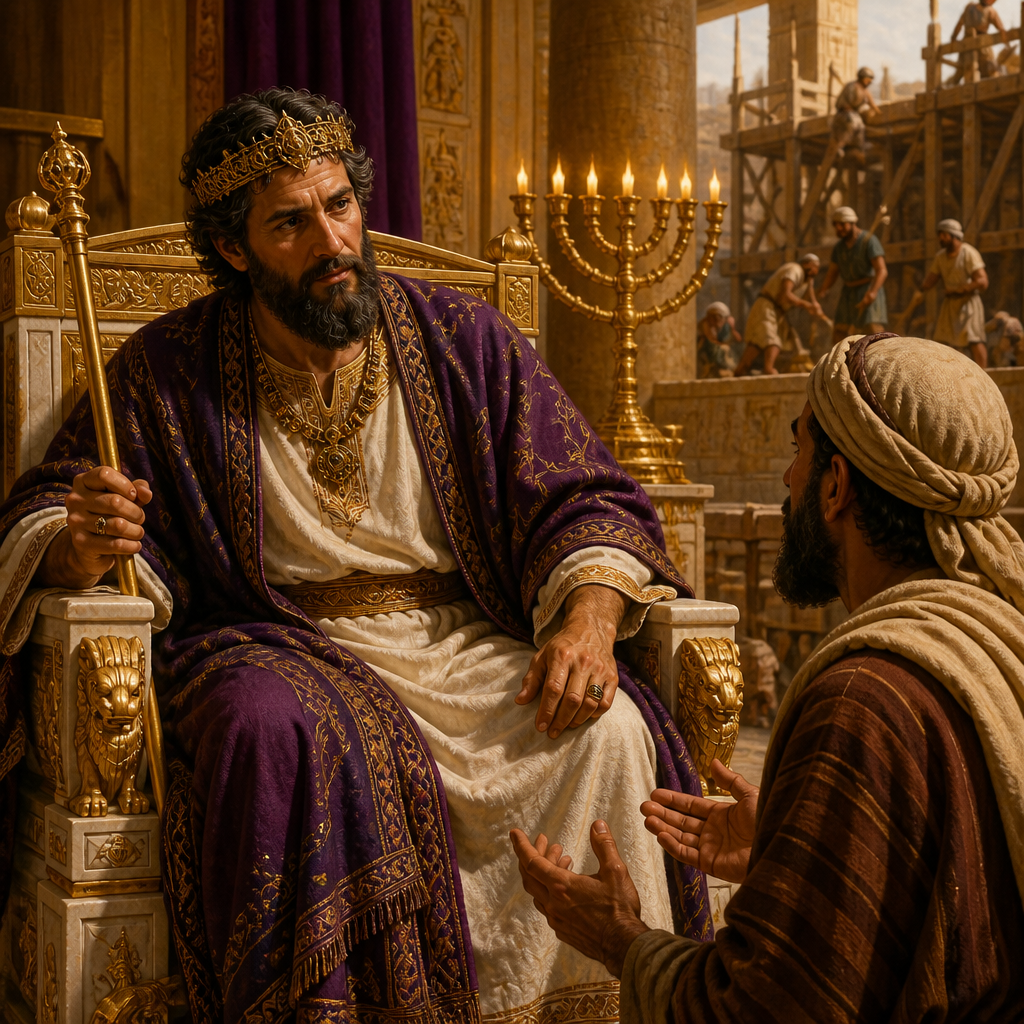
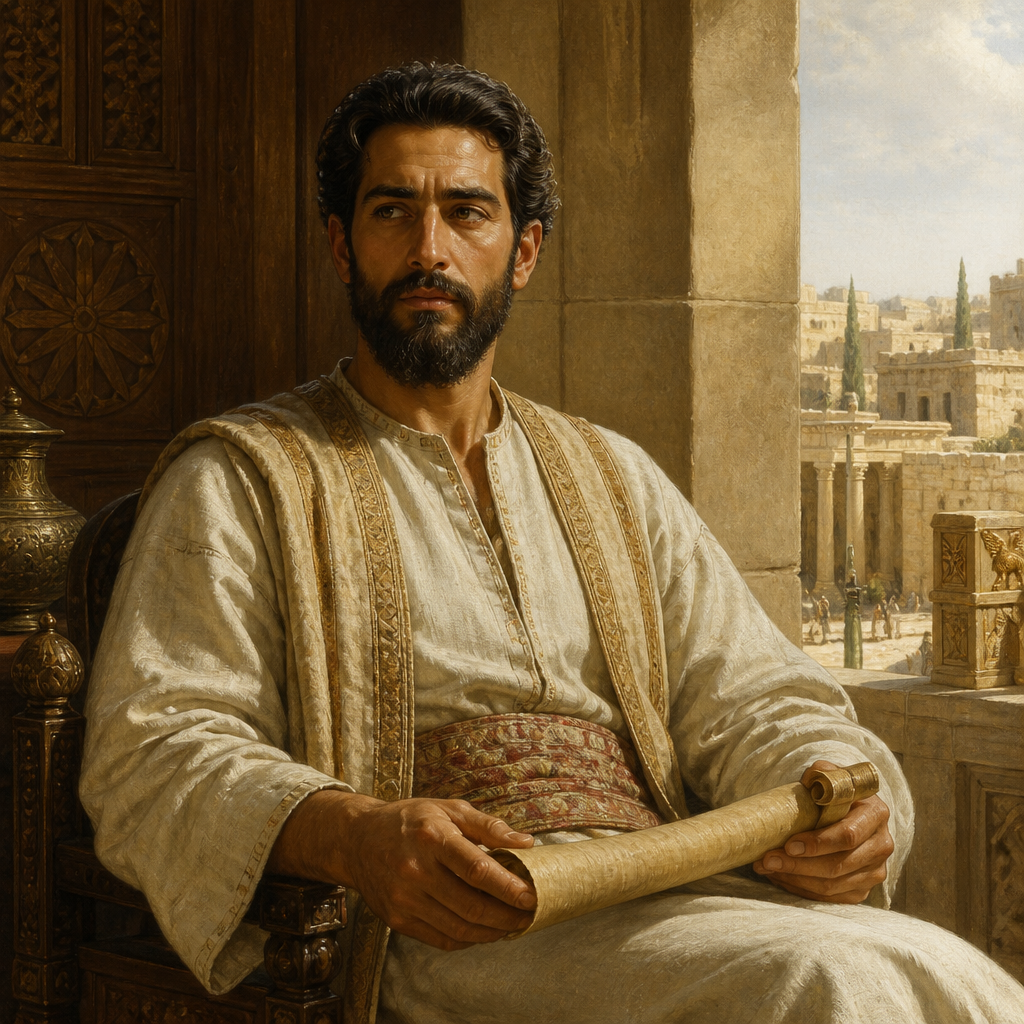
Azariah, son of Nathan, was a prominent administrative official during the reign of King Solomon in the 10th century BC. He held a position of significant authority within the centralized government of the United Monarchy, specifically designated as the officer "in charge of the governors" (1 Kings 4:5). This role was critical to the economic and logistical stability of Solomon's kingdom, as the governors were responsible for the taxation and provisioning of the royal household.
Azariah belonged to an elite circle of advisors and administrators who served in Solomon's court, often referred to as the "princes" or high officials. His pedigree is notable, as he was the son of Nathan, a figure generally identified as the prophet who served King David. His brother, Zabud, served as a priest and a personal advisor (or "friend") to King Solomon, indicating that Azariah’s family held a unique position of trust and influence at the highest levels of the Israelite government.
Background and Family
Azariah was born into a family of significant religious and political prestige during the transition from the reign of King David to King Solomon. According to 1 Kings 4:5, he was the son of Nathan. Biblical scholars generally identify this Nathan as Nathan the Prophet, who famously confronted King David regarding Bathsheba and later played a pivotal role in ensuring Solomon’s succession to the throne. This lineage suggests that Azariah was raised in the royal court’s inner circle, benefiting from his father’s status as a moral and political guide to the Davidic dynasty.
Azariah’s family was deeply integrated into Solomon’s administration. His brother, Zabud, is described in the same verse as a "priest and adviser to the king" (1 Kings 4:5). The presence of two brothers in such high-ranking positions—one overseeing the civil administration and the other serving as a spiritual confidant—highlights the consolidation of power within a few trusted families during the United Monarchy.
Major Life Events
The biblical record concerning Azariah is concentrated in the description of Solomon’s administrative structure. Solomon divided the land of Israel into twelve districts, each overseen by a governor. These governors were tasked with providing food for the king and his household, each for one month of the year (1 Kings 4:7). Azariah’s primary responsibility was to act as the head over these twelve officials.
This role was not merely clerical; it was a cornerstone of Solomon's domestic policy. By overseeing the governors, Azariah ensured that the complex system of regional taxation and resource distribution functioned without interruption. This system allowed Solomon to fund his massive building projects, including the Temple in Jerusalem and the royal palace, while maintaining the legendary opulence of his court. Azariah’s oversight would have required significant diplomatic skill to manage regional interests while prioritizing the needs of the central monarchy.
Relationship to Other Biblical Figures
Azariah’s relationship to King Solomon was one of delegated authority. As the son of Nathan the Prophet, he represented the second generation of a family that had been loyal to the Davidic line. While his father Nathan functioned as an external voice of God’s law to the king, Azariah functioned as an internal mechanism of the king’s will.
His relationship with his brother Zabud is also noteworthy. While Zabud held the title of "priest" (Hebrew: kohen), Azariah held a secular administrative title. Together, they represent the dual pillars of Solomon’s rule: the administrative (Azariah) and the personal/sacred (Zabud). There is no mention of Azariah’s own children or later life, as the text focuses exclusively on his role during the height of the United Monarchy.
Spiritual Significance
Though Azariah is mentioned in only one verse, his presence in the text signifies the fulfillment of the transition from a tribal confederacy to a sophisticated, organized state. The Bible presents the orderliness of Solomon’s court—including the roles held by men like Azariah—as a sign of divine blessing and the wisdom granted to Solomon.
From a theological perspective, Azariah’s service illustrates the biblical theme of "stewardship." He was responsible for the fair and efficient management of the nation’s resources. His position demonstrates that in the biblical worldview, administrative service is a vital component of a kingdom dedicated to God’s order. By serving as the son of a prophet within the civil government, Azariah bridges the gap between the prophetic word and the practical governance of the people of Israel.
Spiritual Significance
Azariah represents the institutionalization of the United Monarchy under Solomon. His role as the overseer of the twelve governors is the only specific administrative link mentioned between the central throne in Jerusalem and the regional tribal territories. His inclusion in the list of Solomon's high officials serves to validate the organized and prosperous nature of the kingdom, which the author of 1 Kings portrays as the golden age of Israel's history.
Theologically, his identity as the son of Nathan the Prophet suggests a continuity of divine favor from David to Solomon. It implies that those who were faithful during David’s struggles (like Nathan) were rewarded with positions of great responsibility and influence during the era of peace that followed. Azariah’s life shows that the 'peace' (*shalom*) of Solomon's reign was supported by a framework of diligent human administration.
Frequently Asked Questions
Who was Azariah's father?
Azariah was the son of Nathan, who is widely identified as Nathan the Prophet.
What was Azariah's job in Solomon's kingdom?
He was in charge of the twelve regional governors who provided food and supplies for the king's household.
Did Azariah have any siblings mentioned in the Bible?
Yes, he had a brother named Zabud, who served as a priest and a personal advisor to King Solomon.
In which time period did Azariah live?
Azariah lived during the United Monarchy of Israel, specifically during the 10th century BC reign of King Solomon.
What tribe did Azariah belong to?
The Bible does not explicitly state his tribe, though his father Nathan was closely associated with the court in Jerusalem and the tribe of Judah.
Connected Figures
Categories
Mentions by Book
- 1 Kings1
Family & Relationships
Sibling
1 Kings 4:5
Parent
2 Samuel 7:2
Sibling
1 Kings 4:5
Others Named Azariah
Azariah, Prophet and Son of Oded2 Chronicles 15:1
A prophet of the Divided Monarchy whose short yet pivotal message to King Asa sparked a spiritual reformation in the Kingdom of Judah.
Azariah son of Obed2 Chronicles 23:1
A military commander of the Tribe of Levi who played a crucial role in the covenant to overthrow Queen Athaliah and restore the Davidic line through King Joash.
Azariah, Leader of the ReturnNehemiah 7:7
A prominent Jewish leader and priest who returned from the Babylonian exile and signed the covenant of faithfulness under Nehemiah.
Azariah, Chief Priest of the Divided Monarchy2 Chronicles 26:17
A bold chief priest during the reign of King Uzziah who led a group of eighty priests to prevent the king from unlawfully burning incense in the Temple.
Azariah, Father of Joel the Levite2 Chronicles 29:12
A Levite of the Kohathite clan during the Divided Monarchy whose son, Joel, assisted in the sanctification of the Temple under King Hezekiah.
Azariah, Companion of DanielDaniel 1:6
A noble youth of Judah taken into Babylonian captivity who survived the fiery furnace after refusing to worship Nebuchadnezzar’s golden image.
Azariah son of Jeroham2 Chronicles 23:1
A military commander of hundreds in the Kingdom of Judah who participated in the covenant to overthrow Queen Athaliah and crown Joash.
Azariah, Son of Jehallelel2 Chronicles 29:12
A Levite of the Merarite clan who participated in the purification of the Temple during the reign of King Hezekiah.
Azariah, Son of Jehu1 Chronicles 2:38
Azariah, son of Jehu, was a descendant of Jerahmeel and a member of the tribe of Judah whose lineage is preserved in the genealogical records of the Divided Monarchy.
Azariah, Son of Jehoshaphat2 Chronicles 21:2
A prince of Judah and son of King Jehoshaphat, Azariah was one of several brothers murdered by Jehoram during a bloody consolidation of the Judean throne.
Azariah, Son of Ethan1 Chronicles 2:8
A descendant of Judah through the line of Zerah and the son of Ethan, recorded in the genealogies of 1 Chronicles.
Azariah son of Jehohanan2 Chronicles 28:12
An Ephraimite leader who opposed the enslavement of Judean prisoners during the reign of King Pekah.
Azariah, Teacher of the LawNehemiah 8:7
A Levite who assisted Ezra in explaining the Law to the people of Jerusalem during the Post-Exilic restoration.
Azariah, Son of Zadok the Priest1 Kings 4:2
A high-ranking official and priest in the court of King Solomon during the United Monarchy, descended from the line of Zadok.
Azariah, Builder of Jerusalem's WallNehemiah 3:23
Azariah was a resident of Jerusalem who participated in the reconstruction of the city walls alongside Nehemiah, repairing the section adjacent to his own home.
Azariah, Chief Priest of the Zadokite Lineage2 Chronicles 31:10
A chief priest of the line of Zadok who managed the Temple storehouses and oversaw the abundance of offerings during King Hezekiah’s religious reforms.
Azariah, High Priest of the Divided Monarchy1 Chronicles 6:13
Azariah was a high official in the Temple of Jerusalem and a key link in the Aaronic priesthood during the late Divided Monarchy, serving as the father of the Chief Priest Seraiah.
Azariah, Son of Johanan1 Chronicles 6:9
A Levite priest during the Divided Monarchy who served in the high priestly line and was the father of Amariah.