Johanan, Son of Azariah the Priest
A Levite and high-ranking priest of the Divided Monarchy, Johanan was a descendant of Zadok who maintained the priestly line in Jerusalem during the era of the First Temple.
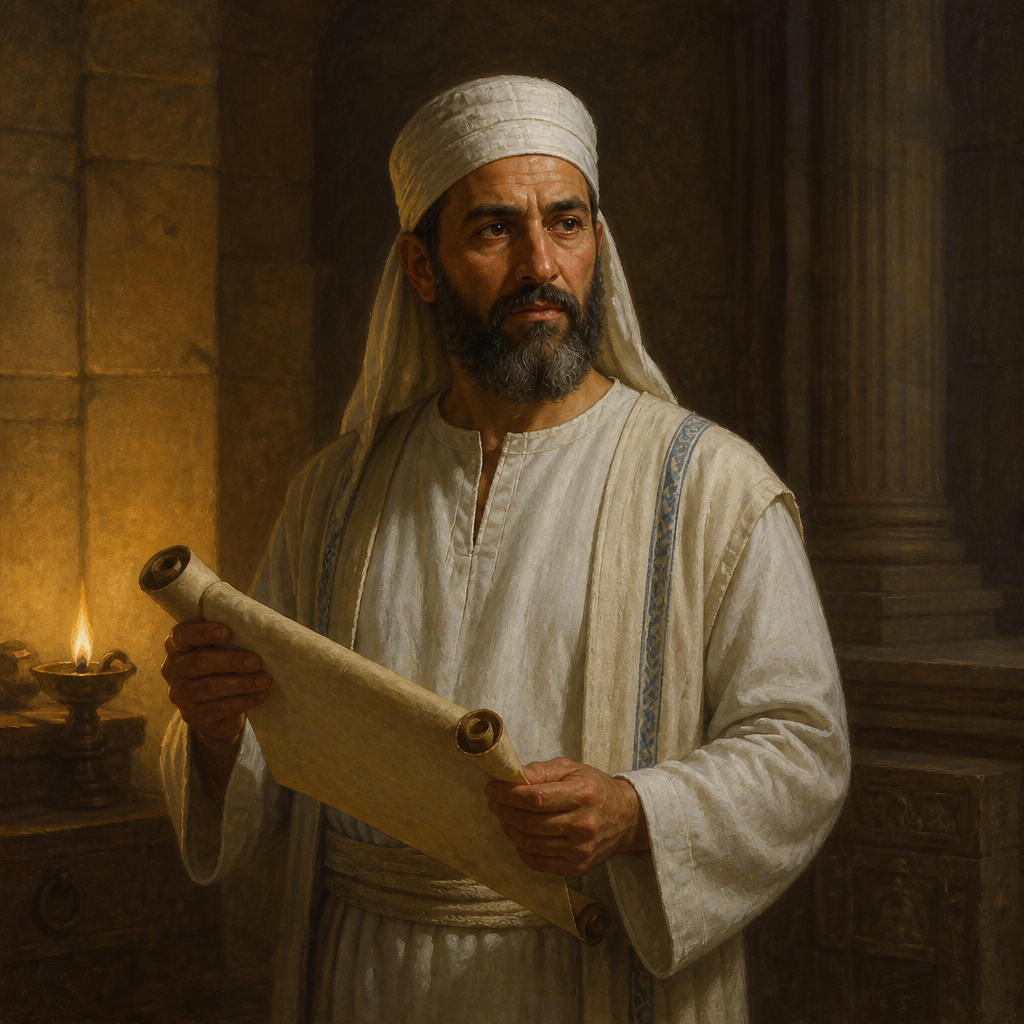
Johanan was a member of the tribe of Levi and a high-ranking priest who served during the period of the Divided Monarchy. He is situated within the prestigious lineage of Zadok, the high priest who remained loyal to King David and Solomon. As a central link in the genealogical record of the Zadokite priesthood, Johanan’s life is anchored to the administration of the Temple in Jerusalem.
While the biblical record regarding Johanan is concise, his placement in the priestly succession is significant. He lived during a transitional period for the Southern Kingdom of Judah, maintaining the sacred duties and the genealogical integrity of the office between his father, Azariah, and his son, also named Azariah. His service ensures the continuity of the Aaronic priesthood through one of the most stable yet spiritually turbulent eras of Israel's history.
Background and Family
Johanan appears in the genealogy of the high priests recorded in the book of 1 Chronicles. He was a descendant of Aaron through the line of Eleazar and Phinehas, specifically belonging to the Zadokite branch which rose to prominence during the United Monarchy. According to 1 Chronicles 6:9, Johanan was the son of Azariah and the grandson of Ahimaaz.
His family was deeply entrenched in the religious and political life of Jerusalem. His grandfather, Ahimaaz, was renowned for his loyalty to King David during the rebellion of Absalom, and his father, Azariah, served in the high levels of the Solomonic administration. Johanan inherited a legacy of strict adherence to the Law of Moses and the preservation of the sacrificial system established in the Tabernacle and later the Temple.
Major Life Events
The biblical text provides two primary markers for Johanan's life: his parentage and his offspring. The record in 1 Chronicles 6:10 notes that Johanan was the father of Azariah. This son, Azariah, is distinguished by the chronicler as the one "who served as priest in the temple that Solomon built in Jerusalem."
Because Johanan is positioned between two men named Azariah, he serves as a vital genealogical anchor during the Divided Monarchy. While the text does not detail specific political crises or reforms he may have witnessed, his tenure as a priest would have required navigating the religious shifts that occurred as the kingdom of Judah balanced its identity against the northern kingdom of Israel and surrounding pagan influences.
Relationship to Other Biblical Figures
Johanan’s primary relationships are defined by his ancestry and his descendants. As the son of Azariah (son of Ahimaaz), he was part of a line of men who were often close advisors to the kings of Judah. His son, Azariah, is specifically noted for his service in Solomon’s Temple, suggesting that the family maintained their residence and sacred authority in Jerusalem even as the kingdom faced external pressures.
In the broader context of the tribe of Levi, Johanan represented the elite priestly class. Unlike the common Levites who served in various capacities throughout the land, the descendants of Zadok, including Johanan, were responsible for the most sacred functions within the Holy Place and the Holy of Holies.
Spiritual Significance
The significance of Johanan lies in the concept of biblical continuity. In the Chronicler's view, the legitimacy of the post-exilic community rested upon their ability to trace their lineage back to the pre-exilic Temple. By recording Johanan’s place in the succession, the Bible emphasizes that God’s covenant with the priesthood remained unbroken through the centuries of the Divided Monarchy.
Johanan represents the "quiet" generations of faith—those who do not have dramatic stories of war or prophecy recorded, but who faithfully performed the daily requirements of the Law, ensuring that the fire on the altar never went out and that the knowledge of God was passed to the next generation. Without the steady service of men like Johanan, the reforms of later kings like Hezekiah or Josiah would have had no foundation upon which to build.
Spiritual Significance
Johanan’s primary significance is genealogical and institutional. He serves as a vital link in the High Priestly line of Zadok during the Divided Monarchy, ensuring the legal and spiritual continuity of the Temple service in Jerusalem. His inclusion in the records of 1 Chronicles 6 highlights the importance of hereditary faithfulness within the tribe of Levi.
His life demonstrates the endurance of the Aaronic priesthood through the shifting political landscape of Judah. By fathering Azariah, who is noted for his significant service in Solomon's Temple, Johanan fulfilled the essential role of preserving the sacred office for future generations of Israel's worship.
Frequently Asked Questions
Who was Johanan's father?
Johanan was the son of Azariah, who was the son of Ahimaaz (1 Chronicles 6:9).
What tribe did Johanan belong to?
Johanan belonged to the tribe of Levi, specifically the priestly line of Zadok.
Which son of Johanan is mentioned in the Bible?
His son was Azariah, who is noted for serving as a priest in the Temple that Solomon built in Jerusalem.
What era did Johanan live in?
He lived during the Divided Monarchy, the period after the kingdom of Israel split into the Northern and Southern kingdoms.
Why is Johanan important if there are no stories about him?
He is significant because he maintains the genealogical line of the High Priesthood, proving the legitimacy of the Temple administration and God's faithfulness to the house of Zadok.
Connected Figures

Categories
Mentions by Book
- 1 Chronicles2
Family & Relationships
Child
1 Chronicles 6:9
Parent
Azariah, Son of Zadok the Priest
1 Kings 4:2
Others Named Johanan
Johanan son of Kareah2 Kings 25:23
A military commander of Judah who attempted to protect the remnant of Jerusalem after the Babylonian conquest but eventually led the survivors to Egypt against prophetic counsel.
Johanan, son of HakkatanEzra 8:12
Johanan, son of Hakkatan, was a leader of the descendants of Azgad who returned from Babylon to Jerusalem under the leadership of Ezra the priest.
Johanan, Gadite Warrior of the Divided Monarchy1 Chronicles 12:12
A skilled Gadite warrior and commander who defected from Saul's army to support David at Ziklag.
Johanan, Father of Azariah the Ephraimite2 Chronicles 28:12
Johanan was the father of Azariah, one of the four Ephraimite leaders who intervened to protect Judean prisoners during the Syro-Ephraimite War.
Johanan, Benjamite Warrior of the Divided Monarchy1 Chronicles 12:4
A skilled Benjamite warrior and archer who joined David at Ziklag during his exile from King Saul.
Johanan, High Priest in the Days of NehemiahNehemiah 12:22
A high-ranking Levite and descendant of Eliashib, Johanan served during the Persian period and was central to the genealogical records of the post-exilic returnees.
Johanan, Son of Elioenai1 Chronicles 3:24
A descendant of the royal line of Judah and one of the seven sons of Elioenai listed in the Davidic genealogy.