Johanan, son of Hakkatan
Who was Johanan, son of Hakkatan, in the Bible?
Johanan, son of Hakkatan, was a leader of the descendants of Azgad who returned from Babylon to Jerusalem under the leadership of Ezra the priest.
This is one of 8 people named Johanan in the Bible. See all 8 →
Johanan, son of Hakkatan, is a figure mentioned in the biblical record of the Post-Exilic Period. He appears specifically within the list of those who joined Ezra, the scribe and priest, on his journey from Babylon to Jerusalem during the reign of Artaxerxes I of Persia (c. 458 BC). Johanan is identified as a representative of the clan of Azgad, a family line that played a significant role in the restoration of the Jewish community in Judea.
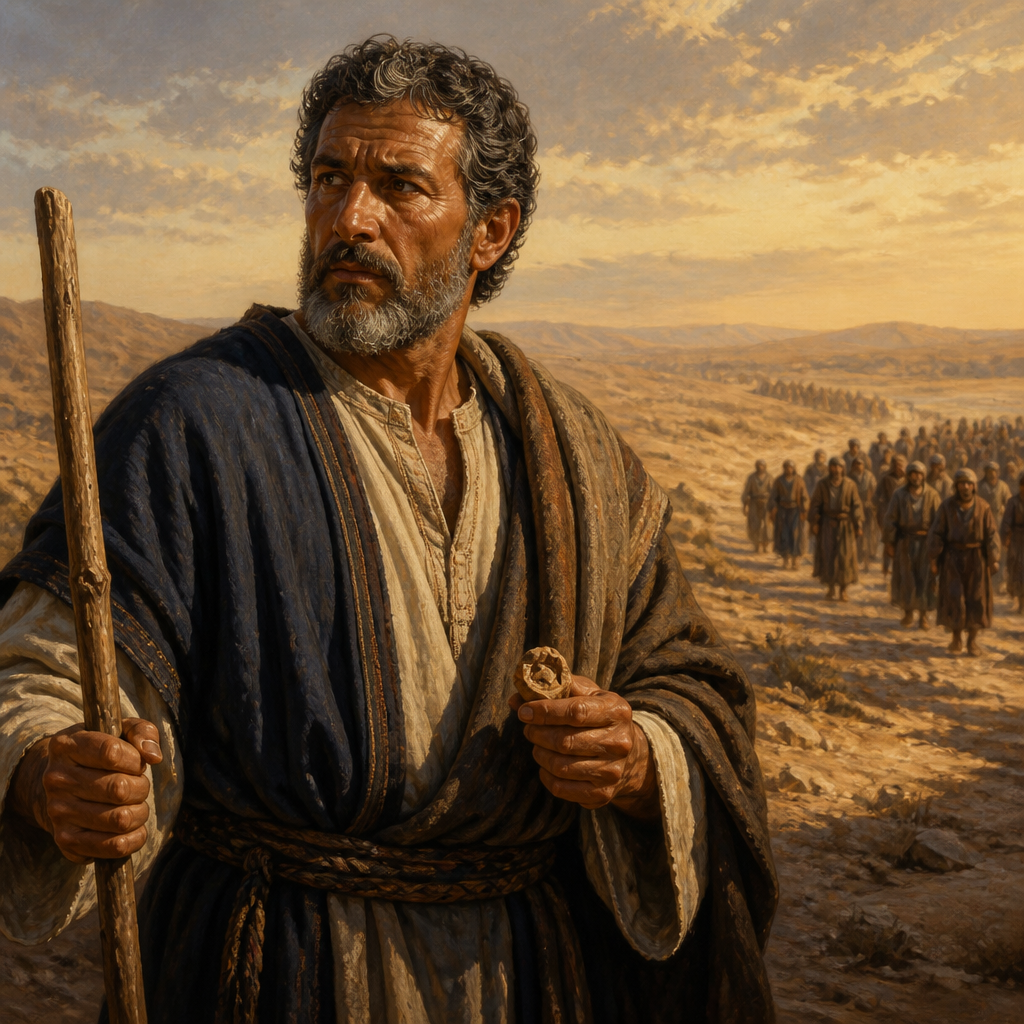
His mention in the Book of Ezra is brief but vital for the genealogical accounting of the returnees. As a leader among his kin, Johanan was responsible for a group of 110 men, indicating his status and influence within the Azgad family tree. His participation marks him as a participant in the second major wave of return from the Babylonian exile, emphasizing his commitment to the rebuilding of the Hebrew nation and the restoration of Temple worship.
Background and Family
Johanan is identified in the biblical text as the son of Hakkatan. While the specific tribe of Hakkatan and Johanan is not explicitly named in the text of Ezra 8, they are listed as members of the descendants of Azgad. The house of Azgad was a large and prominent family among the returning exiles. According to Ezra 2:12, an earlier group of 1,222 descendants of Azgad had returned with Zerubbabel decades prior. The name 'Johanan' means 'Yahweh has been gracious,' a common and meaningful name in the post-exilic community reflecting the people's gratitude for their release from captivity.
His father’s name, Hakkatan, means 'the small' or 'the younger' in Hebrew. In the context of the return from exile, being listed by father and family group was essential for establishing legal rights to ancestral land in Israel and for maintaining the purity of the priestly and lay lines within the restored community.
Major Life Events
The sole recorded event in Johanan’s life is his participation in the caravan of returnees led by Ezra. This journey took place in the seventh year of King Artaxerxes’ reign. Unlike the first return under Zerubbabel, which focused on rebuilding the Temple, Ezra’s mission was focused on religious reform and the teaching of the Law of Moses.
Johanan’s role was significant; he led a company of 110 men. This indicates that he was likely a clan elder or a recognized head of a household (a 'Rosh Beth-Ab'). Leading such a group through the hazardous wilderness between Babylon and Jerusalem required logistics, courage, and a reliance on divine protection, especially since Ezra famously refused a royal military escort, trusting instead in the 'hand of God' (Ezra 8:22-23).
Relationship to Other Biblical Figures
Johanan served under the spiritual and administrative leadership of Ezra. He is also grouped with other heads of families such as those of the lines of Phinehas, Ithamar, and David. Within the specific subgroup of the descendants of Azgad, Johanan appears as the primary leader for this specific contingent of the second return. His relationship to the other returnees was one of shared hardship and shared religious purpose, as they all sought to re-establish the covenant community in the land of their ancestors.
Spiritual Significance
Though Johanan’s name appears only once, his presence in the scriptural record underscores the theme of the 'Remnant.' The Bible emphasizes that God preserved a specific number of individuals to return to the Land of Promise to fulfill the messianic prophecies. Johanan’s willingness to leave the relative stability of Babylon to face the ruins of Jerusalem signifies a prioritization of the spiritual over the material. He is recorded as one of the 'heads of their fathers’ houses' who was specifically moved by God to return and contribute to the restoration of the holy city.
Johanan's significance lies in his role as a leader of the returning remnant. In the post-exilic context, the survival of the Jewish people depended on the courage of family leaders like Johanan who were willing to uproot their families and return to a desolate Jerusalem. His inclusion in the genealogy of Ezra 8 validates his family's standing in the community and ensures that his household's contribution to the restoration of Israel was permanently memorialized in the canon of Scripture.
Theologically, Johanan represents the faithfulness of God in fulfilling the promises made through the prophets Jeremiah and Isaiah regarding the return of the exiles. By leading 110 men, Johanan acted as a shepherd for a portion of the people, ensuring their safe passage and their integration into the new social and religious order being established by Ezra.
Frequently Asked Questions
Who was Johanan's father?
Johanan was the son of Hakkatan, as recorded in Ezra 8:12.
What group did Johanan lead during the return from exile?
He led a group of 110 men from the descendants of Azgad.
When did Johanan return to Jerusalem?
He returned during the reign of Artaxerxes I, around 458 BC, in the company led by Ezra.
What does the name Johanan mean?
The name Johanan is of Hebrew origin and means 'Yahweh has been gracious.'
In which book of the Bible is this Johanan mentioned?
He is mentioned exclusively in the Book of Ezra, specifically in chapter 8, verse 12.
Family & Relationships
Parents
 HakkatanFatherEzra 8:12Stated
 Johanan, son of HakkatanThis page
Connected Figures
Family
Father · Ezra 8:12
A father during the post-exilic period whose son, Johanan, led a group of 110 men back to Jerusalem under Ezra.
Categories
Mentions by Book
- Ezra1
Scripture References
All 1 indexed verse, in canonical order, from the Berean Standard Bible.
Ezra · 1
- Ezra 8:12
from the descendants of Azgad, Johanan son of Hakkatan, and with him 110 men;
Others Named Johanan
Compare all 8 bearers →Johanan, Son of Azariah the Priest1 Chronicles 6:9
A Levite and high-ranking priest of the United Monarchy, Johanan was a descendant of Zadok who maintained the priestly line in Jerusalem during the era of the First Temple.
Johanan son of Kareah2 Kings 25:23
A military commander of Judah who attempted to protect the remnant of Jerusalem after the Babylonian conquest but eventually led the survivors to Egypt against prophetic counsel.
Johanan, Gadite Warrior of the Divided Monarchy1 Chronicles 12:12
A skilled Gadite warrior and commander who defected from Saul's army to support David at Ziklag.
Jehohanan, Father of Azariah the Ephraimite2 Chronicles 28:12
Johanan was the father of Azariah, one of the four Ephraimite leaders who intervened to protect Judean prisoners during the Syro-Ephraimite War.
Johanan, Benjamite Warrior of the Divided Monarchy1 Chronicles 12:4
A skilled Benjamite warrior and archer who joined David at Ziklag during his exile from King Saul.
Johanan, High Priest in the Days of NehemiahNehemiah 12:11
A high-ranking Levite and descendant of Eliashib, Johanan served during the Persian period and was central to the genealogical records of the post-exilic returnees.
Johanan, Son of Elioenai1 Chronicles 3:24
A descendant of the royal line of Judah and one of the seven sons of Elioenai listed in the Davidic genealogy.