Johanan, Father of Azariah the Ephraimite
Johanan was the father of Azariah, one of the four Ephraimite leaders who intervened to protect Judean prisoners during the Syro-Ephraimite War.
Johanan is a figure mentioned in the genealogical context of the Divided Monarchy, specifically during the reign of King Pekah of Israel and King Ahaz of Judah. While Johanan himself is not depicted in active narrative roles, he is identified as the father of Azariah, a prominent head of the tribe of Ephraim. His lineage is recorded within the context of a significant moral and political crisis in the Northern Kingdom of Israel.
His identification serves to ground the authority of his son, Azariah, who emerged as a voice of conscience in the Northern Kingdom. The mention of Johanan in 2 Chronicles 28:12 places his family among the influential leadership of the Ephraimites, suggesting a position of social or ancestral standing within the tribal structure of the ten northern tribes.
Background and Family
Johanan appears in the biblical record solely within the genealogical list of Northern leaders in 2 Chronicles 28. He lived during the mid-8th century BC, a period characterized by the deep political instability of the Divided Monarchy. As the father of Azariah, Johanan is linked to the tribe of Ephraim, which was the dominant tribe of the Northern Kingdom (Israel). The text does not provide the name of Johanan’s wife or his own father, but the inclusion of his name alongside other prominent fathers like Meshillemoth, Shallum, and Hadlai suggests he belonged to a recognized noble or administrative class within the Ephraimite territory.
Major Life Events
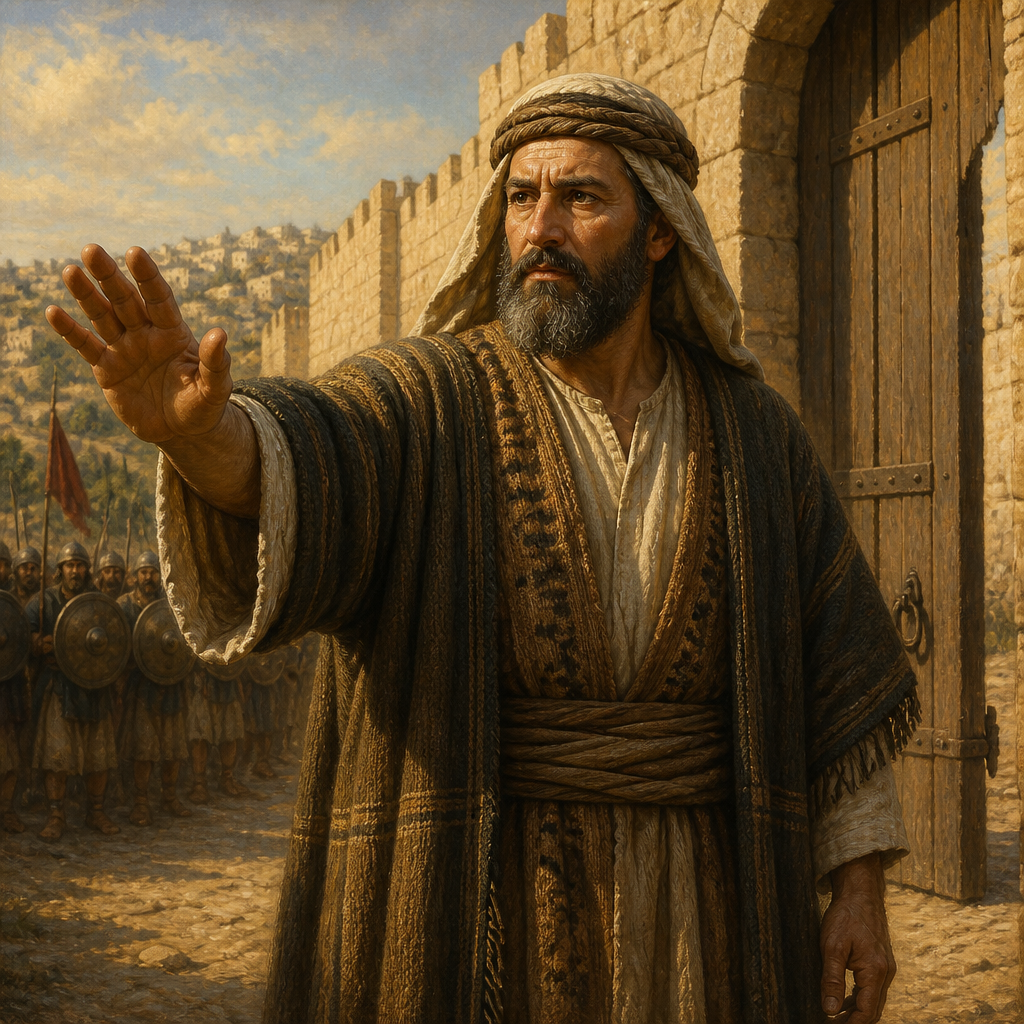
The biblical text does not record the specific actions of Johanan, but rather the actions of his son, Azariah. Following a devastating conflict where the Northern Kingdom of Israel defeated the Southern Kingdom of Judah, the Israelite army attempted to bring 200,000 Judean women and children to Samaria as slaves. It was at this moment that Johanan’s son, Azariah, along with three other leaders, stood in opposition to the returning army.
While Johanan is not credited with this intervention personally, the Chronicler includes his name to establish the legitimacy and pedigree of the men who defied the military's intent. By identifying Azariah as the "son of Jehohanan" (a variant of Johanan), the text highlights the domestic and tribal framework from which these leaders emerged to uphold the words of the prophet Oded.
Relationship to Other Biblical Figures
Johanan’s primary biblical relationship is his fatherhood of Azariah. He is also indirectly associated with the other heads of the Ephraimite houses mentioned in the same passage: Berechiah son of Meshillemoth, Jehizkiah son of Shallum, and Amasa son of Hadlai. Collectively, these families represented the civilian and tribal leadership that provided a check against the military excesses of King Pekah’s administration.
Spiritual Significance
Though Johanan is a minor figure in terms of narrative space, his presence in the text signifies the continuation of a specific lineage within the Northern Kingdom that remained sensitive to the ethical demands of the covenant. In a time when the Northern Kingdom was often characterized by apostasy and violence, the household of Johanan produced a leader (Azariah) who recognized the Judeans as "brothers" rather than mere spoils of war. Johanan thus represents the generational foundation of a family that played a critical role in preventing further divine wrath from falling upon Samaria.
Spiritual Significance
Johanan’s significance lies in his role as the progenitor of a righteous leader in the Northern Kingdom. During the Syro-Ephraimite War, when the spirit of brotherhood between Israel and Judah had vanished, Johanan's son was one of the few who intervened to show mercy. Johanan is thus recorded to validate the social standing and identity of the men who redirected Israel's path toward humanitarianism and obedience to prophetic warning.
The use of his name (meaning 'Yahweh has been gracious') reflects the persistent presence of Yahwistic tradition within the Ephraimite leadership, even during the turbulent years preceding the Assyrian conquest. He stands as a representative of the tribal eldership of the Divided Monarchy.
Frequently Asked Questions
Who was Johanan in 2 Chronicles 28?
Johanan (also spelled Jehohanan) was the father of Azariah, one of the four Ephraimite leaders who opposed bringing Judean captives into Samaria as slaves.
What tribe did Johanan belong to?
He was a member of the tribe of Ephraim, one of the leading tribes of the Northern Kingdom of Israel.
Did Johanan fight in the Syro-Ephraimite War?
The Bible does not record Johanan's personal participation in the war; it only mentions him to identify his son, Azariah, who dealt with the war's aftermath.
What does the name Johanan mean?
The name Johanan (or Jehohanan) is Hebrew for 'Yahweh has been gracious.'
Connected Figures

Categories
Mentions by Book
- 2 Chronicles1
Family & Relationships
Child
2 Chronicles 28:12
Others Named Johanan
Johanan, Son of Azariah the Priest1 Chronicles 6:9
A Levite and high-ranking priest of the Divided Monarchy, Johanan was a descendant of Zadok who maintained the priestly line in Jerusalem during the era of the First Temple.
Johanan son of Kareah2 Kings 25:23
A military commander of Judah who attempted to protect the remnant of Jerusalem after the Babylonian conquest but eventually led the survivors to Egypt against prophetic counsel.
Johanan, son of HakkatanEzra 8:12
Johanan, son of Hakkatan, was a leader of the descendants of Azgad who returned from Babylon to Jerusalem under the leadership of Ezra the priest.
Johanan, Gadite Warrior of the Divided Monarchy1 Chronicles 12:12
A skilled Gadite warrior and commander who defected from Saul's army to support David at Ziklag.
Johanan, Benjamite Warrior of the Divided Monarchy1 Chronicles 12:4
A skilled Benjamite warrior and archer who joined David at Ziklag during his exile from King Saul.
Johanan, High Priest in the Days of NehemiahNehemiah 12:22
A high-ranking Levite and descendant of Eliashib, Johanan served during the Persian period and was central to the genealogical records of the post-exilic returnees.
Johanan, Son of Elioenai1 Chronicles 3:24
A descendant of the royal line of Judah and one of the seven sons of Elioenai listed in the Davidic genealogy.