Meshullam, Supporter of Jonathan son of Asahel
A man who supported the opposition led by Jonathan son of Asahel regarding Ezra's plan for investigating foreign marriages in the post-exilic community.
Meshullam was a member of the Jewish community that returned to Jerusalem from the Babylonian exile. He is mentioned exclusively within the context of the reforms led by Ezra the scribe, specifically during the period of the restoration of the Judean community around 458 BC.
Meshullam is noted for his specific stance during a pivotal public assembly in Jerusalem. When Ezra proposed a commission to investigate and rectify the marriages between Israelites and foreign women, Meshullam was one of a small group of individuals identified as having supported the opposition led by Jonathan son of Asahel and Jahzeiah son of Tikvah. His involvement highlights the internal complexities and differing opinions within the returning exiles regarding the implementation of religious laws.
Background and Family
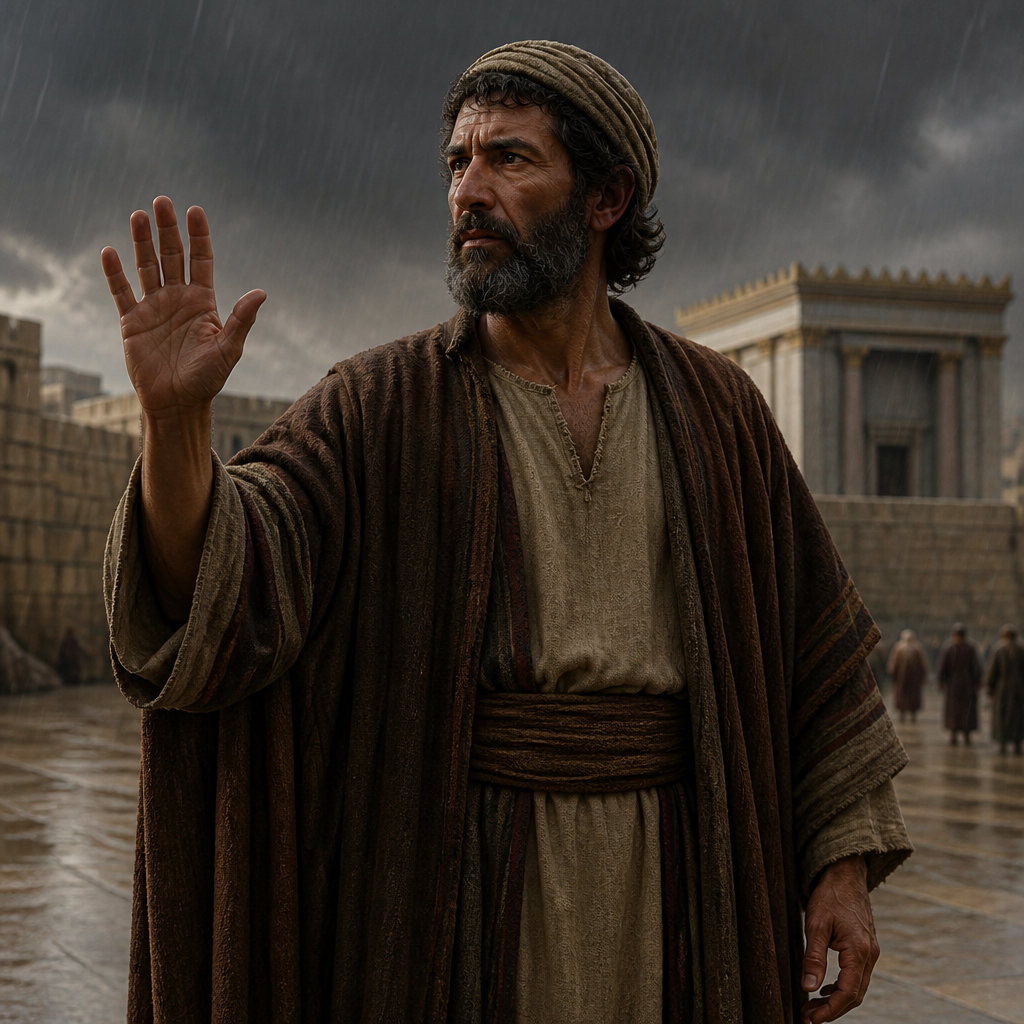
Meshullam appears in the biblical record during the Post-Exilic Period, a time of reconstruction and religious reform in Judah. While the text of Ezra 10:15 identifies him as a contemporary of the scribe Ezra and the Levite Shabbethai, it does not provide specific details regarding his tribe or his immediate family lineage. He is simply situated within the gathering of the people at Jerusalem during a heavy rain in the ninth month of the Jewish calendar.
Major Life Events
The only recorded event involving Meshullam occurs in the aftermath of Ezra’s prayer and confession regarding the intermarriage of the returning exiles with the surrounding pagan nations. A large assembly gathered at Jerusalem, trembling both because of the gravity of the spiritual matter and the severe weather. The majority of the assembly agreed to a proposal to appoint officials to oversee a case-by-case divorce process for those who had taken foreign wives.
However, a small minority stood in opposition to the specific procedural plan or the immediate execution of this reform. Meshullam is explicitly named as one who "supported" (amad in Hebrew, often meaning to stand with or assist) Jonathan son of Asahel and Jahzeiah son of Tikvah in their dissent.
"Only Jonathan son of Asahel and Jahzeiah son of Tikvah, supported by Meshullam and Shabbethai the Levite, opposed this plan." (Ezra 10:15)
Relationship to Other Biblical Figures
Meshullam is linked directly to three other men: Jonathan son of Asahel, Jahzeiah son of Tikvah, and Shabbethai the Levite. While Jonathan and Jahzeiah were the primary figures in the opposition, Meshullam acted in a secondary, supporting role. The text distinguishes Meshullam from Shabbethai by not explicitly labeling Meshullam as a Levite, though the two worked in tandem to bolster the position of the primary objectors.
Spiritual Significance
Meshullam represents the presence of dissenting voices within a community striving for holiness. His role in Ezra 10:15 illustrates that even during moments of broad religious consensus, there were individuals who questioned the methods or timing of the leadership. While the Bible does not explicitly state the motivation for his opposition—whether he felt the measures were too harsh, or perhaps not thorough enough—his inclusion by name in the record of the return ensures that the complexity of the Judean restoration is preserved. He stands as a reminder that the post-exilic community was not a monolith, but a collection of individuals navigating the difficult path of returning to Torah-based living under Persian rule.
Spiritual Significance
Meshullam’s inclusion in the narrative of Ezra 10 provides a realistic view of the political and religious tensions during the Judean restoration. His significance lies in his role as a named dissenter, showing that the implementation of Ezra's reforms was not without internal resistance or debate among the returnees.
From a textual perspective, Meshullam’s presence in Ezra 10:15 is an example of the precision of the Chronicler’s records. By naming the few who stood against the prevailing plan, the text validates the historical authenticity of the account, recording not just the successes of the leaders, but the friction points within the community.
Frequently Asked Questions
What did Meshullam oppose in the book of Ezra?
Meshullam supported the opposition to the specific plan or procedure proposed by the assembly for handling the issue of intermarriage with foreign women.
Was Meshullam a Levite?
The text does not explicitly identify Meshullam as a Levite. While he is mentioned alongside Shabbethai the Levite, the label is only applied to Shabbethai in Ezra 10:15.
Who were Meshullam's associates?
He is recorded as supporting Jonathan son of Asahel and Jahzeiah son of Tikvah, along with Shabbethai the Levite.
When did Meshullam live?
Meshullam lived during the Post-Exilic Period, specifically during the mid-5th century BC (c. 458 BC) during the time of Ezra.
Connected Figures
Jonathan son of Asahel
Leader of the opposition whom Meshullam supported
Shabbethai
Fellow supporter of the opposition
Ezra
Leader of the religious reforms Meshullam opposed
Categories
Mentions by Book
- Ezra1
Others Named Meshullam
Meshullam, Signer of the CovenantNehemiah 10:20
A Jewish leader during the Post-Exilic period who joined Nehemiah in signing the firm covenant to follow God's Law.
Meshullam, Grandfather of Shaphan2 Kings 22:3
A man of the Divided Monarchy period known solely as the grandfather of Shaphan the scribe during King Josiah's reign.
Meshullam, son of JoedNehemiah 11:7
A Benjamite whose descendants settled in Jerusalem during the Post-Exilic period after the return from Babylon.
Meshullam, Priest of the ReturnNehemiah 10:7
A priest during the Post-Exilic period who signed the covenant with Nehemiah and participated in the dedication of the rebuilt walls of Jerusalem.
Meshullam, Levite of the Return1 Chronicles 9:12
A Levite priest during the Post-Exilic period who served in the priestly lineage of Immer, contributing to the re-establishment of Jerusalem.
Meshullam, Son of Abihail1 Chronicles 5:13
A prominent head of a household within the tribe of Gad who lived during the era of the Divided Monarchy.
Meshullam, Son of Shephatiah1 Chronicles 9:8
A descendant of Reuel and son of Shephatiah who was among the heads of households to settle in Jerusalem following the return from the Babylonian exile.
Meshullam, Son of Zerubbabel1 Chronicles 3:19
A member of the Davidic line and the eldest son of Zerubbabel, the governor of Judah during the restoration period.
Meshullam, Levite of the Divided Monarchy2 Chronicles 34:12
A Levite of the Kohathite family who served as a faithful overseer during King Josiah’s restoration of the Temple in Jerusalem.
Meshullam, Son of Hodaviah1 Chronicles 9:7
A Benjamite who returned from the Babylonian exile and settled in Jerusalem as a head of a household.
Meshullam, Leader of the ReturnEzra 8:16
A prominent Jewish leader summoned by Ezra at the Ahava Canal to assist in recruiting Levites for the return to Jerusalem in 458 BC.
Meshullam, son of BesodeiahNehemiah 3:6
A Jewish returnee who collaborated with Joiada to repair the Old Gate of Jerusalem's wall during the governorship of Nehemiah.
Meshullam, Son of BaniEzra 10:29
A descendant of Bani who lived during the return from the Babylonian exile and was recorded for having taken a foreign wife.
Meshullam, Head of the House of GinnethonNehemiah 12:16
A Jewish priest and head of the ancestral house of Ginnethon during the post-exilic high priesthood of Joiakim.
Meshullam, Son of Elpaal1 Chronicles 8:17
A member of the tribe of Benjamin and son of Elpaal mentioned within the genealogical records of the Divided Monarchy.
Meshullam, Supporter of Ezra’s AssemblyNehemiah 8:4
A prominent Jewish leader who stood at the left hand of Ezra the scribe during the public reading of the Law in Jerusalem.
Meshullam, Gatekeeper of the ReturnNehemiah 12:25
A Levite gatekeeper during the post-exilic period who was responsible for guarding the storerooms at the gates of Jerusalem.
Meshullam, Son of BerechiahNehemiah 3:4
A prominent wall-rebuilder under Nehemiah who maintained a complex, controversial alliance with the Ammonite official Tobiah.
Meshullam, Priest of Ezra's LineageNehemiah 12:13
A prominent post-exilic priest and head of the ancestral house of Ezra during the high priesthood of Joiakim.