Jonathan, Son of Asahel
Who was Jonathan, Son of Asahel, in the Bible?
A Judean man during the post-exilic period who formally opposed Ezra’s specific procedure for dissolving foreign marriages.
This is one of 12 people named Jonathan in the Bible. See all 12 →
Jonathan, son of Asahel, was a resident of Jerusalem or the surrounding territory of Judah during the period of the return from the Babylonian Exile. His specific mention in the biblical record is localized to the administration of Ezra the Scribe, during a time of intense religious and social reformation following the reconstruction of the Second Temple. Jonathan is distinguished in the text for his specific stance regarding the communal response to the issue of intermarriage with foreign populations.
While many of the returned exiles supported the sweeping reforms initiated by Ezra, Jonathan is identified as one of the few named individuals who stood against a particular administrative plan. His presence in the narrative highlights the internal complexities and dissenting voices that existed within the post-exilic community as they sought to redefine their national and religious identity under Persian rule.
Background and Family
Jonathan is identified in the biblical record as the son of Asahel. Aside from this patronymic, the text provides no specific details regarding his tribe, though his presence in the assembly at Jerusalem during the time of Ezra suggests he was likely of the tribe of Judah or Benjamin, the primary groups returning from the Babylonian Exile. The era of the Exile and Return (c. 538–400 BC) was characterized by a concerted effort to restore the Mosaic Law and the purity of the Israelite lineage.
Historical Context
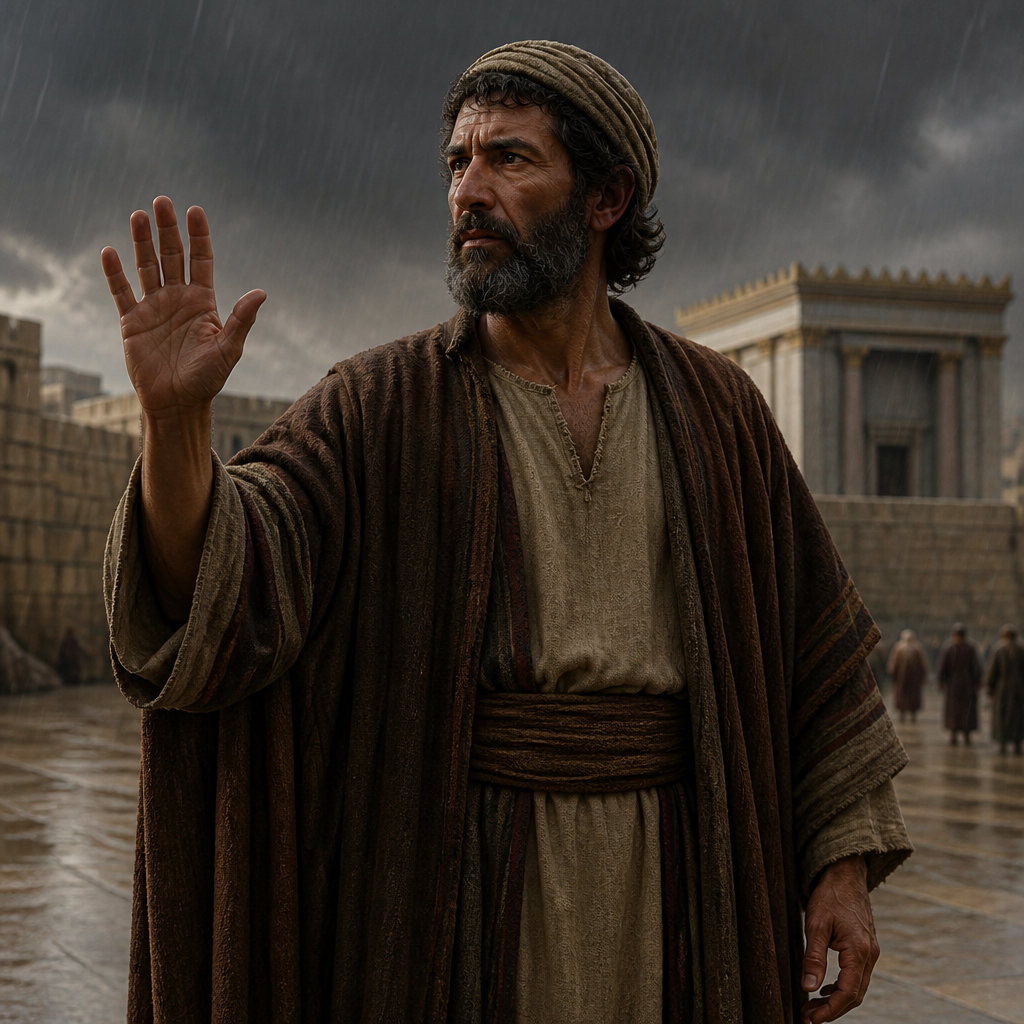
Upon Ezra's arrival in Jerusalem around 458 BC, he was confronted with the report that the people of Israel, including priests and Levites, had intermarried with the surrounding pagan nations. This was viewed as a grievous breach of the covenant. In response, a great assembly was called in Jerusalem during a heavy rain in the ninth month. The assembly agreed to a proposal to appoint commissions to investigate and dissolve these marriages over a period of time.
Major Life Events
The single recorded event in the life of Jonathan, son of Asahel, occurs in Ezra 10:15. As the assembly debated the logistical process of addressing the foreign marriage crisis, a specific plan was proposed to have the people return to their home cities and appear before local elders and judges at appointed times, rather than resolving the matter immediately in the rainy square of Jerusalem.
Only Jonathan son of Asahel and Jahzeiah son of Tikvah, supported by Meshullam and Shabbethai the Levite, opposed this plan. (Ezra 10:15, BSB)
Jonathan was one of only two primary leaders mentioned who registered a formal opposition to the consensus. The text does not clarify whether he opposed the dissolution of the marriages themselves or merely the administrative method of the commission; however, his dissent is marked as a notable exception to the general agreement of the people.
Relationship to Other Biblical Figures
Jonathan acted in concert with Jahzeiah, son of Tikvah. They were supported in their opposition by two others: Meshullam and Shabbethai the Levite. This small group represented a minority voice within the reforms led by Ezra the Scribe. There is no recorded interaction between Jonathan and Ezra personally, though Jonathan's stance was a direct response to the movement Ezra inaugurated.
Spiritual Significance
Jonathan’s presence in the text serves as a reminder of the diversity of opinion in the post-exilic community. His opposition demonstrates that even during moments of profound religious revival and national repentance, there were individuals who questioned the methods or mandates of the leadership. His inclusion in the genealogy of this event preserves the historical reality that the reformation under Ezra was not without internal friction.
Theologically, Jonathan, son of Asahel, represents the voice of dissent within the process of community sanctification. While the book of Ezra focuses on the restoration of the covenant, the mention of Jonathan provides a nuanced view of the 'Remnant,' showing that they were not a monolithic group but individuals with differing views on how to apply the Law of Moses to practical administrative challenges. His opposition is recorded without explicit condemnation, serving as a historical footnote to the complexity of the return from exile.
Frequently Asked Questions
What did Jonathan, son of Asahel, oppose?
He opposed the specific plan or procedure proposed by the assembly in Jerusalem to handle the crisis of intermarriage with foreign women.
Who supported Jonathan in his opposition?
He was joined by Jahzeiah son of Tikvah, and supported by Meshullam and Shabbethai the Levite.
In which book of the Bible is this Jonathan found?
His only mention is in the Book of Ezra, specifically chapter 10, verse 15.
Was Jonathan a priest or a Levite?
The Bible does not specify his occupation or tribe, identifying him only by his father, Asahel.
Did Jonathan's opposition stop Ezra's reforms?
No. Despite his and a few others' opposition, the plan to investigate the marriages proceeded as intended by the majority of the assembly.
Family & Relationships
Parents
 Asahel, Father of JonathanFatherEzra 10:15Stated
 Jonathan, Son of AsahelThis page
Connected Figures
Family
Father · Ezra 10:15
A man of the Post-Exilic Period whose son, Jonathan, was one of the few individuals to oppose the mass divorce proceedings initiated under Ezra.
Categories
Mentions by Book
- Ezra1
Scripture References
All 1 indexed verse, in canonical order, from the Berean Standard Bible.
Ezra · 1
- Ezra 10:15
(Only Jonathan son of Asahel and Jahzeiah son of Tikvah, supported by Meshullam and Shabbethai the Levite, opposed this plan.)
Others Named Jonathan
Compare all 12 bearers →Jonathan, Son of Shammah2 Samuel 23:32
An elite Judean warrior and one of King David's 'Mighty Men' who achieved high military distinction during the United Monarchy.
Jonathan of the MalluchiNehemiah 12:14
A member of the house of Malluchi who served during the Post-Exilic Period during the reorganization of the priesthood under Nehemiah.
Jonathan, Priest to the Tribe of DanJudges 18:30
A Levite during the Period of the Judges who established a hereditary priesthood for an idolatrous shrine in the northern territory of Dan.
Jonathan, Son of Abiathar the Priest2 Samuel 15:27
A loyal priest of the tribe of Levi who served as a courier and intelligence agent for King David during the rebellions of Absalom and Adonijah.
Jonathan, Father of EbedEzra 8:6
A descendant of Adin during the Post-Exilic Period whose son, Ebed, led a group of fifty men back to Jerusalem under the leadership of Ezra.
Jonathan, Son of Uzziah1 Chronicles 27:25
An administrator during the United Monarchy who managed the royal agricultural and strategic storehouses for the Davidic kingdom.
Jonathan, Son of King Saul1 Samuel 13:2
A prince of Israel and renowned warrior of the Tribe of Benjamin, famous for his profound covenantal friendship with David and his loyalty to God over his own royal succession.
Jonathan, Son of ShemaiahNehemiah 12:35
A Levite of the post-exilic period and a descendant of Asaph whose lineage was instrumental in the musical and liturgical restoration of Jerusalem.
Jonathan, Son of Jada1 Chronicles 2:32
A descendant of Jerahmeel within the Tribe of Judah, known for his inclusion in the post-exilic genealogical records of the era of the conquest and the judges.
Jonathan, Son of KareahJeremiah 40:8
Jonathan, son of Kareah, was a Judean military officer who joined the governor Gedaliah at Mizpah after the fall of Jerusalem to the Babylonians.
Jonathan the ScribeJeremiah 37:15
A government official in Jerusalem during the reign of King Zedekiah who converted his private residence into a dungeon for the prophet Jeremiah.