Jonathan, Son of Shemaiah
Who was Jonathan, Son of Shemaiah, in the Bible?
A Levite of the post-exilic period and a descendant of Asaph whose lineage was instrumental in the musical and liturgical restoration of Jerusalem.
This is one of 12 people named Jonathan in the Bible. See all 12 →
Jonathan, son of Shemaiah, was a Levite living during the era of the Exile and Return. He is primarily identified through his genealogical placement as a descendant of Asaph, the renowned temple musician from the time of King David. While the biblical record provides only a snapshot of his life, his identity is deeply rooted in the priestly and musical traditions of Israel, which were revitalized following the Babylonian captivity.
As a figure mentioned during the reconstruction and dedication of Jerusalem's walls under Nehemiah, Jonathan represents the continuity of the levitical office. His inclusion in the sacred genealogies serves to validate the spiritual authority and heritage of the musicians who led the congregation in worship during one of the most pivotal transitions in Israel's history.
Background and Family
Jonathan, son of Shemaiah, appears in the biblical record within the context of the post-exilic community in Jerusalem. Following the decree of Cyrus the Great in 538 BC, waves of Jewish exiles returned to their ancestral homeland to rebuild the Temple and the city walls. Jonathan belonged to the tribe of Levi, specifically within the lineage of Asaph. The sons of Asaph were traditionally the guild of musicians responsible for the vocal and instrumental worship in the house of God.
According to Nehemiah 12:35, Jonathan’s father was Shemaiah. His ancestry is traced further back through Mattaniah, Micaiah, and Zaccur, ultimately reaching Asaph. This genealogy is significant because it establishes Jonathan not merely as an individual, but as a link in a chain of sacred service that survived the seventy-year exile in Babylon. He is also identified as the father of Zechariah, who would go on to play a prominent role in the dedication of the wall of Jerusalem.
Major Life Events
The primary mention of Jonathan occurs during the celebratory dedication of the wall of Jerusalem, an event overseen by Nehemiah and Ezra. While Jonathan himself is not described in active combat or political leadership, his life is defined by the preservation of his family's clerical duties. His son, Zechariah, is listed among the priests who carried trumpets during the great processional.
Jonathan’s role was likely centered on the instruction and maintenance of the liturgical traditions that had been disrupted by the destruction of the first temple. During this era, the restoration of the genealogy was a matter of national security and spiritual integrity; without a verified lineage, a man could not serve in the temple. Jonathan’s presence in these records confirms his family’s successful preservation of their identity through the hardships of the exile.
Relationship to Other Biblical Figures
Jonathan serves as a bridge between the previous generations of Levites and the new generation of post-exilic leaders. His most direct relationship noted in Scripture is to his son, Zechariah. Zechariah is recorded as leading one of the musical divisions during the dedication ceremony, indicating that Jonathan successfully passed down the musical and spiritual training required for temple service.
Furthermore, Jonathan is listed alongside several other figures in Nehemiah 12:35-36, including Shemaiah, Azarel, Milalai, Gilalai, Maai, Nethanel, Judah, and Hanani. These men are described as the "musicians of David," emphasizing that their service was modeled after the original patterns established during the United Monarchy in the 10th century BC. Although Jonathan is the father/ancestor of these individuals in the collective listing, he stands as a patriarch of a musical dynasty that helped restore the joy of Jerusalem.
Spiritual Significance
The spiritual significance of Jonathan, son of Shemaiah, lies in the principle of faithfulness to a calling across generations. The period of the Return was fraught with opposition, poverty, and the temptation to assimilate into the surrounding cultures. By maintaining his lineage and raising a son like Zechariah to serve with the trumpet at the wall's dedication, Jonathan exemplified the quiet persistence of the Levites.
His life reflects the fulfillment of God's promise to preserve a remnant for Himself. Even when the nation was in ruins, the specific assignments given to the sons of Asaph were not forgotten. Jonathan represents the thousands of unnamed or briefly mentioned individuals whose primary contribution was the stewardship of their heritage, ensuring that when the time for celebration arrived, there were prepared and sanctified men ready to lead the people in praise.
Jonathan’s significance is found in his role as a preserver of the Asaphite musical tradition during the transition from the Babylonian Exile to the Second Temple period. His inclusion in Nehemiah’s record underscores the importance of legitimate genealogy in the restoration of Israel’s religious life, proving that the liturgical worship established by David was successfully transmitted through the exile.
He serves as a vital link between the pre-exilic temple traditions and the post-exilic community. By raising sons who participated in the wall's dedication, Jonathan ensured that the 'songs of the Lord' would continue to be heard in a rebuilt Jerusalem, affirming the continuity of God's covenant with the tribe of Levi.
Frequently Asked Questions
Who was Jonathan's father?
Jonathan was the son of Shemaiah, a descendant of Mattaniah and Asaph.
What tribe did Jonathan belong to?
He was a member of the tribe of Levi, specifically within the lineage of the musicians descended from Asaph.
In which biblical book is this Jonathan mentioned?
This specific Jonathan is mentioned in the book of Nehemiah, chapter 12, verse 35.
What was the role of Jonathan’s son, Zechariah?
Zechariah was a priest who played the trumpet during the dedication of the rebuilt walls of Jerusalem.
During what time period did Jonathan live?
Jonathan lived during the Post-Exilic Period, the era when the Jewish people returned from Babylon to Jerusalem (roughly the 5th century BC).
Family & Relationships
Parents
 Shemaiah, Father of Jonathan the PriestFatherNehemiah 12:35Stated
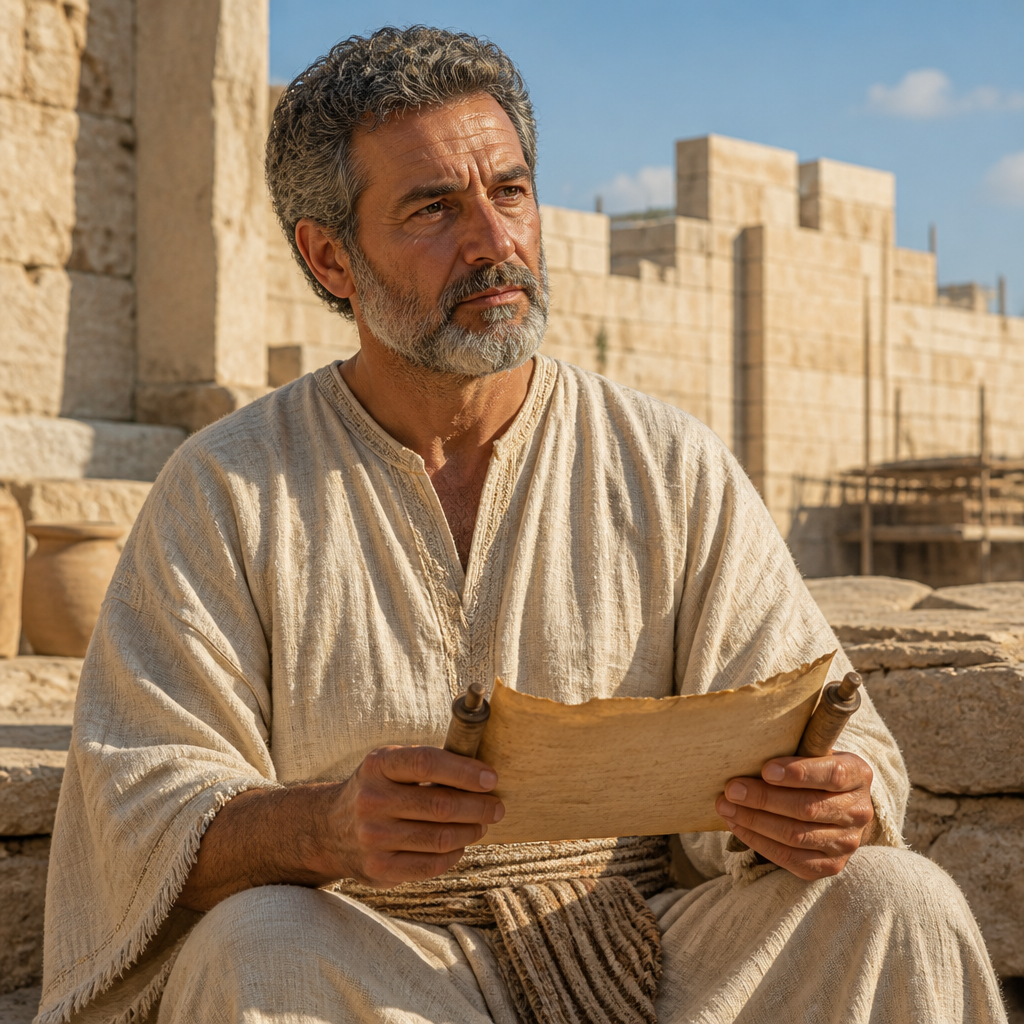 Jonathan, Son of ShemaiahThis page
Children
 Zechariah, Musician of the Post-Exilic PeriodSonNehemiah 12:35Stated
Connected Figures
Family
Father · Nehemiah 12:35
A Levite priest of the post-exilic period and the father of Jonathan, serving as a vital link in the lineage of the Asaphite singers during the restoration of Jerusalem.
Exile and ReturnFirst: Nehemiah 12:352 versesPriest and LeviteLevi
Son · Nehemiah 12:35
A priest and trumpet player who participated in the joyous dedication of the rebuilt walls of Jerusalem under Nehemiah.
Exile and ReturnFirst: Nehemiah 12:352 versesPriest and Musician
Categories
Mentions by Book
- Nehemiah2
Scripture References
All 2 indexed verses, in canonical order, from the Berean Standard Bible.
Nehemiah · 2
- Nehemiah 12:35
and some of the priests with trumpets, and also Zechariah son of Jonathan, the son of Shemaiah, the son of Mattaniah, the son of Micaiah, the son of Zaccur, the son of Asaph,
- Nehemiah 12:36Partial
and his associates—Shemaiah, Azarel, Milalai, Gilalai, Maai, Nethanel, Judah, and Hanani—with the musical instruments prescribed by David the man of God. Ezra the scribe led the procession.
Cited as evidence on a family card; added so References, Key Verses and Mentions by Book share one index.
Others Named Jonathan
Compare all 12 bearers →Jonathan, Son of Shammah2 Samuel 23:32
An elite Judean warrior and one of King David's 'Mighty Men' who achieved high military distinction during the United Monarchy.
Jonathan of the MalluchiNehemiah 12:14
A member of the house of Malluchi who served during the Post-Exilic Period during the reorganization of the priesthood under Nehemiah.
Jonathan, Priest to the Tribe of DanJudges 18:30
A Levite during the Period of the Judges who established a hereditary priesthood for an idolatrous shrine in the northern territory of Dan.
Jonathan, Son of Abiathar the Priest2 Samuel 15:27
A loyal priest of the tribe of Levi who served as a courier and intelligence agent for King David during the rebellions of Absalom and Adonijah.
Jonathan, Father of EbedEzra 8:6
A descendant of Adin during the Post-Exilic Period whose son, Ebed, led a group of fifty men back to Jerusalem under the leadership of Ezra.
Jonathan, Son of Uzziah1 Chronicles 27:25
An administrator during the United Monarchy who managed the royal agricultural and strategic storehouses for the Davidic kingdom.
Jonathan, Son of AsahelEzra 10:15
A Judean man during the post-exilic period who formally opposed Ezra’s specific procedure for dissolving foreign marriages.
Jonathan, Son of King Saul1 Samuel 13:2
A prince of Israel and renowned warrior of the Tribe of Benjamin, famous for his profound covenantal friendship with David and his loyalty to God over his own royal succession.
Jonathan, Son of Jada1 Chronicles 2:32
A descendant of Jerahmeel within the Tribe of Judah, known for his inclusion in the post-exilic genealogical records of the era of the conquest and the judges.
Jonathan, Son of KareahJeremiah 40:8
Jonathan, son of Kareah, was a Judean military officer who joined the governor Gedaliah at Mizpah after the fall of Jerusalem to the Babylonians.
Jonathan the ScribeJeremiah 37:15
A government official in Jerusalem during the reign of King Zedekiah who converted his private residence into a dungeon for the prophet Jeremiah.