Jonathan, Son of Shammah
Who was Jonathan, Son of Shammah, in the Bible?
An elite Judean warrior and one of King David's 'Mighty Men' who achieved high military distinction during the United Monarchy.
This is one of 12 people named Jonathan in the Bible. See all 12 →
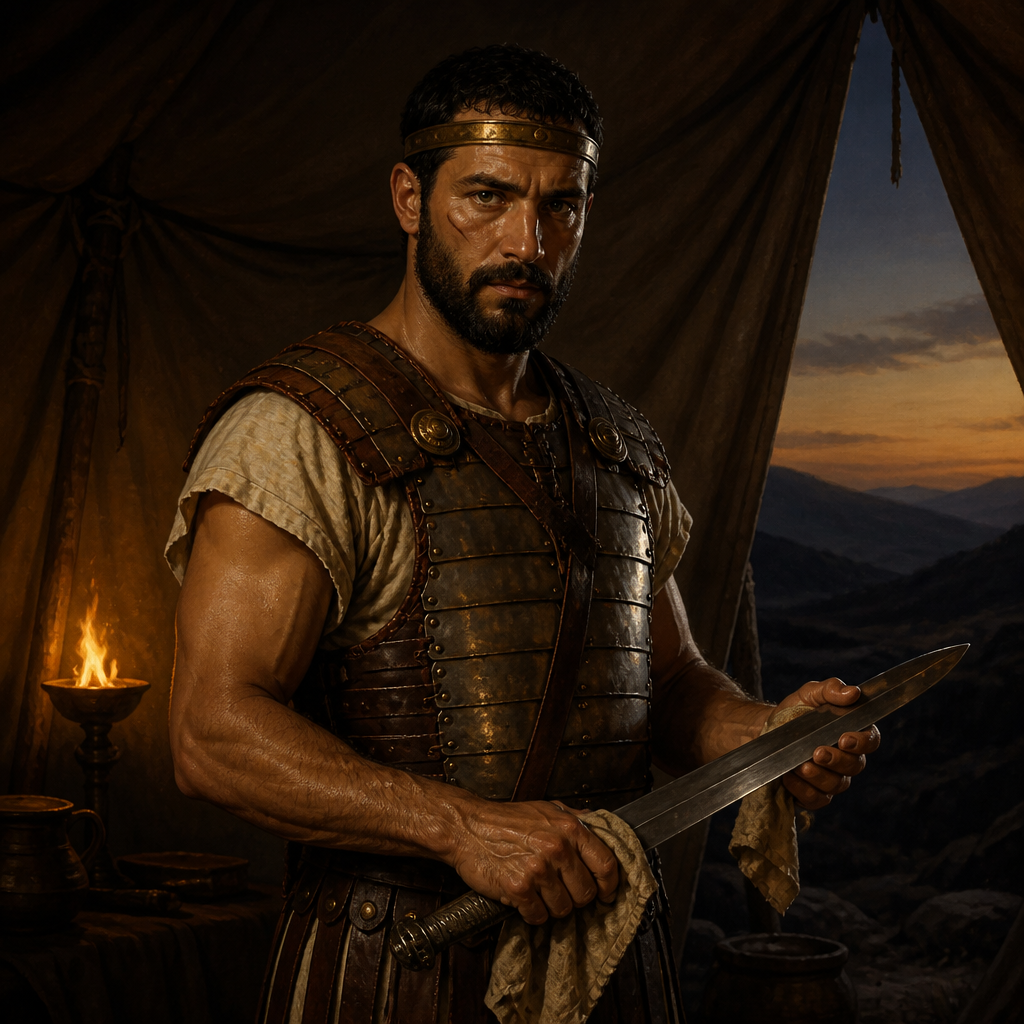
Jonathan, son of Shammah (also referred to as the son of Shagee the Hararite), was a prominent military figure during the United Monarchy of Israel under the reign of King David. He is distinguished in the biblical record as one of the 'Gibborim,' or the 'Mighty Men,' an elite cadre of warriors renowned for their extraordinary strength, loyalty, and martial prowess. Jonathan’s inclusion in these lists signifies his high standing in the royal court and his significant contributions to the expansion and stabilization of David’s kingdom.
His identity is preserved in two critical rosters of David's military hierarchy: 2 Samuel 23 and 1 Chronicles 11. While his biographical details are sparse compared to the king he served, his lineage connects him to the Hararites, a group or family line associated with the hill country, likely within the territory of Judah. His presence in these records highlights the professionalization of the Israelite military during the 10th century BC and the meritocratic nature of David’s inner circle.
Background and Family
Jonathan was the son of Shammah the Hararite (recorded as Shagee in some manuscripts of 1 Chronicles). The term 'Hararite' generally refers to a 'mountaineer' or someone from the hill country, suggesting a rugged upbringing that likely contributed to his physical capabilities. His father, Shammah, is also listed among David’s elite warriors, specifically as one of the 'Three' who performed legendary feats (2 Samuel 23:11). This indicates that Jonathan was part of a distinguished military family whose loyalty to the Davidic line was established early in the King's rise to power.
In the lists provided in 1 Chronicles 11 and 2 Samuel 23, the names are often grouped by familial or regional ties. Jonathan is mentioned alongside the 'sons of Hashem' or 'sons of Jashen,' suggesting a close-knit company of soldiers who trained and fought together. Because he is identified by his father's name, it is clear that he held an inherited reputation for bravery that he validated through his own service.
Major Life Events
The primary historical record of Jonathan’s life is his enrollment in the 'Thirty,' a specific tier of elite commanders within David’s army. These men were not merely foot soldiers; they were the special forces of the United Monarchy, tasked with the most dangerous missions and responsible for leading larger divisions of the Israelite host.
Jonathan served during a period of intense conflict as Israel transitioned from a loose confederation of tribes to a centralized regional power. His service would have encompassed the wars against the Philistines, Moabites, and Ammonites. Though the specific battles Jonathan led are not detailed individually, his inclusion in the final list of David’s mighty men—compiled toward the end of David's reign—indicates a career of sustained excellence and survival through decades of warfare.
Relationship to Other Biblical Figures
Jonathan’s primary relationship was his subordinate and loyal bond to King David. As a member of the 'Thirty,' he would have had direct access to the King and likely participated in the capture of Jerusalem or the defense of the city against subsequent Philistine incursions. He was a peer to other famous warriors such as Joab, Abishai, and Benaiah. Within the lists, he is closely associated with the 'sons of Jashen,' implying a specific unit or sub-group within the elite guard where he may have held a leadership role over his kinsmen.
Spiritual Significance
Theologically, Jonathan represents the 'arm of the King.' In the context of the United Monarchy, the military success of David was interpreted by the biblical authors as a sign of divine favor upon the house of Judah. Warriors like Jonathan were seen as the instruments through which God fulfilled His promises to give Israel rest from their enemies.
"These are the names of the mighty men whom David had... Jonathan..." (2 Samuel 23:8, 32)
His inclusion in the holy scriptures serves as a testament to the importance of individual contribution to the larger communal history of Israel. Though his words are not recorded, his name is preserved eternally in the 'Hall of Fame' of Israel’s history, signifying that in the kingdom of God, even those who serve in the shadow of the great King are remembered by name and lineage for their faithfulness.
Jonathan, son of Shammah, serves as a representative of the elite military class that enabled the transition of Israel into a sovereign state. His significance lies in the preservation of his name within the sacred genealogies and military rosters, illustrating that the biblical narrative values the individual loyalty and physical sacrifice required to establish the Davidic throne. Theologically, he belongs to the tradition of the 'mighty men' who were empowered by the Spirit to perform acts of valor on behalf of God's anointed leader.
Furthermore, Jonathan’s presence in two separate books (2 Samuel and 1 Chronicles) underscores the reliability of the royal archives of the 10th century BC. His life demonstrates that the establishment of the Kingdom of God on earth involved practical, dangerous, and dedicated service from individuals whose specific stories, while largely untold, were foundational to the national identity of Israel.
Frequently Asked Questions
Was Jonathan, son of Shammah, a relative of King Saul?
No. This Jonathan was the son of Shammah the Hararite and served as one of David’s elite 'Mighty Men.' He is a distinct individual from the son of King Saul.
What does 'Hararite' mean?
'Hararite' is a designation meaning 'mountaineer' or 'dweller of the hill country.' It refers to the geographic or tribal origin of Jonathan and his father, Shammah.
Where is Jonathan mentioned in the Bible?
Jonathan is mentioned in the lists of David’s mighty men found in 2 Samuel 23:32 and 1 Chronicles 11:34.
What was the role of the 'Thirty' in David's army?
The 'Thirty' were an elite group of commanders who served as David's most trusted warriors and military leaders, distinct from the general infantry.
Who was Jonathan's father?
His father was Shammah (also called Shagee), who was himself one of the highest-ranking and most heroic warriors in King David’s service.
Family & Relationships
Parents
 Shammah, Father of JonathanFather2 Samuel 23:32–33Stated
 Jonathan, Son of ShammahThis page
Connected Figures
Family
Father · 2 Samuel 23:32–33
A Hararite man during the United Monarchy whose son served among King David’s elite group of mighty warriors.
United MonarchyFirst: 2 Samuel 23:333 versesPatriarch of a military family
Categories
Mentions by Book
- 2 Samuel3
- 1 Chronicles2
Scripture References
All 5 indexed verses, in canonical order, from the Berean Standard Bible.
2 Samuel · 3
- 2 Samuel 23:11
And after him was Shammah son of Agee the Hararite. When the Philistines had banded together near a field full of lentils, Israel’s troops fled from them.
designation reference
- 2 Samuel 23:32
Eliahba the Shaalbonite, the sons of Jashen, Jonathan
- 2 Samuel 23:33
son of Shammah the Hararite, Ahiam son of Sharar the Hararite,
designation reference
1 Chronicles · 2
- 1 Chronicles 11:34
the sons of Hashem the Gizonite, Jonathan son of Shagee the Hararite,
- 1 Chronicles 11:35
Ahiam son of Sachar the Hararite, Eliphal son of Ur,
designation reference
Others Named Jonathan
Compare all 12 bearers →Jonathan of the MalluchiNehemiah 12:14
A member of the house of Malluchi who served during the Post-Exilic Period during the reorganization of the priesthood under Nehemiah.
Jonathan, Priest to the Tribe of DanJudges 18:30
A Levite during the Period of the Judges who established a hereditary priesthood for an idolatrous shrine in the northern territory of Dan.
Jonathan, Son of Abiathar the Priest2 Samuel 15:27
A loyal priest of the tribe of Levi who served as a courier and intelligence agent for King David during the rebellions of Absalom and Adonijah.
Jonathan, Father of EbedEzra 8:6
A descendant of Adin during the Post-Exilic Period whose son, Ebed, led a group of fifty men back to Jerusalem under the leadership of Ezra.
Jonathan, Son of Uzziah1 Chronicles 27:25
An administrator during the United Monarchy who managed the royal agricultural and strategic storehouses for the Davidic kingdom.
Jonathan, Son of AsahelEzra 10:15
A Judean man during the post-exilic period who formally opposed Ezra’s specific procedure for dissolving foreign marriages.
Jonathan, Son of King Saul1 Samuel 13:2
A prince of Israel and renowned warrior of the Tribe of Benjamin, famous for his profound covenantal friendship with David and his loyalty to God over his own royal succession.
Jonathan, Son of ShemaiahNehemiah 12:35
A Levite of the post-exilic period and a descendant of Asaph whose lineage was instrumental in the musical and liturgical restoration of Jerusalem.
Jonathan, Son of Jada1 Chronicles 2:32
A descendant of Jerahmeel within the Tribe of Judah, known for his inclusion in the post-exilic genealogical records of the era of the conquest and the judges.
Jonathan, Son of KareahJeremiah 40:8
Jonathan, son of Kareah, was a Judean military officer who joined the governor Gedaliah at Mizpah after the fall of Jerusalem to the Babylonians.
Jonathan the ScribeJeremiah 37:15
A government official in Jerusalem during the reign of King Zedekiah who converted his private residence into a dungeon for the prophet Jeremiah.