Shammah, Father of Jonathan
Who was Shammah, Father of Jonathan, in the Bible?
A Hararite man during the United Monarchy whose son served among King David’s elite group of mighty warriors.
This is one of 4 people named Shammah in the Bible. See all 4 →
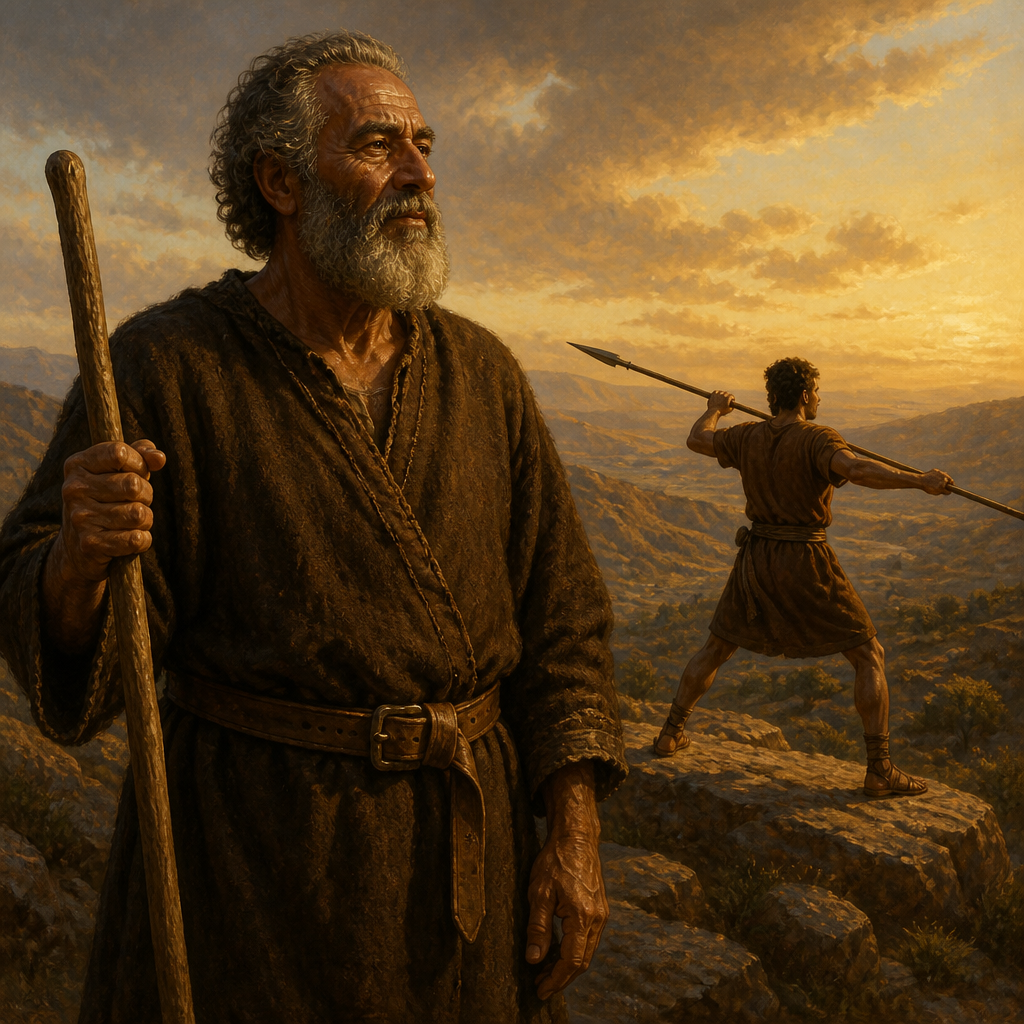
Shammah, identified as a Hararite, lived during the United Monarchy in Israel, the period encompassing the reigns of Saul, David, and Solomon. His primary significance in the biblical narrative is his role as a patriarch within the elite military circles of King David. Though Shammah himself is not recorded as performing specific deeds of valor, he is the sire of one of David’s 'mighty men' (the Gibborim), a status that suggests a family lineage of high social and military standing.
The textual evidence regarding Shammah is found within the formal catalogs of David’s special forces. These lists, preserved in the books of Samuel and Chronicles, served as an official roll of honor for the men who supported David during his rise to power and the subsequent stabilization of the kingdom. Shammah’s inclusion as the father of one of these heroes indicates that his family name was recognized as a mark of distinction in the Judean hills or the surrounding regions where the Hararites resided.
Background and Family
Shammah is identified by the gentilic descriptor "the Hararite." While the specific geographical location of "Harar" remains a subject of debate among biblical geographers, the term is generally thought to be derived from the Hebrew word for "mountaineer" or "hill-dweller." This suggests that Shammah and his family hailed from the rugged hill country, likely within the territory of Judah or the surrounding central highlands. Living during the United Monarchy (c. 1010–930 BC), Shammah would have been a contemporary of King David, witnessing the transition of Israel from a loose confederation of tribes into a centralized regional power.
His primary genealogical legacy is his son, Jonathan. In the military registers, Jonathan is distinguished by his father's name, a common practice in ancient Israelite culture to denote lineage and social standing. The presence of Shammah’s name in these lists ensures that his family’s contribution to the Davidic crown was formally memorialized in the royal archives.
Major Life Events
The biblical record does not provide a narrative account of Shammah’s personal life, occupation, or specific actions. Instead, his name appears in the context of the "Catalogue of Mighty Men." In 2 Samuel 23:33, he is listed as the father of Jonathan, who is counted among the elite warriors known as "The Thirty."
There is a textual variation in the parallel account found in 1 Chronicles 11:34. While the 2 Samuel account calls him "Shammah the Hararite," the Chronicler refers to his son as "Jonathan son of Shagee the Hararite." Scholars generally view "Shagee" and "Shammah" as variations of the same name or potentially a scribal corruption, though they both point to the same historical figure within the Hararite lineage. Beyond these genealogical citations, no further details of Shammah’s life are preserved in the Masoretic Text.
Relationship to Other Biblical Figures
Shammah’s most significant relationship is with his son, Jonathan. This Jonathan (distinct from King Saul’s son) was a member of the Gibborim, David’s personal guard and specialized military unit. The Gibborim were not merely soldiers but were considered heroes of the realm, often performing near-superhuman feats of bravery. By being identified as the father of such a man, Shammah is positioned as a figure of hereditary respect. His association with the Hararite clan also links him to Ahiam son of Sharar, another warrior mentioned in the same list (2 Samuel 23:33), suggesting that the Hararites were a significant source of military talent for the Davidic monarchy.
Spiritual Significance
While Shammah is a minor figure in terms of narrative volume, his presence in the Bible highlights the importance of family legacy and the recognition of individuals who contributed to the establishment of the Kingdom of God on earth (typified by David’s throne). In the biblical worldview, the success of a leader like David was not solely his own but was built upon the loyalty and strength of families like Shammah’s. Shammah represents the many "silent" figures of the United Monarchy whose names are preserved not for their own words, but for the faithfulness and service of their household in support of God’s anointed king.
Shammah, Father of Jonathan, represents the essential but often unrecorded foundation of the Davidic kingdom. His inclusion in the Holy Scripture serves as a genealogical anchor for Jonathan, one of David's mighty men, ensuring that the honor of the son is shared by the father. Historically, he illustrates the importance of the 'Hararite' group in the formation of David's military elite, contributing to our understanding of the diverse tribal or regional groups that unified under the first Judean kings.
Theologically, the mention of Shammah within the official registers of Israel emphasizes that in the eyes of the biblical historians, every individual within the covenant community had a place of record. Even without a detailed biography, Shammah’s identity as a 'hill-dweller' who raised a defender of Israel reinforces the theme that God uses ordinary families from the highlands to support the divine infrastructure of the nation.
Frequently Asked Questions
Who was Shammah the Hararite's son?
His son was Jonathan, who became one of King David’s elite mighty warriors, specifically listed among 'The Thirty'.
What does 'Hararite' mean?
It is a gentilic term likely meaning 'mountaineer' or 'hill-dweller,' referring to a person from the mountainous regions of Israel.
Is Shammah the Father of Jonathan the same as Shammah the son of Agee?
No. While they share the name Shammah and the descriptor 'Hararite,' the biblical text treats them as distinct individuals; one is noted for his individual exploits in a lentil field, while this Shammah is identified specifically as the father of the warrior Jonathan.
Where is Shammah mentioned in the Bible?
He is mentioned in 2 Samuel 23:33 and 1 Chronicles 11:34 (where he is possibly referred to as Shagee).
What tribe did Shammah belong to?
The Bible does not explicitly state his tribe, though the designation 'Hararite' suggests he was from the hill country, likely within the territory of Judah.
Family & Relationships
 Shammah, Father of JonathanThis page
Children
 Jonathan, Son of ShammahSon2 Samuel 23:32–33Stated
Connected Figures
Family
Son · 2 Samuel 23:32–33
An elite Judean warrior and one of King David's 'Mighty Men' who achieved high military distinction during the United Monarchy.
United MonarchyFirst: 2 Samuel 23:325 versesElite Warrior / Military CommanderJudah
Categories
Mentions by Book
- 2 Samuel2
- 1 Chronicles1
Scripture References
All 3 indexed verses, in canonical order, from the Berean Standard Bible.
2 Samuel · 2
- 2 Samuel 23:32Partial
Eliahba the Shaalbonite, the sons of Jashen, Jonathan
Cited as evidence on a family card; added so References, Key Verses and Mentions by Book share one index.
- 2 Samuel 23:33
son of Shammah the Hararite, Ahiam son of Sharar the Hararite,
1 Chronicles · 1
- 1 Chronicles 11:34Partial
the sons of Hashem the Gizonite, Jonathan son of Shagee the Hararite,
Cited as a key verse; added so References, Key Verses and Mentions by Book share one index.
Others Named Shammah
Compare all 4 bearers →Shammah, Grandson of EsauGenesis 36:13
Shammah was a prominent Edomite chief, the son of Reuel and grandson of Esau and Basemath.
Shammah, Son of Agee2 Samuel 23:11
A member of King David's elite warriors who famously defended a lentil field against the Philistine army.
Shammah the Harodite2 Samuel 23:25
A distinguished member of King David’s elite group of warriors known as 'The Thirty' during the United Monarchy.