Ahiam
Who was Ahiam in the Bible?
Ahiam was a member of King David’s 'Thirty,' an elite group of warriors celebrated for their exceptional military service and loyalty during the United Monarchy.
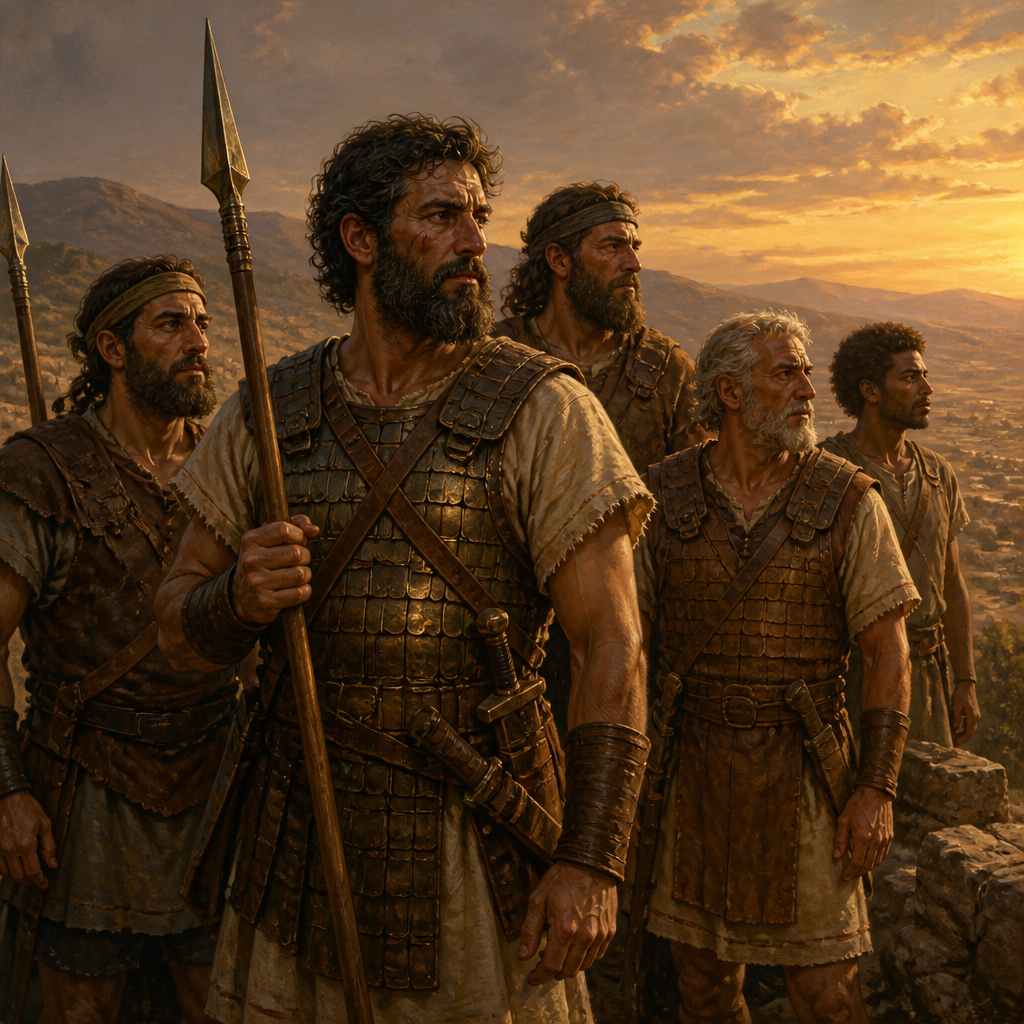
Ahiam, son of Sharar (or Sachar), was a prominent military figure during the 10th century BC. He served as one of the elite warriors known in the biblical record as the 'Thirty,' a specialized corps of fighting men who formed the core of King David’s military strength.
While biographical details regarding his personal life are sparse, Ahiam’s legacy is preserved in the official rosters of David’s mighty men. These lists, found in 2 Samuel and 1 Chronicles, serve as a testament to the military infrastructure that allowed David to expand his borders and secure the United Monarchy against various regional threats.
Background and Family
Ahiam appears in the biblical record specifically within the catalogues of David’s 'Mighty Men' (Gibborim). He is identified as the son of Sharar the Hararite in 2 Samuel 23:33, though the parallel account in 1 Chronicles 11:35 records the father's name as Sachar. This variation is common in ancient Hebrew transcriptions, where similar-looking consonants (such as resh and heth) could lead to spelling differences between manuscripts.
The designation 'Hararite' is significant, as it suggests Ahiam originated from the hill country of Judah or Ephraim. The term literally translates to 'mountaineer,' implying a background characterized by the rugged terrain of central Israel. This geographic context often produced hardy and resilient warriors, traits essential for the specialized mountain warfare and guerrilla tactics employed during the rise of the United Monarchy in the late 11th and early 10th centuries BC.
Major Life Events
The biblical text does not provide a narrative account of Ahiam’s individual battles or specific feats of strength. Instead, his life is defined by his inclusion in the 'Thirty' (Shaloshim). This group was an elite order of heroes who had distinguished themselves through extraordinary loyalty to David during his years as a fugitive from King Saul and his subsequent rise to the throne in Hebron.
As a member of this group, Ahiam would have been involved in the consolidation of the kingdom. This era (c. 1000 BC) was marked by constant conflict with the Philistines, Moabites, and Ammonites. Members of the Thirty typically served as high-ranking officers or special operations commanders, leading larger divisions of the Israelite army while reporting directly to David’s inner circle of commanders.
Relationship to Other Biblical Figures
Ahiam’s most significant relationship is his professional bond with King David. His name is listed alongside other legendary figures such as Uriah the Hittite and Eliam the son of Ahithophel. The fact that Ahiam is mentioned specifically in both 2 Samuel and 1 Chronicles highlights his enduring reputation; even when other minor figures were omitted from various historical summaries, Ahiam remained part of the foundational record of the kingdom’s military elite.
He is also linked to Shammah the Hararite (mentioned in 2 Samuel 23:33), who was one of the 'Three'—the highest-ranking tier above the Thirty. It is possible that Ahiam was related to Shammah or was part of a specific Hararite military contingent that gained prominence under David’s leadership.
Spiritual Significance
Theologically, Ahiam represents the 'unsung hero' within the biblical narrative. While he does not possess a personal story arc like David or Solomon, his presence in the Holy Scripture underscores the principle that the establishment of God’s kingdom involved the contributions of many dedicated individuals. In the context of the Old Testament, military service to the anointed king was often viewed as service to Yahweh Himself. Ahiam’s inclusion in the eternal record of the Bible serves as a reminder that devotion and reliability in one's vocation are recognized by God, even when the specific details of that service remain hidden from history.
Ahiam’s significance lies in his status as a pillar of the United Monarchy. His life reflects the transition of Israel from a loose confederation of tribes into a centralized, powerful nation. His inclusion in the lists of the 'Mighty Men' validates the historical reality of David's administration and the meritocratic nature of his military leadership.
From a canonical perspective, Ahiam demonstrates the diversity of the men who supported the Davidic line. As a 'Hararite,' he represents the rugged, devoted followers who helped secure the throne, fulfilling the promise of a stable kingdom through which the Messiah would eventually come.
Frequently Asked Questions
Who was Ahiam in the Bible?
Ahiam was one of King David's 'Mighty Men,' specifically a member of the elite group known as 'the Thirty.' He served as a high-ranking warrior during the United Monarchy.
What does the name Ahiam mean?
The name Ahiam (אֲחִיאָם) is Hebrew for 'mother's brother' or 'brother of the mother.'
Who was Ahiam’s father?
Ahiam is identified as the son of Sharar the Hararite in 2 Samuel 23:33, and as the son of Sachar the Hararite in 1 Chronicles 11:35.
What is a 'Hararite'?
A Hararite refers to a person from the hill country (mountaineer). It indicates Ahiam's geographical origin, likely within the rugged highlands of Israel.
What were the 'Mighty Men'?
The Mighty Men (Gibborim) were David's most courageous and loyal soldiers who performed extraordinary feats and held high positions in his military command.
Family & Relationships
Parents
 ShararFather2 Samuel 23:33Stated
 AhiamThis page
Connected Figures
Family
Father · 2 Samuel 23:33
A Hararite man during the United Monarchy whose son, Ahiam, served as one of King David’s elite thirty mighty men.
Categories
Mentions by Book
- 2 Samuel2
- 1 Chronicles2
Scripture References
All 4 indexed verses, in canonical order, from the Berean Standard Bible.
2 Samuel · 2
- 2 Samuel 23:11
And after him was Shammah son of Agee the Hararite. When the Philistines had banded together near a field full of lentils, Israel’s troops fled from them.
designation reference
- 2 Samuel 23:33
son of Shammah the Hararite, Ahiam son of Sharar the Hararite,
1 Chronicles · 2
- 1 Chronicles 11:34
the sons of Hashem the Gizonite, Jonathan son of Shagee the Hararite,
designation reference
- 1 Chronicles 11:35
Ahiam son of Sachar the Hararite, Eliphal son of Ur,