Sharar
Who was Sharar in the Bible?
A Hararite man during the United Monarchy whose son, Ahiam, served as one of King David’s elite thirty mighty men.
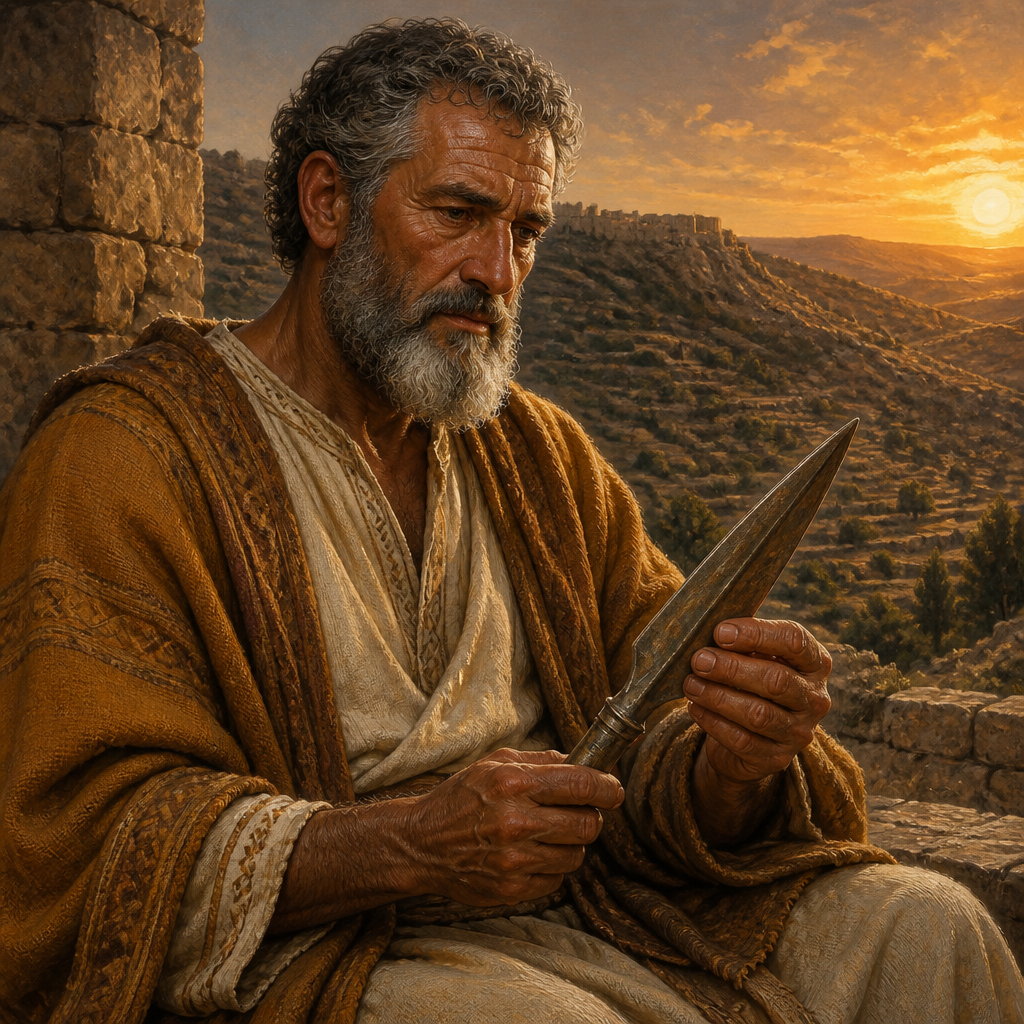
Sharar is a figure mentioned in the Old Testament during the transition of the United Monarchy under King David. His significance in the biblical narrative is derived primarily from his status as a father to one of David’s "Mighty Men," an elite group of warriors known for their exceptional bravery, loyalty, and martial prowess. While the biblical text provides little information regarding Sharar’s personal life or specific deeds, he is identified by his geographical or ancestral origin as a Hararite.
In the lists of David’s warriors found in the books of Samuel and Chronicles, Sharar is presented as a patriarchal head of a military family. His son, Ahiam, occupies a place of high honor within the military hierarchy of Israel.
Background and Family
Sharar lived during the United Monarchy, specifically during the reign of King David (c. 1010–970 BC). The biblical text identifies him as "the Hararite," a designation that typically refers to a resident of the hill country. The term Hararite is likely derived from the Hebrew word har, meaning "mountain" or "hill." This suggests that Sharar and his family hailed from the mountainous regions of Judah or Ephraim, areas known for producing rugged and resilient inhabitants who formed the backbone of David's early support base.
Sharar is specifically noted as the father of Ahiam. In the cultural context of the ancient Near East, the identity of a warrior was inextricably linked to his father’s name. By recording Sharar’s name alongside Ahiam’s, the biblical chroniclers emphasized the domestic stability and ancestral honor that underpinned the military structure of the kingdom.
Major Life Events
There are no specific biographical events or recorded actions attributed directly to Sharar in the Masoretic Text or the Septuagint. His presence in the scripture is restricted to the military rosters of King David. In 2 Samuel 23:33, he is listed as the father of Ahiam, who is named among the "Thirty" (the Shalishim). This group was a distinguished body of heroes who performed extraordinary feats of valor during the wars against the Philistines and other regional adversaries.
In the parallel account found in 1 Chronicles 11:35, the name appears with a slight orthographic variation as "Sachar." Textual scholars often view Sharar and Sachar as the same individual, noting that the Hebrew letters Resh (ר) and Kaph (כ) were frequently subject to scribal variation due to their similar appearance. Despite the lack of recorded personal narrative, his inclusion in these two major historical books underscores his role as a contributor to the strength of the Davidic dynasty through his progeny.
Relationship to Other Biblical Figures
Sharar’s primary relationship is with his son, Ahiam. Ahiam is categorized among the elite warriors who served under the command of Joab and ultimately under King David himself. Being the father of a "Mighty Man" implies that Sharar was a man of some standing, likely a landowner or a tribal elder whose family commitment to David was total.
Additionally, Sharar is mentioned in close proximity to Shammah the Hararite (2 Samuel 23:33). While some commentators suggest a familial link between Shammah and Sharar—perhaps as brothers or near kinsmen—the text simply groups them together by their shared Hararite origin. This grouping suggests a specific regional contingent within David’s army that held significant influence.
Spiritual Significance
From a theological perspective, the mention of Sharar in the genealogies of David’s warriors highlights the biblical theme of corporate identity and the importance of the family unit in fulfilling divine purposes. The establishment of the Davidic kingdom was seen as a fulfillment of God’s promises to Israel, and Sharar, through his son Ahiam, participated in the physical labor of securing that kingdom.
Sharar represents the "quiet" figures of the Bible—those whose names are preserved not for their own individual speeches or miracles, but for their contribution to the covenant community. His presence in the inspired record serves as a testament to the fact that the greatest heroes of the faith did not stand alone; they were supported by a lineage and a heritage that made their service possible.
Sharar’s significance lies in his role as a patriarchal figure within the military infrastructure of the early Israelite monarchy. As the father of Ahiam, he is linked to the 'Mighty Men' who defended the transition of power from the house of Saul to the house of David. His name preserved in two separate books (Samuel and Chronicles) indicates his recognition as a legitimate forefather of the heroes of Israel.
Theological reflection on Sharar often centers on the concept of 'legacy.' While he performed no recorded miracles, his legacy was the character and courage he instilled in his son, Ahiam, which contributed to the safety and expansion of the nation of Israel under God's anointed king.
Frequently Asked Questions
Who was Sharar in the Bible?
Sharar was a Hararite and the father of Ahiam, one of King David's elite warriors known as the 'Thirty Mighty Men'.
In which books of the Bible is Sharar mentioned?
He is mentioned in 2 Samuel 23:33 and 1 Chronicles 11:35 (where he is referred to as Sachar).
What does 'Hararite' mean?
It generally refers to a 'mountain dweller' or someone from the hill country, suggesting Sharar came from a rugged, mountainous region of Israel.
Did Sharar fight in David's army?
The Bible does not explicitly state that Sharar himself was a soldier, but it honors him as the father of Ahiam, who was a prominent warrior in David's service.
Is Sharar the same person as Sachar?
Yes, biblical scholars generally agree that 'Sharar' in 2 Samuel and 'Sachar' in 1 Chronicles are the same person, with the difference being a minor variation in spelling or transcription.
Family & Relationships
 ShararThis page
Children
 AhiamSon2 Samuel 23:33Stated
Connected Figures
Family
Son · 2 Samuel 23:33
Ahiam was a member of King David’s 'Thirty,' an elite group of warriors celebrated for their exceptional military service and loyalty during the United Monarchy.
United MonarchyFirst: 2 Samuel 23:114 versesWarrior / Military Officer
Categories
Mentions by Book
- 2 Samuel1
- 1 Chronicles1
Scripture References
All 2 indexed verses, in canonical order, from the Berean Standard Bible.
2 Samuel · 1
- 2 Samuel 23:33
son of Shammah the Hararite, Ahiam son of Sharar the Hararite,
1 Chronicles · 1
- 1 Chronicles 11:35Partial
Ahiam son of Sachar the Hararite, Eliphal son of Ur,
Cited as a key verse; added so References, Key Verses and Mentions by Book share one index.