Jonathan, Son of Kareah
Who was Jonathan, Son of Kareah, in the Bible?
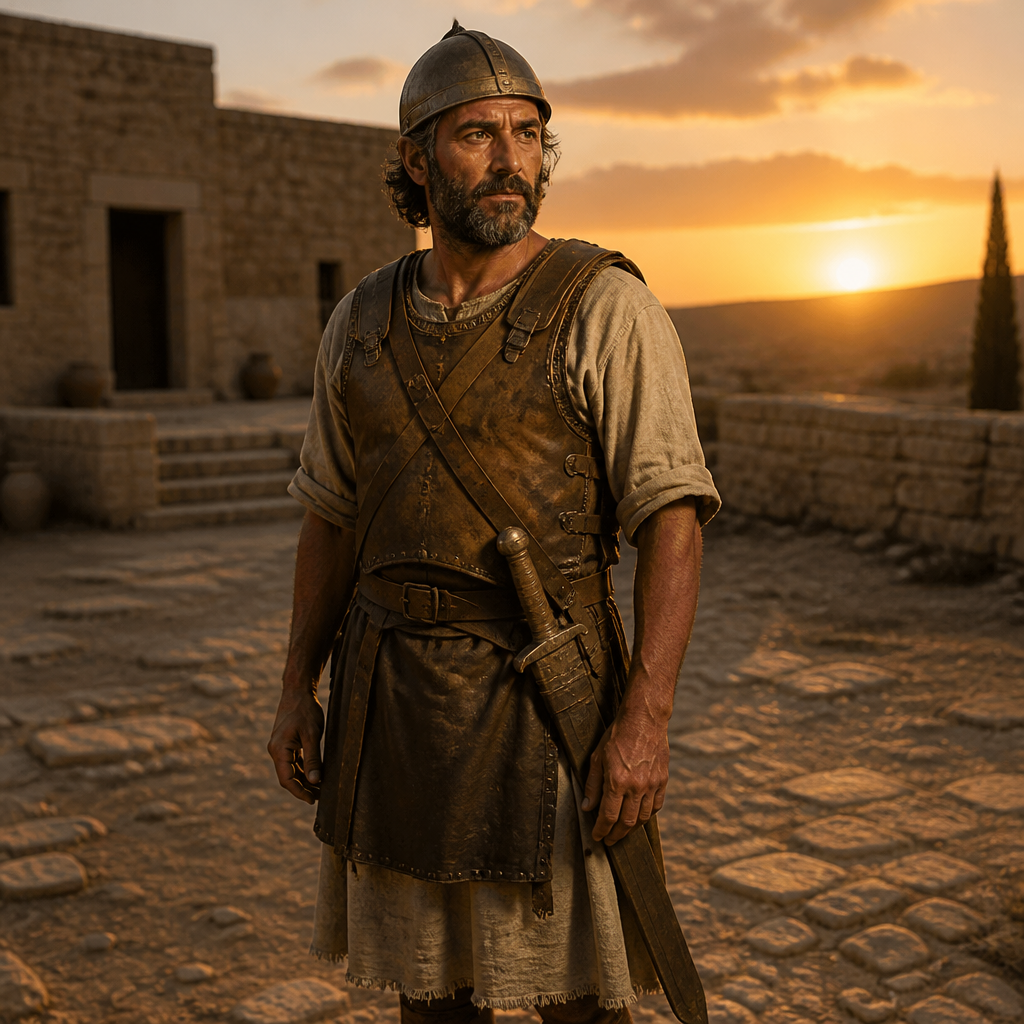
Jonathan, son of Kareah, was a Judean military officer who joined the governor Gedaliah at Mizpah after the fall of Jerusalem to the Babylonians.
This is one of 12 people named Jonathan in the Bible. See all 12 →
Jonathan, son of Kareah, appears in the biblical narrative during the immediate aftermath of the Babylonian destruction of Jerusalem in 586 BC. As a member of the Judean military forces that had been scattered in the fields following the collapse of the Davidic monarchy, Jonathan represents the surviving leadership tasked with navigating the fragile peace under Babylonian oversight.
He is specifically identified alongside his brother, Johanan, as one of the commanders who sought out Gedaliah, the newly appointed governor of Judah. His presence at Mizpah signals his initial willingness to cooperate with the remnant of the Judean people left in the land, though his individual actions are largely overshadowed in the text by the more prominent role played by his brother.
Background and Family
Jonathan is identified in the Masoretic Text of Jeremiah 40:8 as a son of Kareah. He is the brother of Johanan, a figure who plays a significant role in the events following the assassination of Gedaliah. The biblical record does not provide specific details regarding Jonathan’s tribal affiliation, though as a military commander in the service of the Judean state during the Divided Monarchy, he was almost certainly of the tribe of Judah or Benjamin. His family appears to have held considerable influence within the military hierarchy, as both brothers are listed among the primary leaders of the "forces that were in the fields" after the main Judean army had been routed by Nebuchadnezzar II.
Major Life Events
The single explicit mention of Jonathan occurs during a pivotal moment of transition for the survivors of the Babylonian siege. Following the appointment of Gedaliah by the King of Babylon to oversee the poor of the land and the remaining officials, the scattered military commanders emerged from hiding.
Jonathan, alongside his brother Johanan and other officers such as Ishmael son of Nethaniah and Seraiah son of Tanhumeth, traveled to Mizpah to pledge their support to Gedaliah.
they came to Gedaliah at Mizpah—Ishmael son of Nethaniah, Johanan and Jonathan the sons of Kareah, Seraiah son of Tanhumeth, the sons of Ephai the Netophathite, and Jezaniah son of the Maacathite—they and their men. (Jeremiah 40:8)
At this meeting, Gedaliah urged these commanders to settle in the land, serve the Babylonians, and gather wine, summer fruit, and oil. While the text later follows Johanan into a conflict with Ishmael and an eventual flight to Egypt, Jonathan is not mentioned by name in those subsequent events, suggesting he either remained in a subordinate role or met an unrecorded end during the ensuing turmoil.
Relationship to Other Biblical Figures
Jonathan’s primary relationship is with his brother, Johanan. In many manuscripts and ancient versions, such as the Septuagint, Jonathan’s name is omitted in Jeremiah 40:8, leaving Johanan as the sole son of Kareah mentioned. However, the Hebrew Masoretic Text preserves Jonathan as a distinct individual. His association with Gedaliah is also critical; he was among the first to recognize Gedaliah’s authority, participating in the brief period of stability before the governor’s assassination.
Spiritual Significance
Though his recorded history is brief, Jonathan’s inclusion in the list of commanders highlights the complexity of the "remnant" left in Judah. His presence at Mizpah reflects the fulfillment of Jeremiah’s prophecies regarding the survival of a small portion of the people. Spiritually, his life illustrates the precarious nature of the Judean community during the transition from the Divided Monarchy to the Exilic Period, caught between the desire for national restoration and the reality of divine judgment through foreign occupation.
Jonathan’s significance lies in his role as a military leader during the collapse of the Kingdom of Judah. He represents the remnant of the leadership that attempted to reconstruct a life for the Judeans under the difficult conditions of Babylonian vassalage. His inclusion in the genealogy of those who met with Gedaliah provides historical weight to the narrative of the post-destruction period.
Furthermore, his presence underscores the reality that even in the wake of total national defeat, administrative and military structures persisted. His submission to Gedaliah’s counsel—initially, at least—serves as a narrative foil to the later rebellion and treachery of Ishmael son of Nethaniah.
Frequently Asked Questions
Who was Jonathan’s father?
Jonathan was the son of Kareah, a detail he shares with his more famous brother, Johanan.
What happened to Jonathan after he met Gedaliah?
The Bible does not record Jonathan's fate after the meeting at Mizpah. While his brother Johanan continues in the narrative, Jonathan is not mentioned again.
Is this the same Jonathan who was David's friend?
No. This Jonathan lived centuries later, during the time of the prophet Jeremiah and the fall of Jerusalem to Babylon.
Where did Jonathan meet the governor Gedaliah?
Jonathan and the other military commanders met Gedaliah at Mizpah, which served as the administrative center after Jerusalem was destroyed.
Why is Jonathan not mentioned in some versions of the Bible?
In some Greek translations (the Septuagint), Jonathan’s name is omitted in Jeremiah 40:8, though he is clearly present in the Hebrew Masoretic Text.
Family & Relationships
Parents
 KareahFatherJeremiah 40:8Stated
 Jonathan, Son of KareahThis page
 Johanan son of KareahBrotherJeremiah 40:8–13Stated
Connected Figures
Family
Father · Jeremiah 40:8
A Judean figure whose sons served as high-ranking military commanders during the chaotic period following the fall of Jerusalem to the Babylonians.
Divided MonarchyFirst: 2 Kings 25:2314 versesPatriarch of a military family
Brother · Jeremiah 40:8–13
A military commander of Judah who attempted to protect the remnant of Jerusalem after the Babylonian conquest but eventually led the survivors to Egypt against prophetic counsel.
Divided MonarchyFirst: 2 Kings 25:2319 versesMilitary Commander
Categories
Mentions by Book
- Jeremiah6
Scripture References
All 6 indexed verses, in canonical order, from the Berean Standard Bible.
Jeremiah · 6
- Jeremiah 40:8
they came to Gedaliah at Mizpah—Ishmael son of Nethaniah, Johanan and Jonathan the sons of Kareah, Seraiah son of Tanhumeth, the sons of Ephai the Netophathite, and Jezaniah son of the Maacathite—they and their men.
- Jeremiah 40:9Partial
Gedaliah son of Ahikam, the son of Shaphan, swore an oath to them and their men, assuring them, “Do not be afraid to serve the Chaldeans. Live in the land and serve the king of Babylon, and it will go well with you.
Cited as evidence on a family card; added so References, Key Verses and Mentions by Book share one index.
- Jeremiah 40:10Partial
As for me, I will stay in Mizpah to represent you before the Chaldeans who come to us. As for you, gather wine grapes, summer fruit, and oil, place them in your storage jars, and live in the cities you have taken.”
Cited as evidence on a family card; added so References, Key Verses and Mentions by Book share one index.
- Jeremiah 40:11Partial
When all the Jews in Moab, Ammon, Edom, and all the other lands heard that the king of Babylon had left a remnant in Judah and had appointed Gedaliah son of Ahikam, the son of Shaphan, over them,
Cited as evidence on a family card; added so References, Key Verses and Mentions by Book share one index.
- Jeremiah 40:12Partial
they all returned from all the places to which they had been banished and came to the land of Judah, to Gedaliah at Mizpah. And they gathered an abundance of wine grapes and summer fruit.
Cited as evidence on a family card; added so References, Key Verses and Mentions by Book share one index.
- Jeremiah 40:13Partial
Meanwhile, Johanan son of Kareah and all the commanders of the armies in the field came to Gedaliah at Mizpah
Cited as evidence on a family card; added so References, Key Verses and Mentions by Book share one index.
Others Named Jonathan
Compare all 12 bearers →Jonathan, Son of Shammah2 Samuel 23:32
An elite Judean warrior and one of King David's 'Mighty Men' who achieved high military distinction during the United Monarchy.
Jonathan of the MalluchiNehemiah 12:14
A member of the house of Malluchi who served during the Post-Exilic Period during the reorganization of the priesthood under Nehemiah.
Jonathan, Priest to the Tribe of DanJudges 18:30
A Levite during the Period of the Judges who established a hereditary priesthood for an idolatrous shrine in the northern territory of Dan.
Jonathan, Son of Abiathar the Priest2 Samuel 15:27
A loyal priest of the tribe of Levi who served as a courier and intelligence agent for King David during the rebellions of Absalom and Adonijah.
Jonathan, Father of EbedEzra 8:6
A descendant of Adin during the Post-Exilic Period whose son, Ebed, led a group of fifty men back to Jerusalem under the leadership of Ezra.
Jonathan, Son of Uzziah1 Chronicles 27:25
An administrator during the United Monarchy who managed the royal agricultural and strategic storehouses for the Davidic kingdom.
Jonathan, Son of AsahelEzra 10:15
A Judean man during the post-exilic period who formally opposed Ezra’s specific procedure for dissolving foreign marriages.
Jonathan, Son of King Saul1 Samuel 13:2
A prince of Israel and renowned warrior of the Tribe of Benjamin, famous for his profound covenantal friendship with David and his loyalty to God over his own royal succession.
Jonathan, Son of ShemaiahNehemiah 12:35
A Levite of the post-exilic period and a descendant of Asaph whose lineage was instrumental in the musical and liturgical restoration of Jerusalem.
Jonathan, Son of Jada1 Chronicles 2:32
A descendant of Jerahmeel within the Tribe of Judah, known for his inclusion in the post-exilic genealogical records of the era of the conquest and the judges.
Jonathan the ScribeJeremiah 37:15
A government official in Jerusalem during the reign of King Zedekiah who converted his private residence into a dungeon for the prophet Jeremiah.