Ishmael son of Nethaniah
Who was Ishmael son of Nethaniah in the Bible?
A member of the Davidic royal family who assassinated Gedaliah, the Babylonian-appointed governor of Judah, following the fall of Jerusalem.
This is one of 6 people named Ishmael in the Bible. See all 6 →
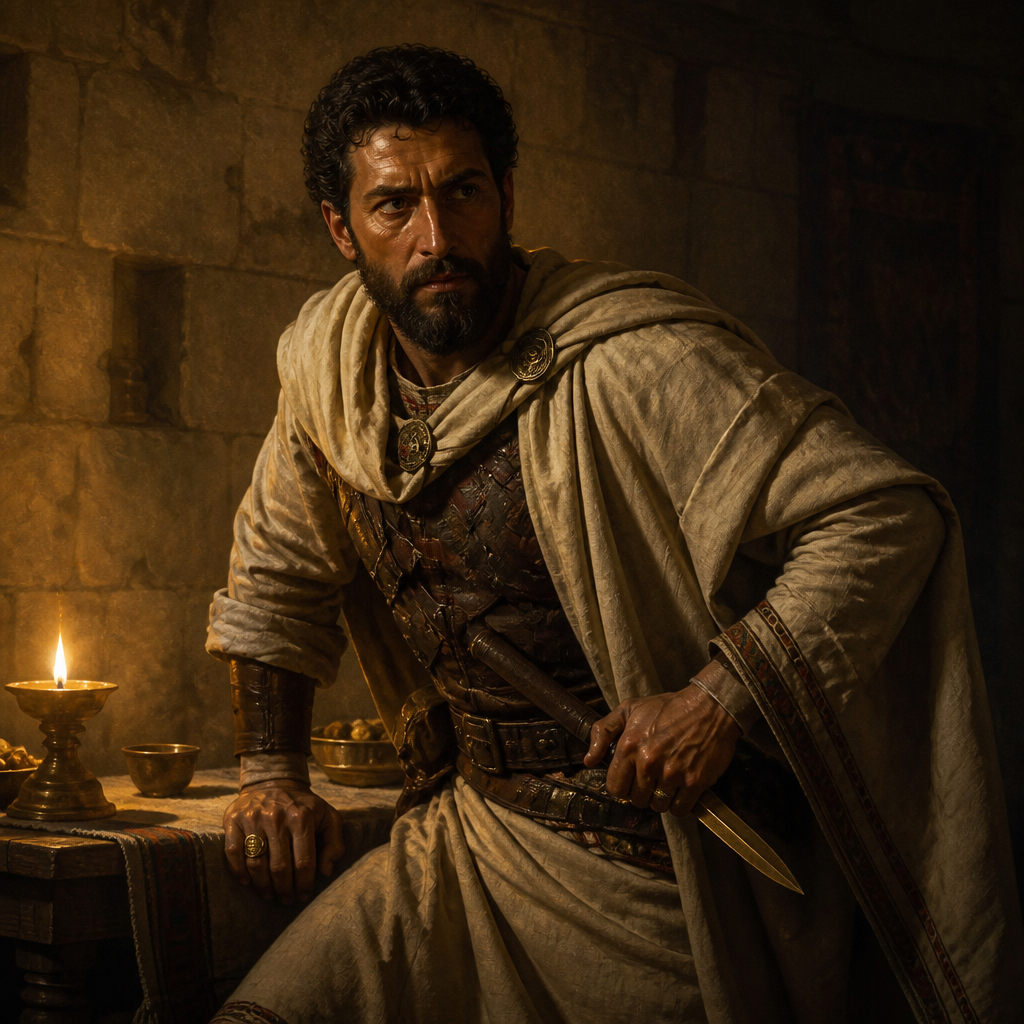
Ishmael son of Nethaniah was a Judean military commander and a member of the royal seed of David who emerged as a significant insurgent during the immediate aftermath of the Babylonian destruction of Jerusalem in 586 BC. His actions represent the final, violent gasp of internal political strife within the defunct Kingdom of Judah, as he sought to destabilize the fragile peace established by the Babylonian Empire.
Following the deportation of the Judean elite, Ishmael led a small band of conspirators to the administrative center at Mizpah. Motivated by a combination of royalist ambition and foreign instigation, he orchestrated a brutal massacre that claimed the life of the governor Gedaliah and decimated the remaining community. His brief reign of terror constitutes one of the darkest chapters in the history of the Divided Monarchy and the early Exilic transition.
Background and Family
Ishmael was the son of Nethaniah and the grandson of Elishama. Crucially, the biblical record in both 2 Kings 25:25 and Jeremiah 41:1 identifies him as being of the "royal family" (zera hamelakah). This pedigree is central to understanding his motivations. As a descendant of David, Ishmael likely viewed Gedaliah—a man from the noble family of Shaphan but not of the Davidic line—as a Babylonian puppet and a usurper.
At the time of his appearance in the narrative, Jerusalem had already fallen to Nebuchadnezzar II. The Temple had been destroyed, and the Davidic king, Zedekiah, had been blinded and taken to Babylon. Ishmael was one of several "commanders of the armies" who had remained in the open country during the siege and subsequently emerged to meet with the new administration at Mizpah.
Major Life Events
The Conspiracy at Mizpah
After the fall of Jerusalem, the Babylonians appointed Gedaliah son of Ahikam as governor over the remnant of Judah. Ishmael was among the military leaders who initially pledged loyalty to Gedaliah. However, intelligence reached other Judean leaders, specifically Johanan son of Kareah, that Ishmael had been dispatched by Baalis, the king of the Ammonites, to assassinate the governor. Despite explicit warnings from Johanan, Gedaliah dismissed the reports as slander.
In the seventh month (roughly two months after the city fell), Ishmael arrived at Mizpah with ten men. In a profound violation of the ancient Near Eastern laws of hospitality, Ishmael and his men attacked Gedaliah while eating a meal with him. They slaughtered the governor, the Judeans present, and even the Chaldean (Babylonian) soldiers stationed there.
The Massacre of the Pilgrims
The day after the assassination, while the deaths were still unknown to the public, eighty men from Shechem, Shiloh, and Samaria approached Mizpah. They were pilgrims dressed in mourning clothes, bringing grain offerings and incense to the ruined site of the Temple. Ishmael went out to meet them, deceptively weeping to lure them into the city. Once they were inside, he and his men slaughtered seventy of them, casting their bodies into a large cistern originally built by King Asa. He spared ten men only after they promised to reveal hidden stores of wheat, barley, oil, and honey.
Capture and Flight
Ishmael attempted to take the survivors of Mizpah—including the "king’s daughters" who had been left in Gedaliah's care—as captives to the land of the Ammonites. However, Johanan son of Kareah and other military officers pursued him. They caught up with Ishmael at the "great pool in Gibeon." When the captives saw Johanan’s forces, they defected back to the Judean side. Realizing he was outnumbered, Ishmael fled with eight of his men to the Ammonites, disappearing from the biblical record.
Relationship to Other Biblical Figures
Ishmael’s primary foil is Gedaliah son of Ahikam. Gedaliah represents a policy of submission to Babylon as a means of survival, while Ishmael represents a violent, reactionary nationalism. His relationship with Johanan son of Kareah is one of direct antagonism; Johanan correctly identifies Ishmael’s treachery and ultimately thwarts his attempt to kidnap the remnant of Judah. Furthermore, his alliance with Baalis, king of the Ammonites, suggests that Ishmael was willing to act as a mercenary for foreign interests to satisfy his own political grievances.
Spiritual Significance
The story of Ishmael son of Nethaniah serves as a stark illustration of the internal rot that led to Judah's downfall. Even after the judgment of the Exile had begun, the spirit of factionalism and political violence persisted. Ishmael’s actions were catastrophic for the remaining Judeans; the fear of Babylonian reprisal for his assassination of Gedaliah led the survivors to flee to Egypt against the prophetic counsel of Jeremiah.
In Jewish tradition, the assassination of Gedaliah by Ishmael is commemorated by the Fast of Gedaliah. Theologically, Ishmael embodies the tragic irony of a member of the "royal seed" who, instead of protecting his people, becomes their predator, scattering the very remnant God had promised to preserve.
Ishmael son of Nethaniah serves as the final antagonist of the Divided Monarchy period. His assassination of Gedaliah is the catalyst that ended the brief period of Babylonian-sponsored stability in Judah, forcing the remaining Jews to flee to Egypt in fear. This event effectively completed the depopulation of the land, fulfilling the prophetic warnings of total desolation.
Theologically, Ishmael's narrative emphasizes that heritage (being of the 'royal seed') does not equate to righteousness. His treachery stands in contrast to the humble submission required by God through the prophet Jeremiah. His actions are recorded not as a heroic resistance against Babylon, but as a criminal betrayal of his own people and the peace of the land.
Frequently Asked Questions
Why did Ishmael son of Nethaniah kill Gedaliah?
The Bible suggests two primary reasons: first, he was of the royal Davidic line and likely resented Gedaliah (who was not royalty) being appointed governor by Babylon. Second, he was supported by Baalis, king of the Ammonites, who sought to further destabilize Judah.
What happened to Ishmael after the assassination?
After his attempt to take captives to Ammon was thwarted by Johanan son of Kareah at Gibeon, Ishmael escaped with eight men and fled to the territory of the Ammonites. The Bible provides no further record of his life or death.
Who were the eighty men Ishmael killed at Mizpah?
They were pilgrims from northern Israelite cities (Shechem, Shiloh, and Samaria) who were traveling to the ruins of the Temple in Jerusalem to offer sacrifices. Ishmael deceptively lured them into Mizpah before slaughtering most of them.
What was the 'cistern of Asa' mentioned in the story?
It was a large reservoir built centuries earlier by King Asa of Judah during his war with King Baasha of Israel. Ishmael used this historic structure as a mass grave for the pilgrims he murdered.
Family & Relationships
Parents
 Nethaniah, Father of IshmaelFather2 Kings 25:23Stated
 Ishmael son of NethaniahThis page
Extended family
 Elishama, Ancestor of IshmaelGrandfather2 Kings 25:25Stated
Connected Figures
Family
Father · 2 Kings 25:23
A member of the royal house of Judah and the father of Ishmael, who assassinated the Babylonian-appointed governor Gedaliah after the fall of Jerusalem.
Grandfather · 2 Kings 25:25
A member of the royal family of Judah during the Divided Monarchy, known as the grandfather of Ishmael son of Nethaniah.
Divided MonarchyFirst: 2 Kings 25:252 versesRoyal Official / Prince
Categories
Mentions by Book
- 2 Kings2
- Jeremiah19
Scripture References
All 21 indexed verses, in canonical order, from the Berean Standard Bible.
2 Kings · 2
- 2 Kings 25:23
When all the commanders of the armies and their men heard that the king of Babylon had appointed Gedaliah as governor, they came to Gedaliah at Mizpah—Ishmael son of Nethaniah, Johanan son of Kareah, Seraiah son of Tanhumeth the Netophathite, and Jaazaniah son of the Maacathite, as well as their men.
- 2 Kings 25:25
In the seventh month, however, Ishmael son of Nethaniah, the son of Elishama, who was a member of the royal family, came with ten men and struck down and killed Gedaliah, along with the Judeans and Chaldeans who were with him at Mizpah.
Jeremiah · 19
- Jeremiah 40:8
they came to Gedaliah at Mizpah—Ishmael son of Nethaniah, Johanan and Jonathan the sons of Kareah, Seraiah son of Tanhumeth, the sons of Ephai the Netophathite, and Jezaniah son of the Maacathite—they and their men.
- Jeremiah 40:14
and said to him, “Are you aware that Baalis king of the Ammonites has sent Ishmael son of Nethaniah to take your life?” But Gedaliah son of Ahikam did not believe them.
- Jeremiah 40:15
Then Johanan son of Kareah spoke privately to Gedaliah at Mizpah. “Let me go and kill Ishmael son of Nethaniah,” he said. “No one will know it. Why should he take your life and scatter all the people of Judah who have gathered to you, so that the remnant of Judah would perish?”
- Jeremiah 40:16
But Gedaliah son of Ahikam said to Johanan son of Kareah, “Do not do such a thing! What you are saying about Ishmael is a lie.”
- Jeremiah 41:1
In the seventh month, Ishmael son of Nethaniah, the son of Elishama, who was a member of the royal family and one of the king’s chief officers, came with ten men to Gedaliah son of Ahikam at Mizpah, and they ate a meal together there.
- Jeremiah 41:2
Then Ishmael son of Nethaniah and the ten men who were with him got up and struck down Gedaliah son of Ahikam, the son of Shaphan, with the sword, killing the one whom the king of Babylon had appointed to govern the land.
- Jeremiah 41:3
Ishmael also killed all the Jews who were with Gedaliah at Mizpah, as well as the Chaldean soldiers who were there.
- Jeremiah 41:6
And Ishmael son of Nethaniah went out from Mizpah to meet them, weeping as he went. When Ishmael encountered the men, he said, “Come to Gedaliah son of Ahikam.”
- Jeremiah 41:7
And when they came into the city, Ishmael son of Nethaniah and the men with him slaughtered them and threw them into a cistern.
- Jeremiah 41:8
But ten of the men among them said to Ishmael, “Do not kill us, for we have hidden treasure in the field—wheat, barley, oil, and honey!” So he refrained from killing them with the others.
- Jeremiah 41:9Partial
Now the cistern into which Ishmael had thrown all the bodies of the men he had struck down along with Gedaliah was a large one that King Asa had made for fear of Baasha king of Israel. Ishmael son of Nethaniah filled it with the slain.
- Jeremiah 41:10Partial
Then Ishmael took captive all the remnant of the people of Mizpah—the daughters of the king along with all the others who remained in Mizpah—over whom Nebuzaradan captain of the guard had appointed Gedaliah son of Ahikam. Ishmael son of Nethaniah took them captive and set off to cross over to the Ammonites.
- Jeremiah 41:11
When Johanan son of Kareah and all the commanders of the armies with him heard of all the crimes that Ishmael son of Nethaniah had committed,
- Jeremiah 41:12
they took all their men and went to fight Ishmael son of Nethaniah. And they found him near the great pool in Gibeon.
- Jeremiah 41:13
When all the people with Ishmael saw Johanan son of Kareah and all the commanders of the army with him, they rejoiced,
- Jeremiah 41:14
and all the people whom Ishmael had taken captive at Mizpah turned and went over to Johanan son of Kareah.
- Jeremiah 41:15
But Ishmael son of Nethaniah and eight of his men escaped from Johanan and went to the Ammonites.
- Jeremiah 41:16
Then Johanan son of Kareah and all the commanders of the armies with him took the whole remnant of the people from Mizpah whom he had recovered from Ishmael son of Nethaniah after Ishmael had killed Gedaliah son of Ahikam: the soldiers, women, children, and court officials he had brought back from Gibeon.
- Jeremiah 41:18
to escape the Chaldeans. For they were afraid of the Chaldeans because Ishmael son of Nethaniah had struck down Gedaliah son of Ahikam, whom the king of Babylon had appointed over the land.
Others Named Ishmael son of Nethaniah
Compare all 6 bearers →Ishmael, Son of AbrahamGenesis 16:11
Ishmael was the firstborn son of Abraham through Hagar, the forefather of the Ishmaelite tribes, and a patriarch whom God promised would father twelve princes.
Ishmael, father of Zebadiah2 Chronicles 19:11
A Judean man of the Divided Monarchy whose son, Zebadiah, served as the royal administrator under King Jehoshaphat.
Ishmael son of Jehohanan2 Chronicles 23:1
A military commander and son of Jehohanan who joined the high priest Jehoiada in the successful coup to overthrow Queen Athaliah and crown Joash king of Judah.
Ishmael, Son of Azel1 Chronicles 8:38
A Benjamite descendant of King Saul and one of the six sons of Azel, listed in the genealogical records of the Divided Monarchy.
Ishmael, descendant of PashhurEzra 10:22
A priest and descendant of Pashhur who was among those who married foreign women and later pledged to separate from them during the reforms of Ezra.