Meshullam, Signer of the Covenant
A Jewish leader during the Post-Exilic period who joined Nehemiah in signing the firm covenant to follow God's Law.
Meshullam was a prominent communal leader in Jerusalem during the mid-5th century BC, specifically during the governance of Nehemiah. He is recognized in the biblical record as one of the chief men or heads of the people who stood in representation of the Jewish community following the return from Babylonian captivity. His primary contribution to the scriptural narrative is his participation in a solemn public ceremony of national repentance and dedication.
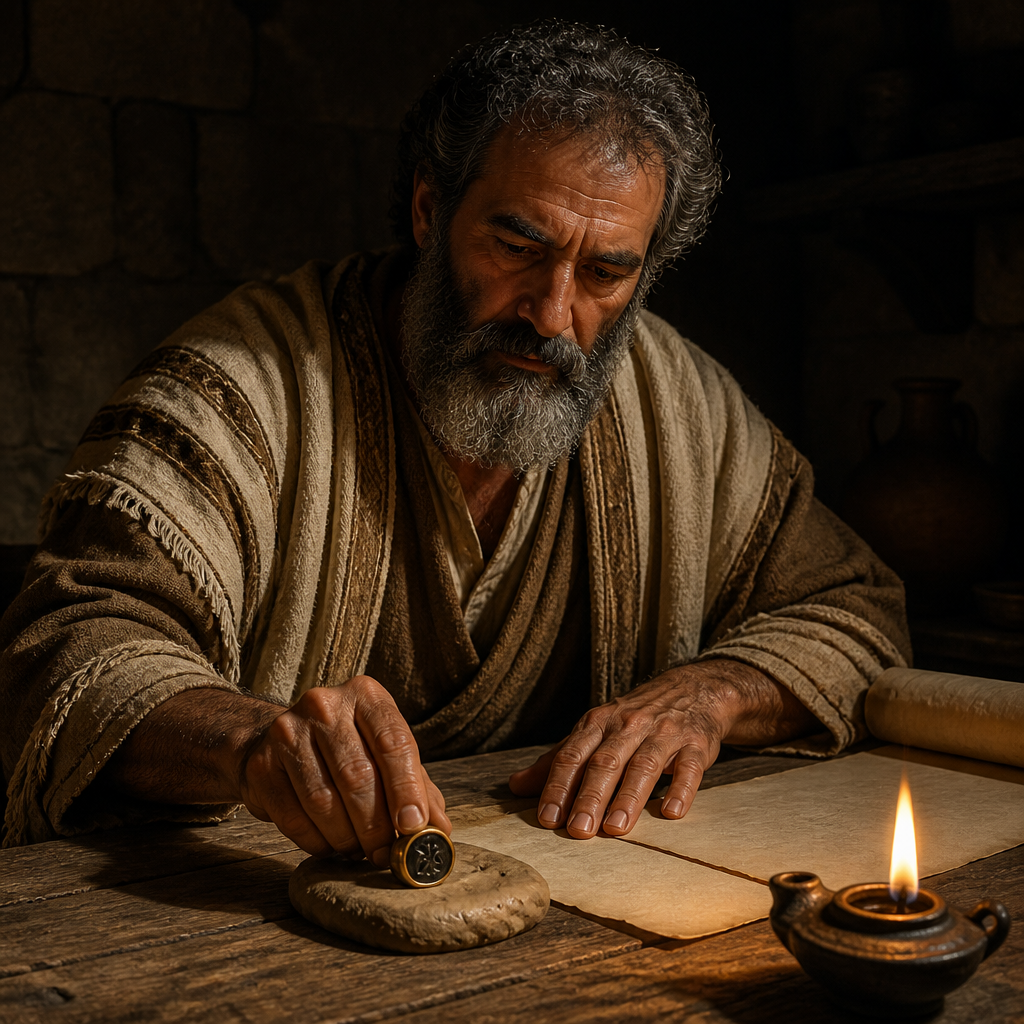
As a representative of his family or district, Meshullam was a signatory to the 'sure covenant' (or 'binding agreement') recorded in the book of Nehemiah. This document served as a formal commitment by the post-exilic community to separate themselves from the surrounding pagan nations and to strictly adhere to the Mosaic Law, particularly regarding the Sabbath and the maintenance of the Temple.
Background and Family
Meshullam lived during the era of the Exile and Return, a pivotal moment in Israelite history when the Jewish people were transitioning from decades of Babylonian displacement to the re-establishment of their religious and social identity in Judea. While the biblical text in Nehemiah 10:20 lists him among the 'heads of the people,' it does not provide his specific tribal affiliation or his immediate lineage. He appears in the list alongside other leaders such as Magpiash and Hezir, suggesting he held a position of significant civic or ancestral authority within the reorganized community of Jerusalem.
Major Life Events
The defining event of Meshullam’s life as recorded in Scripture is the signing of the written covenant during the days of Nehemiah the governor and Ezra the scribe. Following the completion of the Jerusalem walls and a period of intensive public reading of the Law, the people of Israel entered into a time of fasting and confession.
This culminated in the drafting of a document that pledged the nation to divine service. Meshullam is listed as one of the leaders who set their seal to this document. By doing so, he publicly committed his household to several specific reforms: avoiding intermarriage with local populations, observing the Sabbath and the sabbatical year, and providing the necessary financial support (the temple tax and wood offerings) for the continued operation of the house of God.
Relationship to Other Biblical Figures
Meshullam acted in concert with the highest authorities of his day. His name appears in the formal registry of those who supported the administrative and spiritual reforms of Nehemiah. Although the text does not record a personal dialogue between Meshullam and the governor, his inclusion in the list of signatories indicates he was a member of the influential circle of leaders who facilitated the transition of the returnees into a structured, law-abiding society.
Spiritual Significance
The spiritual significance of Meshullam lies in his role as a witness and a guarantor. In the post-exilic context, the act of signing a covenant was a move toward institutionalizing the spiritual renewal that had begun under Ezra. Meshullam represents the collective will of the lay leadership to move beyond the failures that led to the initial exile. His presence in the text serves as a historical marker of the broad support for Nehemiah’s reforms, demonstrating that the commitment to God’s Law was not merely the decree of a single governor but the shared vow of the community’s representative heads.
Spiritual Significance
Meshullam serves as a representative of the lay leadership that supported the restoration of Judea. His theological importance is found in his participation in the 'seal' of the covenant, which symbolized a formal, legal, and spiritual return to the Mosaic Law. In the book of Nehemiah, his name contributes to the historical authenticity of the restoration period, showing that the rebuilding of the community required the cooperation of specific, named individuals who were willing to take public responsibility for the nation's spiritual health.
Frequently Asked Questions
What did Meshullam sign in Nehemiah 10?
He signed a formal, written covenant (a binding agreement) pledging that the people would walk in God's Law, refrain from marrying foreign women, and support the Temple services.
Was Meshullam a priest or a Levite?
In Nehemiah 10:20, Meshullam is listed under the category of the 'heads of the people,' which generally refers to lay leaders or chiefs of households, rather than the priests or Levites who are listed in the preceding verses.
In what year did Meshullam live?
He lived during the time of Nehemiah's governorship, which is generally dated to the mid-5th century BC, around 444 BC.
What does the name Meshullam mean?
The name is derived from the Hebrew root 'shalam,' meaning 'devoted,' 'recompensed,' or 'at peace.'
Why is Meshullam mentioned in only one verse?
He is mentioned as part of a formal list of signatories. In the genealogical and administrative records of Nehemiah, being named in such a document was a significant mark of status and faithfulness to the restoration project.
Connected Figures
Nehemiah
Governor and leader of the covenant signing
Magpiash
Peer leader mentioned alongside him in Nehemiah 10:20
Hezir
Peer leader mentioned alongside him in Nehemiah 10:20
Categories
Mentions by Book
- Nehemiah1
Others Named Meshullam
Meshullam, Grandfather of Shaphan2 Kings 22:3
A man of the Divided Monarchy period known solely as the grandfather of Shaphan the scribe during King Josiah's reign.
Meshullam, son of JoedNehemiah 11:7
A Benjamite whose descendants settled in Jerusalem during the Post-Exilic period after the return from Babylon.
Meshullam, Priest of the ReturnNehemiah 10:7
A priest during the Post-Exilic period who signed the covenant with Nehemiah and participated in the dedication of the rebuilt walls of Jerusalem.
Meshullam, Levite of the Return1 Chronicles 9:12
A Levite priest during the Post-Exilic period who served in the priestly lineage of Immer, contributing to the re-establishment of Jerusalem.
Meshullam, Son of Abihail1 Chronicles 5:13
A prominent head of a household within the tribe of Gad who lived during the era of the Divided Monarchy.
Meshullam, Son of Shephatiah1 Chronicles 9:8
A descendant of Reuel and son of Shephatiah who was among the heads of households to settle in Jerusalem following the return from the Babylonian exile.
Meshullam, Son of Zerubbabel1 Chronicles 3:19
A member of the Davidic line and the eldest son of Zerubbabel, the governor of Judah during the restoration period.
Meshullam, Levite of the Divided Monarchy2 Chronicles 34:12
A Levite of the Kohathite family who served as a faithful overseer during King Josiah’s restoration of the Temple in Jerusalem.
Meshullam, Son of Hodaviah1 Chronicles 9:7
A Benjamite who returned from the Babylonian exile and settled in Jerusalem as a head of a household.
Meshullam, Leader of the ReturnEzra 8:16
A prominent Jewish leader summoned by Ezra at the Ahava Canal to assist in recruiting Levites for the return to Jerusalem in 458 BC.
Meshullam, son of BesodeiahNehemiah 3:6
A Jewish returnee who collaborated with Joiada to repair the Old Gate of Jerusalem's wall during the governorship of Nehemiah.
Meshullam, Son of BaniEzra 10:29
A descendant of Bani who lived during the return from the Babylonian exile and was recorded for having taken a foreign wife.
Meshullam, Head of the House of GinnethonNehemiah 12:16
A Jewish priest and head of the ancestral house of Ginnethon during the post-exilic high priesthood of Joiakim.
Meshullam, Son of Elpaal1 Chronicles 8:17
A member of the tribe of Benjamin and son of Elpaal mentioned within the genealogical records of the Divided Monarchy.
Meshullam, Supporter of Ezra’s AssemblyNehemiah 8:4
A prominent Jewish leader who stood at the left hand of Ezra the scribe during the public reading of the Law in Jerusalem.
Meshullam, Gatekeeper of the ReturnNehemiah 12:25
A Levite gatekeeper during the post-exilic period who was responsible for guarding the storerooms at the gates of Jerusalem.
Meshullam, Son of BerechiahNehemiah 3:4
A prominent wall-rebuilder under Nehemiah who maintained a complex, controversial alliance with the Ammonite official Tobiah.
Meshullam, Priest of Ezra's LineageNehemiah 12:13
A prominent post-exilic priest and head of the ancestral house of Ezra during the high priesthood of Joiakim.
Meshullam, Supporter of Jonathan son of AsahelEzra 10:15
A man who supported the opposition led by Jonathan son of Asahel regarding Ezra's plan for investigating foreign marriages in the post-exilic community.