Meshullam, Son of Shephatiah
Who was Meshullam, Son of Shephatiah, in the Bible?
A descendant of Reuel and son of Shephatiah who was among the heads of households to settle in Jerusalem following the return from the Babylonian exile.
This is one of 20 people named Meshullam in the Bible. See all 20 →
Meshullam, son of Shephatiah, is a figure mentioned in the genealogical records of 1 Chronicles during the pivotal transition from the Babylonian captivity to the resettlement of the promised land. As a descendant of Reuel and Ibnijah, his lineage represents the continuity of the covenant people during the Post-Exilic period. He is specifically identified as one of the individuals who resided in Jerusalem, a city that required intentional repopulation and fortification after decades of desolation.
While the biblical record concerning this specific Meshullam is concise, his inclusion in the chronicler's list signifies his status as a head of a household. These genealogies served a vital administrative and spiritual purpose: they validated the identity of the returnees and ensured that the tribal heritages and priestly duties were correctly assigned in the restored community. Meshullam's presence in Jerusalem underscores the commitment of his family line to the restoration of the holy city.
Background and Family
The genealogical record of Meshullam, son of Shephatiah, is preserved in 1 Chronicles 9, a chapter dedicated to listing the inhabitants of Jerusalem after the return from the Babylonian exile. According to 1 Chronicles 9:8, Meshullam was the son of Shephatiah, who was the son of Reuel, who was the son of Ibnijah. This specific lineage distinguishes him within the complex genealogical tapestry of the restoration era.
The mention of Reuel in his ancestry suggests a connection to the broader family structures that survived the displacement of the exile. Although his specific tribe is not explicitly stated in the immediate verse, his residence in Jerusalem alongside members of Judah and Benjamin indicates he was part of the core group of returnees dedicated to the rebuilding of the Jewish social and religious infrastructure.
Major Life Events
The primary event associated with Meshullam is the resettlement of Jerusalem. Following the decree of Cyrus the Great in 538 BC, waves of Jewish exiles returned to Judea. However, Jerusalem remained largely in ruins and sparsely populated for many years. The chronicler notes that Meshullam was among those who took up residence in the city.
Living in Jerusalem during this era was not merely a matter of convenience; it was a significant act of civic and religious devotion. The city faced constant threats from surrounding hostile groups and required a dedicated population to maintain its defenses and support the newly reconstructed Temple. Meshullam’s inclusion in this list identifies him as a leader or a representative of a family unit that played a foundational role in the post-exilic community.
Relationship to Other Biblical Figures
Meshullam is defined by his immediate kin: his father Shephatiah and his ancestors Reuel and Ibnijah. He is listed alongside other heads of houses such as Ibneiah son of Jeroham and Elah son of Uzzi. Together, these men formed the leadership cadre of the residents of Jerusalem. Their names are recorded to provide a legal and historical witness to the legitimate occupation of the land by the descendants of the original tribes.
Spiritual Significance
The spiritual significance of Meshullam lies in the concept of the 'Remnant.' The Bible emphasizes that despite the judgment of the exile, God preserved a specific group of people to fulfill His promises to David and the patriarchs. Meshullam represents the tangible fulfillment of these promises. By returning to Jerusalem and establishing his household there, he participated in the physical restoration that mirrored the spiritual renewal of the people. His name, which can be translated as 'allied,' 'devoted,' or 'recompensed,' reflects the era of restoration in which he lived—a time when the broken relationship between Israel and God was being mended through the return to the land.
Meshullam, son of Shephatiah, serves as a scriptural testament to the preservation of the Jewish lineage during the Babylonian captivity. His presence in the post-exilic records of 1 Chronicles 9 highlights the importance of individual families in the collective effort to rebuild Jerusalem and maintain the covenant identity under Persian rule. The meticulous recording of his ancestry (Shephatiah, Reuel, Ibnijah) demonstrates the biblical priority of historical continuity and the legitimacy of the returnees as the true heirs of the pre-exilic traditions.
Frequently Asked Questions
Who was the father of this specific Meshullam?
This Meshullam was the son of Shephatiah, as recorded in 1 Chronicles 9:8.
During what time period did Meshullam, son of Shephatiah, live?
He lived during the Post-Exilic period, the era when the Jewish people returned from Babylon to resettle Jerusalem (c. 6th–5th century BC).
Where did Meshullam live?
He was among the heads of households who lived in the city of Jerusalem following the return from exile.
What is the primary biblical source for this Meshullam?
The only mention of this specific individual is found in the genealogical records of 1 Chronicles 9:8.
Who were Meshullam's ancestors?
His lineage is traced through his father Shephatiah to his grandfather Reuel and his great-grandfather Ibnijah.
Family & Relationships
Parents
 Shephatiah, child of ReuelFather1 Chronicles 9:8Stated
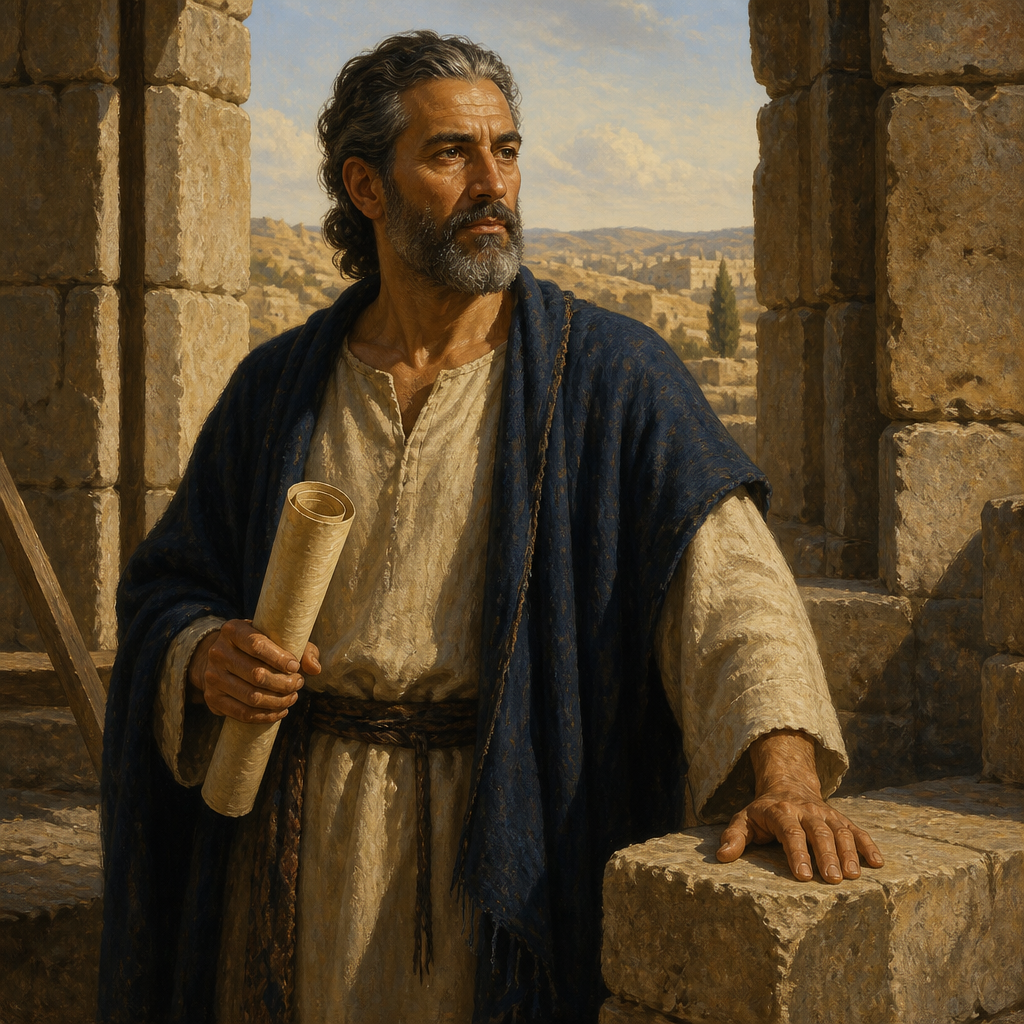 Meshullam, Son of ShephatiahThis page
Extended family
 IbnijahGreat-Grandfather1 Chronicles 9:8Stated
Connected Figures
Family
Father · 1 Chronicles 9:8
Shephatiah was a Benjamite of the Post-Exilic period whose lineage was recorded among those resettling Jerusalem after the Babylonian captivity.
Great-Grandfather · 1 Chronicles 9:8
A Benjaminite ancestor whose descendants were among the first to resettle Jerusalem following the Babylonian Captivity.
Exile and ReturnFirst: 1 Chronicles 9:81 versesPatriarchal head of a familyBenjamin
Categories
Mentions by Book
- 1 Chronicles1
Scripture References
All 1 indexed verse, in canonical order, from the Berean Standard Bible.
1 Chronicles · 1
- 1 Chronicles 9:8
Ibneiah son of Jeroham; Elah son of Uzzi, the son of Michri; Meshullam son of Shephatiah, the son of Reuel, the son of Ibnijah;
Others Named Meshullam
Compare all 20 bearers →Meshullam, Signer of the CovenantNehemiah 10:20
A Jewish leader during the Post-Exilic period who joined Nehemiah in signing the firm covenant to follow God's Law.
Meshullam, Grandfather of Shaphan2 Kings 22:3
A man of the Divided Monarchy period known solely as the grandfather of Shaphan the scribe during King Josiah's reign.
Meshullam, son of JoedNehemiah 11:7
A Benjamite whose descendants settled in Jerusalem during the Post-Exilic period after the return from Babylon.
Meshullam, Priest of the ReturnNehemiah 10:7
A priest during the Post-Exilic period who signed the covenant with Nehemiah and participated in the dedication of the rebuilt walls of Jerusalem.
Meshullam, Levite of the Return1 Chronicles 9:12
A Levite priest during the Post-Exilic period who served in the priestly lineage of Immer, contributing to the re-establishment of Jerusalem.
Meshullam, Son of Abihail1 Chronicles 5:13
A prominent head of a household within the tribe of Gad who lived during the era of the Divided Monarchy.
Meshullam, Son of Zerubbabel1 Chronicles 3:19
A member of the Davidic line and the eldest son of Zerubbabel, the governor of Judah during the restoration period.
Meshullam, Levite of the Divided Monarchy2 Chronicles 34:12
A Levite of the Kohathite family who served as a faithful overseer during King Josiah’s restoration of the Temple in Jerusalem.
Meshullam, Son of Hodaviah1 Chronicles 9:7
A Benjamite who returned from the Babylonian exile and settled in Jerusalem as a head of a household.
Meshullam, Leader of the ReturnEzra 8:16
A prominent Jewish leader summoned by Ezra at the Ahava Canal to assist in recruiting Levites for the return to Jerusalem in 458 BC.
Meshullam, son of BesodeiahNehemiah 3:6
A Jewish returnee who collaborated with Jehoiada to repair the Old Gate of Jerusalem's wall during the governorship of Nehemiah.
Meshullam, Son of BaniEzra 10:29
A descendant of Bani who lived during the return from the Babylonian exile and was recorded for having taken a foreign wife.
Meshullam, Head of the House of GinnethonNehemiah 12:16
A Jewish priest and head of the ancestral house of Ginnethon during the post-exilic high priesthood of Joiakim.
Meshullam, Son of Elpaal1 Chronicles 8:17
A member of the tribe of Benjamin and son of Elpaal mentioned within the genealogical records of the Divided Monarchy.
Meshullam, Supporter of Ezra’s AssemblyNehemiah 8:4
A prominent Jewish leader who stood at the left hand of Ezra the scribe during the public reading of the Law in Jerusalem.
Meshullam, Gatekeeper of the ReturnNehemiah 12:25
A Levite gatekeeper during the post-exilic period who was responsible for guarding the storerooms at the gates of Jerusalem.
Meshullam, Son of BerechiahNehemiah 3:4
A prominent wall-rebuilder under Nehemiah who maintained a complex, controversial alliance with the Ammonite official Tobiah.
Meshullam, Priest of Ezra's LineageNehemiah 12:13
A prominent post-exilic priest and head of the ancestral house of Ezra during the high priesthood of Joiakim.
Meshullam, Supporter of Jonathan son of AsahelEzra 10:15
A man who supported the opposition led by Jonathan son of Asahel regarding Ezra's plan for investigating foreign marriages in the post-exilic community.