Meshullam, son of Besodeiah
Who was Meshullam, son of Besodeiah, in the Bible?
A Jewish returnee who collaborated with Jehoiada to repair the Old Gate of Jerusalem's wall during the governorship of Nehemiah.
This is one of 20 people named Meshullam in the Bible. See all 20 →
Meshullam, son of Besodeiah, was a Jewish man who participated in the restoration of Jerusalem's fortifications in the 5th century BC. He appears in the biblical record specifically during the period of the Return from Exile, serving as a dedicated laborer under the leadership of Nehemiah. His primary contribution was the reconstruction of one of the city's most vital entry points.
Working alongside Jehoiada son of Paseah, Meshullam focused his efforts on the Jeshanah Gate, also known as the Old Gate. This project was part of a larger, coordinated effort to secure the city of Jerusalem against regional adversaries. His inclusion in the sacred text serves as a record of the collaborative spirit required to rebuild the Jewish commonwealth following the Babylonian captivity.
Background and Family
Meshullam was the son of Besodeiah. While his specific tribal affiliation is not explicitly stated in the text of Nehemiah, he was clearly part of the remnant that had returned to Judah from Babylon. The name Meshullam, meaning "devoted," "repaid," or "peaceable," was a common name among the post-exilic community, signaling a period of restoration and covenant renewal. His father, Besodeiah, is mentioned only in relation to Meshullam's labor, providing a genealogical marker that distinguishes this Meshullam from others of the same name living in Jerusalem at the time.
Major Life Events
The defining event of Meshullam’s life, as recorded in Scripture, was the repair of the Jeshanah Gate (Nehemiah 3:6). During the twentieth year of King Artaxerxes I of Persia (c. 444 BC), Nehemiah arrived in Jerusalem with a commission to rebuild its broken walls. The city was divided into sections, with different families and professional groups taking responsibility for specific portions of the wall and its gates.
Meshullam was assigned to work with Jehoiada son of Paseah. Together, they were responsible for a comprehensive restoration of the Jeshanah Gate. The text specifies the technical nature of their work:
The Jeshanah Gate was repaired by Jehoiada son of Paseah and Meshullam son of Besodeiah. They laid its beams and installed its doors, bolts, and bars. (Nehemiah 3:6)
This description indicates that Meshullam was involved not just in masonry, but in significant carpentry and metalwork. The installation of "beams, doors, bolts, and bars" suggests a complete fortification process, ensuring the gate was functional for both commerce and defense. The Jeshanah Gate is traditionally identified with the gate leading toward the old city or the suburb of Jeshanah, located on the northwest side of Jerusalem.
Relationship to Other Biblical Figures
Meshullam’s primary biblical connection is his partnership with Jehoiada son of Paseah. This partnership highlights the communal nature of Nehemiah’s project, where individuals from different families worked side-by-side to achieve a national goal. He operated under the administrative oversight of Nehemiah, the governor of Judah, and would have been active at the same time as the High Priest Eliashib. Unlike some other workers mentioned in Nehemiah 3 who were noted for their high social status or specific trades (such as goldsmiths or perfumers), Meshullam and Jehoiada are presented simply as sons of their respective fathers, emphasizing that the wall was built by the common efforts of the people.
Spiritual Significance
Although Meshullam is mentioned in only one verse, his contribution is significant within the theology of the Post-Exilic Period. The rebuilding of the wall was not merely a construction project; it was a spiritual act of reclaiming the Holy City and protecting the Temple. By installing the "bolts and bars," Meshullam helped provide the physical security necessary for the Jewish people to live and worship according to the Law of Moses without fear of their neighbors.
His role exemplifies the biblical theme of the "faithful remnant." After decades of exile, the restoration of the gates symbolized the reopening of Jerusalem to the scattered tribes of Israel. Meshullam’s willingness to labor on a specific, assigned task reflects the New Testament principle of each member of a body contributing to the health and security of the whole. In the historical record of Nehemiah, he stands as a testament to the practical service required to fulfill a divine promise of restoration.
Meshullam's significance lies in his practical contribution to the physical and political restoration of Israel. By repairing the Jeshanah Gate, he helped secure Jerusalem against the threats of Sanballat and Tobiah, thereby ensuring the survival of the post-exilic community. His work represents the intersection of manual labor and divine will, showing that the restoration of God's people required both prayer and the physical setting of beams and bars.
Theologically, he serves as an example of the 'everyman' in the biblical narrative—an individual whose specific task, though narrow in scope, was essential for the completion of a much larger redemptive work. His inclusion in the genealogical and architectural records of Nehemiah 3 affirms that God honors the specific labors of those who contribute to the rebuilding of His community.
Frequently Asked Questions
Which part of Jerusalem did Meshullam son of Besodeiah repair?
He repaired the Jeshanah Gate, also known as the Old Gate, located on the northwest side of Jerusalem's wall.
Who worked alongside Meshullam on the wall?
He worked in partnership with Joiada son of Paseah.
What specific tasks did Meshullam perform on the gate?
The Bible records that he and Joiada laid the beams of the gate and installed its doors, bolts, and bars.
Who was Meshullam's father?
His father was Besodeiah.
In which book of the Bible is this Meshullam mentioned?
He is mentioned exclusively in the Book of Nehemiah, specifically in chapter 3, verse 6.
Family & Relationships
Parents
 BesodeiahFatherNehemiah 3:6Stated
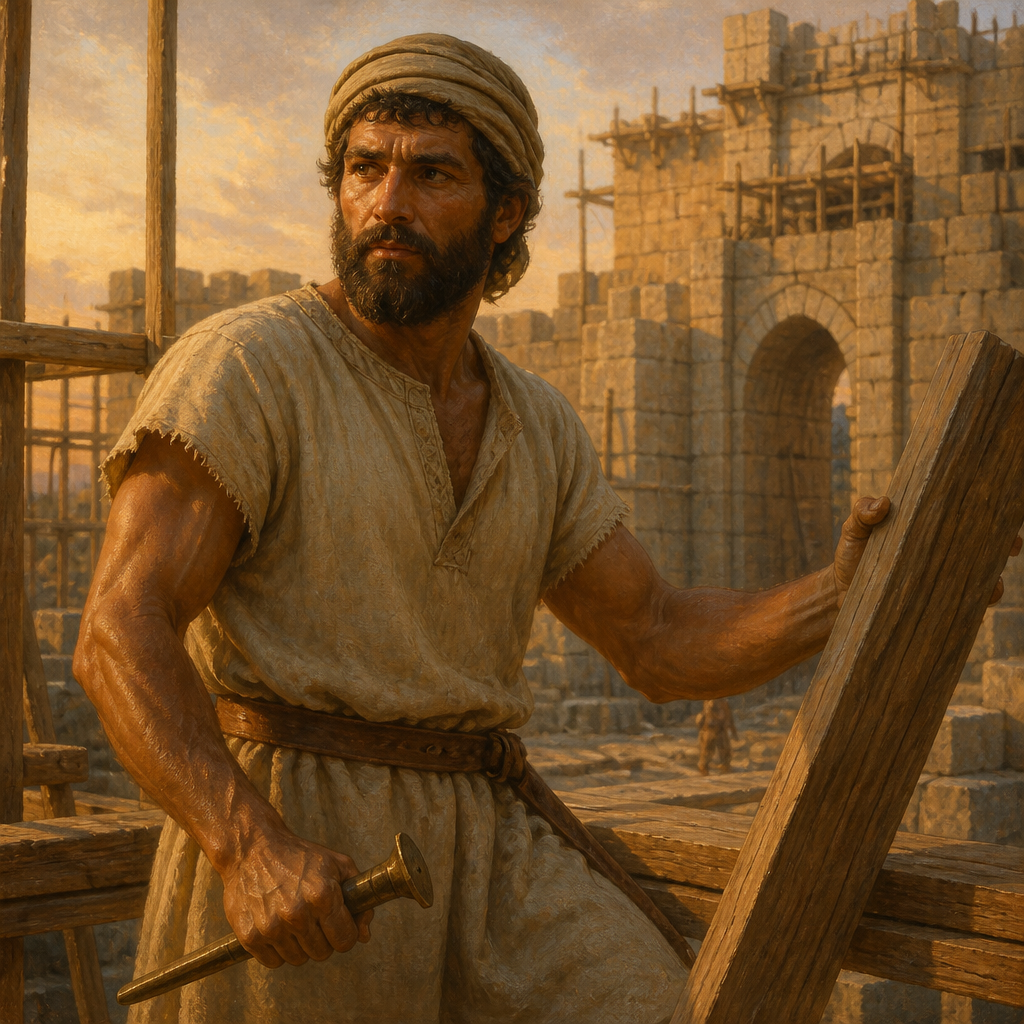 Meshullam, son of BesodeiahThis page
Connected Figures
Family
Father · Nehemiah 3:6
A Jewish man whose son, Meshullam, assisted Nehemiah in the restoration of Jerusalem's Old Gate during the Post-Exilic Period.
Categories
Mentions by Book
- Nehemiah1
Scripture References
All 1 indexed verse, in canonical order, from the Berean Standard Bible.
Nehemiah · 1
- Nehemiah 3:6
The Jeshanah Gate was repaired by Joiada son of Paseah and Meshullam son of Besodeiah. They laid its beams and installed its doors, bolts, and bars.
Others Named Meshullam
Compare all 20 bearers →Meshullam, Signer of the CovenantNehemiah 10:20
A Jewish leader during the Post-Exilic period who joined Nehemiah in signing the firm covenant to follow God's Law.
Meshullam, Grandfather of Shaphan2 Kings 22:3
A man of the Divided Monarchy period known solely as the grandfather of Shaphan the scribe during King Josiah's reign.
Meshullam, son of JoedNehemiah 11:7
A Benjamite whose descendants settled in Jerusalem during the Post-Exilic period after the return from Babylon.
Meshullam, Priest of the ReturnNehemiah 10:7
A priest during the Post-Exilic period who signed the covenant with Nehemiah and participated in the dedication of the rebuilt walls of Jerusalem.
Meshullam, Levite of the Return1 Chronicles 9:12
A Levite priest during the Post-Exilic period who served in the priestly lineage of Immer, contributing to the re-establishment of Jerusalem.
Meshullam, Son of Abihail1 Chronicles 5:13
A prominent head of a household within the tribe of Gad who lived during the era of the Divided Monarchy.
Meshullam, Son of Shephatiah1 Chronicles 9:8
A descendant of Reuel and son of Shephatiah who was among the heads of households to settle in Jerusalem following the return from the Babylonian exile.
Meshullam, Son of Zerubbabel1 Chronicles 3:19
A member of the Davidic line and the eldest son of Zerubbabel, the governor of Judah during the restoration period.
Meshullam, Levite of the Divided Monarchy2 Chronicles 34:12
A Levite of the Kohathite family who served as a faithful overseer during King Josiah’s restoration of the Temple in Jerusalem.
Meshullam, Son of Hodaviah1 Chronicles 9:7
A Benjamite who returned from the Babylonian exile and settled in Jerusalem as a head of a household.
Meshullam, Leader of the ReturnEzra 8:16
A prominent Jewish leader summoned by Ezra at the Ahava Canal to assist in recruiting Levites for the return to Jerusalem in 458 BC.
Meshullam, Son of BaniEzra 10:29
A descendant of Bani who lived during the return from the Babylonian exile and was recorded for having taken a foreign wife.
Meshullam, Head of the House of GinnethonNehemiah 12:16
A Jewish priest and head of the ancestral house of Ginnethon during the post-exilic high priesthood of Joiakim.
Meshullam, Son of Elpaal1 Chronicles 8:17
A member of the tribe of Benjamin and son of Elpaal mentioned within the genealogical records of the Divided Monarchy.
Meshullam, Supporter of Ezra’s AssemblyNehemiah 8:4
A prominent Jewish leader who stood at the left hand of Ezra the scribe during the public reading of the Law in Jerusalem.
Meshullam, Gatekeeper of the ReturnNehemiah 12:25
A Levite gatekeeper during the post-exilic period who was responsible for guarding the storerooms at the gates of Jerusalem.
Meshullam, Son of BerechiahNehemiah 3:4
A prominent wall-rebuilder under Nehemiah who maintained a complex, controversial alliance with the Ammonite official Tobiah.
Meshullam, Priest of Ezra's LineageNehemiah 12:13
A prominent post-exilic priest and head of the ancestral house of Ezra during the high priesthood of Joiakim.
Meshullam, Supporter of Jonathan son of AsahelEzra 10:15
A man who supported the opposition led by Jonathan son of Asahel regarding Ezra's plan for investigating foreign marriages in the post-exilic community.